What Are Nike Shoes Made Of: Materials Explained
Nike shoes sold in the United States are made from a mix of synthetic textiles, foam, rubber, plastic, adhesives, and sometimes metal or carbon-fiber parts. The exact materials depend on the shoe type, model, and intended use.
A running shoe may use engineered mesh, lightweight foam, rubber, and a plastic support plate. A basketball shoe may add stronger synthetic overlays and a stiffer midsole. Lifestyle shoes often use leather, suede, canvas, or synthetic leather.
Nike also uses recycled materials in many products. However, “made with recycled materials” does not mean that every part of the shoe is recycled or that the shoe is fully recyclable.
The Main Parts of a Nike Shoe
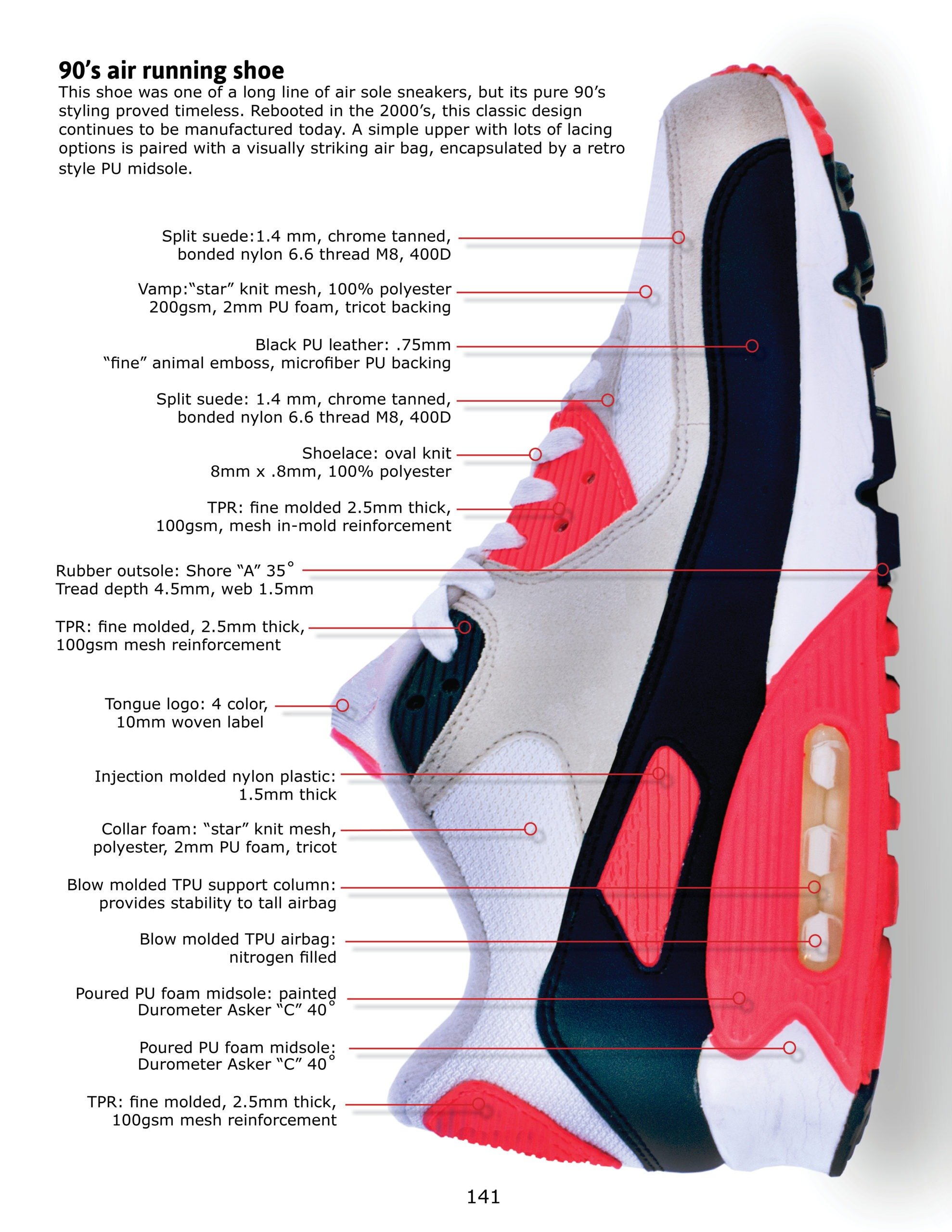
A Nike shoe has several main parts. Each part has a different job, so each one uses materials chosen for comfort, support, grip, weight, or durability.
| Shoe part | Common materials | Main purpose |
|---|---|---|
| Upper | Mesh, knit, textile, synthetic leather, leather, suede | Holds the foot and provides fit |
| Midsole | EVA foam, PEBA foam, TPU foam, rubber blends | Cushions and supports the foot |
| Outsole | Solid rubber, carbon rubber, rubber compounds | Provides traction and wear resistance |
| Sockliner | Foam, textile, polyurethane | Adds comfort inside the shoe |
| Support parts | TPU, nylon, plastic, carbon fiber | Adds stability or structure |
| Laces and eyelets | Polyester, nylon, cotton, plastic, metal | Secures the shoe |
| Adhesives | Synthetic bonding compounds | Joins the shoe’s layers |
The materials can change even within the same shoe family. For example, two Nike running shoes may both use “Nike Air,” but one may have a knit upper while another uses engineered mesh and a carbon-fiber plate.
What Is the Upper Made Of?
The upper is the part of the shoe that wraps around your foot. Nike commonly makes uppers from mesh, knit fabric, synthetic leather, leather, suede, or a blend of several textiles.
Mesh and engineered textile
Mesh is common in Nike running shoes and training shoes. It allows air to move through small openings while giving the foot a light layer of support.
Engineered mesh uses different knit or weave patterns in different areas. A designer may make the toe box more flexible and the midfoot more supportive. This can reduce the need for many separate overlays.
Mesh uppers are often made from polyester or nylon. Some models use recycled polyester made from reclaimed plastic waste. The percentage varies by model, colorway, and shoe part.
Flyknit and knit uppers
Nike Flyknit is a knitted upper material. It is designed to use different knit zones for stretch, support, and breathability.
Knit uppers can feel soft and flexible. They may also reduce the number of separate upper panels. Still, the shoe may contain other materials, such as foam, rubber, synthetic support pieces, laces, and adhesives.
A knit upper is not the same as a sock. It still needs a sole, heel structure, footbed, and other parts to function as a shoe.
Synthetic leather
Synthetic leather is made from man-made fibers and polymer coatings. Common base materials include polyester or other textile fibers, while the outer coating may use polyurethane or similar plastics.
Nike may use synthetic leather in basketball shoes, lifestyle shoes, soccer shoes, and training shoes. It can offer a smooth look and may resist light moisture better than some open mesh fabrics.
Synthetic leather is still a plastic-based material. It is not the same as animal leather and should not be described as natural leather.
Natural leather and suede
Some Nike shoes use animal leather or suede, especially certain lifestyle and classic models. Leather is processed animal hide. Suede comes from the softer inner side of a hide or from specially finished leather.
Leather and suede can feel durable and structured, but they may need more care than mesh. They can also absorb water, stain, and change texture with use.
Product pages usually identify whether a model contains leather, synthetic leather, or textile materials. Check the exact product listing because materials can differ between versions.
What Is the Midsole Made Of?
The midsole is the layer between the upper and outsole. It controls much of a shoe’s cushioning, weight, flexibility, and energy return.
Nike midsoles often use foam made from ethylene-vinyl acetate, thermoplastic compounds, or other synthetic polymers. Different foam formulas create different levels of softness, firmness, rebound, and stability.
EVA foam
EVA, or ethylene-vinyl acetate, is a common footwear foam. It is light and easy to shape, which makes it useful for running shoes, walking shoes, and casual sneakers.
EVA foam can be molded into different shapes. A softer formula may feel comfortable under the heel, while a firmer formula may help the shoe feel more stable.
Over time, foam can compress. Heat, moisture, body weight, mileage, and storage conditions can affect how quickly this happens.
Nike React foam
Nike React is a foam platform used in some Nike shoes. Nike describes it as a synthetic foam designed to balance cushioning, durability, and energy return.
The exact feel depends on the shoe’s shape, the amount of foam, the outsole, and the person wearing it. A label such as “React” describes the foam system, not the entire shoe.
Nike ZoomX foam
Nike ZoomX is a lightweight foam used in selected performance shoes. It is associated with a soft, responsive feel and high energy return.
Some Nike running shoes combine ZoomX with a plate or other support system. The plate can change the way the shoe bends and rolls forward. A ZoomX shoe is not automatically right for every runner, since softness, stability, fit, and running style still matter.
Air cushioning
Nike Air is not simply foam. It is a pressurized air unit placed inside the sole. The air unit usually works with foam and rubber rather than replacing them.
Air units can appear in the heel, forefoot, or full-length midsole. Their shape and placement affect the shoe’s feel. The shoe still needs an upper, foam or structural base, outsole, and bonding materials.
What Is the Outsole Made Of?
The outsole is the part that touches the ground. Nike outsoles are generally made from rubber or rubber-based compounds.
Rubber helps the shoe grip surfaces and resist wear. Nike may use different rubber patterns or densities in one outsole. High-wear areas often receive thicker rubber, while less exposed areas may use lighter materials to reduce weight.
Running shoes may have rubber pods under the heel and forefoot. Court shoes often use a flatter rubber pattern for indoor traction. Trail shoes may use deeper rubber lugs to grip dirt, rock, and mud.
The outsole material alone does not determine grip. Surface type, tread design, temperature, moisture, wear, and rubber hardness all affect traction.
Do Nike Shoes Contain Recycled Materials?
Many Nike shoes contain some recycled materials, but the amount differs by product. Recycled polyester is commonly used in textiles, mesh, knit uppers, laces, and other fabric parts.
Nike’s Move to Zero program focuses on reducing waste and carbon emissions. Nike has also described the use of recycled materials in footwear and other products.
A recycled material usually begins as a waste stream that is processed into a usable fiber, foam, or component. For example, plastic bottles can be processed into recycled polyester yarn. That yarn may then become mesh or knit fabric.
Recycled content does not mean the whole shoe can be recycled. A finished shoe combines many materials with glue, stitching, foam, rubber, and plastic. Separating those materials at the end of the shoe’s life can be difficult.
What “recycled content” means
When a product says it contains recycled content, the claim normally applies to a defined part or percentage of the product. It does not mean every component contains recycled material.
Look for wording such as:
- Recycled polyester upper
- At least a stated percentage of recycled content
- Recycled rubber outsole
- Recycled foam
- Made with recycled materials
Read the product details for the exact model. Nike’s sustainability claims and material choices can change as products are updated.
Are Nike Shoes Made From Plastic?
Yes. Most modern Nike shoes contain several plastic-based materials.
Common examples include:
- Polyester in mesh, knit fabric, and laces
- Nylon in textiles, support parts, and threads
- Polyurethane in synthetic leather and some foams
- EVA in midsoles
- TPU in plates, clips, and support structures
- Rubber compounds made partly from synthetic polymers
- Adhesives used to bond the shoe together
“Plastic” covers many different materials with different properties. A soft foam and a rigid heel clip may both be polymer-based, but they do not behave in the same way.
Plastic materials help shoes stay light, flexible, cushioned, and durable. Their main trade-off is end-of-life handling. A mixed-material shoe is harder to recycle than a single-material product.
Are Nike Shoes Made With Animal Products?
Some Nike shoes contain animal-derived materials, while others use only synthetic materials. Leather and suede are the clearest examples.
The answer depends on the model. A shoe may use synthetic leather on the upper but still contain animal-derived glue or another less visible material. Product pages may identify the main upper materials without listing every chemical in the adhesive.
People who avoid animal products should check Nike’s product description and contact Nike customer support for questions about a specific model. Do not assume that a shoe is vegan simply because the upper is synthetic.
How Are Nike Shoes Put Together?
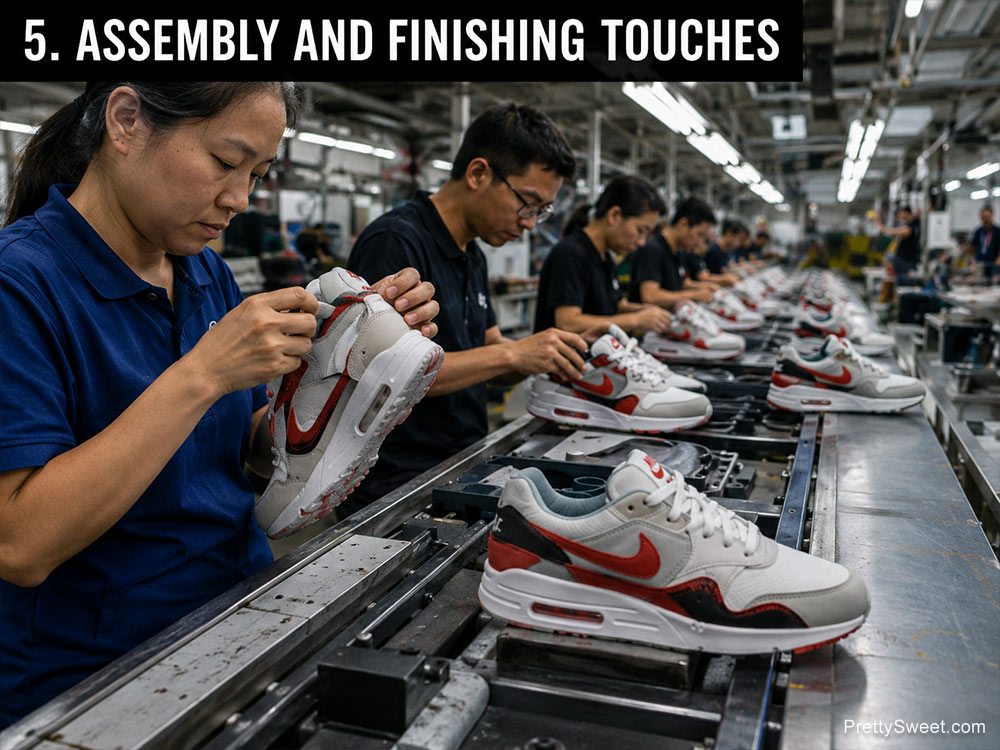
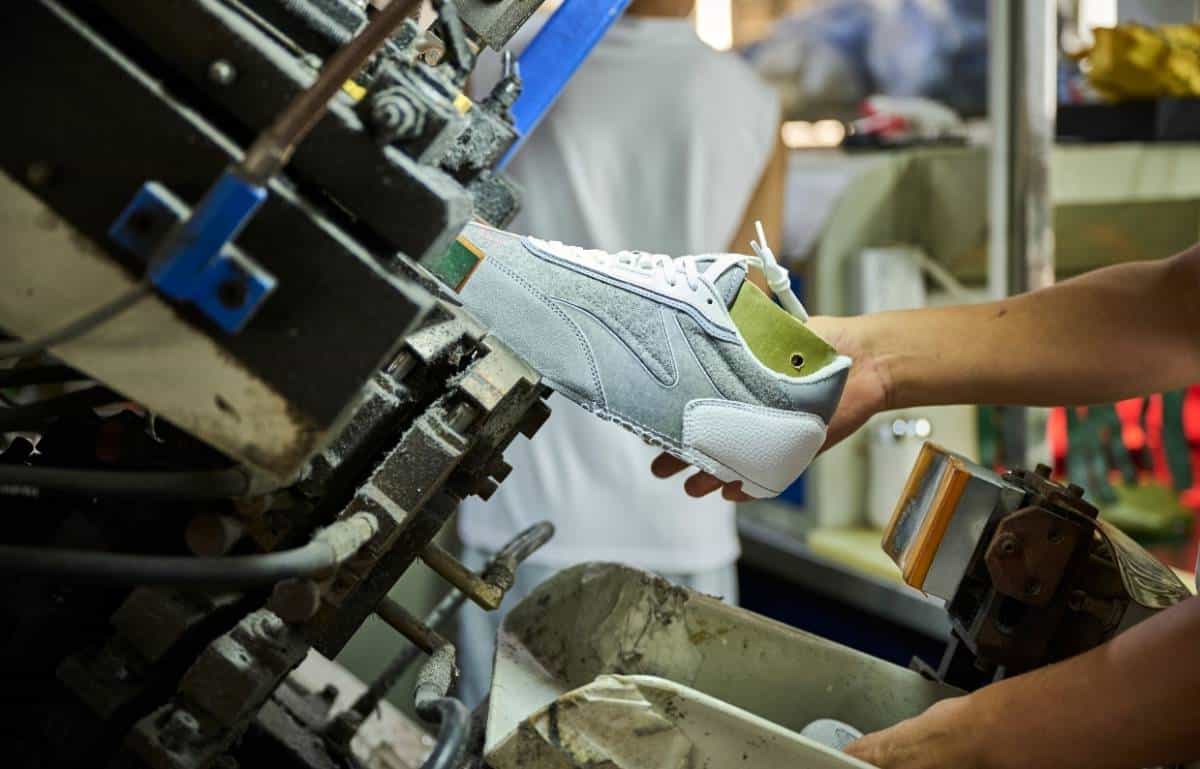
Nike shoes are made by combining fabric, foam, rubber, plastic, and other parts through cutting, molding, stitching, pressing, and bonding.
A simplified production process looks like this:
- Material preparation: Fabrics, foam sheets, rubber, and synthetic materials are prepared for cutting or molding.
- Upper construction: Textile panels or knit sections are shaped and joined with stitching, heat bonding, or overlays.
- Midsole molding: Foam is shaped into the required midsole form.
- Outsole production: Rubber is molded with a tread pattern.
- Lasting: The upper is shaped around a foot-shaped form called a last.
- Sole attachment: The upper, midsole, and outsole are bonded or pressed together.
- Finishing and inspection: The shoe is trimmed, cleaned, checked, and packed.
Not every Nike model follows the same process. A knit upper may need fewer stitched panels than a traditional leather shoe. A performance shoe with a plate or Air unit needs additional assembly steps.
Glue is important because many shoes combine materials that cannot be joined by stitching alone. This is one reason shoes are difficult to take apart for recycling.
Where Are Nike Shoes Made?
Nike designs products in the United States but does not manufacture all of its shoes in the United States. Nike uses independent contract factories in several countries.
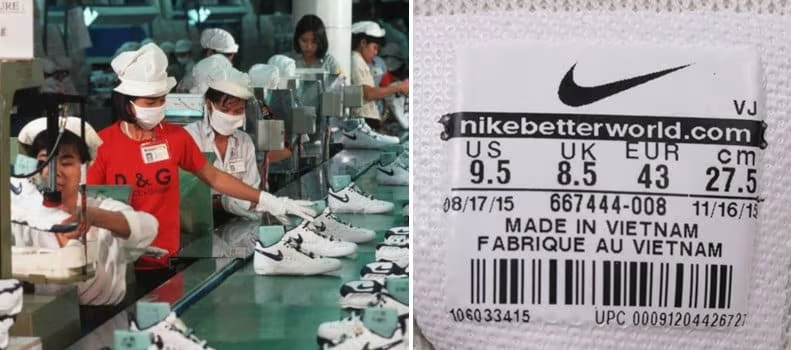
The country of manufacture depends on the model and production run. The most reliable place to find that information is the label inside the shoe, the shoebox label, or the product packaging.
A “Made in” label identifies where the product was assembled under the applicable labeling rules. It does not necessarily mean every material came from that country.
Nike publishes supplier and manufacturing information in its corporate responsibility and sustainability reporting. Factory locations and production partners can change over time.
Does the Material Affect Comfort and Performance?
Yes. Each material creates a trade-off between weight, support, flexibility, breathability, grip, and durability.
| Material or feature | Common benefit | Possible trade-off |
|---|---|---|
| Open mesh | Breathability and low weight | Less protection from water and debris |
| Knit textile | Flexibility and close fit | May offer less structure |
| Synthetic leather | Structure and easy cleaning | Can feel warmer or less flexible |
| EVA foam | Light cushioning | May compress with use |
| Responsive foam | Springy ride | Can feel unstable for some users |
| Rubber outsole | Grip and wear resistance | Adds weight |
| Carbon-fiber plate | Stiffness and forward roll | May feel demanding or less natural |
| Leather or suede | Structure and classic appearance | Needs care and may absorb water |
The best material depends on how you plan to use the shoe. A breathable mesh running shoe may work well for road miles but offer little protection on rough trails. A durable leather sneaker may be good for casual wear but feel too warm for summer training.