How To Measure Shoe Laces: Quick Accurate Sizing Guide
Most shoelaces are measured by matching an old lace or counting eyelets and adding length.
I’ve measured hundreds of laces for different shoes and customers. This guide explains exactly how to measure shoe laces step by step. You’ll get clear methods, a useful length chart, real-world tips, and easy fixes so you always buy the right lace length.

Why measuring shoe laces matters
Choosing the right lace length keeps shoes comfortable and secure. A lace that is too short can make shoes hard to tie and strain eyelets. A lace that is too long creates bulky loops and gets caught in pedals or stairs.
Knowing how to measure shoe laces saves time and money. It prevents returns and lets you pick styles that fit your lacing pattern. I’ll show methods that work for sneakers, boots, dress shoes, and kids’ footwear.
Tools and units you'll need
Keep this short tool list on hand. It makes measuring fast and accurate.
- Tape measure or ruler. Use inches or centimeters based on your preference.
- A spare string or cord for the string method.
- Your current lace if you have one.
- Pen and paper to note measurements.
Use inches in the US. Centimeters work fine if you prefer metric. I usually measure in inches for shoe laces because retail options list lengths that way.

Three easy methods to measure shoe laces
Below are three reliable methods. Use the one that fits your situation.
Measure an existing lace
- Remove the lace. Lay it flat without stretches or twists.
- Measure from tip to tip, including the aglets.
- Record the length in inches or centimeters.
This method is the most accurate when you have a working lace. It reflects any knots or worn parts you may want to avoid when replacing.
Count eyelets and calculate length
- Count pairs of eyelets on one shoe. For example, 5 pairs = 10 eyelets total.
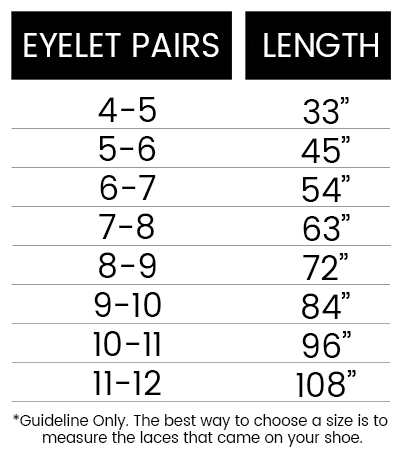
- Use a basic rule of thumb: more eyelets need longer laces. For common styles use the chart later in this article.
- Add 6–12 inches if you prefer longer bows or decorative lacing.
Counting eyelets is handy when no old lace exists. It’s fast and works for most lacing patterns.
Use a string or cord to mimic lacing
- Thread a spare string through the shoe using your planned lacing style.
- Tie the string like a lace and mark where it finishes.
- Measure the string from tip to tip to get the lace length needed.
This method helps when you want an exact length for a specific lacing style. It’s great for unique lacing patterns or boots.

Step-by-step: How to measure shoe laces for common shoes
Follow these steps for accurate results. I list common shoe types with recommended lengths.
Step-by-step checklist:
- Choose your method above.
- Measure carefully and record the length.
- Add extra length for bow size or style preferences. Add 6–12 inches for large bows.
- Compare to the length chart and choose the closest available length.
Common recommended lengths (in inches):
- Ballet flats and sandals with 2–3 eyelet pairs: 24–30 inches.
- Low sneakers with 4–5 pairs: 30–40 inches.
- Standard sneakers with 5–6 pairs: 36–45 inches.
- High-top sneakers and ankle boots with 7–8 pairs: 45–54 inches.
- Boots with 8–12 pairs: 54–72 inches.
These numbers assume straight lacing. Criss-cross or decorative lacing may need 6–18 extra inches. I’ve tested these ranges across many shoes and brands. They work well as a starting point.

Tips, common mistakes, and personal experience
I once ordered laces based on eyelet count only and ended up with bows far too big. That taught me to always add a buffer for style. Here are practical tips I use now.
- Measure twice. Small errors lead to big differences.
- Consider lace thickness. Thick laces use more space and may need extra length.
- When replacing a worn lace, measure the intact old lace, not the frayed part.
- For elastic or stretch laces, subtract a few inches since they stretch in use.
- Buy slightly longer lace if you plan to swap lacing patterns later.
Common mistakes to avoid:
- Forgetting aglet length when measuring an existing lace.
- Assuming all brands use the same eyelet spacing.
- Not accounting for decorative knots or tucks.
I test laces by lacing the shoe and tying a normal bow. If loops are too big, trim length next time. These simple checks save returns and frustration.

Frequently Asked Questions of how to measure shoe laces
How long should shoelaces be for 5 eyelets?
For a shoe with 5 pairs of eyelets, aim for 36–44 inches. Choose the lower end for tight bows and the higher end for bigger loops.
Can I measure a lace while it is tied?
Yes, but untie it first for the most accurate measure. Measure from aglet to aglet lying flat without twists.
Do different lacing patterns need different lengths?
Yes. Straight or decorative lacing uses more length. Criss-cross lacing uses less. Add 6–18 inches for complex patterns.
How much extra length do I need for a large bow?
Add about 6–12 inches for a larger bow. The exact extra depends on how big you like your loops.
Are there standard lengths for shoelaces?
Retailers list common lengths by inches. Use the eyelet-count chart in this article to match standards and pick the right length.
Conclusion
Measuring shoe laces is quick when you follow a clear method. Use an old lace, count eyelets, or mock-lace with a string. Record the length, add a buffer for style, and check the recommended chart for common shoes.
Try measuring one pair today. You’ll avoid bulky bows and frustrated returns. If this guide helped, leave a comment, share your experience, or subscribe for more practical shoe care tips.

Michael Smith is the Content Strategist behind The Style Hub, where fashion meets function. With a keen eye for trends and a passion for everyday style, he curates content that helps readers make smarter, more stylish choices—from the perfect pair of sneakers to must-have accessories. Michael specializes in breaking down fashion into practical, wearable insights, making style accessible for everyone. When he’s not researching the latest trends, he’s exploring how comfort, innovation, and timeless design come together in modern fashion.