
How To Choose Boots For Women: A Smart Buying Guide
Choosing women’s boots starts with where you will wear them, what you need them to do, and how your feet fit inside them. A boot for snowy Minnesota sidewalks should not be built like a boot for mild California winters. Start with the use, then check fit, support, weather protection, materials, and sole grip.
The best boot is not always the tallest, warmest, or most expensive pair. It is the pair that fits well, suits your daily conditions, and stays comfortable for the time you plan to wear it.
Start With the Boot’s Main Job
The right boot depends on its main job. A dress boot, hiking boot, rain boot, and work boot solve different problems.
Before shopping, answer these questions:
- Will you wear the boots for walking, work, travel, or events?
- Will you use them in rain, snow, ice, mud, or dry weather?
- Do you need warmth?
- Will you wear thick socks?
- Do you need room for a wide foot, high instep, or orthotic?
- How many hours will you wear them at a time?
- Do you need a low heel for walking or a taller heel for style?
A simple use chart can narrow your choices:
| Main use | Features to look for | Features to avoid |
|---|---|---|
| Daily city wear | Cushioned footbed, stable heel, flexible sole | Very stiff sole or narrow toe box |
| Rainy weather | Waterproof construction, sealed seams, deep tread | Unlined leather that absorbs water |
| Snow and cold | Insulation, waterproof upper, thick lug sole | Smooth sole and thin lining |
| Hiking | Secure heel, toe protection, firm sole, ankle support | Soft fashion sole with little grip |
| Work | Protective toe if required, slip-resistant sole, durable upper | Decorative sole without tested traction |
| Dress events | Stable heel, comfortable lining, secure fit | Loose shaft or painful toe pressure |
| Travel | Light weight, walking comfort, easy entry | Heavy boots with no cushioning |
If you need protective footwear for work, check your employer’s safety rules before buying. The Occupational Safety and Health Administration (OSHA) sets workplace requirements, but the exact boot depends on the job and hazard.
Fashion boots versus performance boots
Fashion boots often focus on shape, color, heel height, and shaft design. Performance boots focus on grip, support, protection, insulation, and weather resistance.
Some boots do both jobs well. Still, a stylish boot is not automatically safe on ice, and a boot labeled “water-resistant” is not necessarily waterproof. Read the product details and inspect the construction.

Measure Your Feet Before You Buy
Measure both feet near the end of the day, when feet may be slightly larger. Wear the socks you expect to use with the boots.
You can measure at home:
- Place a sheet of paper on a hard floor.
- Stand on the paper with your heel lightly against a wall.
- Trace or mark the longest point of your foot.
- Measure from the heel to the longest toe.
- Measure the widest part of the foot.
- Repeat for the other foot.
- Use the larger measurement when checking the brand’s size chart.
Feet often differ in length or width. Fit the larger foot rather than forcing both feet into the same tight space.
Do not trust size numbers alone
Women’s boot sizes can vary by brand, style, and country. A size 8 in one brand may not feel like a size 8 in another. The shape of the boot also matters.
Check:
- Length
- Width
- Toe shape
- Instep height
- Heel width
- Shaft circumference
- Calf width
- Available half sizes
- Available wide or extra-wide sizes
A wide foot needs more than a wider toe. The whole boot may need more room across the forefoot, instep, and heel.
Check shaft and calf measurements
Tall boots need more than the right foot size. Measure around the widest part of your calf while wearing the clothing you plan to wear with the boots.
Compare that measurement with the boot’s listed shaft circumference. Remember that the listed measurement may be taken at a specific point, not at the widest part of the shaft.
For knee-high boots, also check:
- Shaft height
- Opening width
- Calf circumference
- Whether the shaft narrows near the ankle
- Whether the boot has elastic panels or an adjustable closure
A boot can fit your foot but still pinch your calf or cut into the back of your knee.

Check the Fit in the Store or at Home
A good boot should feel secure without squeezing your foot. It should hold your heel in place while leaving enough room for your toes to move.
Walk on a hard, flat surface for several minutes. If possible, wear the boots with your normal socks.
Use this fit check:
- Toes: They should not touch the front when you walk downhill or bend your knees.
- Toe box: Your toes should be able to spread and move.
- Heel: A small amount of movement can occur in a new stiff boot, but your heel should not lift sharply.
- Arch: The footbed should feel supportive, not painful.
- Instep: The upper should not press hard across the top of your foot.
- Ankle: The boot should not rub or fold into your ankle.
- Leg and calf: The shaft should not pinch or fall down.
- Balance: You should feel steady when standing and walking.
Do not buy boots that hurt in the hope that they will “break in.” Leather may soften, but a boot that is too short will not become longer. Severe pressure points may also lead to blisters, skin damage, or changes in how you walk.
Leave room for socks, but not too much
Cold-weather boots often need thicker socks. Try them on with the socks you will actually wear.
Do not solve a tight boot by buying a much larger size. Too much extra space can cause your foot to slide. That movement may create blisters and reduce control.
If you need more room, look for a wider fit, a different toe shape, or a boot with an adjustable closure.
Use the return policy as part of the fit process
For online purchases, check the return window, return shipping cost, and rules about outdoor wear before you order. Try new boots indoors on a clean floor.
Keep the box and packing materials until you know the fit works. Do not remove tags or add outdoor scuffs if the seller requires the boots to be unworn for a return.

Choose the Right Boot Height and Shape
Boot height affects comfort, warmth, movement, and styling. Choose the height based on your clothing, activity, and weather.
Ankle boots
Ankle boots are easy to wear with jeans, trousers, dresses, and skirts. They work well for daily use because they are usually lighter and easier to put on than taller boots.
Look for:
- A padded collar
- A stable heel
- A flexible forefoot
- A sole with useful grip
- Enough room around the ankle
Ankle boots may let cold air or water in above the boot. They are less useful for deep snow or wet grass unless the upper and opening provide enough protection.
Mid-calf boots
Mid-calf boots offer more coverage without the bulk of many knee-high styles. They can work well for rain, casual outdoor use, and cooler weather.
Check whether the shaft bends comfortably when you walk. A stiff shaft that presses into your calf can become uncomfortable during long use.
Knee-high boots
Knee-high boots provide more warmth and coverage. They also need careful measurement of the calf and shaft.
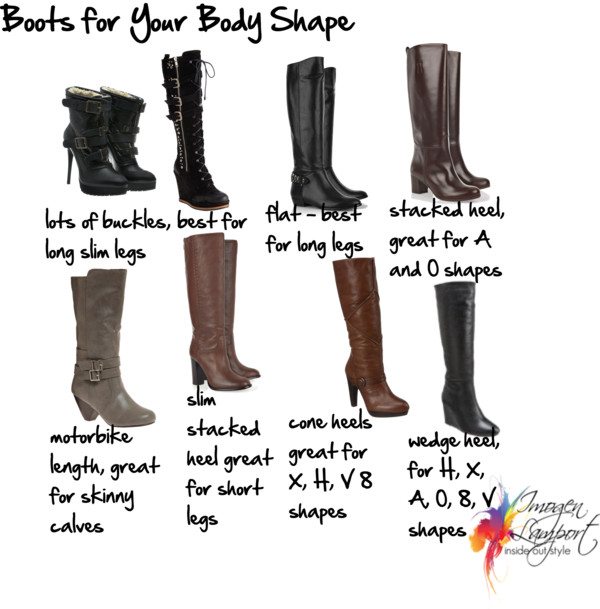
For walking, avoid a shaft that collapses around the ankle. That fold can create pressure and reduce stability.
Over-the-knee boots
Over-the-knee boots are mainly style boots, though some may offer extra warmth. They need a secure upper fit that stays in place without cutting into the leg.
Check the top edge while sitting and standing. The boot should not restrict normal movement or slide down repeatedly.

Select the Right Heel and Sole
Heel height changes pressure, balance, and walking comfort. A higher heel can place more load toward the front of the foot and may make long walks harder.
For daily walking, look for:
- A broad or stable heel
- A firm connection between heel and sole
- A cushioned footbed
- A sole that bends near the ball of the foot
- A low risk of slipping
A block heel is often more stable than a narrow stiletto heel. A wedge can also feel stable, but its stiffness varies by design.
Check the sole for traction
A sole with deep, well-spaced lugs usually offers better grip on loose ground than a smooth sole. However, no ordinary fashion boot guarantees safety on ice.
For winter use, look for:
- A rubber or rubber-like outsole
- Deep tread
- Flexible material in cold conditions
- A stable heel
- A pattern that can shed mud and snow
Ice requires extra care. Walk slowly, shorten your steps, use handrails, and consider traction aids made for the boot. Follow the traction-aid instructions. Remove aids indoors when they may damage floors or reduce grip.
Check flex and stiffness
A hiking or work boot may need a firm sole for protection and stability. A casual boot may feel better with more flex.
Bend the boot gently at the forefoot. It should flex where your foot naturally bends unless the boot is designed for a specific protective purpose.
A sole that twists very easily may offer less support on rough ground. A sole that does not flex at all may feel tiring on city sidewalks.

Match the Material to the Weather
The upper controls how the boot handles water, air, wear, and care. Each material has trade-offs.
Leather
Leather can be durable and may soften with use. It needs care to prevent drying and cracking.
Ask:
- Is the leather treated?
- Is the boot waterproof or only water-resistant?
- Are the seams sealed?
- Can the manufacturer recommend a conditioner or protector?
- Is the lining breathable?
Do not apply an unapproved product. Some treatments can darken leather or affect its finish.
Suede and nubuck
Suede and nubuck have a soft, textured surface. They can mark more easily than smooth leather and may need special care.
Use products made for that specific material. Avoid soaking the boots unless the care instructions allow it.
Synthetic materials
Synthetic uppers can be light, easy to clean, and less costly. Their performance varies widely.
Check the lining, seams, sole attachment, and care instructions. A synthetic upper is not automatically waterproof or breathable.