The best men’s sandals fit your foot well, stay secure as you walk, and match the places you plan to wear them. In the United States, that may mean choosing one pair for beach trips, another for summer walks, or a supportive style for daily errands. Start with fit and function, then compare materials, support, comfort, and care needs.
A sandal that looks good but slips, rubs, or lacks support will spend more time in your closet than on your feet. This guide explains how to choose men’s sandals with less guesswork.
Start With the Main Use
Choose sandals based on where you will wear them most. A light beach sandal does not need the same features as a walking sandal or a water shoe.
Think about your most common use before you shop:
- Beach and pool: Look for quick-drying materials, water resistance, and a sole with grip.
- Casual errands: Choose a comfortable footbed, secure straps, and enough support for short walks.
- Long walks or travel: Prioritize heel stability, arch support, cushioning, and a sole that bends near the toes.
- Hiking and outdoor use: Pick a closed-toe or rugged sport sandal with strong straps and a deeper tread.
- Home and yard work: Choose a durable sandal that stays secure and protects the foot from rough surfaces.
- Dress-casual events: Leather sandals can work well, but they still need a stable sole and a good fit.
The key trade-off is simple: lighter sandals often feel less bulky, while supportive sandals may weigh more. Neither type is best for every task.
A pair of thin flip-flops may be fine for a short walk from a car to a pool. They are a poor choice for a full day of sightseeing if they offer little structure or grip.

Know the Main Types of Men’s Sandals
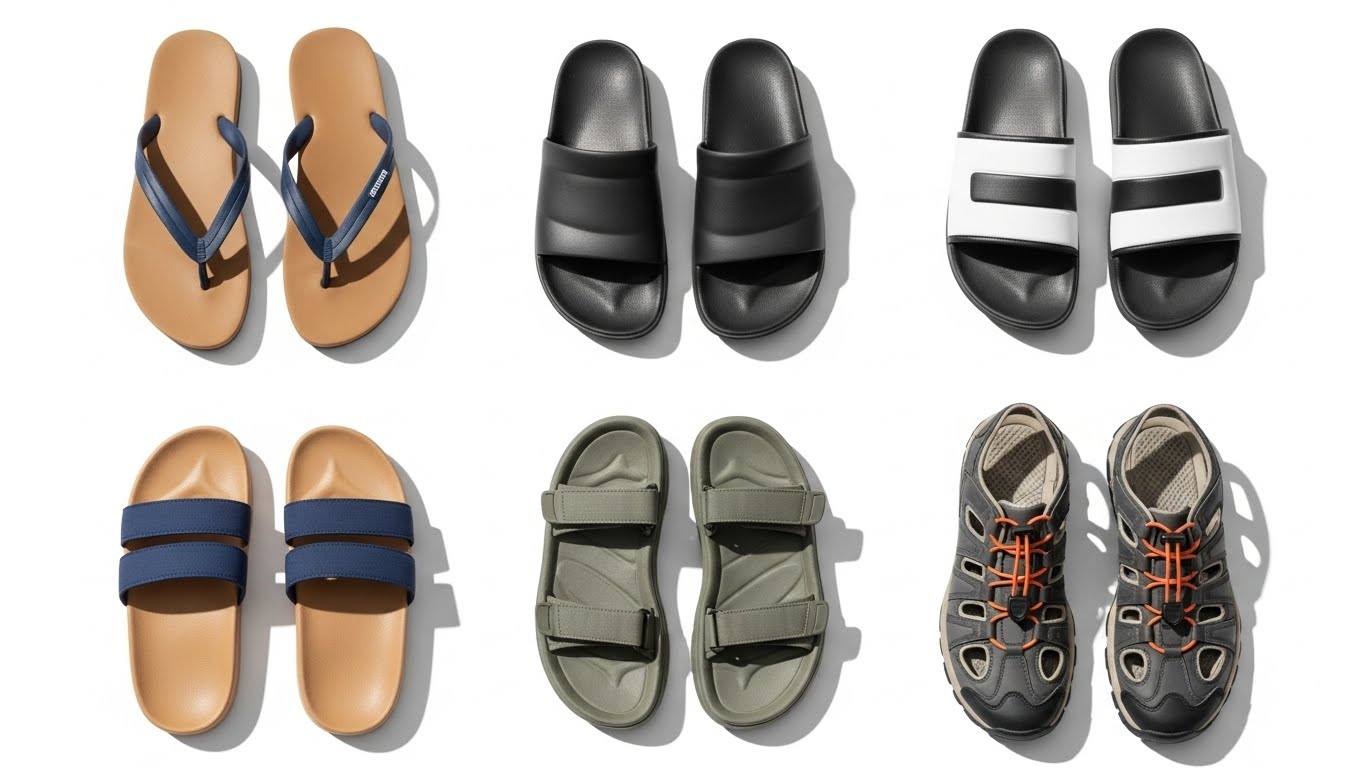
Men’s sandals fall into a few useful groups. Each group solves a different problem.
Flip-flops
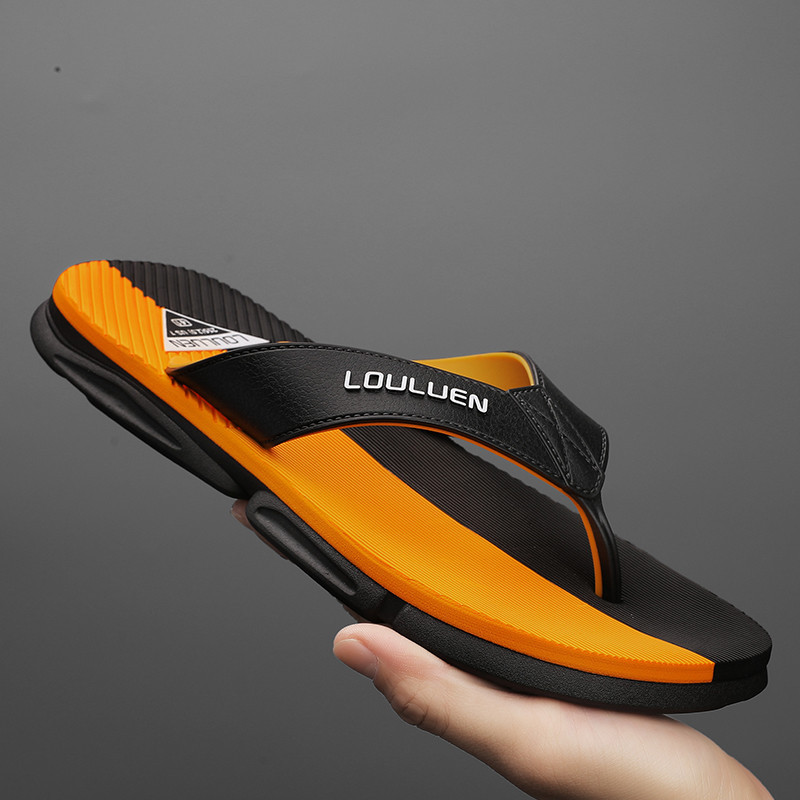
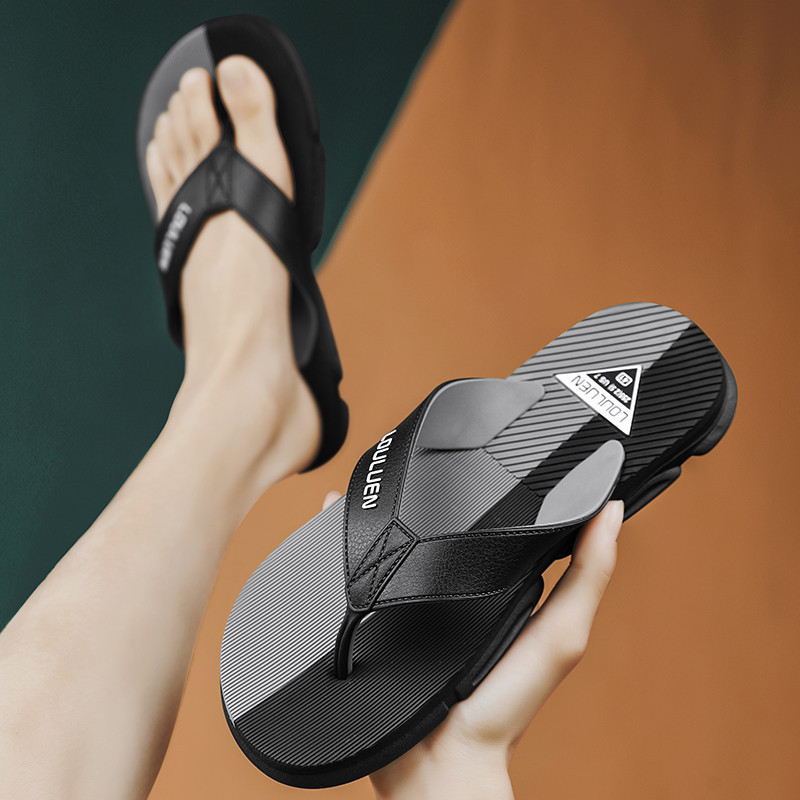
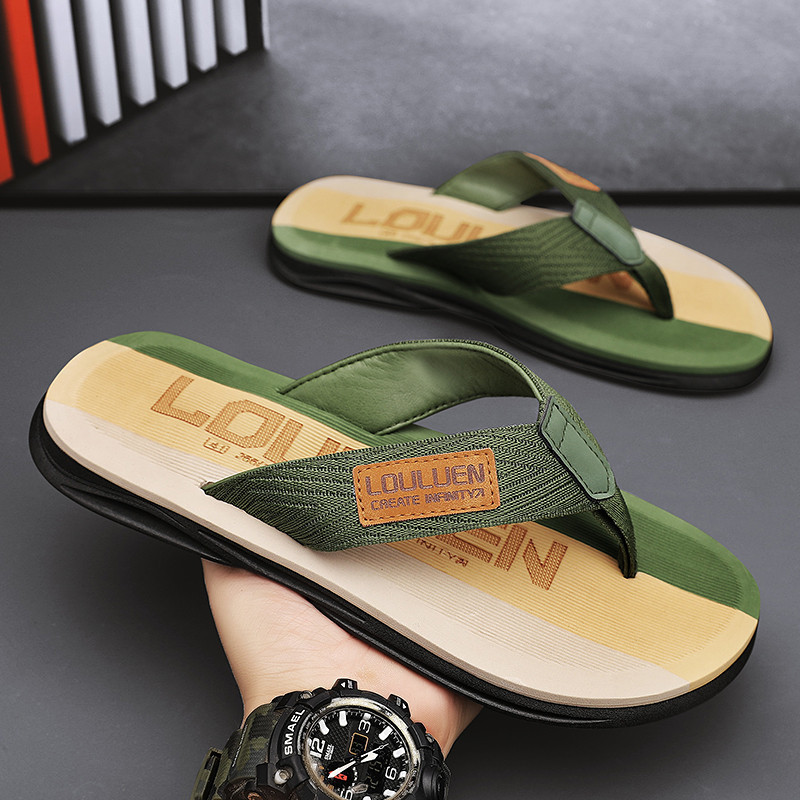
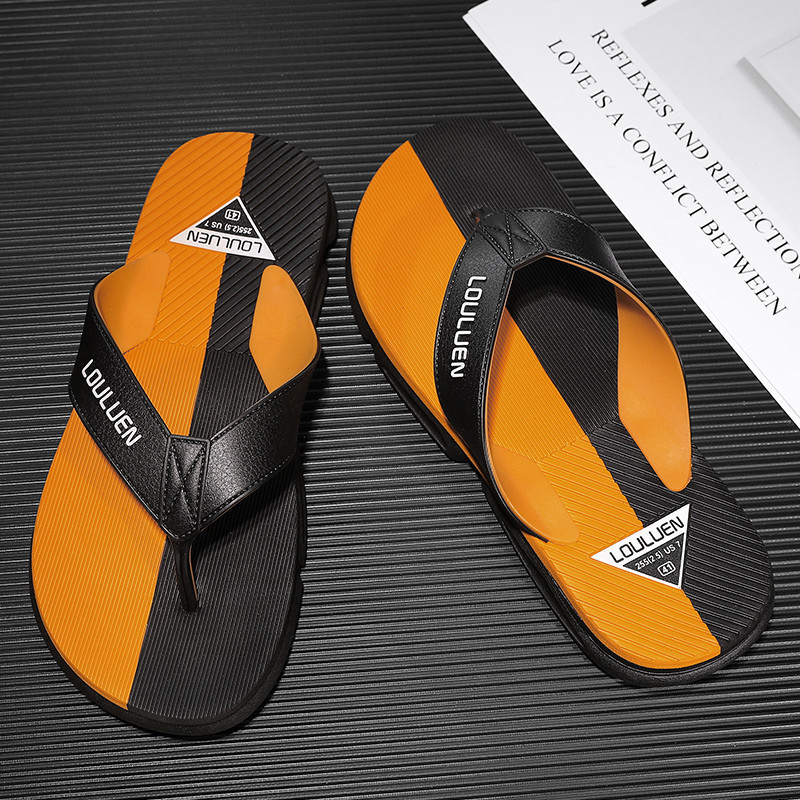
Flip-flops have a flat sole and a strap between the first and second toes. They are easy to pack and useful around pools, locker rooms, and beaches.
Their limits are just as clear. The loose design can make your toes grip the sole to keep the sandal in place. That may feel tiring during long walks. Many flip-flops also offer little heel control or arch support.
Slide sandals
Slides use one broad strap across the foot. They are easy to put on and work well for casual use, showers, and short trips.
A slide should fit snugly without squeezing the top of your foot. If your heel lifts with each step, the slide may be too loose or too shallow.
Two-strap or multi-strap sandals
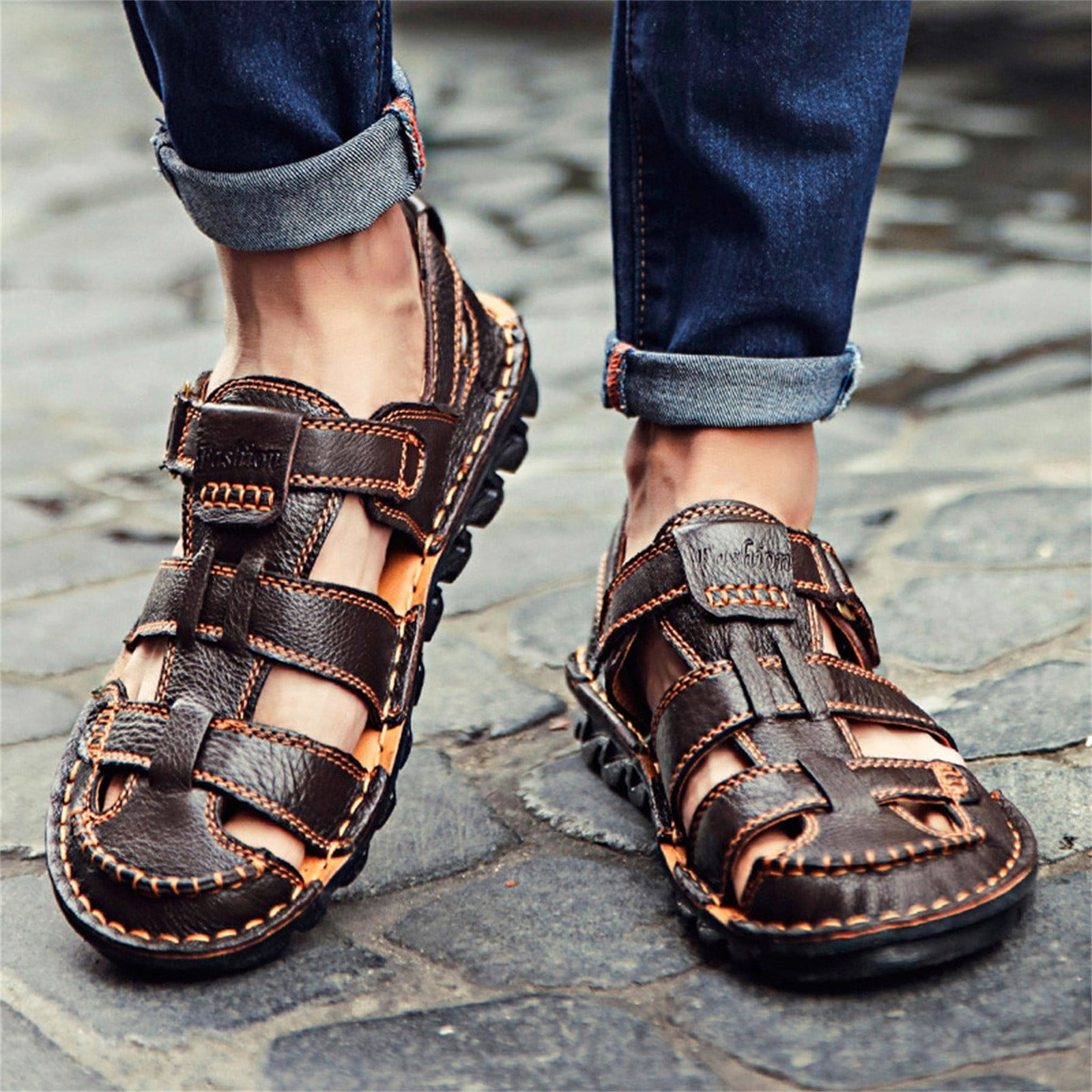
These sandals use adjustable straps around the toes, midfoot, or heel. They often provide a more secure fit than flip-flops or basic slides.
They can be a good choice for daily wear because you can adjust the fit as your feet swell during the day. Check that the straps do not cross a pressure point or rub the skin.
Sport sandals
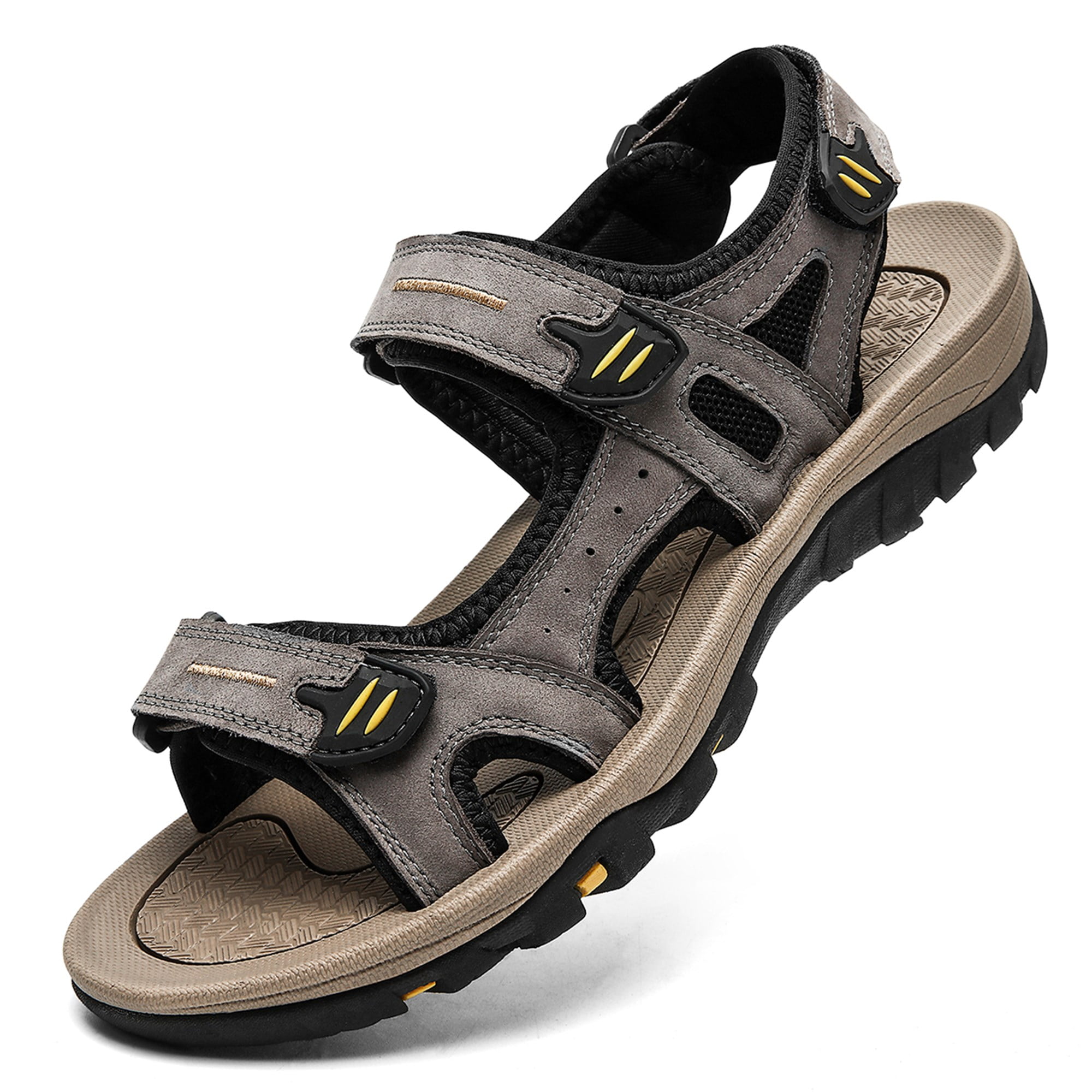
Sport sandals usually have a heel strap, adjustable closures, a textured outsole, and a stronger midsole. Some have a closed toe.
They are useful for travel, light trails, camp use, and wet conditions. They may look too technical for formal settings, and some models take longer to dry.
Leather sandals
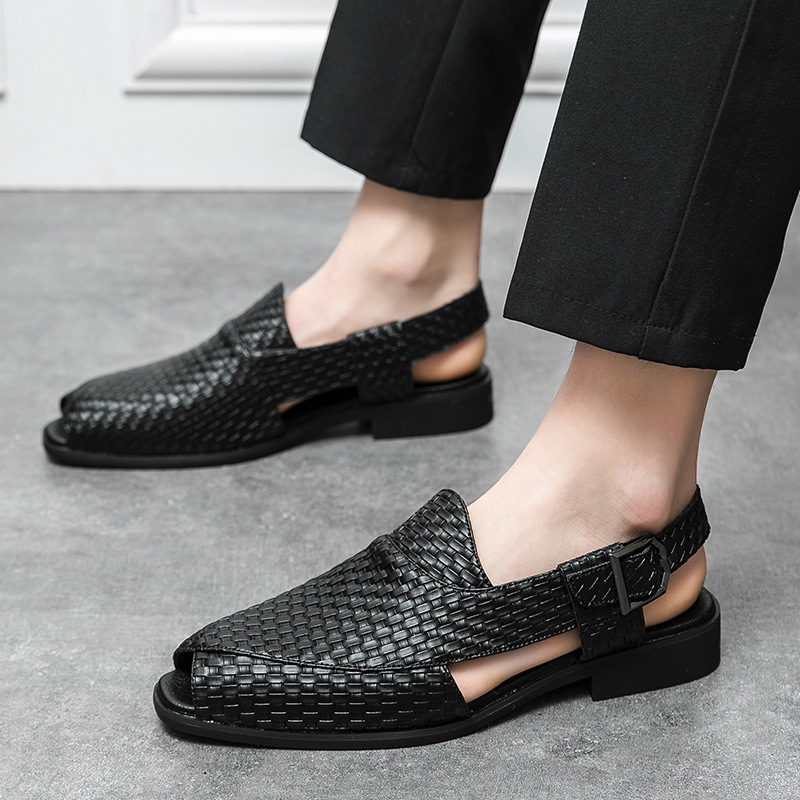
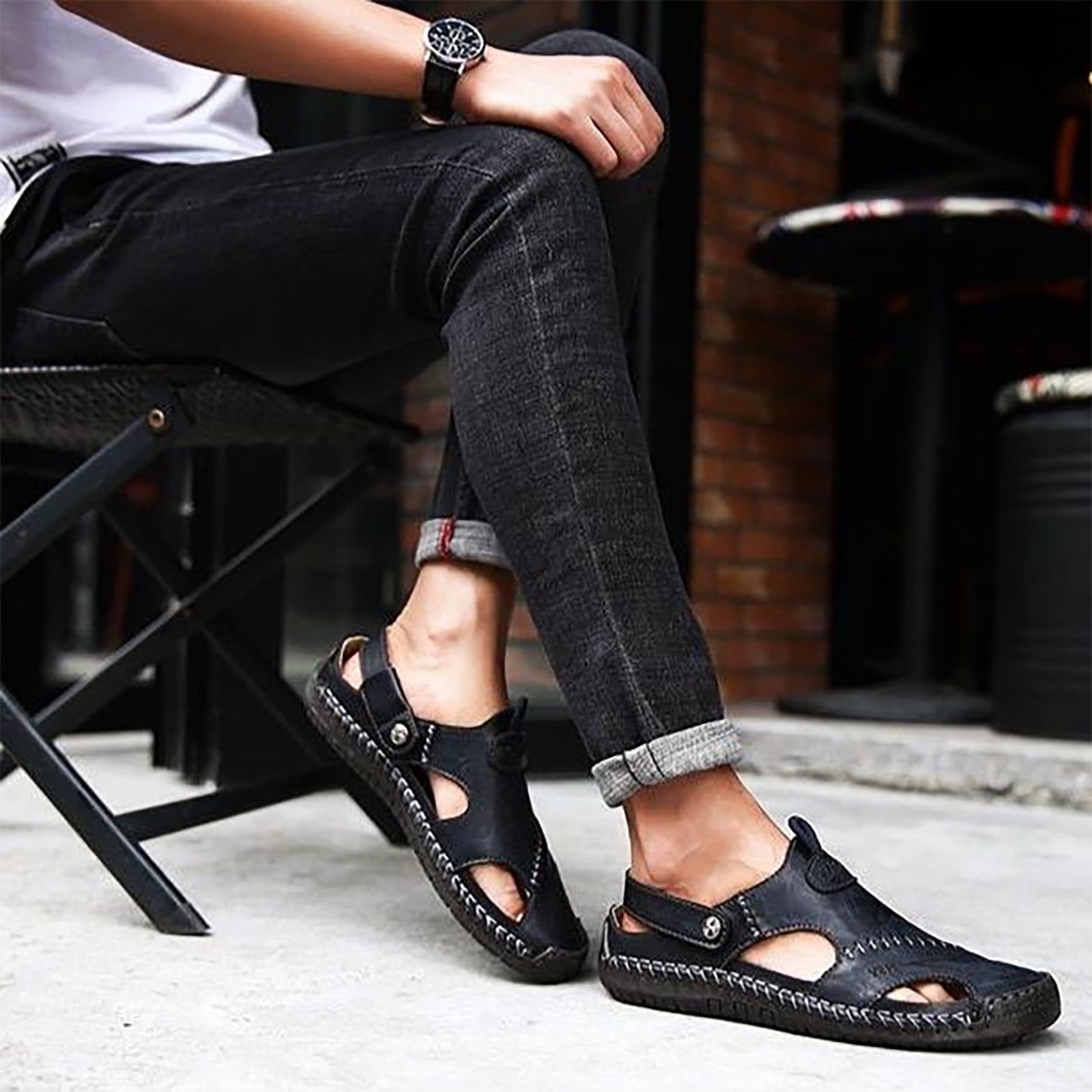
Leather sandals often have a cleaner look than athletic styles. They can suit casual offices, dinners, and warm-weather events.
Leather may soften with use, but it can also absorb water and take longer to dry. Avoid wearing leather sandals in settings where they will stay wet for long periods unless the manufacturer says they are made for that use.
Measure Your Feet Before Buying
Measure both feet at the end of the day. Feet often become slightly larger after hours of standing and walking.
You can measure at home with paper, a pencil, and a ruler:
- Place a sheet of paper on a hard floor.
- Stand on the paper while wearing the socks you expect to use.
- Trace around each foot, or mark the heel and the longest toe.
- Measure the distance from the heel mark to the longest toe.
- Measure the widest part of each foot.
- Use the larger foot when checking the brand’s size chart.
Do not rely on size numbers alone. A men’s size 10 in one brand may not fit like a size 10 in another. Width, strap position, footbed shape, and toe shape can change the fit.
If one foot is larger, fit the larger foot. You can sometimes adjust the smaller side with a strap, but a sandal that is too short cannot be fixed safely.
Check the Fit in Five Steps
The right sandal should feel secure from the first try. It should not need a long break-in period to stop causing pain.
1. Check the length
Your toes should not hang over the front edge. Your heel should not extend beyond the back edge.
Leave enough room for your foot to stay on the footbed as you walk. Too much extra space can make the sandal unstable, while too little space can cause your toes or heel to strike the ground.
2. Check the width
The foot should sit fully on the footbed. The sides of your foot should not spill over the edge.
Do not assume that a tight upper will stretch enough. Some materials soften, but they do not always gain much usable width.
3. Check the straps
Straps should hold the foot in place without creating pressure or numbness. You should be able to slide a fingertip under an adjustable strap, but the sandal should not move freely around your foot.
Watch for rough seams, hard edges, and strap placement over sensitive areas.
4. Walk on a hard surface
Walk for several minutes in the store or at home if the return policy allows it. Try stairs, turns, and a normal pace.
Notice whether the sandal:
- Slides forward
- Twists under your foot
- Makes your toes grip
- Rubs between the toes
- Lifts at the heel
- Feels unstable when you turn
5. Test both sandals
Feet are not always the same size or shape. Try both sandals and stand up before judging the fit.
A sandal that feels fine while sitting may feel tight or loose once your full body weight is on it.
Look for Support and Stability
Support matters most when you plan to walk, stand, or travel in your sandals. A flat sole is not automatically bad, but it may not suit every foot or activity.
Look for these features:
- A firm footbed: It should not collapse easily under your weight.
- A stable heel area: A heel cup or secure heel strap can help limit unwanted movement.
- Moderate arch contour: The arch should meet your foot without pressing sharply into it.
- A flexible forefoot: The sandal should bend near the ball of the foot rather than fold in the middle.
- A grippy outsole: The tread should match the surfaces where you plan to walk.
Avoid choosing support by appearance alone. A deep arch or thick sole is not automatically better. The sandal should support your foot without creating a new pressure point.
People with diabetes, reduced sensation, significant foot pain, or a history of ulcers should use extra care. Shoes and sandals that rub may cause skin damage before the wearer notices it. A podiatrist can help with footwear selection when foot health is a concern. The American Podiatric Medical Association provides general foot-health information, but personal medical advice should come from a qualified clinician.

Match the Sole to the Surface
The outsole controls much of a sandal’s grip and durability. Choose it based on the ground you expect to encounter.
| Use | Sole features to seek | Features to avoid |
|---|---|---|
| Pool or locker room | Water-resistant material and simple traction | Smooth, worn tread |
| City walking | Rubber grip and moderate cushioning | Very thin sole with little structure |
| Light trail use | Deeper tread, heel strap, and toe protection | Loose slides or flat flip-flops |
| Wet outdoor use | Fast-drying upper and water-friendly outsole | Absorbent materials that stay wet |
| Indoor use | Quiet, flexible sole | Heavy tread that feels stiff |
| Dress-casual wear | Clean profile and stable sole | Slippery leather outsole |
Rubber usually provides useful traction, but the exact grip depends on the tread pattern and surface. Even a good outsole can slip on oil, ice, polished stone, or algae-covered surfaces.
Replace sandals when the tread is worn smooth, the footbed is cracked, or the sole starts to separate. A worn sandal may change how your foot lands and can become less stable.

Choose Materials for Comfort and Care
Materials affect how sandals feel, dry, age, and handle heat.
Leather
Leather can feel comfortable and look polished. It may soften as it conforms to the foot.
However, leather needs more care than many synthetic materials. Keep it away from prolonged water exposure unless it has a water-ready design. Let wet leather dry at room temperature rather than placing it on a heater.
Synthetic materials
Synthetic straps and footbeds often resist water and dry faster. They are common in sport and travel sandals.
Their main risk is friction. A stiff synthetic edge or rough seam can rub the skin, especially in hot weather.
Textile uppers
Textile straps can feel soft and light. They may also absorb water and hold moisture longer than smooth synthetic materials.
Check the care instructions before washing them. A machine cycle can damage adhesives, buckles, or footbeds.
Foam footbeds
Foam can feel soft when new and may reduce the sense of impact on hard ground. Some foam materials compress with repeated use.
A soft footbed is not the same as a supportive footbed. If the sandal bottoms out or becomes uneven, it may be time to replace it.
Decide How Much Protection You Need
Open sandals expose more of the foot. That can improve airflow, but it also leaves the toes and sides more vulnerable.
Choose more protection when you expect:
- Rocks or loose ground
- Roots and uneven trails
- Heavy yard work
- Crowded outdoor spaces
- Water with hidden objects
- Activities where the toes may strike an object
A closed-toe sport sandal can protect the toes better than an open model. It may also hold more heat and water. If you choose one for wet use, make sure it dries well between uses.
For everyday city use, a heel strap can offer a useful balance. It helps keep the sandal attached without covering the whole foot.
Compare Features With a Simple Decision Table
Use this table when two or more sandals seem similar.
| Your priority | Give the most weight to | Accept a trade-off in |
|---|---|---|
| Easy packing | Low weight and simple design | Cushioning and protection |
| Long walks | Fit, heel security, support, and grip | Minimal style |
| Hot weather | Breathable, open upper | Toe protection |
| Wet conditions | Quick-drying materials and drainage | Leather appearance |
| Casual style | Clean shape and neutral color | Deep tread |
| Wide feet | Adjustable straps and a broad footbed | Slim profile |
| Narrow feet | Close-fitting straps and heel control | Loose, relaxed fit |
| All-day standing | Firm footbed, cushioning, and secure fit | Lowest possible weight |
Start with the feature that affects safety or comfort most. For example, a person with narrow feet should solve heel movement before choosing a color.
Avoid These Common Buying Mistakes
Many sandal problems come from choosing by appearance or price alone.
Buying too loose
A loose sandal can make the foot slide forward. You may grip with your toes to keep it on.
Adjustable straps can help, but they cannot correct a footbed that is much too long or wide.
Buying too tight
Tight straps can leave red marks, blisters, or numb areas. Feet may also swell during heat, travel, or long periods of standing.
Try sandals later in the day and check the fit while standing.
Wearing flip-flops for every activity
Flip-flops have a useful role, but they are not designed for every walk. Use a more secure sandal for long distances, rough ground, or fast movement.
Ignoring the return policy
Footwear fit can change after several minutes of walking. Check the return rules before wearing new sandals outdoors.
Keep the box and tags until you know the fit works.
Assuming expensive means better
Price does not guarantee a good fit. A moderately priced sandal that stays secure may work better than a costly pair that rubs or slips.
Compare construction, adjustability, outsole grip, and the return policy.
Wearing new sandals for a full day
Start with short periods at home. Look for hot spots before they become blisters.
If a sandal causes pain, do not assume you must “break it in.” Some materials soften, but repeated rubbing can injure the skin.
Break In and Care for New Sandals
Break in sandals slowly, especially leather styles or models with firm straps.
Wear them at home for 20 to 30 minutes at first. Check your skin after removing them. If you see a red area that does not fade, adjust the strap or stop wearing the sandal.
For care:
- Remove dirt with a soft brush or damp cloth.
- Follow the maker’s cleaning instructions.
- Let wet sandals dry in a cool, ventilated place.
- Do not store them while damp.
- Check straps, stitching, buckles, and the outsole.
- Replace sandals with cracked footbeds, loose straps, or smooth tread.
Do not use strong cleaners on leather or technical materials unless the care label allows them. The wrong cleaner can weaken adhesives or damage the finish.
When Should You Replace Men’s Sandals?
Replace sandals when they no longer keep your foot stable or when the materials show serious wear.
Common signs include:
- The outsole is smooth in high-wear areas.
- The footbed has become uneven.
- The heel tilts to one side.
- Straps stretch and cannot hold the foot.
- The sole separates from the upper.
- Cracks appear in the footbed or outsole.
- The sandal causes new pain after normal use.
There is no single replacement date that fits every wearer. A person who wears sandals daily may wear them out much sooner than someone who uses them only on vacations.
Judge the condition of the sandal, not its age alone.

Frequently Asked Questions
Are sandals good for walking?
Some are. Choose a sandal with a secure heel strap, a stable footbed, useful cushioning, and a grippy outsole. Basic flip-flops may work for short, easy walks but are usually less suitable for long distances or uneven ground.
Should men’s sandals have arch support?
Arch support can improve comfort for some people, but the shape must match your foot. A firm, moderate contour is often more useful than a very high arch that creates pressure. If you have ongoing foot pain, ask a podiatrist for guidance.
How should men’s sandals fit?
Your foot should sit fully on the footbed, with no toes or heel hanging over the edges. The straps should hold the foot without pinching, rubbing, or causing numbness. Walk in both sandals before deciding.
Are leather sandals better than synthetic sandals?
Neither material is always better. Leather may offer a more refined look and can soften with use. Synthetic materials often handle water and drying better. Choose based on your main use and care habits.
Can I wear sandals with socks?
Yes, if the style and setting allow it. Socks can reduce rubbing and add warmth, but they may change the fit. Try the sandals with the socks you plan to wear before buying.
What sandals are best for wide feet?
Look for a broad footbed, adjustable straps, and a design that does not taper sharply at the toes. Do not rely only on a wide size label; check whether your foot sits fully within the sandal.
What should I wear for a wet hike?
Choose a water-ready sport sandal with a secure heel strap, quick-drying materials, toe protection, and a tread suited to the surface. Avoid leather unless the manufacturer specifically approves wet use.
Final Recommendation
To pick men’s sandals, start with the activity, then check fit, foot security, support, sole grip, and material care. The best pair is the one that stays comfortable and stable for the way you actually use it.
For short trips near water, a simple slide or flip-flop may be enough. For walking, travel, or outdoor use, choose adjustable straps, a secure heel, a firm footbed, and a durable outsole. Try both sandals later in the day, walk on a hard surface, and return them if they rub, slip, or cause pain.

Michael Smith is the Content Strategist behind The Style Hub, where fashion meets function. With a keen eye for trends and a passion for everyday style, he curates content that helps readers make smarter, more stylish choices—from the perfect pair of sneakers to must-have accessories. Michael specializes in breaking down fashion into practical, wearable insights, making style accessible for everyone. When he’s not researching the latest trends, he’s exploring how comfort, innovation, and timeless design come together in modern fashion.