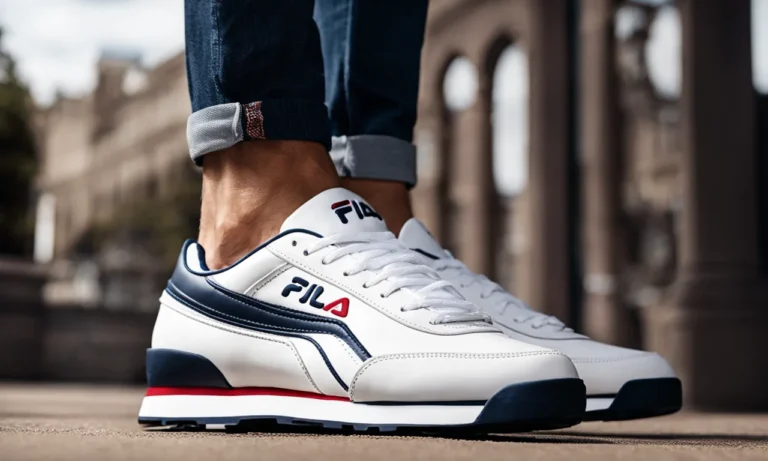
Fila shoes can be good for wide feet, but the answer depends on the model, width option, and shape of your foot. In the United States, many Fila shoes are sold in a standard width. Some models may feel roomy, while others can press on a wide forefoot or toes.
The safest approach is to check the shoe’s listed width, measure your feet, and look for a round or roomy toe box. Do not assume that every Fila shoe fits wide feet just because one Fila model does.
How Fila Shoes Fit Wide Feet
Fila shoes do not have one universal fit. Each model can use a different last, upper, insole, and sole shape. A “last” is the form around which a shoe is built, and it strongly affects width and toe space.
Most standard-width athletic shoes use a medium width. In US sizing, that is often:
- Men: D width
- Women: B width
A wide foot may need:
- Men: 2E or wider
- Women: D or wider
These labels are general industry conventions, not a guarantee that every brand measures width the same way. A shoe marked “wide” may still feel tight if its toe box is narrow or its upper does not stretch much.
What can make a Fila shoe feel wide?
A Fila shoe may feel more comfortable on a wide foot when it has:
- A rounded toe box
- A flexible mesh or knit upper
- Adjustable laces
- A removable insole
- A listed wide or extra-wide option
- A broad platform
- Soft material around the forefoot
A shoe may feel narrow even when it looks large if the toe area tapers sharply. Extra length does not replace extra width. Buying a longer shoe to gain room can make the heel slip and may cause the foot to slide forward.
What can make a Fila shoe feel narrow?
Common causes include:
- A pointed or tapered toe box
- Thick overlays across the toes
- A firm synthetic upper
- A narrow midsole
- Heavy padding that reduces inside space
- A fixed insole that cannot be removed
- A low ceiling over the toes
Fila lifestyle shoes and fashion sneakers may have a different fit from Fila walking or work shoes. The brand name alone cannot predict the result.

Which Fila Shoes May Work Best for Wide Feet?
The best Fila shoe for a wide foot is the model that offers enough space without forcing you to size up. Look first for the width option and the shape of the forefoot, then consider cushioning and use.
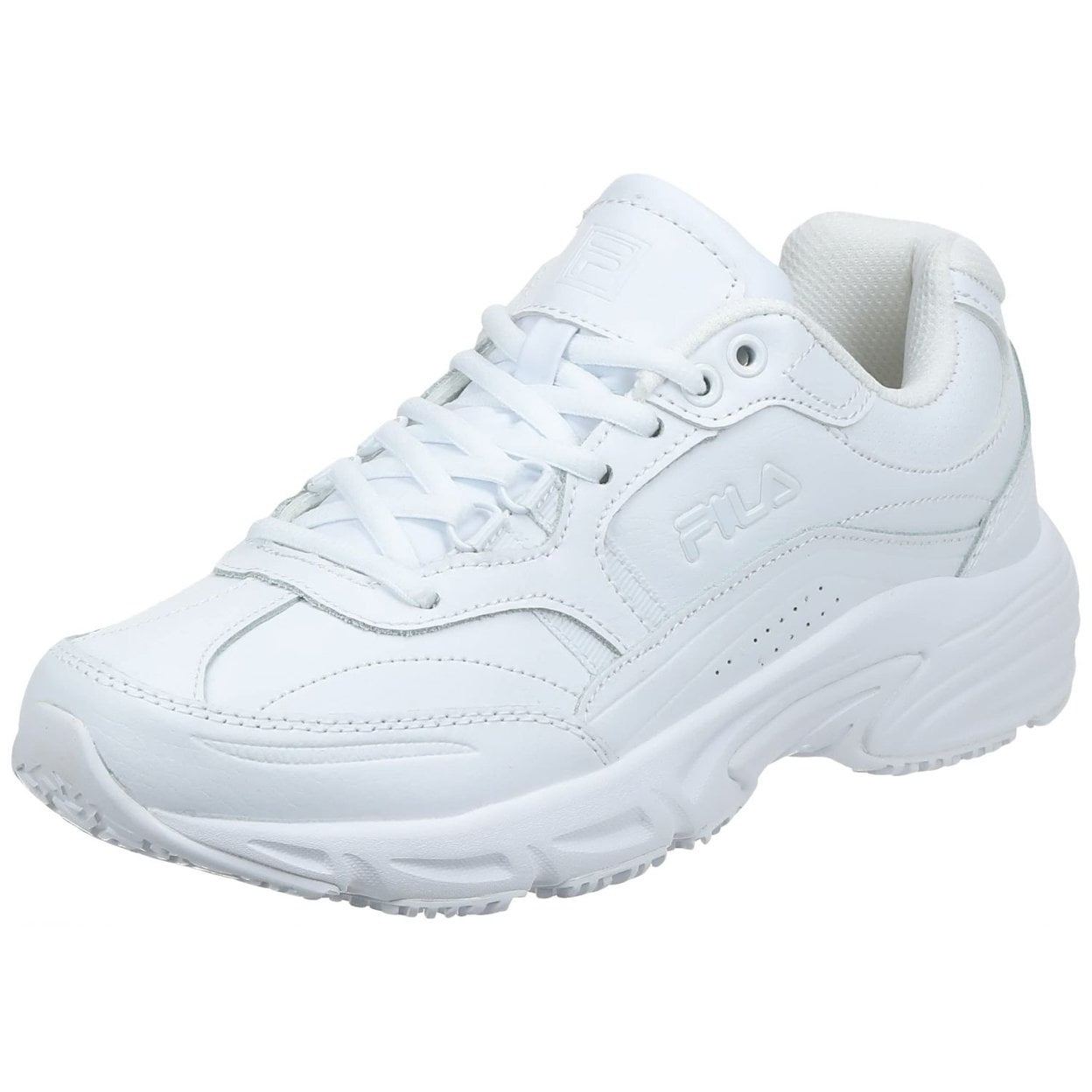
Fila walking and work shoes
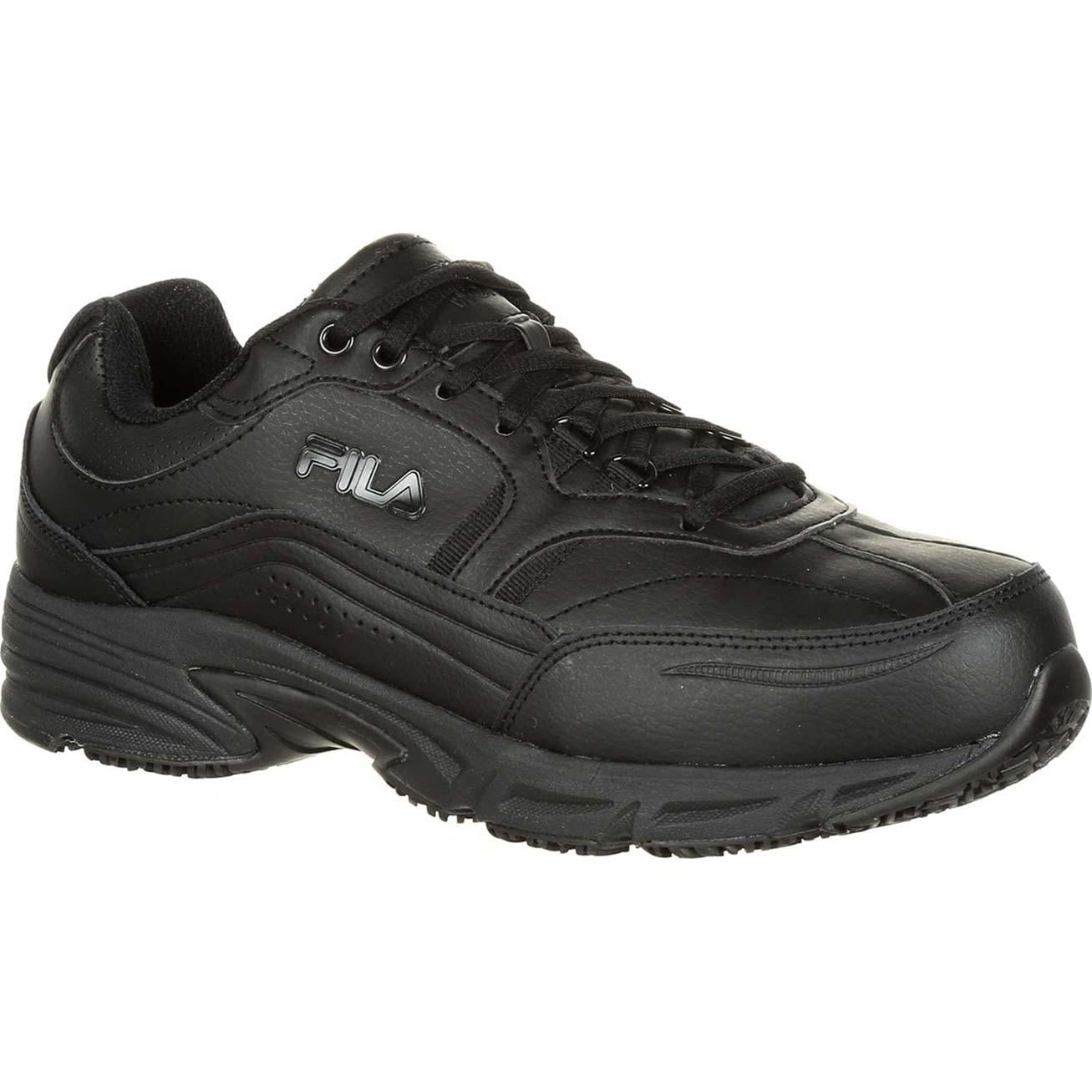
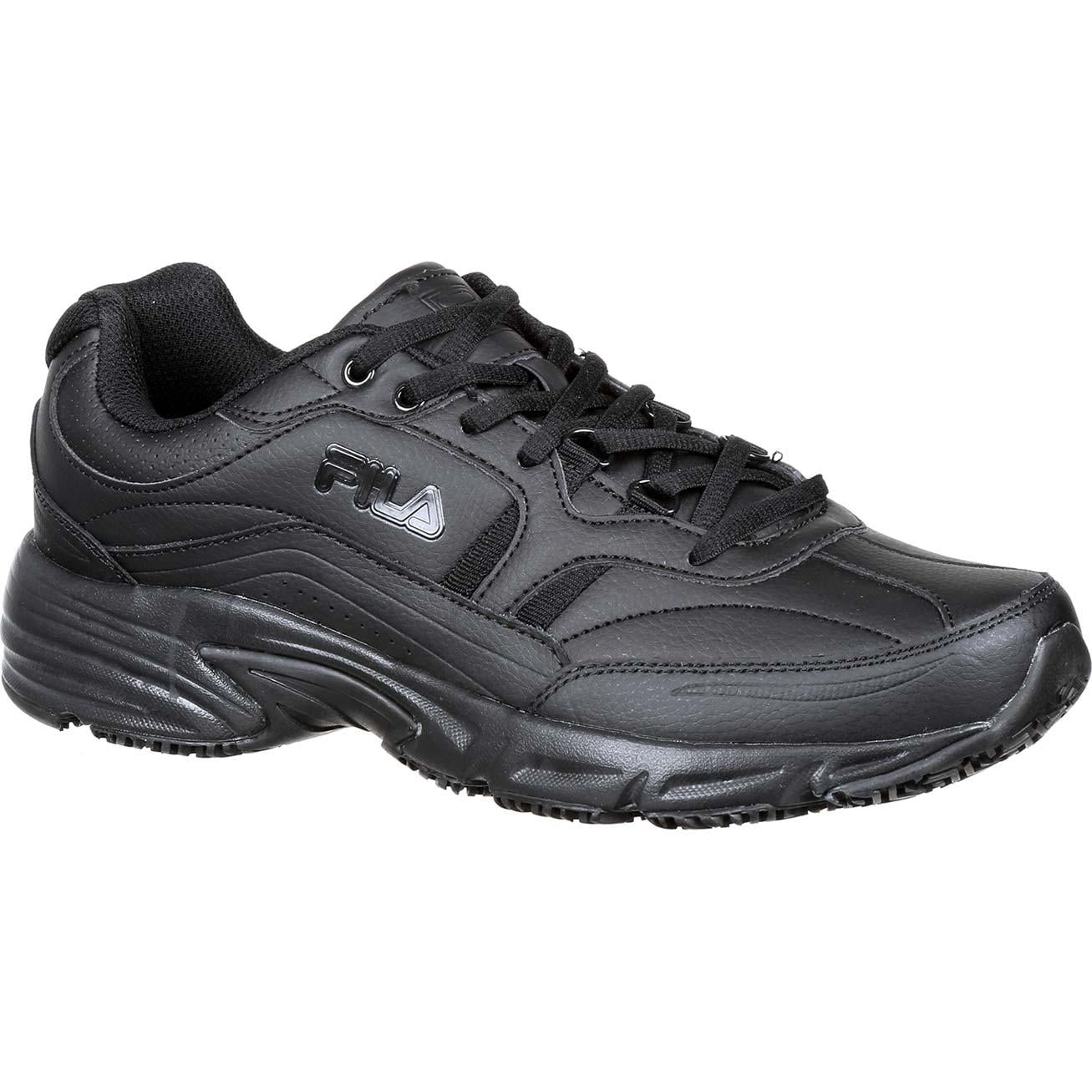
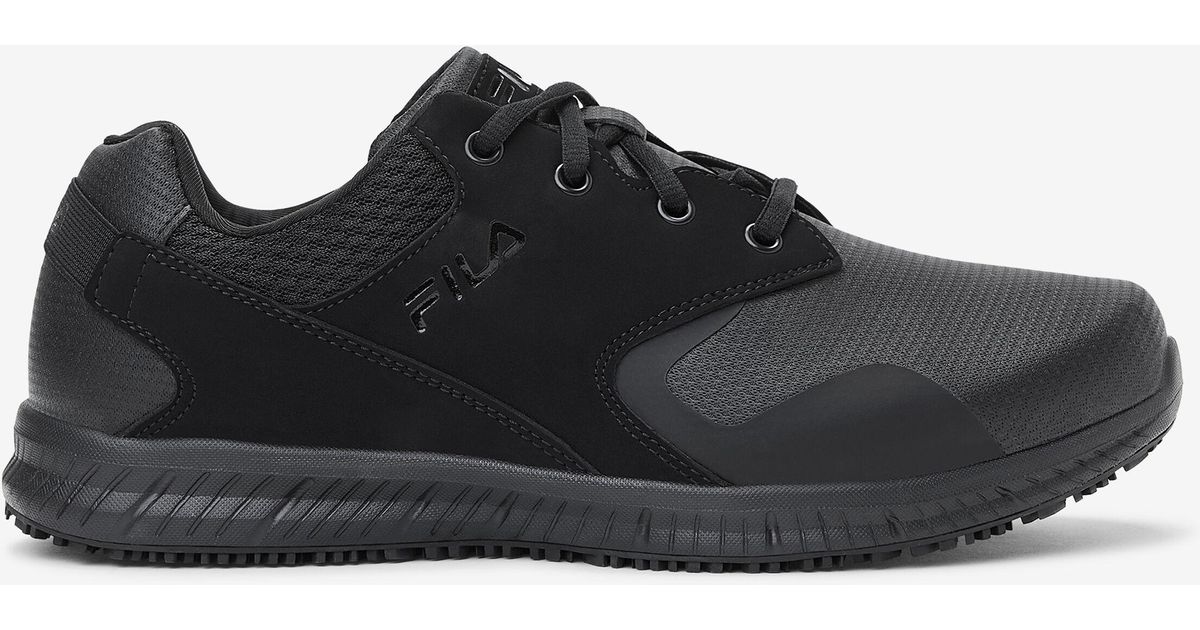
Walking and work shoes are often the most practical place to look for a wide-foot fit. Some Fila work models are marketed through US retailers with wide-width choices, but availability can vary by model, size, and seller.
Before buying, confirm that the product page clearly states:
- The width, such as Wide or 2E
- The available size range
- Whether the width applies to all listed sizes
- The return policy
- Whether the shoe is intended for work, walking, or casual use
A slip-resistant work shoe can be useful for people who stand for long periods, but slip resistance does not prove that the shoe fits wide feet. Fit and traction are separate features.
Fila athletic shoes
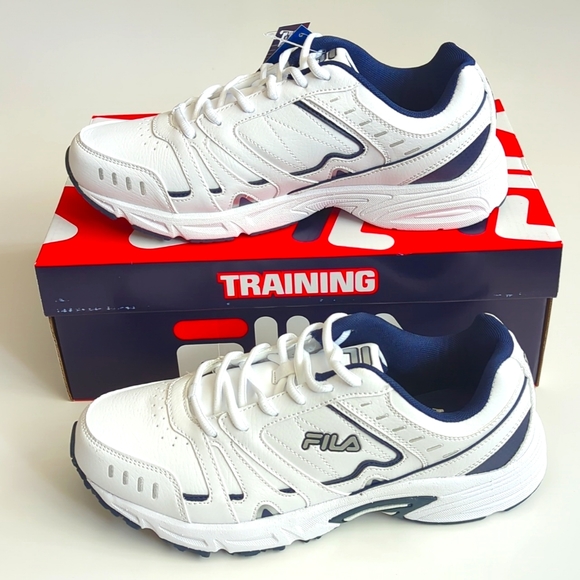
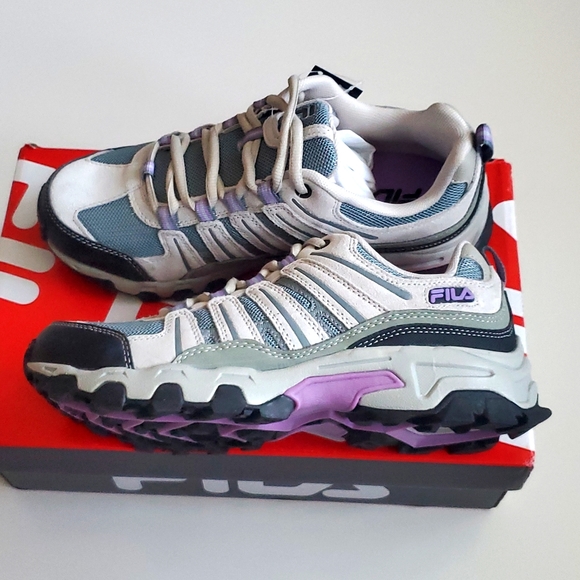
Fila athletic shoes may work for wide feet when the upper has some flexibility and the shoe uses a broad forefoot. However, “athletic” does not always mean wide. A firm upper can press on the little toe, even if the shoe has a soft midsole.
For exercise, pay close attention to:
- Toe spread
- Heel security
- Side pressure
- Bending at the ball of the foot
- Stability during turns
A casual sneaker that feels fine while sitting may feel tight after walking. Feet can swell during the day, especially during long periods of standing or exercise.
Fila fashion sneakers
Fashion-focused Fila shoes often place more emphasis on shape and style than on anatomical width. Some have thick soles and a roomy-looking exterior, but the inside may still narrow near the toes.
These shoes may work for wide feet if:
- Your width is mild
- The upper does not press on your toes
- You can adjust the laces
- You plan to wear them for short periods
- The return policy allows an easy exchange
They may be less suitable for severe forefoot width, bunions, or feet that need extra depth.
A quick comparison
| Fila shoe type | Wide-foot potential | What to check |
|---|---|---|
| Walking shoes | Moderate to good | Width label, toe box, heel fit |
| Work shoes | Moderate to good | Wide options, safety features, return policy |
| Athletic shoes | Model-dependent | Forefoot shape, flexibility, movement |
| Fashion sneakers | Low to moderate | Toe taper, upper stiffness, use time |
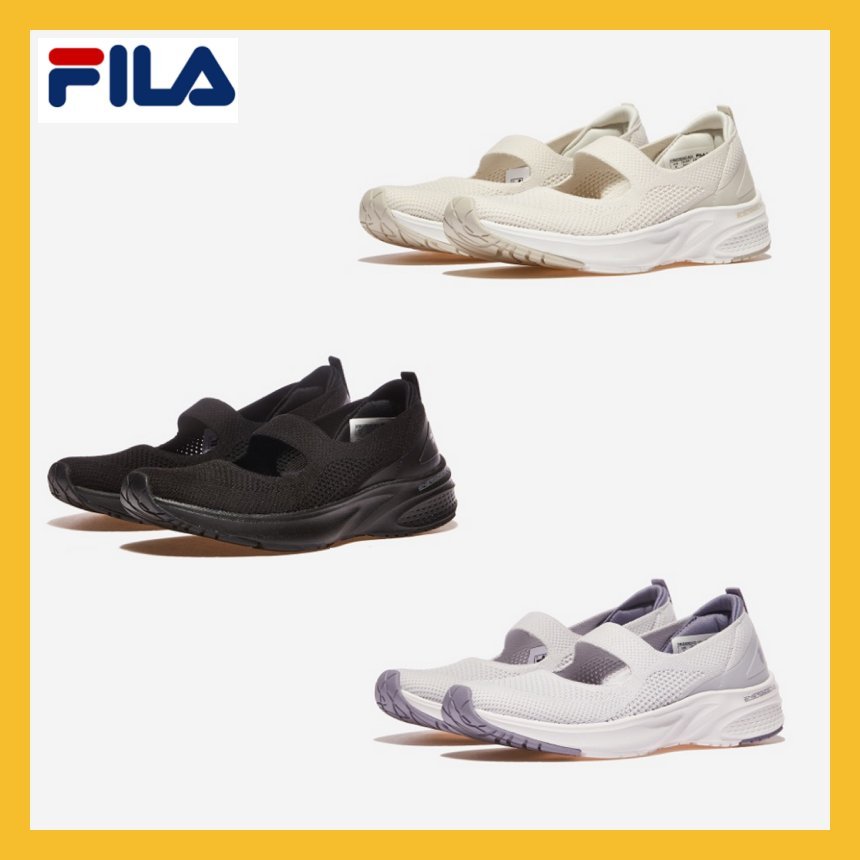
| Slip-on shoes | Model-dependent | Instep height, side pressure, heel hold |
These categories are only a starting point. The exact model matters more than the category.
How to Check if a Fila Shoe Is Wide Enough
A proper fit should feel secure at the heel and roomy at the toes. Your toes should not be squeezed together, and the widest part of your foot should sit over the widest part of the shoe.
Use this check when trying on Fila shoes:
- Try them on later in the day. Feet often become slightly larger after walking and standing.
- Wear the socks you plan to use. Thick work socks can change the fit.
- Stand up. Your foot spreads under body weight.
- Check the longest toe. Leave about a thumb’s width of space in front.
- Check the sides. The upper should touch your foot lightly, not create hard pressure.
- Walk for several minutes. Watch for rubbing, sliding, or toe contact.
- Bend and turn. The shoe should not pinch when your foot moves.
- Compare both feet. One foot is often slightly larger.
A shoe that feels tight in the store is unlikely to become truly wider with normal wear. Some materials soften, but they do not reliably create a new size or width.
Signs that the shoe is too narrow
A Fila shoe may be too narrow if:
- Your little toe touches the side
- Your toes overlap or cannot spread
- The upper bulges over the edge of the sole
- You see red marks after removing the shoe
- A bunion presses against the sidewall
- Your foot goes numb or tingles
- Your heel slips because you chose a longer size for width
Pain is not a normal break-in sign. Remove the shoe and reassess the fit if you feel sharp pain, burning, numbness, or repeated rubbing.
Signs that the shoe is too wide or too loose
A shoe can also be too roomy. Look for:
- Heel movement with each step
- Your foot sliding forward
- Wrinkling across the upper
- Your toes gripping to keep the shoe on
- Blisters at the heel
- Instability during turns
The goal is not the widest shoe possible. The goal is enough width without losing control.
How to Measure Your Feet for Fila Shoes
Measuring both feet can reduce the chance of choosing the wrong Fila size. Use the larger foot when selecting the size, but use width measurements to decide whether you need a wide version.
What you need
- Two sheets of paper
- A pencil
- A ruler or measuring tape
- The socks you plan to wear
- A flat floor
Measurement steps
- Put one sheet of paper on a hard floor.
- Stand on it while wearing your usual socks.
- Keep your weight evenly spread.
- Trace around the foot, or mark the heel and longest toe.
- Measure from the heel mark to the longest toe.
- Measure across the widest part of the foot.
- Repeat with the other foot.
- Compare the measurements with the current Fila US size chart.
Do not measure while sitting. A seated measurement may understate the length and width your foot needs when standing.
Fila’s official US sizing information should be used for the specific product and size system. A generic shoe chart can help you start, but it should not replace the product’s own chart. See the Fila US size guide and the individual product page before ordering.
Why width measurements need care
Width is not only a number. Two shoes can have the same inside width but feel different because one has:
- More room near the toes
- More depth over the instep
- A softer upper
- A different heel shape
- A more curved or straight sole
For that reason, measurements narrow the choice but do not guarantee comfort.
A simple fit example
Suppose your left foot measures slightly wider than your right foot. A standard-width Fila shoe may fit the right foot but press on the left. In that case, try the next width option before trying a longer size.
If no wider version exists, a different model may work better. Going up one full size can add length without adding the side room your forefoot needs.

Should You Buy Fila Shoes in a Larger Size for More Width?
Usually, no. A longer shoe does not provide the same fit as a wider shoe.
Sizing up may create:
- Heel slip
- Extra creasing
- Forward foot movement
- Poor control
- Toe gripping
- Blisters
If the length is correct but the sides feel tight, look for a wide version or another model with a broader toe box. If the shoe is tight only across the instep, a different lacing method may help, but lacing cannot fix a narrow toe box.
When a half-size increase may help
A half-size increase may be reasonable when:
- Your longest toe touches the front
- The shoe is short rather than narrow
- Your foot grows slightly during the day
- The brand’s size chart supports the change
- The heel still stays secure
Try the shoe while standing and walking. Do not keep a larger size if your heel lifts or your foot slides.
Can You Stretch Fila Shoes for Wide Feet?
You may be able to soften or slightly expand some leather or flexible synthetic materials, but stretching has limits. It cannot reliably turn a standard-width shoe into a true wide shoe.
Avoid aggressive stretching if:
- The shoe has a rigid synthetic upper
- The pressure comes from the sole shape
- The shoe causes numbness
- You have diabetes or reduced foot sensation
- You have a painful bunion or other foot condition
People with reduced sensation may not notice pressure or skin damage early. The American Diabetes Association advises people with diabetes to pay close attention to footwear and foot health. If you have diabetes, neuropathy, circulation problems, or a foot wound, ask a podiatrist about shoe fit instead of relying on stretching.
A shoe repair professional may be able to make a small adjustment to some materials. That work does not guarantee that the shoe will retain its support or comfort.

Are Fila Shoes Good for Bunions or Very Wide Feet?
Fila shoes may work for mild width needs, but they are not automatically suitable for bunions or very wide feet. A bunion needs room at the base of the big toe, while a general wide foot may need more room across the entire forefoot.
Look for:
- A wide or extra-wide option
- A soft, flexible upper
- A rounded toe box
- No seam over the bunion
- Enough depth for the toes
- A stable heel
- A return policy that allows an exchange
Avoid relying on a thick cushion alone. Cushioning can make a shoe feel soft while the upper still presses on the foot.
The American Academy of Orthopaedic Surgeons recommends choosing shoes with enough room for the toes and avoiding shoes that squeeze the foot. Persistent pain, swelling, skin breakdown, or worsening deformity deserves evaluation by a qualified health professional.

How to Make Fila Shoes More Comfortable on Wide Feet
If the shoe is only slightly snug and does not cause pain, a few adjustments may improve comfort:
- Loosen the lower lace rows
- Use a thinner sock
- Remove a removable insole to test extra depth
- Use a footbed designed for the shoe’s available space
- Wear the shoes for short periods first
- Check for seams or overlays that press on the toes
Do not remove the insole if it makes the shoe unstable or removes needed support. Do not use inserts to force a tight shoe to fit. An insert takes up space and may make a narrow shoe tighter.
For work or exercise, test the shoes before relying on them for a full shift or long walk. Comfort during a five-minute try-on does not always predict comfort after several hours.
Fila Wide-Foot Fit: Common Mistakes to Avoid
The most common mistake is treating a brand as if every model has the same fit. Fila shoes can differ in width, depth, materials, and purpose.
Avoid these errors:
- Assuming a chunky sole means a wide interior
- Buying a longer size instead of a wider size
- Ignoring the larger foot
- Trying shoes only while seated
- Testing them with the wrong socks
- Removing the insole without checking stability
- Keeping shoes that cause numbness or pain
- Trusting a retailer’s generic width label without checking the model
- Skipping the return policy
- Expecting stretching to solve major width problems
Product listings can also change. Confirm the current model name, width, size range, and return terms before you buy.
A Practical Fila Buying Checklist
Use this checklist before ordering:
- Measure both feet while standing.
- Check the current Fila US size chart.
- Look for a stated wide or extra-wide width.
- Review photos of the toe box and upper.
- Check whether the insole is removable.
- Read recent fit comments as clues, not proof.
- Confirm the seller’s return and exchange policy.
- Try the shoes with your normal socks.
- Walk on a clean indoor surface first.
- Stop if you feel pain, numbness, burning, or strong pressure.
The best evidence is your own fit check under the conditions in which you will use the shoes.
Frequently Asked Questions
Do Fila shoes run wide or narrow?
Fila shoes do not have one consistent width across all models. Some may feel roomy, while others fit closer to standard width or narrow in the toe box. Check the individual model rather than relying on the brand name.
Are Fila sneakers available in wide sizes?
Some Fila models may be sold in wide widths through US retailers, but wide-size availability depends on the model and size. Look for an explicit width label such as Wide or 2E. If the product page lists only a standard width, do not assume it will fit like a wide shoe.
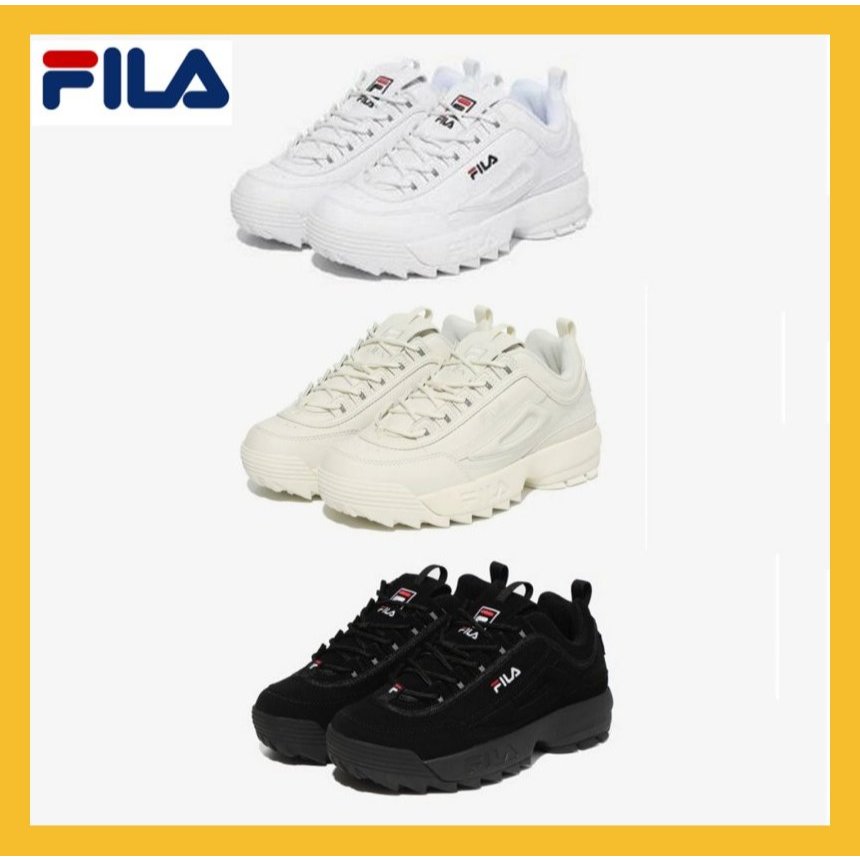
Are Fila Disruptor shoes good for wide feet?
The answer depends on your foot shape and the exact Disruptor version. A chunky outsole does not prove that the toe box is wide. Try the shoes with your normal socks and check for side pressure, toe contact, and heel movement.
Are Fila shoes good for standing all day?
Some Fila work or walking models may be suitable for long periods of standing, but comfort depends on fit, cushioning, stability, and your work surface. A shoe that fits tightly across the forefoot can become uncomfortable during a long shift, even if its midsole feels soft.
How much room should be in front of the toes?
Leave roughly a thumb’s width between your longest toe and the front of the shoe while standing. The exact amount depends on your foot and activity, but your toes should not touch the front when you walk downhill or stop suddenly.
What should I do if Fila shoes hurt my feet?
Stop wearing them if they cause sharp pain, numbness, burning, blisters, or repeated pressure. Check the size and width, then exchange them for a wider model or a different shoe shape. Seek professional advice for ongoing pain, wounds, swelling, or symptoms linked to diabetes or reduced sensation.
Bottom Line: Are Fila Shoes Good for Wide Feet?
Fila shoes can be good for wide feet, but only some models will provide the right fit. Look for a documented wide width, a rounded toe box, flexible materials, and a secure heel. Do not choose a longer size as a substitute for width.
Measure both feet, confirm the current US product details, and test the shoes while standing and walking. If the sides press on your toes or bunion, the model is not a good fit—even if the shoe feels soft or looks roomy.

Michael Smith is the Content Strategist behind The Style Hub, where fashion meets function. With a keen eye for trends and a passion for everyday style, he curates content that helps readers make smarter, more stylish choices—from the perfect pair of sneakers to must-have accessories. Michael specializes in breaking down fashion into practical, wearable insights, making style accessible for everyone. When he’s not researching the latest trends, he’s exploring how comfort, innovation, and timeless design come together in modern fashion.