Are Sandals Good For Walking: Comfort And Support Guide
Introduction
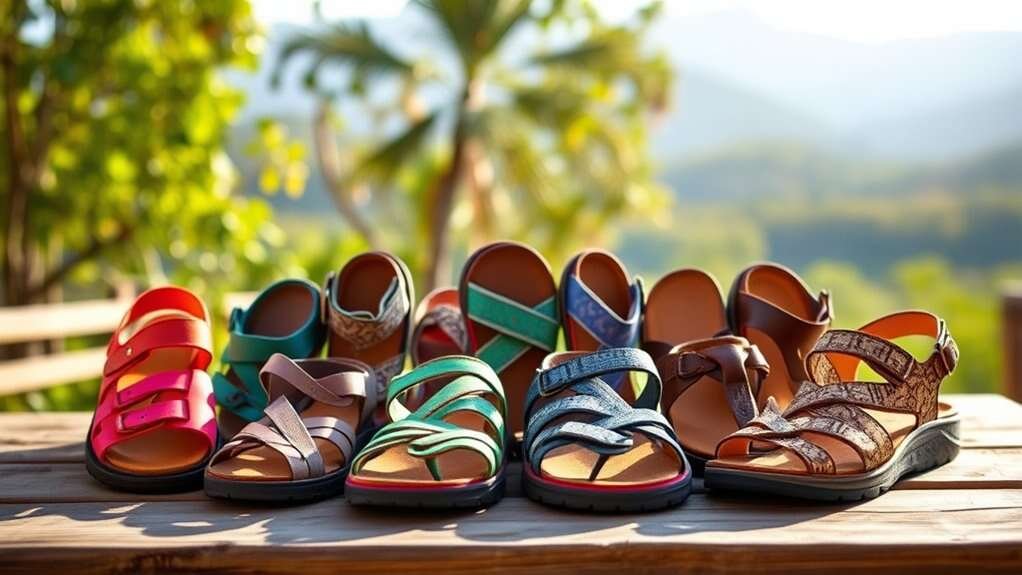
Sandals can be good for walking when they fit well, hold your foot in place, and match the surface and distance. They work well for short walks, warm weather, travel, beaches, and casual daily use. But thin flip-flops or loose slides may cause sore feet, blisters, ankle strain, or trips during long walks.
The best choice depends on more than the sandal’s look. Support, grip, fit, walking surface, and your foot health all matter. A sandal that feels fine for a short walk to a U.S. coffee shop may not be right for a full day at a theme park, a city tour, or a hike.
This guide explains when sandals work, when they do not, and how to choose a safer pair.

When Are Sandals Good for Walking?
Sandals are usually good for walking when they have a firm sole, secure straps, enough room for the toes, and a shape that supports your foot. They should stay on your foot without making you grip the sole with your toes.
A walking sandal may be suitable for:
- Short walks around town
- Travel and sightseeing
- Warm-weather errands
- Boardwalks and paved paths
- Casual work settings
- Beach access and pool areas
- Light trails, if the sandal is made for trail use
Sandals become less useful when the walk is long, fast, steep, wet, or uneven. Open footwear also leaves your toes and skin more exposed to rocks, hot pavement, sharp objects, and sun.
The American Podiatric Medical Association advises people to choose shoes that fit well and provide suitable support. Its general footwear guidance applies to sandals as well as closed shoes: comfort, fit, and purpose should guide the choice.
Sandals versus walking shoes
Walking shoes usually offer more protection and stability. They also cover the foot and often hold the heel more firmly. Sandals offer better airflow and may feel cooler, but they expose more of the foot and can provide less support.
Neither option is best for every walk. A supportive sandal may be better than a stiff, poorly fitted sneaker. A walking shoe may be safer than a flat sandal on uneven ground.
The key question is not, “Are sandals good or bad?” It is, “Can this pair control my foot during this walk?”

What Makes a Sandal Good for Walking?
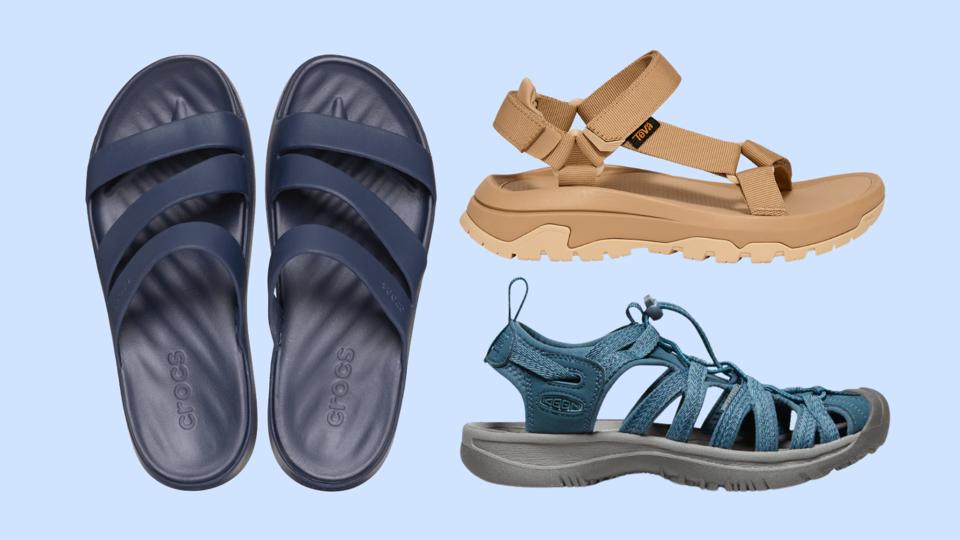
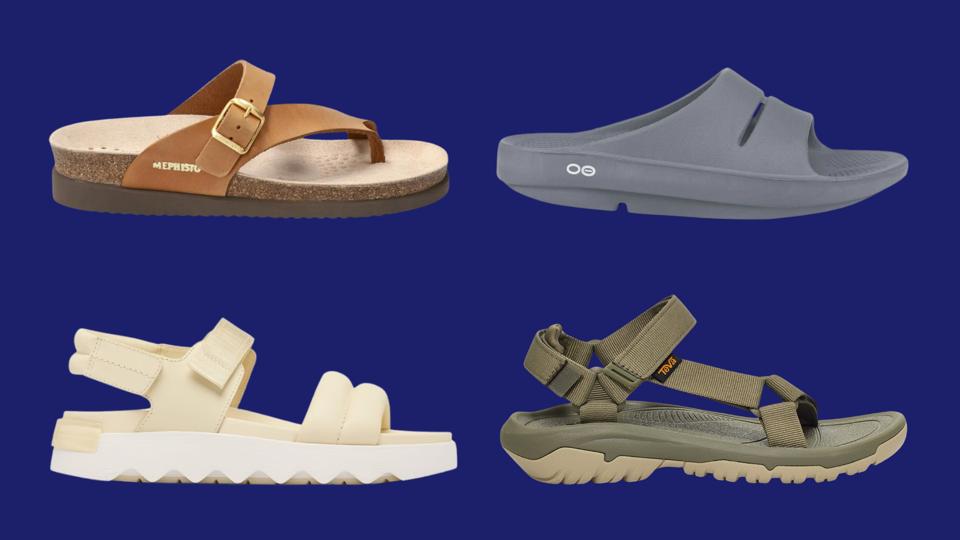
A good walking sandal should control movement without squeezing the foot. Look for five main features: secure fit, useful cushioning, a stable sole, good traction, and a foot-shaped design.
1. Secure straps
The sandal should stay attached to your foot as you walk. Useful designs may include:
- An adjustable heel strap
- A strap across the midfoot
- Adjustable forefoot straps
- A secure ankle or instep closure
Your toes should not need to curl down to keep the sandal in place. Toe gripping can make your feet tired and may increase pressure on the toes.
Slides and loose flip-flops often lack heel control. They may be fine for a locker room or a very short trip, but they are not usually the best choice for miles of walking.
2. A firm, supportive sole
The sole should bend near the toes but should not fold in the middle. A completely flat, thin sole may offer little protection from hard pavement.
A stable sole can help spread pressure across the foot. It may also reduce the need for the foot to work constantly to keep the sandal in place.
This does not mean a sandal must be stiff or heavy. Too much stiffness can make normal walking feel awkward. The goal is a balance between support and natural movement.
3. Enough cushioning
Cushioning can make hard surfaces feel more comfortable. It may help during walks on concrete, asphalt, or indoor floors.
More cushioning is not always better. A very soft sole can feel unstable, especially on slopes or uneven ground. If the foot sinks or wobbles, the sandal may be harder to control.
Choose cushioning based on the walk and your comfort. Test the sandal on a firm floor before wearing it for a full day.
4. Traction
The bottom of the sandal should have a tread pattern that grips the surfaces you expect to use. Smooth soles can slip on wet sidewalks, tile, pool decks, or rocks.
Check the tread before each season. Worn rubber may look acceptable but provide less grip. Replace sandals when the sole is badly worn, cracked, or uneven.
5. A suitable shape
The sandal should match the natural shape of your foot. Your heel should sit fully on the footbed. Your toes should not hang over the front or touch the edge.
There should be enough width for the toes to rest without being pushed together. The straps should not rub over bunions, hammertoes, scars, or other sensitive areas.
Are Flip-Flops Good for Walking?
Most basic flip-flops are not a good choice for long walks. They often have a thin sole, little arch support, no heel strap, and a narrow toe post. These features can make the foot work harder to keep the sandal attached.
Flip-flops may be reasonable for:
- Showers and locker rooms
- Walking across a hotel room
- A short trip to the pool
- Brief beach use
- Quick errands when the ground is even
They are less suitable for:
- Long city walks
- Hiking
- Running
- Driving for long periods
- Uneven trails
- Wet or slippery surfaces
- All-day events
A flip-flop can also change your stride. You may take shorter steps or grip with your toes. This may lead to tired feet, soreness near the heel, or pain in the calves and lower legs.
Not every thong-style sandal is the same. Some have a thicker footbed, a supportive shape, and an ankle or heel strap. The design matters more than the label.

Are Sandals Good for Long-Distance Walking?
Sandals can work for long-distance walking if they are designed for extended use and fit your feet well. However, closed walking shoes are often the safer default for long distances because they offer more protection and heel control.
Before a long walk, check these points:
| Feature | Better for long walks | Riskier for long walks |
|---|---|---|
| Fit | Secure, adjustable, no slipping | Loose or rubbing |
| Sole | Stable with moderate cushioning | Very thin or very soft |
| Heel | Held in place | Slides out with each step |
| Tread | Clear, durable grip | Smooth or worn |
| Toe room | Toes lie flat and free | Toes hit the edge |
| Upper | Soft and secure | Hard edges or loose straps |
| Surface | Paved or smooth paths | Rocks, steep slopes, or debris |
Do not test a new pair on a full-day walk. Wear them first for short periods. Increase the distance only if your feet remain comfortable during the walk and later that day.
A sandal that causes mild rubbing at mile one may cause a blister by mile five. Foot pain can also change your stride and place stress on the knees, hips, or back.
Walking at a theme park or while traveling
Theme parks, airports, city tours, and vacation areas often involve many hours on hard surfaces. Supportive sandals may work for some people, but bring a second pair of suitable shoes if possible.
Pack blister protection, clean socks, and shoes that you have already worn. Give your feet a break during the day. If a strap creates a hot spot, stop and adjust it before the skin breaks.

Are Sandals Good for Hiking or Uneven Trails?
Only sandals made for hiking or outdoor use should be considered for trails. They should have a secure heel strap, strong tread, a protective footbed, and materials that handle water and dirt.
Even then, hiking sandals have limits. Open toes can expose you to:
- Rocks and roots
- Thorny plants
- Insects
- Hot sand
- Loose gravel
- Falling objects
- Scrapes and cuts
Closed hiking shoes or boots are usually a better choice for rough trails, steep terrain, cold weather, or areas with sharp rocks. They also provide more protection if you lose your balance.
A hiking sandal may be useful on a warm, well-maintained trail near a U.S. campground. It is not automatically suitable for mountain routes, desert paths, or technical terrain.
Use the trail conditions as the deciding factor. Check the weather, surface, elevation, and local park guidance before choosing open footwear.
Can Sandals Cause Foot Pain?
Sandals can contribute to foot pain when they do not fit or support the way you walk. They are not the only possible cause. Pain may also come from a sudden increase in walking, an existing foot problem, or an injury.
Common symptoms and possible causes include:
| Symptom | Possible sandal-related cause |
|---|---|
| Heel soreness | Poor cushioning, lack of support, or sudden extra walking |
| Ball-of-foot pain | Thin sole or pressure from the forefoot |
| Blisters | Rubbing straps, sweat, or loose movement |
| Toe pain | Toe gripping or a tight front strap |
| Arch fatigue | A footbed that does not suit your foot |
| Ankle soreness | Loose fit or poor stability |
| Skin irritation | Rough material, heat, or trapped moisture |
Stop wearing the sandal if pain increases, your skin breaks, or you begin to limp. Rest, keep the area clean, and switch to footwear that does not cause rubbing.
Seek medical care for severe pain, swelling, numbness, an open wound, signs of infection, or pain that does not improve. People with diabetes, reduced feeling in the feet, poor circulation, or a history of foot ulcers should use extra care. The CDC advises people with diabetes to check their feet and address foot problems promptly.
A podiatrist can help if you have repeated pain or a known condition such as plantar fasciitis, arthritis, bunions, or flat feet. General sandal advice cannot replace an exam.

How Should Walking Sandals Fit?
A walking sandal should feel secure at once. Do not expect a poor fit to improve with time.
Use this quick fit check:
- Stand with your full weight on both feet.
- Make sure your heel sits on the footbed.
- Check that your toes do not hang over the front.
- Confirm that the widest part of your foot is not squeezed.
- Walk on a firm surface.
- Watch for slipping, rubbing, pinching, or toe gripping.
- Adjust each strap until the sandal feels secure but not tight.
Shop later in the day if possible. Feet often swell after hours of standing and walking. Try the sandals with the socks you plan to wear, if any.
Leave enough room for natural toe movement. Do not use a sandal with a strap that cuts into the skin. At the same time, avoid a loose fit that lets your foot slide forward.
Replace sandals when:
- The footbed has compressed unevenly
- The tread is smooth
- The sole has cracks
- The straps stretch or break
- Your foot begins to slide
- The sandal causes new pain
- Your toes or heel extend beyond the edges

How to Break In Sandals Safely
Most sandals do not need a painful break-in period. If they cause strong rubbing from the start, the design or fit may be wrong.
Use this gradual plan: