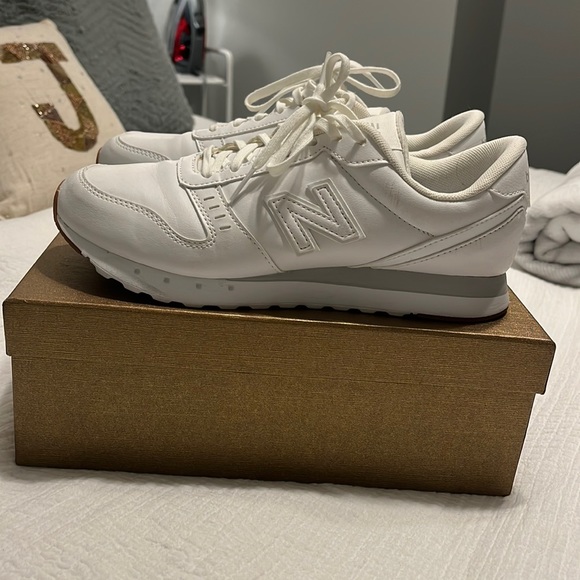
White New Balance shoes look fresh when they are clean, but dirt, grass, salt, and scuffs show fast. The safest way to clean them is to remove dry dirt first, then use a small amount of mild soap and cool water. Clean each material with the right method, and let the shoes air-dry away from heat.
This guide is for New Balance shoes sold and worn in the United States. It covers common materials such as mesh, knit fabric, leather, synthetic leather, rubber, and suede. Always check the care label first, since materials can vary by model.
Introduction
You do not need strong bleach or a washing machine to clean white New Balance shoes. In most cases, a soft brush, mild dish soap or laundry detergent, cool water, and a clean cloth will do the job.
The key is to use less water than you think. Too much water can soak the foam, loosen glue, stain the lining, or leave water marks. Heat can also warp the shoe or damage its shape.

What You Need Before You Start
Gather these basic supplies:
- A soft shoe brush or old toothbrush
- A clean microfiber cloth
- A small bowl
- Cool or lukewarm water
- Mild dish soap or mild laundry detergent
- A soft sponge
- Paper towels or a clean white towel
- A suede brush, if the shoe has suede panels
- Baking soda for odor control, if needed
Use a white cloth when possible. A colored cloth may transfer dye to white shoes.
Before cleaning, remove the laces and insoles. Take the shoes outside or place them over an old towel. This keeps loose dirt and dirty water from spreading around your home.
Do not start with water. Dry dust and grit can turn into muddy paste. That makes the cleaning job harder.
Check the Shoe Material First
The material decides how much water and pressure the shoe can safely handle.
| Shoe material | Safer cleaning method | Avoid |
|---|---|---|
| Mesh or knit | Mild soap, a soft brush, and light water | Hard scrubbing and soaking |
| Smooth leather | Damp cloth with mild soap | Excess water and rough brushes |
| Synthetic leather | Damp cloth and mild soap | Strong solvents and heat |
| Suede or nubuck | Dry suede brush and targeted treatment | Water, soap, and soaking |
| Rubber sole | Soap, water, and a soft or medium brush | Scrubbing the upper with a harsh eraser |
| Foam midsole | Damp cloth or soft brush | Heavy pressure and strong chemicals |
New Balance uses different materials across its running, walking, lifestyle, and trail shoes. A shoe may also contain more than one material. For example, one pair may have mesh on the upper, suede near the heel, and rubber on the outsole.
If the shoe contains suede or nubuck, treat that part as a special case. Do not use the same wet method on the whole shoe.

How to Clean White New Balance Mesh Shoes
This method works well for many white mesh, knit, and fabric New Balance shoes.
1. Remove the laces and insoles
pull out the laces and set them aside. Remove the insoles only if they come out easily.
Removing these parts lets you clean the tongue, eyelets, and inside edge of the shoe. It also helps the shoe dry more evenly.
2. Brush away dry dirt
Use a dry soft brush to clean the upper, seams, tongue, and outsole. Brush in one direction first. Then use short strokes on areas with packed dirt.
Use light pressure. Hard brushing can rough up mesh fibers and make the surface look fuzzy.
3. Mix a mild cleaning solution
Add a few drops of mild soap to a bowl of cool or lukewarm water. The water should look only slightly soapy.
You do not need a strong mix. A useful starting point is about one teaspoon of mild soap in two cups of water. This is a cleaning guide, not a fixed rule. Use less soap if the shoe has a delicate knit upper.
4. Test a hidden area
Dip a cloth into the solution and wring it out well. Dab a small hidden spot near the tongue or heel.
Wait a few minutes. Check for color transfer, texture change, or water marks. If the material changes, stop and use the care instructions for that model.
5. Clean the upper in small areas
Dip a soft brush into the soapy water. Tap off extra water. Work on one small section at a time.
Use gentle circles on smooth areas. Use short strokes that follow the weave on mesh or knit. Do not flood the upper.
Wipe away loosened dirt with a damp microfiber cloth. Rinse the cloth often in clean water. A dirty cloth can spread grime back onto the shoe.
6. Clean the tongue and seams
The tongue often holds sweat and dust. Clean it with a damp cloth and light pressure.
Use a soft toothbrush around the eyelets and stitching. Avoid pulling at loose threads. If the tongue has foam or padding, use very little water.
7. Clean the rubber sole
Use the same mild soap solution on the rubber outsole and midsole. A soft or medium brush can help with tread grooves.
For gray marks on a rubber midsole, a damp melamine sponge may work. Use very light pressure and keep it on the rubber. A melamine sponge is mildly abrasive and can remove color or texture from fabric, leather, and suede.
8. Remove soap
Wipe the shoe with a clean, damp cloth. Repeat until the surface no longer feels slippery.
Do not rinse the whole shoe under a faucet. Running water can soak the lining and foam.
9. Air-dry the shoes
Stuff the shoes loosely with plain white paper towels. This helps them hold their shape and pulls out some moisture.
Place them in a cool, well-ventilated room. Keep them away from radiators, hair dryers, clothes dryers, fireplaces, and direct hot sunlight.
Let the shoes dry fully before wearing them. Depending on the material, airflow, and humidity, this may take several hours or about a day.

How to Clean White Leather New Balance Shoes
Smooth leather needs less water than mesh. Start with a dry wipe, then use a damp cloth.
- Remove loose dirt with a soft brush or dry cloth.
- Mix a few drops of mild soap with cool water.
- Dampen a microfiber cloth and wring it out.
- Wipe the leather in small sections.
- Use a second cloth dampened with clean water to remove soap.
- Dry the surface with a clean towel.
- Let the shoes air-dry at room temperature.
Do not scrub leather with a stiff brush. Do not soak it. Water can darken leather for a time and may leave uneven marks as it dries.
After cleaning, the leather may feel less smooth. If the care label allows it, apply a small amount of a leather conditioner made for white leather. Test it first in a hidden area. Avoid colored creams or polishes unless they are made for the exact material and shade.
Never use household bleach, acetone, nail polish remover, or strong degreasers on white leather. These products may strip the finish or cause yellow marks.

How to Clean White Suede or Nubuck New Balance Shoes
Suede and nubuck require a dry-first method. Water and soap can flatten the nap, create dark patches, or leave rings.
Follow these steps:
- Let wet dirt dry before brushing.
- Use a suede brush to lift loose dirt.
- Brush gently in one direction.
- Use a suede eraser on small dry scuffs.
- Brush again to restore the surface texture.
- Let the shoe dry naturally if it became damp.
Do not use the mesh-shoe cleaning method on suede panels. If a stain remains, use a cleaner labeled for suede or nubuck. Follow its label and test it in a hidden spot.
For oil, grease, heavy salt, or dye stains, home cleaning may not fully restore the material. A shoe-care professional may be safer than repeated scrubbing.

How to Wash White New Balance Laces and Insoles
Laces can often be cleaned separately.
Place the laces in a bowl of cool water with a small amount of mild detergent. Rub them gently between your fingers. Rinse until the water runs clear, then press them in a towel and let them air-dry.
Do not use bleach to make white laces brighter. Bleach can weaken fibers and cause yellowing over time.
For removable insoles, wipe the surface with a damp cloth and mild soap. Do not soak foam insoles unless the care label says it is safe. Press them with a towel and let them dry fully before putting them back.
If the insoles still smell after cleaning, sprinkle a small amount of baking soda on them. Leave it for several hours, then shake or vacuum it off. Keep baking soda away from wet suede and avoid leaving powder packed inside the shoe.

How to Remove Common Stains
Different stains need different levels of care. Start with the least aggressive method.
Grass stains
Brush away dry grass. Dab the mark with mild soap and cool water. Work from the outside of the stain toward the center.
Do not scrub hard. Grass marks may need two or three gentle cleaning passes.
Mud
Let mud dry first. Brush off as much as possible. Then use the mild soap method for the shoe material.
Cleaning wet mud usually spreads it across the upper.
Road salt
Salt marks are common in colder parts of the United States. Wipe them with a cloth dampened with cool water. Use a fresh part of the cloth as the salt lifts.
On leather, wipe gently and dry the shoe at room temperature. Salt can dry the surface, so follow the material care instructions after cleaning.
Scuff marks
Try a damp microfiber cloth first. For rubber midsoles, use a soft brush or a lightly used melamine sponge.
Do not use a melamine sponge on mesh, knit, suede, nubuck, or finished leather.
Oil or grease
Blot fresh oil with a clean paper towel. Do not rub it deeper into the material.
On fabric, a small amount of mild detergent may help. On suede, use a suede-safe product. A deep oil stain may not come out without changing the appearance of the material.
Yellow marks
Yellowing may come from age, oxidation, leftover soap, glue, or exposure to heat. Strong bleach rarely fixes the cause and can make the damage worse.
Clean away soap residue, let the shoe dry slowly, and avoid heat. If the yellow area is caused by material aging or glue, cleaning may not restore the original white color.

Common Mistakes to Avoid
Avoid these cleaning mistakes if you want your New Balance shoes to keep their shape and finish:
- Do not put them in the washing machine unless the model’s care instructions allow it. Machine cycles can cause twisting, soaking, and damage to glue or foam.
- Do not put them in a clothes dryer. High heat can shrink fabric, warp foam, and affect adhesives.
- Do not use chlorine bleach. It can weaken fibers and cause yellow stains.
- Do not use hot water. Cool or lukewarm water is safer for most shoe materials.
- Do not soak the shoes. Wet padding can take a long time to dry and may develop an odor.
- Do not scrub every material the same way. Suede, leather, mesh, and rubber have different limits.
- Do not use colored towels. Dye can transfer to a white upper.
- Do not wear the shoes while they are still damp. Damp lining can increase odor and slow drying.
- Do not cover wet shoes with plastic. Trapped moisture needs a way to escape.
New Balance care advice commonly favors gentle hand cleaning and air drying. The product tag or model-specific instructions should take priority when they differ.

What to Do If the Shoes Still Look Dirty
If one cleaning pass does not work, do not immediately use a stronger chemical.
First, let the shoes dry completely. Some marks look worse while the fabric is wet. Then inspect the stain again under normal light.
If the dirt remains:
- Repeat the mild soap method once.
- Use a cleaner made for the exact material.
- Treat only the stained area.
- Stop if the color, texture, or finish begins to change.
If the upper has permanent yellowing, deep dye transfer, worn fabric, cracked leather, or damaged suede, cleaning may not solve the problem. A professional shoe cleaner may help, but no cleaner can guarantee that an old or damaged shoe will return to its original white color.

How to Keep White New Balance Shoes Clean Longer
A short care routine can prevent heavy stains.
- Brush off dust after outdoor use.
- Wipe small marks as soon as they appear.
- Keep white shoes away from wet grass and muddy paths when possible.
- Use separate shoes for heavy rain, deep mud, or messy work.
- Store them in a cool, dry place with airflow.
- Do not store them in a sealed plastic bag while damp.
- Clean the laces and insoles when odor starts.
- Rotate shoes if you wear them every day.
A thin layer of dirt is easier to remove than a set-in stain. Think of cleaning like wiping a kitchen counter: a quick pass is easier than removing a week of buildup.
Frequently Asked Questions
Can I put white New Balance shoes in the washing machine?
Check the care label for your exact model first. Even when a machine cycle does not cause immediate damage, soaking and tumbling can affect the shape, glue, foam, or finish. Hand cleaning is the lower-risk choice for most white New Balance shoes.
Can I use baking soda to clean white New Balance shoes?
Baking soda is more useful for odor control than for cleaning the upper. It can be used dry on removable insoles, then brushed or vacuumed away. Do not use it as a rough paste on suede, leather, or delicate mesh.
Can I use toothpaste on white New Balance shoes?
Toothpaste is not a reliable shoe cleaner. Some formulas contain abrasives, dyes, or ingredients that leave residue. Use mild soap for the upper and a suitable brush for the rubber sole instead.
How do I dry New Balance shoes without making them yellow?
Rinse away soap residue with a clean damp cloth, then dry the shoes at room temperature in a ventilated area. Keep them away from high heat and strong direct sun. Yellowing can also come from aging or glue, so drying alone may not prevent every yellow mark.
How often should I clean white New Balance shoes?
Clean small marks as needed and do a fuller clean when dirt builds up. The right schedule depends on use, weather, and material. Frequent light cleaning is safer than rare, aggressive scrubbing.
Final Recommendation
To clean white New Balance shoes safely, remove dry dirt first, use mild soap with very little water, and clean each material according to its care needs. Treat mesh and rubber gently, use a damp cloth on leather, and keep suede and nubuck mostly dry.
Air-dry the shoes at room temperature, avoid bleach and heat, and test any cleaner in a hidden spot. If the shoes contain several materials, follow the most delicate material’s care method.

Michael Smith is the Content Strategist behind The Style Hub, where fashion meets function. With a keen eye for trends and a passion for everyday style, he curates content that helps readers make smarter, more stylish choices—from the perfect pair of sneakers to must-have accessories. Michael specializes in breaking down fashion into practical, wearable insights, making style accessible for everyone. When he’s not researching the latest trends, he’s exploring how comfort, innovation, and timeless design come together in modern fashion.