What Does The H Mean In Shoe Size: H Width Explained
Introduction
In the United States, the H in a shoe size usually refers to width, not length. However, H is not a universal U.S. shoe-width code. Depending on the brand or country, it may mean an extra-wide fit, a very wide fit, or a different width system altogether.
For example, a shoe marked 10H may be wider than a standard men’s 10. But you should always check the brand’s own size chart before buying. U.S. shoe widths often use codes such as B, D, 2E, 4E, and 6E, while H is more common in some British, European, work-boot, and specialty shoe systems.

What Does H Mean on a U.S. Shoe?
The letter H usually describes the shoe’s width. It does not normally describe the shoe’s length, heel height, or half-size.
The exact meaning depends on the maker. One brand may use H for an extra-wide shoe, while another may use numbers and letters such as 2E or 4E instead. Some brands do not use H at all.
This makes the label 10H incomplete without the brand’s sizing guide. The number may tell you the length, but the letter must be matched to that company’s width chart.
H does not have one fixed meaning
U.S. shoe widths are not controlled by one universal labeling system. Brands may use:
- Letters, such as B, D, E, or H
- Repeated E codes, such as 2E, 4E, and 6E
- Terms such as wide, extra wide, or X-wide
- Brand-specific fitting names
- Different systems for men’s, women’s, and children’s shoes
The same letter can therefore produce different results between brands.
H is often linked with a wide or extra-wide fit
When a company uses H as a width code, it often places H toward the wide or extra-wide end of its scale. That does not mean every H shoe has the same inside width.
Shoe width also changes with shoe length. A size 11 H may be wider than a size 8 H because many shoe lasts grow in both length and width as the size increases.
H is not the same as a half size
A half size is usually shown with:
- A fraction, such as 10½
- A decimal, such as 10.5
- A written label, such as 10 Wide
A letter H after the number usually points to width. Still, unusual labels can be used by workwear or specialty brands, so the product page remains the best source.
How U.S. Shoe Widths Usually Work
Most U.S. shoe widths use letters or repeated E codes. The scale is not identical for men, women, and children.
Here is a simplified guide:
| Common U.S. code | Typical meaning for men | Typical meaning for women |
|---|---|---|
| 2A or AA | Very narrow | Narrow |
| B | Narrow | Standard or medium |
| C | Narrow to medium | Slightly wide in some brands |
| D | Standard or medium | Wide in some brands |
| 2E or EE | Wide | Extra wide in some brands |
| 4E | Extra wide | Very wide in some brands |
| 6E | extremely wide | Specialty extra-wide fit |
This table is a general guide, not a universal conversion chart. For example, D is commonly a medium men’s width, while B is commonly a medium women’s width. The same letter can have a different role in another category.
Where does H fit?
H does not have a single place on the standard U.S. width scale. In a particular brand, H could be:
- Wider than standard
- Extra wide
- A specialty orthopedic width
- A width code borrowed from a non-U.S. sizing system
Do not assume that H equals 4E or 6E. A brand may use H to mean a similar width, but the codes are not automatically interchangeable.
Why width codes differ by gender
Traditional U.S. sizing systems use different width baselines for men and women. For example:
- Men’s D is often medium.
- Women’s B is often medium.
- Men’s 2E is often wide.
- Women’s D may be wide.
This is why a women’s shoe marked D is not necessarily the same width as a men’s shoe marked D.
The shoe’s shape also matters. A running shoe, dress shoe, work boot, and casual sneaker may all use the same size label but have different toe boxes and upper materials.

What Does H Mean in British Shoe Sizes?
In many British shoe systems, H commonly means an extra-wide fitting. This is one reason people in the United States may see H on imported shoes or on brands that use British fitting terms.
A British fitting letter is not always a direct match for a U.S. width code. A British H shoe may feel like an extra-wide U.S. shoe, but the fit depends on:
- The brand
- The shoe model
- The length size
- The shape of the last
- The material and construction
- Whether the shoe is for men, women, or children
For imported footwear, use the brand’s conversion chart rather than changing H into a U.S. code on your own.
H fitting versus U.S. H width
The terms may look similar, but they can belong to different systems:
| Label | What it may mean |
|---|---|
| U.S. H | A brand-specific width code |
| British H fitting | Often an extra-wide fitting |
| 4E | A common U.S. extra-wide code |
| 6E | A very wide U.S. code used by some brands |
These labels should not be treated as exact equivalents. If a British shoe lists an H fitting, check the brand’s foot measurements in inches or millimeters when available.
How to Tell Whether an H Shoe Will Fit
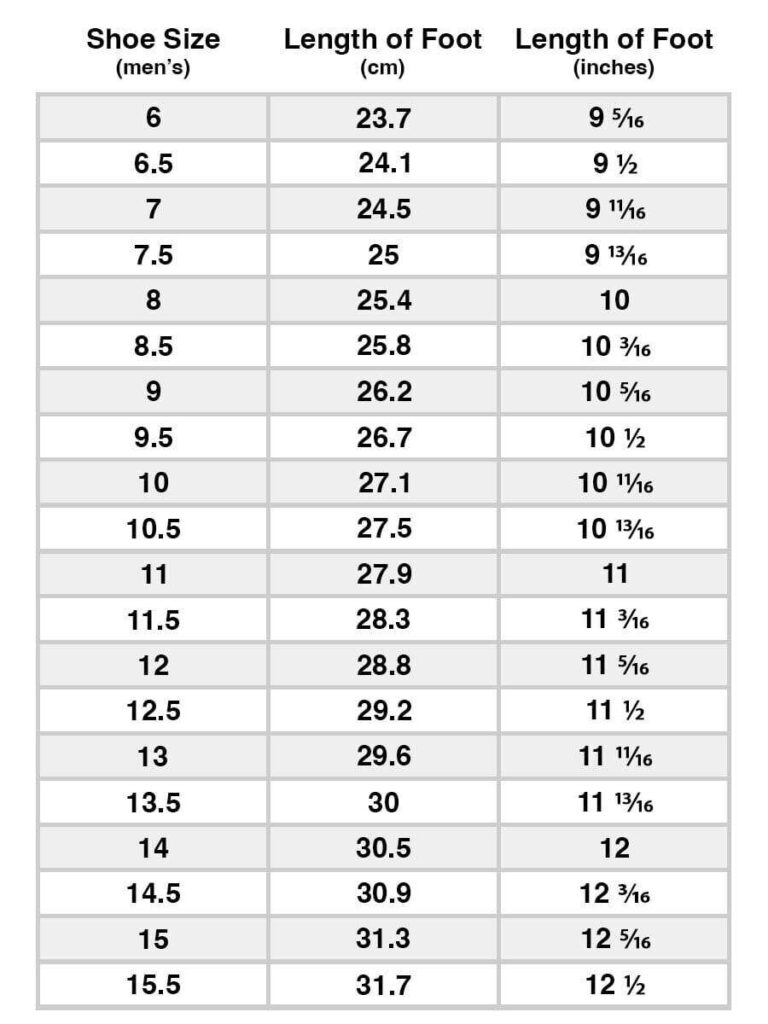
The safest method is to compare your foot measurements with the brand’s chart. Do not choose an H shoe based only on the letter.
Step 1: Measure both feet
Measure your feet at the end of the day, when they may be slightly larger. Wear the socks you plan to use with the shoes.
Place a sheet of paper on a hard floor. Stand with your full weight on one foot and trace around it, or have another person mark the heel and longest toe. Measure:
- Heel to longest toe for length
- The widest part of the forefoot for width
Repeat the process for the other foot. Use the larger measurement when choosing a size.
Step 2: Compare the measurements with the brand chart
Look for a chart that lists:
- Foot length
- Foot width
- Size
- Width code
- Men’s, women’s, or children’s category
A chart based only on a generic letter may not tell you enough. A measurement in inches or millimeters gives you a better comparison.
Step 3: Check the shoe shape
A wide label cannot fix every fit problem. Look at the:
- Toe-box shape
- Instep height
- Heel width
- Arch area
- Opening of the shoe
- Stretch of the upper
A shoe can be wide at the forefoot but narrow across the instep. Another can have a roomy toe box but a loose heel.
Step 4: Test the fit safely
When trying the shoes on, check that:
- Your toes can move without hitting the front.
- The widest part of your foot sits over the widest part of the shoe.
- The upper does not press hard against your foot.
- Your heel stays in place while walking.
- You do not feel numbness, burning, or sharp pressure.
Do not rely on a break-in period to solve strong pain or pressure. Shoes may soften, but they usually do not become meaningfully longer.

H Width Examples
The following examples show why the label must be read with the brand’s chart.
Example 1: Men’s 10H
A men’s shoe labeled 10H may mean:
- Size 10 in length
- H width according to that brand
- A wide or extra-wide fit
It does not automatically mean the same width as a men’s 10 4E.
Example 2: Women’s 8H
A women’s shoe labeled 8H may use a specialty width system. In one brand, H could be very wide. In another, it may be a code used for a particular last or fitting range.
A women’s 8H should not be compared with a men’s 8H without checking both charts.
Example 3: A British size with H fitting
A shoe listed as UK 9 H may use a British fitting system. The H may indicate extra width, but the length is still a UK size.
You may need to convert the UK length to a U.S. length while keeping the brand’s width guidance. Converting the number alone is not enough.
H Width Compared With Wide and Extra-Wide
“H,” “wide,” and “extra wide” are not always interchangeable.
A product page may use:
- Wide
- W
- XW
- EW
- 2E
- 4E
- 6E
- H
The term wide is a description. The code H is a label. A wide shoe from one company may have less room than an H shoe from another.
When possible, compare actual measurements rather than names. Also check whether the measurement is taken from the shoe, the insole, or the intended foot. These numbers are not always measured in the same way.
A practical comparison
| If the label says… | Start by checking… |
|---|---|
| H | The brand’s width definition |
| Wide or W | Whether the company uses a standard or custom scale |
| 2E or EE | Whether the shoe is a men’s or women’s model |
| 4E | The stated foot-width range |
| UK H | The British fitting chart and U.S. length conversion |

Common Mistakes When Reading H Shoe Sizes
Assuming H always means extra wide
H often signals a wide fit, but it does not have one fixed U.S. meaning. Treat it as a brand-specific code until the chart confirms it.
Using the same width code for men and women
Width letters can shift by category. A men’s D and women’s D may represent different positions on their respective scales.
Converting the length but ignoring the width
A U.S. size conversion may give you the right length but the wrong width. Always convert both parts of the size.
Measuring only one foot
Many people have one foot that is slightly longer or wider. Use the larger foot when checking the chart.
Buying by size alone
A size label does not describe the full fit. Two shoes with the same number and width can feel different because their lasts and uppers differ.
Ignoring return terms
If the width code is unclear, check the seller’s return policy before ordering. Avoid wearing uncertain shoes outdoors until you know they fit.
When to Choose a Wide Shoe
A wider shoe may help when your foot spills over the sole, your toes feel cramped, or the upper presses across the forefoot. It may also help if your feet swell during long periods of standing or walking.
A wider shoe is not always the answer. Pain can come from the wrong length, a low toe box, poor arch support, a narrow heel, or a medical condition.
If you have diabetes, reduced sensation, poor circulation, or a foot wound, seek advice from a qualified health professional before relying on shoe labels alone. A painless pressure spot can still cause harm when sensation is reduced.

How to Find the Meaning of H on a Specific Shoe
Use this short checklist: