
How To Clean Nike Shoes With Mesh: Easy Safe Cleaning Guide
Clean Nike mesh shoes with a soft brush, mild soap, cool water, and careful air drying.
Knowing how to clean Nike shoes with mesh helps protect the fabric, color, shape, and comfort of your favorite pair. Mesh can trap dirt quickly, but harsh cleaners, hot water, and rough scrubbing can damage its fine fibers. This guide explains a safe, practical method for freshening mesh Nike sneakers at home, along with stain tips, drying advice, and mistakes to avoid.
What You Need to Clean Nike Mesh Shoes
Before learning how to clean Nike shoes with mesh, gather gentle tools. You do not need expensive products. Simple household items work well when used with care.
You will need:
• A soft shoe brush or clean toothbrush
• Mild liquid laundry detergent or gentle dish soap
• Two clean microfiber cloths
• A small bowl
• Cool or lukewarm water
• Paper towels or white towels
• A soft sponge
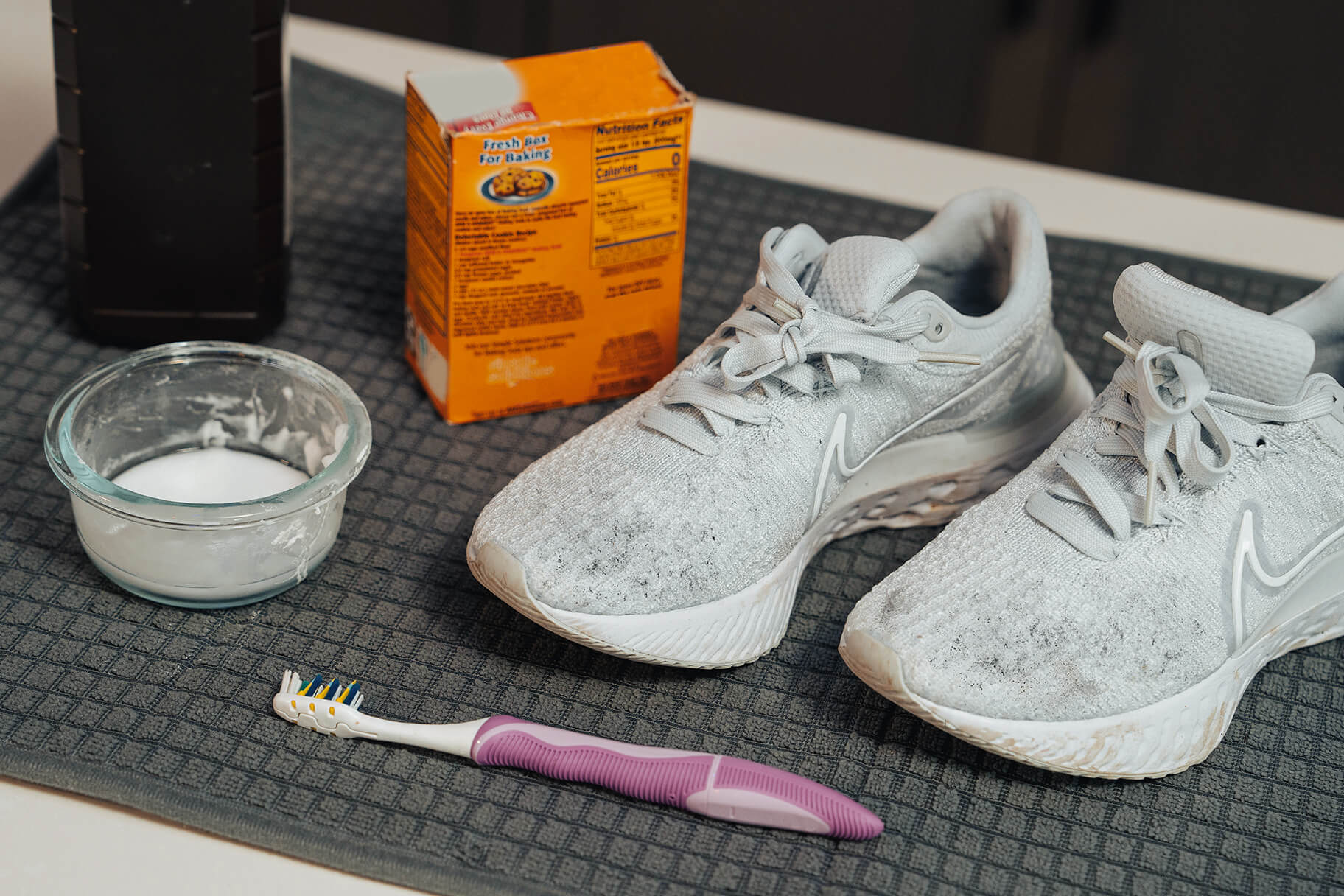
• Baking soda for odor control, if needed
Avoid bleach, strong stain removers, alcohol, acetone, and rough scrubbers. These products may fade the color, weaken the mesh, or damage synthetic coatings.
Check the shoe label first. Nike shoes use different mesh types, including woven textile mesh, engineered mesh, and synthetic mesh. The safest method is always the gentlest one.

How to Clean Nike Shoes With Mesh: Step-by-Step
The best way to clean Nike shoes with mesh is to remove dry dirt first, then use a small amount of mild soapy water. Work slowly and keep the shoes from becoming soaked.
1. Remove the laces and insoles
Take out the laces before cleaning. This lets you reach the tongue and the spaces around the eyelets.
Remove the insoles if they come out easily. Clean them separately with a damp cloth and mild soap. Do not twist or soak foam insoles because they can lose their shape and hold water for a long time.
2. Brush away loose dirt
Use a dry, soft brush to remove dust, sand, and dried mud. Brush in one direction instead of scrubbing back and forth.
Pay attention to the sole edge, heel, tongue, and areas near the toes. Dry brushing is important because wet dirt can spread across the mesh and create a larger stain.
3. Make a mild cleaning solution
Mix a small amount of mild detergent with cool or lukewarm water. A useful starting point is about one teaspoon of detergent in two cups of water.
The solution should look lightly cloudy, not thick or highly foamy. Too much soap can leave a film that attracts more dirt.
4. Test a hidden area
Dip a cloth into the solution and wring it out well. Dab a hidden part of the shoe, such as the inside heel or a covered section near the tongue.
Wait a few minutes and check for color bleeding or texture changes. This simple test can prevent damage to bright or dark mesh.
5. Clean the mesh gently
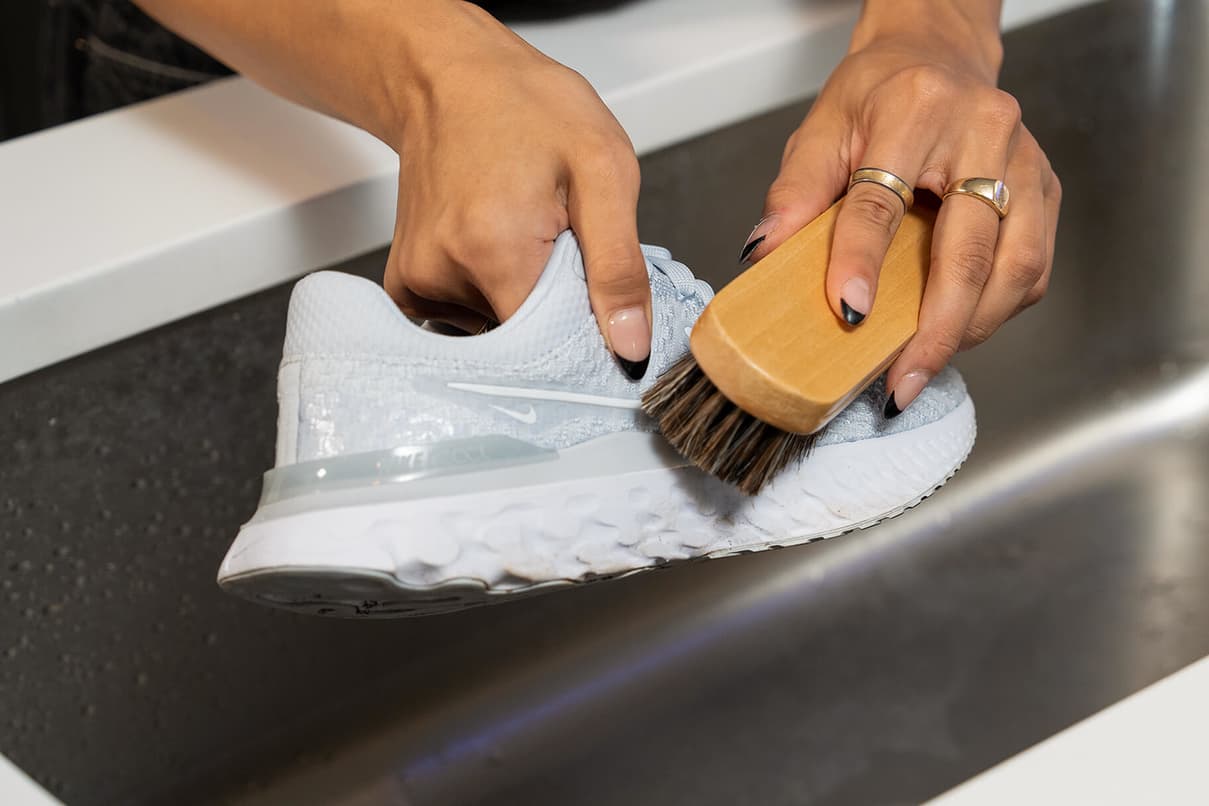
Dip the soft brush into the soapy water. Tap off extra liquid, then brush the mesh with light strokes.
Work in small sections. Do not press hard, push the brush deep into the fabric, or scrub one spot for too long. Mesh is more like a knitted shirt than a rubber boot, so rough treatment can stretch or fray it.
6. Wipe away soap
Use a clean, damp microfiber cloth to remove leftover soap. Rinse and wring the cloth often.
Avoid holding the shoe under a running faucet. Excess water can soak the foam, loosen adhesives, and make drying much harder.
7. Clean the rubber sole
Use the same mild solution on the rubber outsole and midsole. A soft toothbrush can help clean grooves and textured areas.
For stubborn marks on white rubber, a damp melamine sponge may help. Use it only on rubber, not on mesh, suede, leather, or colored fabric. It works like very fine sandpaper and can wear down delicate surfaces.
8. Dry the shoes correctly
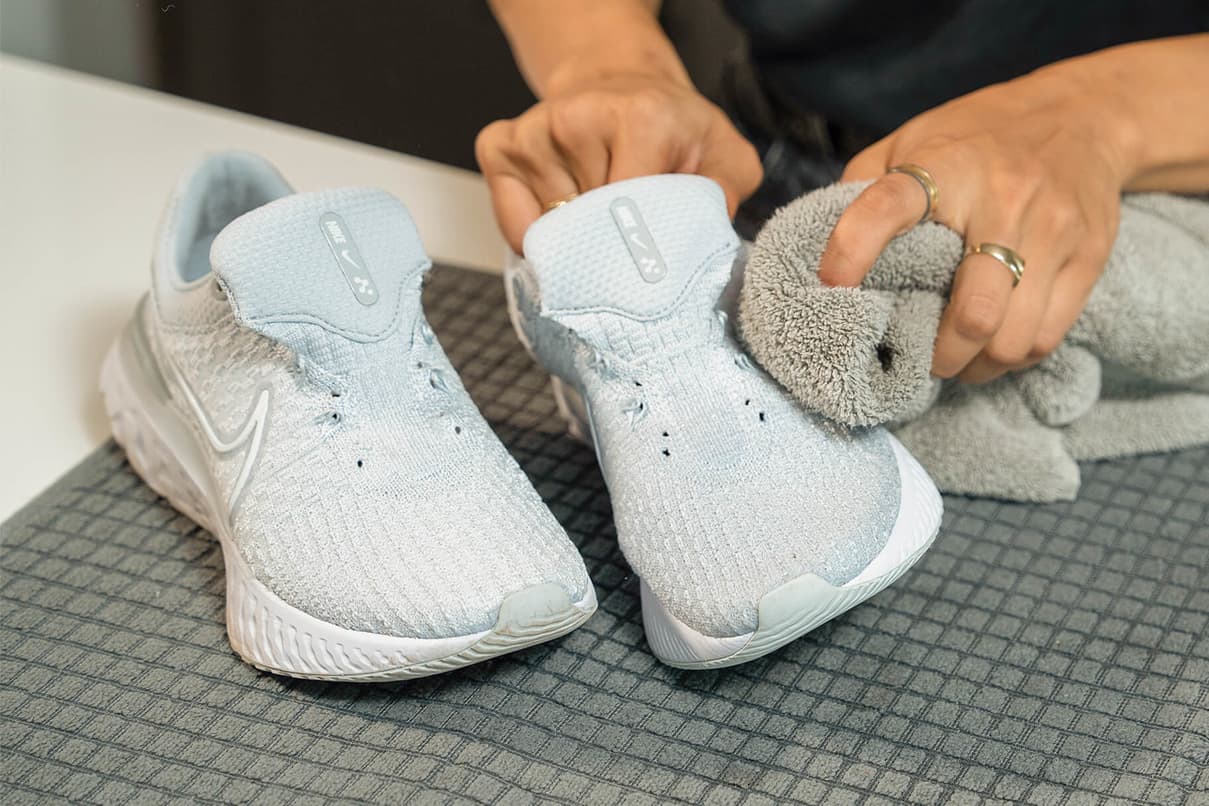
Press a dry towel against the shoes to absorb moisture. Stuff them loosely with white paper towels to help hold their shape.
Let them air-dry at room temperature in a well-ventilated place. Keep them away from radiators, hair dryers, clothes dryers, and direct sunlight. High heat can shrink mesh, warp foam, fade color, and weaken glue.
How to Remove Common Stains From Mesh Nike Shoes
Different stains need different care. Start with the mildest method and repeat it rather than using a harsh product at once.
Grass stains
Apply a small amount of mild detergent solution to the stain. Let it sit for about five minutes, then brush gently with a soft toothbrush.
Rinse the area with a clean damp cloth. Grass stains may need two or three gentle treatments.
Mud
Let mud dry fully before brushing it away. Cleaning wet mud can push it deeper into the mesh.
After brushing, use the mild soap method described above. Never use force to remove packed mud from the fabric.
Food or drink stains
Blot fresh spills with a clean towel. Do not rub, since rubbing can spread the stain through the mesh.
Use cool water and a small amount of mild detergent. Avoid hot water because heat may set some stains, especially those containing protein or sugar.
Oil or grease
Blot the stain with a dry paper towel. Do not add water right away, as water can spread oil across the fabric.
Use a tiny amount of mild dish soap on a damp cloth. Dab from the outside of the stain toward the center, then wipe with a clean damp cloth.
Scuff marks
For scuffs on the rubber sole, use a soft brush or damp melamine sponge. For scuffs on mesh, use only mild soap and light dabbing.
If the color has been removed from the fabric, cleaning will not restore it. Trying stronger chemicals may make the mark worse.
How to Clean White Nike Shoes With Mesh
White mesh shows every mark, so frequent light cleaning is safer than occasional harsh cleaning. Brush off dust after each few wears, especially around the toe box and sole.
To clean white Nike shoes with mesh:
- Remove dry dirt with a soft brush.
- Mix mild detergent with cool water.
- Dab or brush the mesh lightly.
- Wipe away soap with a clean damp cloth.
- Air-dry the shoes away from direct sun.
Do not use chlorine bleach. It can yellow white fabric, weaken synthetic fibers, and cause uneven color. Baking soda may help with odor, but it is not a guaranteed whitening treatment and can leave powder in the mesh if it is not removed well.
A common cleaning mistake is chasing a small gray mark with stronger and stronger products. In practice, several gentle cleaning rounds usually protect the shoe better than one aggressive scrub.
How to Clean Colored or Dark Nike Mesh Shoes
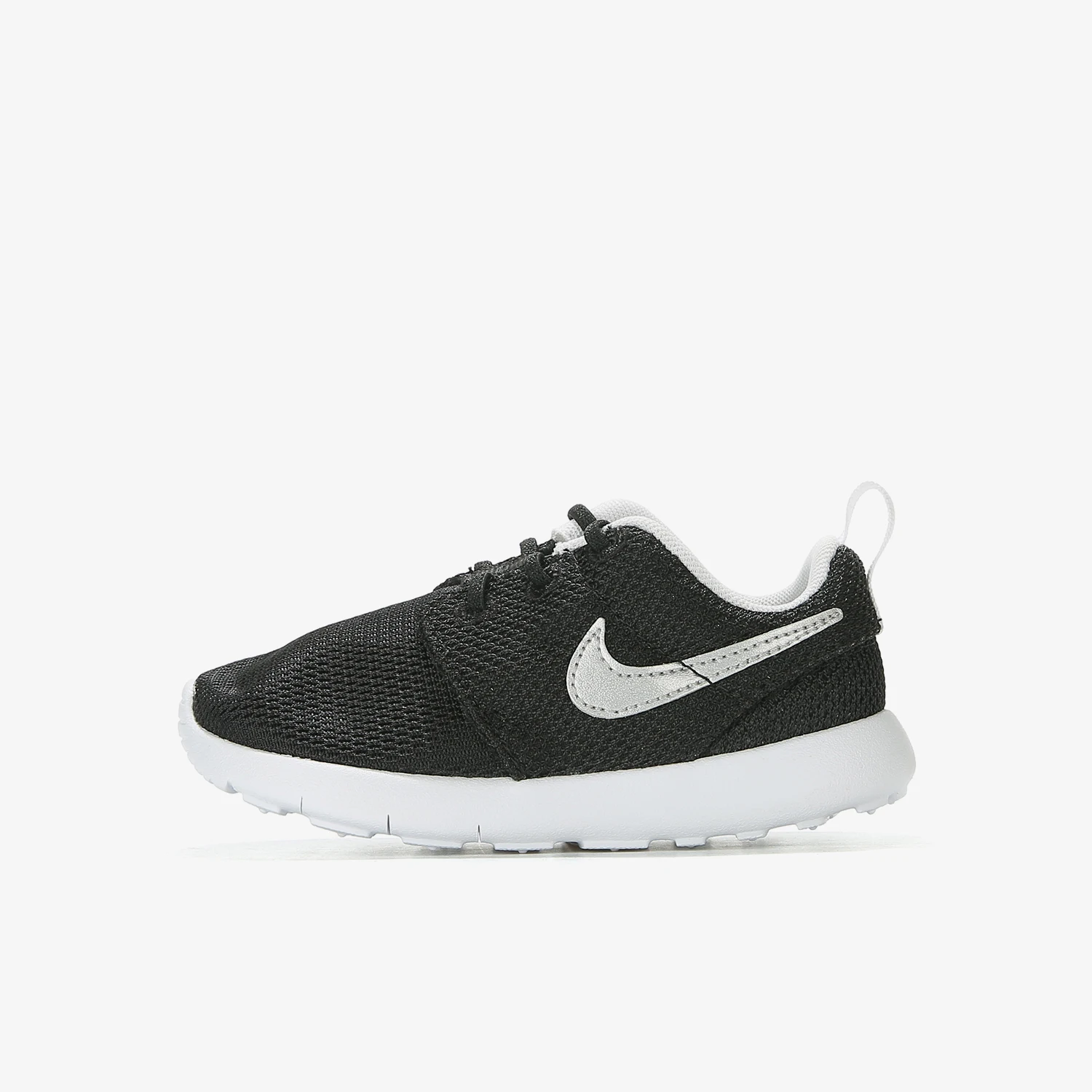
Colored mesh needs extra care because dye can bleed when the shoe becomes too wet. Use less water and test the solution in a hidden area before cleaning the visible panels.
Clean colored Nike mesh shoes with these steps:
• Use cool water instead of hot water.
• Choose a clear, mild detergent.
• Work with a damp brush, not a dripping one.
• Clean one panel at a time.
• Blot moisture instead of rubbing it across the shoe.
• Dry the shoes in shade with good airflow.
Do not leave colored shoes in a strong cleaning mixture. Even mild soap may change the appearance if it remains on the fabric for too long.
If the shoe has suede, leather, reflective material, or printed sections beside the mesh, treat those materials separately. A method that works for mesh may harm another part of the shoe.
How to Clean Nike Mesh Shoes Without Damaging Them
The main goal is to control water, pressure, and heat. These three factors cause most home-cleaning problems.
Keep these safety rules in mind:
• Do not put mesh Nike shoes in a washing machine unless the care instructions clearly allow it.
• Do not use a dryer.
• Do not soak the shoes overnight.
• Do not scrub with a stiff brush.
• Do not pour detergent directly onto the mesh.
• Do not use bleach or harsh solvents.
• Do not dry shoes on a heater or in strong sunlight.
A washing machine can twist the shoe, damage the sole, and create deep creases. Even when the shoe survives the wash, the cushioning and adhesives may not respond well to repeated machine cycles.
If the shoes are expensive, limited edition, heavily stained, or made with several delicate materials, professional shoe cleaning may be the safer choice.
How to Dry Nike Mesh Shoes After Cleaning
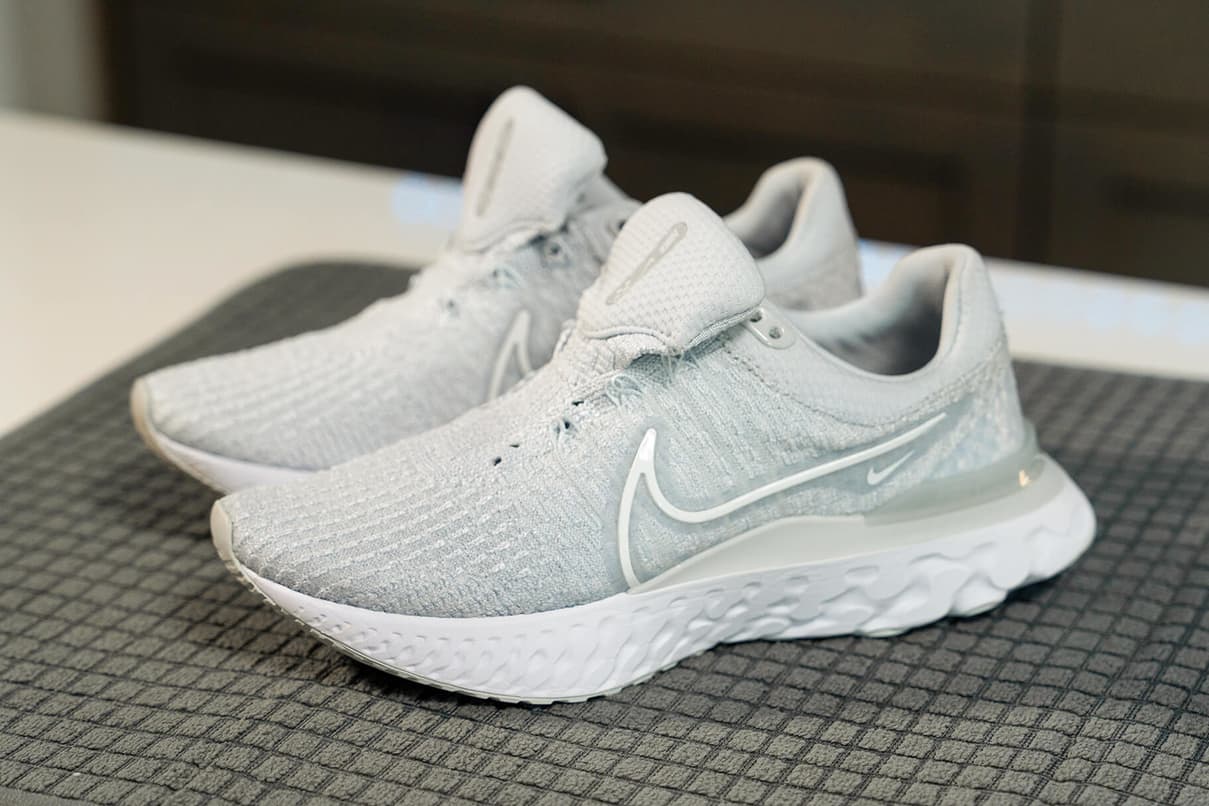
Drying is just as important as cleaning. Damp shoes can develop odor, mildew, and weak adhesive bonds if they stay wet too long.
Follow this drying method:
- Press a towel against the outside of each shoe.
- Remove extra water from the insole and laces.
- Stuff the toe box loosely with white paper towels.
- Place the shoes in a cool room with airflow.
- Replace wet paper towels after a few hours.
- Wait until the shoes are fully dry before wearing them.
Avoid newspaper when cleaning white mesh because ink may transfer to the fabric. Avoid plastic bags during drying because they trap moisture.
Most lightly damp shoes dry within 12 to 24 hours. Thick foam, humid weather, and heavy cleaning can extend that time. Do not rush the process with heat.
How to Remove Odor From Nike Mesh Shoes
Odor usually comes from sweat, bacteria, and moisture trapped inside the shoe. Cleaning the outside alone may not solve the problem.
First, remove the insoles and let them air out. Wipe them with mild soapy water, then dry them fully. You can also place a small amount of baking soda inside the dry shoes overnight and shake it out the next day.
Do not mix baking soda with vinegar inside the shoes. The two react and mostly cancel each other out, while the added moisture may make drying harder.
To reduce future odor:
• Wear clean, moisture-wicking socks.
• Rotate between two pairs of shoes.
• Let shoes dry fully between uses.
• Remove insoles after long or sweaty activities.
• Store shoes in a dry, ventilated space.
How Often Should You Clean Nike Mesh Shoes?
Clean Nike mesh shoes when they look dirty or begin to smell. For daily wear, a light brush once a week can prevent dirt from becoming embedded.
A deeper clean may be useful every few weeks, depending on use. Running shoes used on muddy trails need more care than casual shoes worn indoors.
Clean them sooner after exposure to:
• Mud
• Salt from winter roads
• Chlorinated water
• Food or sugary drinks
• Heavy rain
• Grass and soil
Frequent gentle care is better than waiting until dirt becomes a hard layer. This is one of the most useful lessons in how to clean Nike shoes with mesh: prevention reduces the need for aggressive treatment.
Mistakes to Avoid When Cleaning Nike Mesh Shoes
Many damaged shoes are not ruined by dirt. They are ruined by the cleaning method.
The most common mistakes include:
• Using too much water
• Scrubbing with a hard brush
• Applying bleach to white mesh
• Mixing several cleaning products
• Drying shoes with a hair dryer
• Leaving soap on the fabric
• Wearing shoes before the inside is dry
• Using colored towels that may transfer dye
One mistake I often see is treating all sneaker materials the same way. Mesh needs a soft touch, rubber can handle more pressure, and suede needs a separate cleaner. Cleaning by material is safer than cleaning the whole shoe with one product.
Always take photos of the shoe before cleaning if it is valuable or under warranty. This creates a record of its condition and helps you notice whether color or texture changes after cleaning.
How to Keep Nike Mesh Shoes Cleaner for Longer
Good storage and simple habits can reduce cleaning time. Think of it as brushing your teeth: small care often prevents a larger repair.
Try these habits:
• Brush off dirt before storing the shoes.
• Keep them away from wet floors.
• Use a shoe tree or loose paper to maintain shape.
• Do not store damp shoes in a closed gym bag.
• Rotate shoes when possible.
• Clean spills as soon as they happen.
• Use a breathable storage box or open shelf.
Water-repellent sprays may help some synthetic mesh shoes, but they are not universal. Read the product label and test the spray on a hidden area. Never assume a spray designed for leather or suede is safe for mesh.
Frequently Asked Questions About How to Clean Nike Shoes With Mesh
Can I put Nike mesh shoes in the washing machine?
Hand cleaning is usually safer because it limits water, pressure, and twisting. Use a washing machine only if the shoe’s care instructions specifically permit it.
Can I use dish soap to clean Nike mesh shoes?
Yes, a small amount of mild dish soap can clean light dirt and stains. Dilute it well, use a soft brush, and wipe away all soap after cleaning.
Can I use bleach on white Nike mesh shoes?
No, bleach can yellow white mesh and weaken its fibers. Use mild detergent and repeat gentle cleaning instead.
How long do Nike mesh shoes take to dry?
Lightly damp shoes often need 12 to 24 hours to dry at room temperature. Thick cushioning, high humidity, or heavy cleaning may require more time.
Can I dry Nike mesh shoes in a dryer?
No, dryer heat can shrink mesh, deform foam, fade color, and weaken adhesives. Air-dry the shoes in a cool place with good ventilation.
How do I clean muddy Nike mesh shoes?
Let the mud dry first, then brush away as much as possible. Clean the remaining marks with diluted mild detergent and a soft brush.
How do I stop Nike mesh shoes from smelling?
Air them out fully, clean the insoles, and use baking soda inside dry shoes overnight if needed. Wearing clean socks and rotating shoes also helps control odor.
Conclusion
Learning how to clean Nike shoes with mesh is simple when you use less water, mild soap, gentle brushing, and slow air drying. Remove dry dirt first, test cleaners on a hidden area, protect delicate materials, and never use bleach or direct heat.
With regular light care, your Nike mesh shoes can stay cleaner, fresher, and more comfortable for longer. Try these steps on your next pair, and share your best sneaker-care tip in the comments.

Michael Smith is the Content Strategist behind The Style Hub, where fashion meets function. With a keen eye for trends and a passion for everyday style, he curates content that helps readers make smarter, more stylish choices—from the perfect pair of sneakers to must-have accessories. Michael specializes in breaking down fashion into practical, wearable insights, making style accessible for everyone. When he’s not researching the latest trends, he’s exploring how comfort, innovation, and timeless design come together in modern fashion.