
What Are Sandals With Straps Called: Style Guide
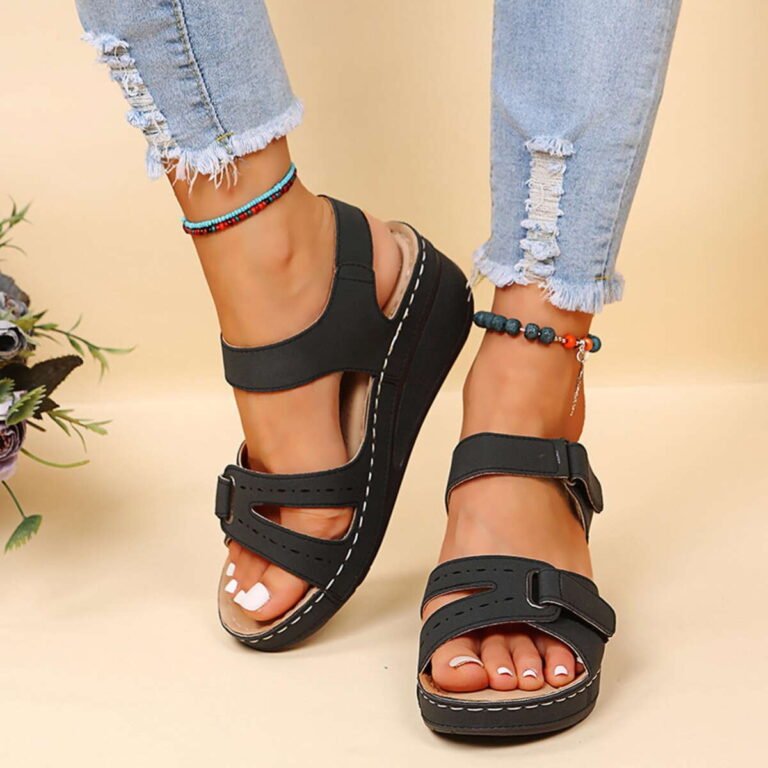
In the United States, sandals with straps are usually called strappy sandals or strap sandals. The exact name depends on where the straps sit and how they fasten. For example, a sandal with one strap across the toes may be a slide, while one with straps that wrap around the ankle may be an ankle-strap sandal.
This guide explains the main names, how they differ, and which term to use when shopping for sandals online or in a store.
The Short Answer: Strappy Sandals or Strap Sandals
Strappy sandals is the broad, everyday term for sandals that use one or more straps to hold the foot in place. Strap sandals means much the same thing and is also common in American clothing stores.
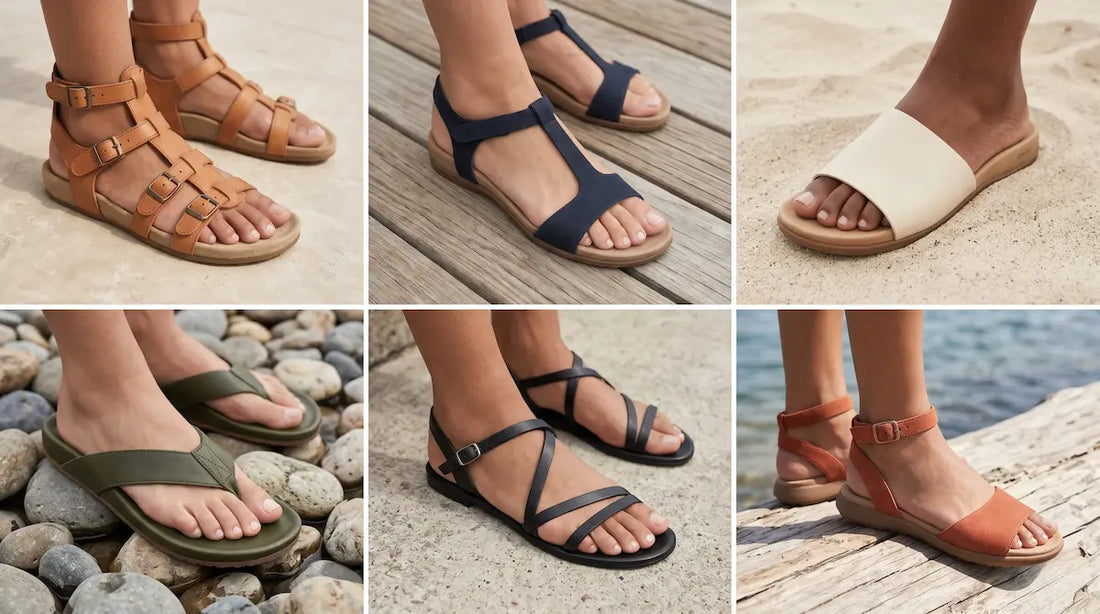
The name can become more specific when the sandal has a clear design:
- Ankle-strap sandals have a strap around the ankle.
- T-strap sandals have a vertical strap that connects the toe area to an ankle strap.
- Gladiator sandals have several straps that cross the foot or extend up the leg.
- Toe-loop sandals have a loop around one toe, often the big toe.
- Slingback sandals have a strap behind the heel or around the back of the ankle.
- Fisherman sandals have several wide, woven straps that cover much of the foot.
- Thong sandals use a V-shaped strap that passes between the toes.
So, if you need a general name, say strappy sandals. If you want to describe the design more precisely, use the specific style name.
Common Types of Sandals With Straps
The best name depends on the strap pattern, not just the number of straps. Two sandals may both have straps but belong to different style groups.
Ankle-Strap Sandals
Ankle-strap sandals have a band that wraps around the ankle. The front may have one wide band, several thin straps, or an open design.
This style often closes with a buckle, hook-and-loop fastener, or elastic section. The ankle strap helps keep the sandal from sliding off, but it should not feel tight or dig into the skin.
T-Strap Sandals
T-strap sandals have a strap that runs from the toe area up the center of the foot and meets a strap around the ankle. From above, the design looks like the letter “T.”
This design is common in flat sandals and dress sandals. It gives the shoe a more secure feel than a simple toe band because the center strap helps limit side-to-side movement.
Gladiator Sandals
Gladiator sandals use multiple straps across the foot. Some stop at the ankle, while others rise partway up the calf.
The term describes a visual style rather than one exact construction. A sandal can have thin decorative straps or broad functional straps and still be sold as a gladiator sandal.
Toe-Loop Sandals
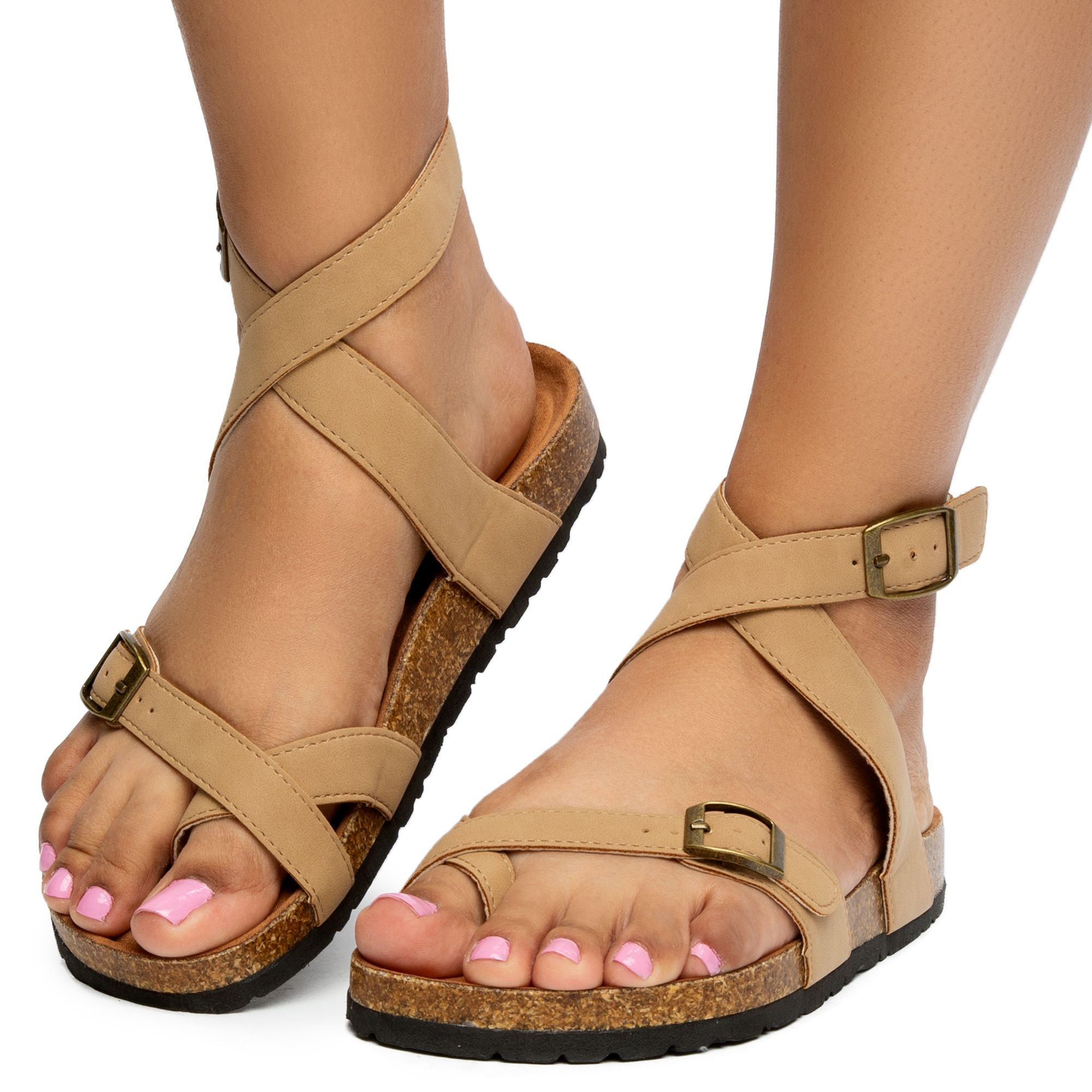
Toe-loop sandals have a loop that fits around one toe, usually the big toe. The loop may connect to a strap across the foot or to a flat sole.
They are different from thong sandals. A thong sandal places a narrow strap between two toes, while a toe-loop sandal surrounds one toe.
Slingback Sandals
Slingback sandals have a strap that passes behind the heel or around the back of the ankle. The heel itself remains mostly open.
The strap may be adjustable or elastic. This style can be confused with an ankle-strap sandal, but a slingback strap usually sits behind the heel rather than fully circling the ankle.
Fisherman Sandals
Fisherman sandals have broad, woven straps that cover much of the upper foot. They often include a closed or partly covered toe area and an ankle fastener.
They are called fisherman sandals because the design resembles practical footwear traditionally associated with fishing and outdoor work. Modern versions are often made for casual wear.
Thong Sandals
Thong sandals have a Y-shaped or V-shaped strap. One part sits between the toes, and the other parts extend across the foot.
In the United States, people often use “flip-flops” for flat thong sandals with a simple rubber or foam sole. Not every thong sandal is a flip-flop, though. Dressier versions may have leather straps, a shaped footbed, or a decorative upper.
Sandal Strap Names by Location
If you do not know the style name, describe the strap by its location. This works well when searching for a product or explaining what you want to a salesperson.
| Strap location or layout | Common name |
|---|---|
| One or more straps across the toes | Toe-strap sandals or strappy sandals |
| A strap around the ankle | Ankle-strap sandals |
| A strap from the toes to the ankle | T-strap sandals |
| A strap behind the heel | Slingback sandals |
| A strap between the toes | Thong sandals or flip-flops |
| A loop around one toe | Toe-loop sandals |
| Many straps across the foot | Gladiator sandals |
| Wide woven straps over much of the foot | Fisherman sandals |
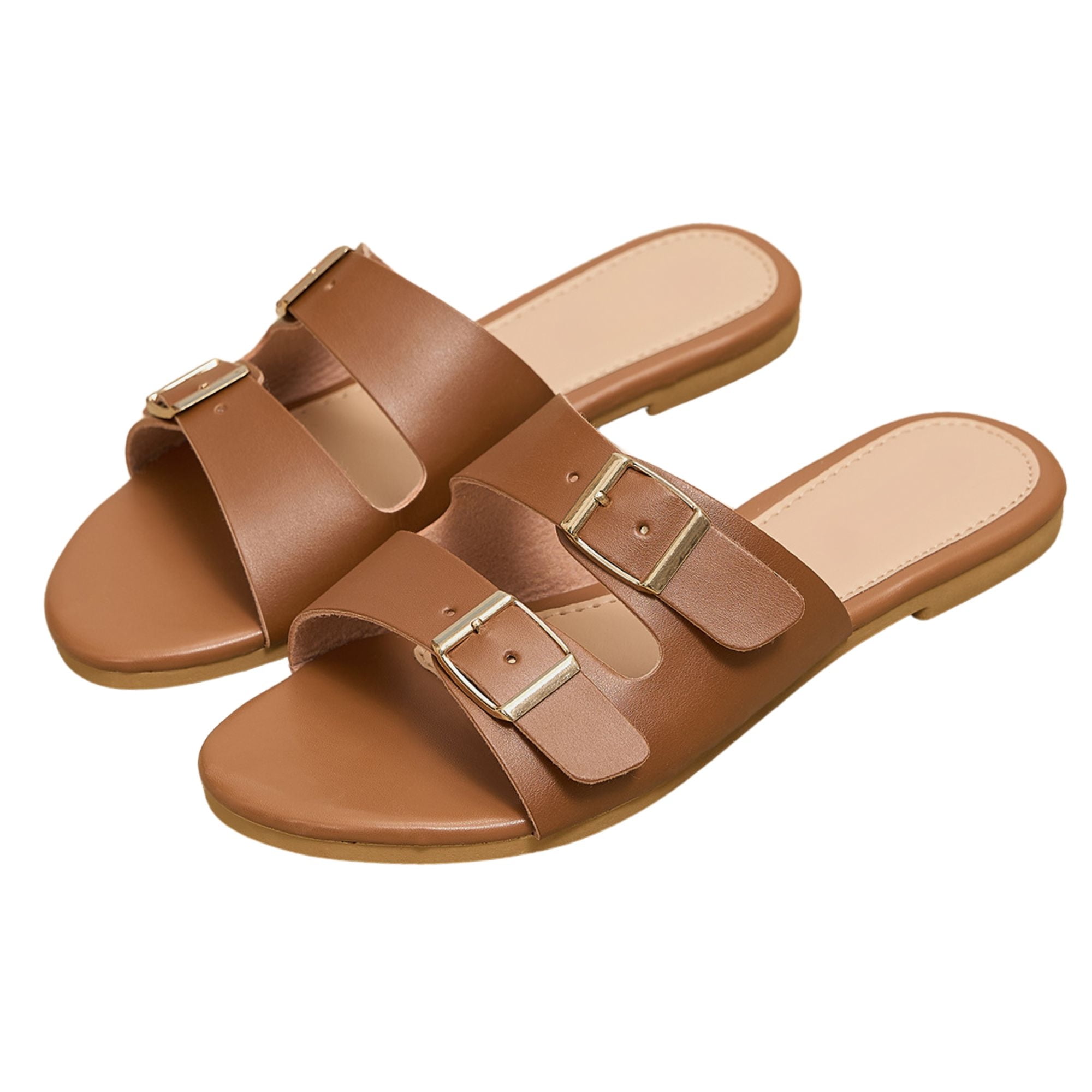
| A broad strap over the front of the foot | Band sandals or slides, depending on the heel |
Retailers may use these terms in different ways. A product listed as an “ankle-wrap sandal” may have long straps that cross the foot and tie around the ankle. A “strappy sandal” may have only two straps. Product names are not always standardized.

Are Strappy Sandals the Same as Strap Sandals?
Yes, in most cases. Strappy sandals and strap sandals are broad style terms for open footwear held on by straps.
The difference is usually tone:
- Strappy sandals often suggests several narrow or decorative straps.
- Strap sandals can describe any sandal with a strap, including one wide strap.
- Strap heels usually refers to heeled sandals with straps.
- Sport sandals often have adjustable straps and a sturdy sole.
- Water sandals are designed for use near water and may use quick-drying materials.
The terms overlap, but they do not always describe the same purpose. A delicate strappy sandal may suit a formal outfit, while a sport sandal may use thick straps for walking and outdoor use.
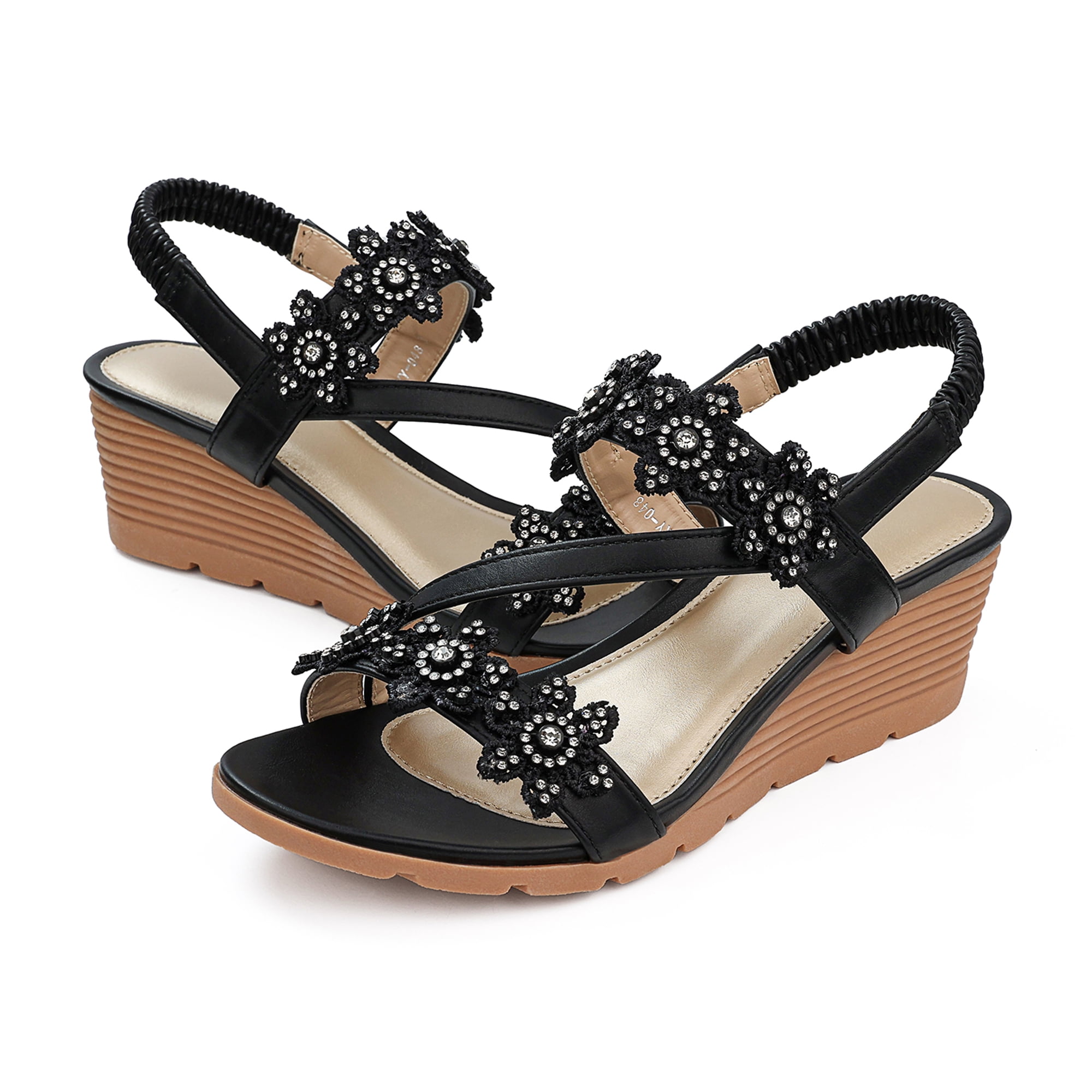
How to Choose the Right Name When Shopping
Use the strap position, closure, and heel height to narrow your search. This usually works better than searching for “sandals with straps” alone.
For a Dressy Look
Search for:
- Strappy heeled sandals
- Ankle-strap heels
- Minimal strap sandals
- Dress sandals
- Barely-there sandals
These terms usually bring up sandals with slim straps and a heel. Check the product photos closely because thin straps may offer less adjustment and less coverage.
For Everyday Wear
Search for:
- Flat strappy sandals
- Ankle-strap flats
- Casual strap sandals
- Leather strap sandals
- Comfort sandals
These styles often have a lower heel or a flat sole. Look for adjustable closures if your feet swell during the day or if you need a more exact fit.
For Walking or Outdoor Use
Search for:
- Sport sandals
- Walking sandals
- Adventure sandals
- Hiking sandals
- Water sandals
These terms usually describe sandals with adjustable straps, a more secure heel area, and a sole designed for outdoor use. The label alone does not prove that a sandal is suitable for hiking, wet surfaces, or long walks. Check the maker’s materials, outsole description, and care instructions.
For a Toe-Strap Style
Search for:
- Thong sandals
- Toe-loop sandals
- Toe-post sandals
- Y-strap sandals
Use “toe-loop” when you want a loop around one toe. Use “thong” or “toe-post” when you want a strap between the toes.

What Is the Difference Between Straps and Bands?
A strap is usually a narrow or adjustable strip that secures the foot. A band is often wider and may simply cover the top of the foot.
For example, a sandal with one wide piece of leather over the toes may be called a single-band sandal. It may not have a separate ankle strap or buckle.
The line is not strict. Retailers may call a wide piece a strap, band, upper, or vamp. If the name is unclear, focus on the construction:
- Does it cross the toes?
- Does it wrap around the ankle?
- Does it pass behind the heel?
- Does it adjust with a buckle or fastener?
- Does it connect to a heel or toe loop?
These details tell you more than the product title.

Fit and Comfort: What to Check
A sandal with straps should hold the foot in place without squeezing it. Straps are useful for fit, but more straps do not automatically mean more comfort or support.
Check these points:
- Toe clearance: Your toes should not hang over the front edge.
- Heel position: Your heel should sit on the sole rather than extend past it.
- Strap pressure: No strap should pinch, rub, or leave deep marks.
- Foot movement: Your foot should not slide far forward with each step.
- Fastener security: Buckles and hook-and-loop closures should stay closed during normal walking.
- Sole contact: The sole should bend in a way that feels natural for the intended use.
Wear new sandals for short periods at first. If a strap causes broken skin, numbness, persistent pain, or swelling, stop wearing the sandals and reassess the size, adjustment, and design.
For people with diabetes, reduced sensation, circulation problems, or a history of foot wounds, footwear decisions may require advice from a qualified health professional. General fit guidance cannot replace personal medical care.

Common Naming Mistakes
Several sandal terms are often used as if they mean the same thing, but they describe different features.
Calling Every Strappy Sandal a Gladiator Sandal
A gladiator sandal usually has several crossing straps. A simple sandal with one ankle strap is better described as an ankle-strap sandal.
Calling Every Open-Back Sandal a Slingback
A slingback has a strap behind the heel. A sandal with no rear strap is an open-back sandal, slide, or another style.
Treating Flip-Flops and Thong Sandals as Exact Synonyms
In American English, “flip-flop” often means a very casual thong sandal with a flat, flexible sole. “Thong sandal” is a wider term that can include more structured designs.
Assuming a Strap Means Better Support
A strap can improve security, but support also depends on the sole, footbed, heel structure, fit, and intended use. A fashion sandal may have several straps and still provide little cushioning or stability.
Searching Only for “Sandals With Straps”
This phrase is broad. Add the feature you want, such as “flat ankle-strap sandals,” “women’s T-strap sandals,” “men’s sport sandals,” or “leather toe-loop sandals.”
Frequently Asked Questions
What is the general name for sandals with many straps?
The general name is strappy sandals. If the straps cross the foot or extend upward toward the calf, the style may be called gladiator sandals.
What are sandals with straps around the ankle called?
They are usually called ankle-strap sandals. If the strap sits mainly behind the heel, the more precise term is slingback sandals.
What are sandals with a strap between the toes called?
They are called thong sandals, toe-post sandals, or, when very casual and flat, flip-flops.
What are sandals with straps that cross the foot called?
They may be called strappy sandals, cross-strap sandals, or gladiator sandals. The best term depends on how many straps the sandal has and whether they extend toward the ankle or calf.