Are Sandals Safe For Toddlers: Safe First Steps
Yes, sandals can be safe for toddlers when they fit well, stay on the foot, and match the activity. In the United States, most toddlers can wear sandals for short walks, warm-weather play, and outdoor trips. The safest pair has a firm heel hold, adjustable straps, a flexible sole, good grip, and enough room for the toes.
Sandals are not ideal for every setting. Loose flip-flops, backless slides, slippery soles, and thin fashion sandals can raise the risk of trips, falls, cuts, and stubbed toes. For playgrounds, long walks, hiking, or fast play, a secure closed-toe shoe may work better.
The American Academy of Pediatrics advises that young children need shoes that fit well and allow natural foot movement. Shoes do not need to be stiff or heavy to protect a growing foot. For more guidance, see HealthyChildren.org’s advice on choosing shoes for toddlers.

What makes sandals safe for toddlers?
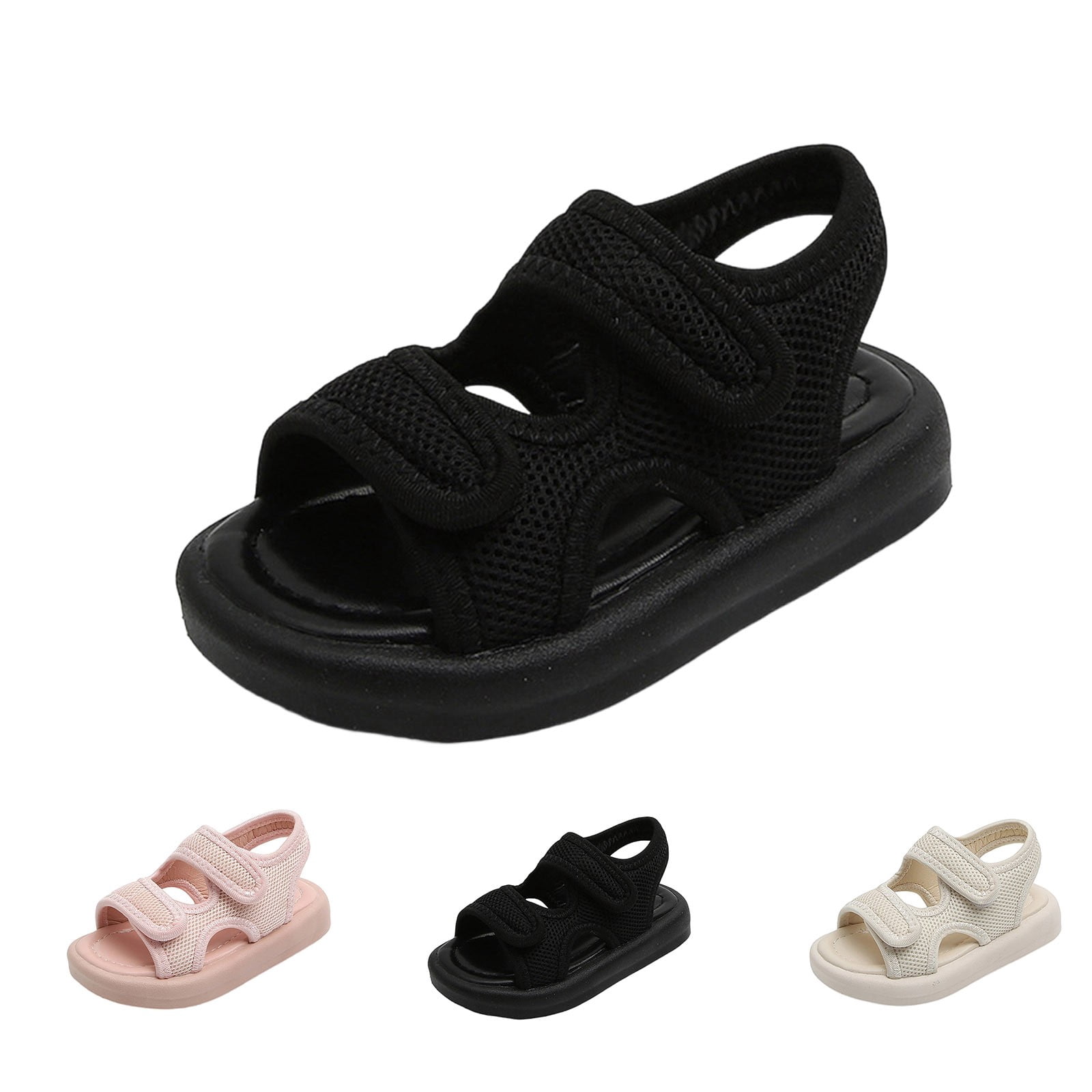
Safe toddler sandals should stay on the foot without squeezing it. They should also let the toes move, bend at the ball of the foot, and grip the ground.
Look for these features:
| Feature | What to look for | Why it matters |
|---|---|---|
| Heel hold | A back strap or closed heel | Helps prevent the foot from sliding out |
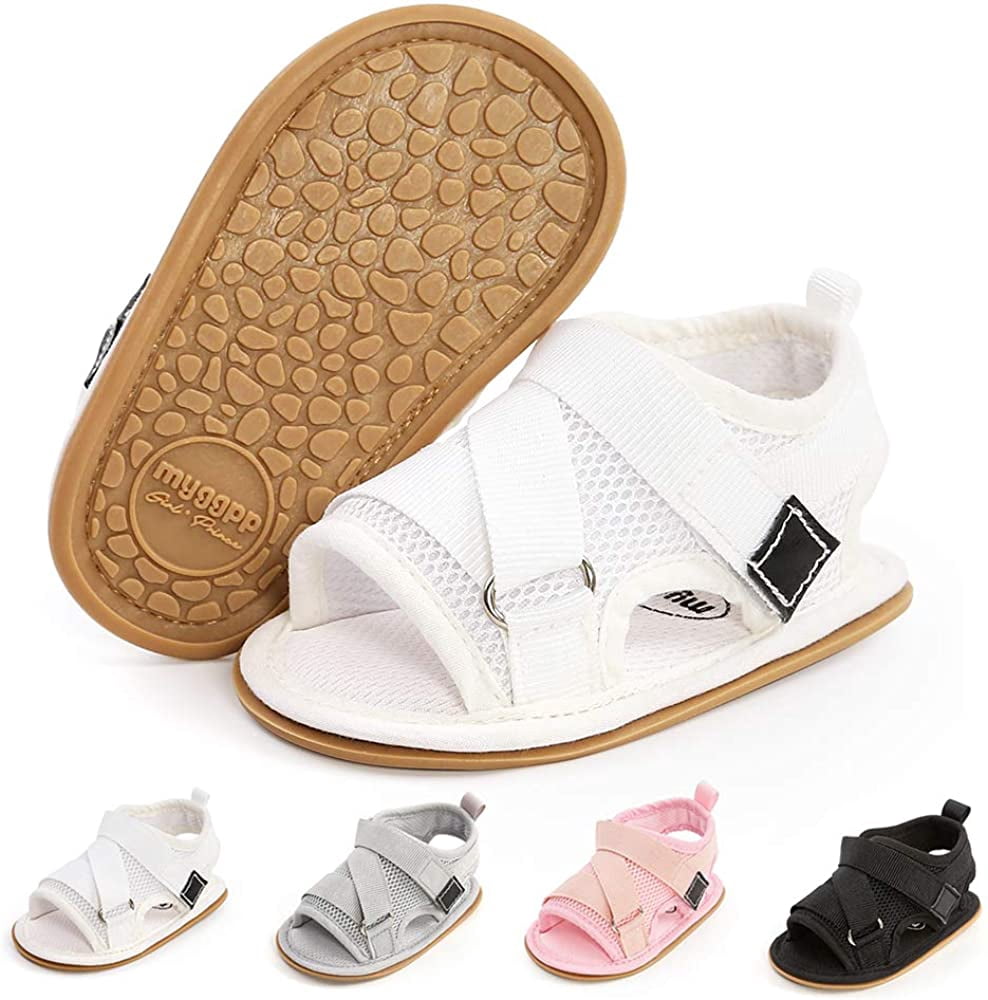
| Secure closure | Adjustable hook-and-loop straps, buckles, or laces | Keeps the sandal in place |
| Toe space | About a thumb’s width between the longest toe and the front | Allows growth and toe movement |
| Flexible sole | The sole bends near the toes, not in the middle | Supports natural walking |
| Traction | A textured rubber or similar outsole | Helps reduce slips |
| Smooth inside | No rough seams, sharp edges, or hard ridges | Lowers the chance of blisters |
| Light weight | A sandal that does not feel heavy | Makes walking easier for a young child |
| Breathable material | Materials that allow airflow and dry well | Helps limit heat and moisture buildup |
A sandal should bend where the toddler’s toes bend. If it folds in half at the middle, it may provide too little support. If it does not bend at all, it may make normal walking harder.
The heel strap matters most
A back strap is one of the most useful features in a toddler sandal. It helps stop the heel from lifting out of the shoe. It also reduces the need for a child to curl their toes to keep the sandal on.
A front strap alone is often not enough. A sandal may look secure while the heel still slides out with each step. This can lead to trips, skin rubbing, or a change in the child’s walking pattern.
Flexible does not mean flimsy
Toddlers need shoes that allow movement. They do not usually need rigid arch supports or thick, hard soles unless a medical professional recommends them.
However, a sandal should still protect the bottom of the foot from hot pavement, sharp objects, rough ground, and small stones. The best balance is a sole that is flexible at the front but resists sharp objects and offers steady grip.
When are sandals a poor choice?
Sandals are a poor choice when they can slip off, catch on surfaces, expose the toes to hazards, or make it hard for the child to walk normally.
Avoid relying on sandals for:
- Playgrounds with climbing equipment
- Hiking trails or rocky paths
- Bike or scooter riding
- Running games with frequent stops and turns
- Wet, slippery surfaces
- Long walks
- Construction areas or places with broken glass
- Cold weather
- Activities where toes may be hit or trapped
For these settings, a well-fitting sneaker or a secure closed-toe water shoe may offer better protection.
Why flip-flops can cause problems
Flip-flops often have a loose heel and a thin sole. A toddler may need to grip the sandal with the toes to keep it from falling off. That extra effort can make walking less steady.
Flip-flops can also catch on steps, playground edges, and uneven ground. They may be fine for a brief trip from a pool chair to a changing area if an adult is close by, but they are usually not a good everyday shoe for an active toddler.
Backless slides are also less secure
Slides are easy to put on, but that convenience comes with a trade-off. The child’s foot can move forward, sideways, or out of the shoe. A toddler may trip while trying to keep the slide in place.
A backless sandal may work for calm, supervised use. It is less suitable for running, climbing, or walking on uneven ground.
Open toes increase exposure
Open-toe sandals do not automatically cause injury. They can work well on clean, smooth surfaces when the child walks carefully. Still, exposed toes are more likely to be scraped, stubbed, or caught under objects.
For a playground, trail, or crowded outdoor area, closed toes add a useful layer of protection. They do not replace supervision, but they can reduce some common foot injuries.

How to choose and fit toddler sandals
Fit the sandals while your child is standing. A toddler’s foot spreads under body weight, so a pair that looks large enough while sitting may feel tight during walking.
Use this simple process:
- Measure both feet. One foot may be longer or wider than the other. Choose a size that fits the larger foot.
- Check the toe space. Leave about a thumb’s width between the longest toe and the front of the sandal.
- Check the width. The foot should not bulge over the edges. The straps should not leave deep marks.
- Secure the heel. The heel should remain inside the sandal during normal steps.
- Watch the walk. Ask your toddler to walk, turn, and stop. Look for slipping, limping, toe gripping, or repeated tripping.
- Check the straps. You should be able to place one finger under a strap. It should feel secure but not tight.
- Inspect the skin. Remove the sandals after several minutes and look for red areas, rubbing, or blisters.
Do not buy a much larger size so the child can “grow into” it. Extra length can make a toddler trip. A small amount of growing room is useful, but a loose shoe can be unsafe now.
Signs the sandals do not fit
Replace or adjust the sandals if you see:
- Toes touching or curling against the front
- The heel lifting out with each step
- The foot sliding sideways
- Red marks that last after the sandals come off
- Blisters or broken skin
- A child refusing to walk in them
- Frequent tripping that does not occur barefoot
- Straps that need to be pulled very tight
- The sandal twisting while the child walks
Toddlers may not explain that a shoe hurts. Changes in mood, walking, or willingness to move can be useful clues.
Do toddlers need arch support?
Most healthy toddlers do not need special arch support in ordinary shoes. Young children often have flat-looking feet because their arches are still developing and because soft tissue can cover the arch.
The American Academy of Orthopaedic Surgeons explains that flexible flat feet are common in children and often do not cause pain or limit activity. A pediatrician or pediatric foot specialist should assess pain, stiffness, weakness, or a noticeable difference between the two feet.
Do not add inserts or buy corrective sandals based only on appearance. Use them when a qualified clinician recommends them for a specific concern.

Are sandals safe for different toddler activities?
The safest footwear depends on the surface, speed, and hazards involved. A sandal that works at a picnic may not work on a playground.
| Activity | Better choice | Main reason |
|---|---|---|
| Short walk on a sidewalk | Secure sandals or sneakers | Either may work if the fit is good |
| Backyard play | Secure sandals on safe ground | Gives airflow while protecting the sole |
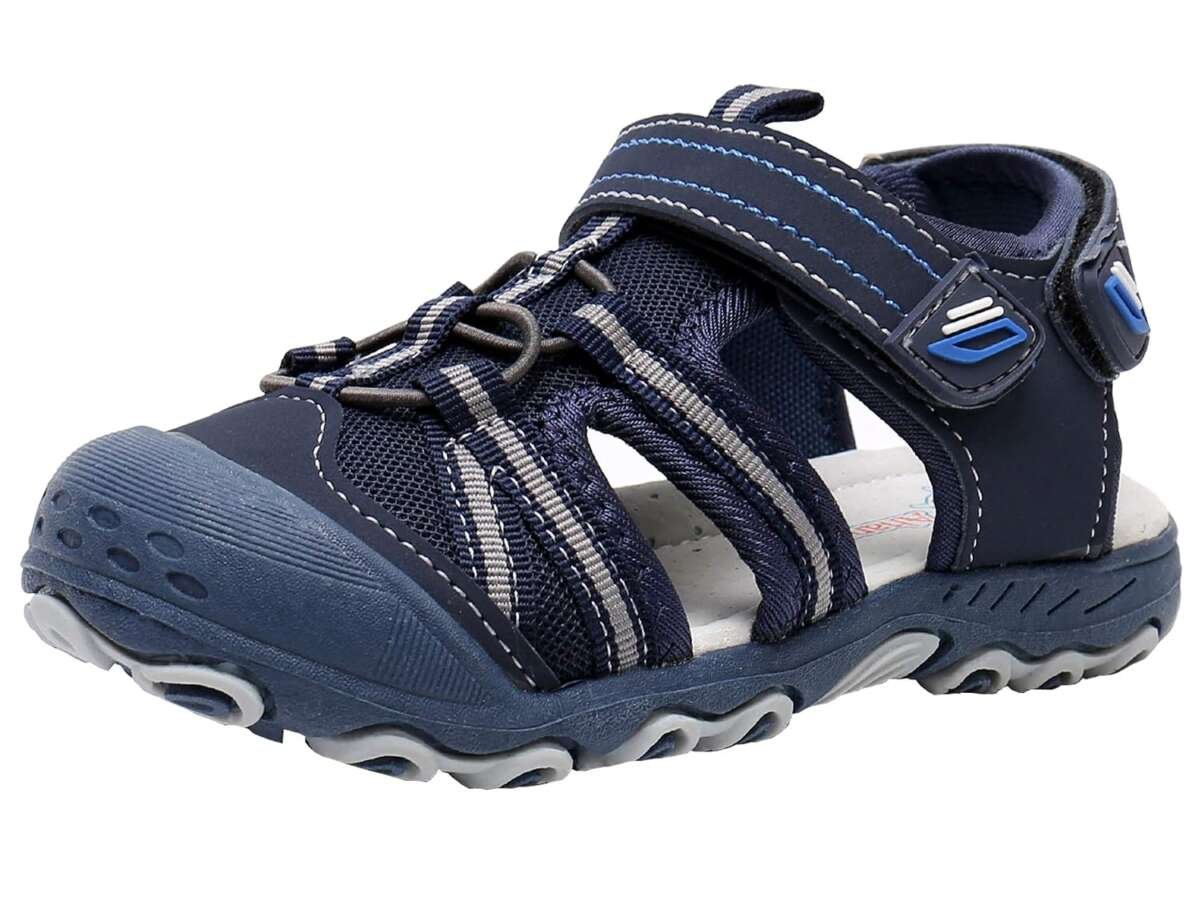
| Playground | Closed-toe sandals or sneakers | Helps protect toes and improves stability |
| Beach | Secure water shoes or sandals | Helps with hot sand, shells, and rough surfaces |
| Pool area | Water shoes or sandals with strong grip | Helps protect feet, but does not prevent drowning |
| Hiking or rocky ground | Closed-toe trail shoes or sneakers | Provides more protection and stability |
| Bike or scooter riding | Closed-toe shoes | Protects toes and improves control |
| Long travel days | Supportive sneakers or secure sandals | Reduces rubbing and fatigue |
| Wet grass | Shoes with traction and a secure heel | Helps reduce slips |
No sandal makes a wet surface safe. Pool decks, splash pads, and wet sidewalks can remain slippery even when the outsole has a textured pattern.
For water play, check whether the sandal dries quickly and whether the straps stay secure when wet. Wet materials can rub the skin, and a loose sandal may become harder to control.

Common mistakes parents make with toddler sandals
The most common mistake is choosing appearance over fit. A cute sandal with poor heel support can be less useful than a plain sandal that stays firmly in place.
Other mistakes include:
Buying without checking the sole
A sandal may have a thick sole but poor traction. Press the outsole against a clean, dry floor and look for a clear tread pattern. Replace sandals when the tread is worn smooth.
Using hand-me-downs without inspecting them
Secondhand sandals can be practical, but check the sole, straps, seams, and shape. Avoid pairs that are worn unevenly, bent to one side, or permanently compressed.
Shoes do not always mold perfectly to one child’s foot, but heavy wear can change how the sandal contacts the ground.
Letting a child wear damp sandals for hours
Moisture and rubbing can lead to blisters and irritated skin. Dry the sandals and the child’s feet before extended wear. Change socks or footwear when needed.
Tightening straps to fix a poor fit
Straps should hold the sandal in place. They should not compensate for a sandal that is too wide, too long, or the wrong shape. Deep strap marks or pale skin under a strap suggest pressure.
Assuming barefoot walking is harmful
Healthy toddlers do not need shoes indoors all the time. Barefoot time on safe surfaces can let children feel the ground and move their feet freely. Shoes are mainly for protection outdoors and in places where the floor may be unsafe.
The CDC developmental milestone guidance can help parents understand general movement milestones. Milestones vary, so footwear should not be used to force a child to walk or correct normal development.

When should a pediatrician check your toddler’s feet?
Contact your child’s pediatrician if your toddler has ongoing foot pain, swelling, repeated falls, or a clear change in walking. Seek medical advice if one foot turns in or out much more than the other, if the child avoids bearing weight, or if a problem continues after changing footwear.
Call a medical professional promptly for a serious injury, severe swelling, a deep cut, a puncture wound, or a foot that looks deformed. A shoe problem should not be assumed when the child may have an injury or a medical condition.
A pediatrician may refer your child to a pediatric orthopedist or podiatrist when a detailed foot, joint, muscle, or gait assessment is needed.
Sandals should not be used to treat:
- Persistent pain
- A limp
- Marked stiffness
- Repeated ankle rolling
- Weakness
- A sudden change in walking
- A known foot or nerve condition
These concerns need an individual assessment rather than a general shoe recommendation.
Frequently asked questions
What age can toddlers wear sandals?
A child can usually wear sandals once they are walking steadily and needs outdoor foot protection. The exact age varies. Many children begin walking around 12 to 15 months, but normal development covers a wider range.
Choose footwear based on walking skill, fit, and the activity—not age alone.
Are open-toe sandals safe for a 2-year-old?
They can be safe on clean, smooth, low-risk surfaces when they fit well and have a secure heel strap. Closed-toe sandals are a better choice for playgrounds, trails, crowded areas, and places with sharp or uneven objects.
Should toddler sandals have arch support?
Usually, no special arch support is needed for a healthy toddler. Choose a flexible, well-fitting sandal unless a qualified clinician recommends an insert or structured support.
Can toddlers wear sandals all day?
They can if the sandals fit well, the activity is suitable, and the child’s skin stays comfortable. Check for redness, rubbing, moisture, and signs of fatigue. For long walks or active play, a secure sneaker may be more comfortable and protective.
Are Crocs or similar clogs safe for toddlers?
A clog may be suitable for calm, short-term use if it fits securely and has good traction. A loose clog is not a strong choice for running, climbing, biking, or stairs. Check whether the heel strap stays behind the heel and whether the foot slides inside.
Should toddlers wear socks with sandals?
Socks are optional. They may help prevent rubbing, especially with stiff straps or longer wear. Use breathable socks, and change them if they become wet. Bare feet may be more comfortable with a smooth, well-made sandal.
Key takeaways
- Sandals can be safe for toddlers when they fit well and stay secure.
- Choose a heel strap, adjustable closure, flexible sole, good traction, and enough toe room.
- Avoid flip-flops, loose slides, and slippery sandals for active play.
- Use closed-toe footwear for playgrounds, trails, bikes, scooters, and rough ground.
- Check your child’s skin, walking pattern, and comfort after wearing new sandals.
- Ask a pediatrician about persistent pain, limping, repeated falls, or unusual walking.
Conclusion
The safest toddler sandal is not the one with the most padding or the stiffest sole. It is the one that fits the child’s foot, stays in place, bends naturally, and matches the activity.
For simple warm-weather use, secure sandals can work well. For running, climbing, long walks, or rough ground, choose a closed-toe shoe with stronger protection. When in doubt, watch how your toddler walks and let comfort, fit, traction, and safety guide the choice.