

Why Do Women Wear Knee High Boots: Style And More
Women in the United States wear knee-high boots for a mix of style, warmth, coverage, comfort, and self-expression. The tall shape can make a simple outfit look more polished. It can also shield the legs from cold air, light rain, mud, and rough ground.
The best pair depends on the weather, outfit, foot shape, and amount of walking you plan to do. A flat leather boot suits a different need than a high-heeled suede boot.

What Are Knee-High Boots?
Knee-high boots are boots with shafts that reach to, or close to, the knee. The shaft is the tall part of the boot above the ankle. Some styles stop just below the kneecap, while others reach higher on the leg.
Common types include:
- Flat knee-high boots: Best for walking and daily wear.
- Heeled boots: Add height and a dressier look.
- Riding boots: Often have a low heel and a firm, clean shape.
- Western boots: Use cowboy-style seams, pointed toes, or angled heels.
- Rain boots: Use rubber or other water-resistant materials.
- Winter boots: Add insulation, thick soles, or weather seals.
- Slouch boots: Have a softer shaft that folds or gathers.
- Stretch boots: Use elastic panels or flexible fabric for a closer fit.
- Over-the-knee boots: Rise above the knee and are a different style category.
“Knee-high” describes height. It does not describe the boot’s purpose, material, heel, or level of comfort.
Why Do Women Wear Knee-High Boots?
Women wear knee-high boots because they combine visual impact with useful coverage. Their tall line can change the shape of an outfit, while the boot itself can protect more of the leg than a shoe or ankle boot.
The main reasons include the following.
1. They create a polished outfit
Knee-high boots give an outfit a clear visual anchor. They can make jeans, leggings, skirts, and dresses look more complete.
A tall boot also creates a long line from the foot up the leg. This effect can make an outfit look neat and balanced. It does not change a person’s actual height or body shape, but it can change the way clothing is framed.
For example:
- Black boots can add a clean line to a neutral outfit.
- Brown boots can soften denim and earth-tone clothing.
- Cream or tan boots can brighten a fall outfit.
- Simple riding boots can make casual clothing look more put together.
This is one reason knee-high boots remain useful across many personal styles. They can be bold, simple, classic, or relaxed.
2. They add warmth and coverage
A tall boot covers the foot, ankle, and much of the lower leg. That extra coverage can help keep skin away from cold air.
Knee-high boots are especially useful with:
- Dresses worn in cool weather
- Skirts with tights
- Jeans tucked into the shaft
- Leggings
- Long coats
- Sweaters and layered outfits
The boot itself is not always warm. Thin leather or fashion fabric may provide little insulation. Warmth depends on the lining, material, fit, socks, and weather seal.
A boot with a large gap around the calf may also let in cold air. A close but comfortable fit usually gives better coverage than a loose shaft.
3. They work with many outfits
Knee-high boots are flexible because they sit between a shoe and a full leg covering. They can fit casual, work, travel, and dress settings when the design matches the occasion.
A few common pairings are:
| Outfit | Boot style that often works | Main effect |
|---|---|---|
| Jeans | Flat leather or suede boots | Casual and practical |
| Leggings | Slim shaft with a soft top | Smooth, simple line |
| Midi skirt | Heeled or flat boots | Adds structure below the hem |
| Short dress | Flat, block-heel, or tall boots | Balances the exposed leg |
| Work trousers | Sleek leather boots | Looks neat and formal |
| Sweater dress | Simple tall boots | Adds shape and coverage |
| Outdoor clothing | Weather-rated boots | Better protection from the elements |
These are style options, not fixed rules. Clothing length, color, fabric, and setting all change the result.
4. They express personal identity
Clothing can show mood, taste, confidence, culture, or group identity. Knee-high boots are often chosen because they feel strong, elegant, adventurous, modern, or classic.
A person may choose:
- A sharp pointed toe for a dressier look
- A chunky sole for a bold look
- A western boot for a country-inspired outfit
- A riding boot for a classic look
- A bright color for contrast
- A simple black boot for a low-effort wardrobe staple
There is no single meaning behind the choice. The same boot can look professional on one person, dramatic on another, and casual on someone else.
5. They can support the foot and ankle
Some knee-high boots provide more structure than soft shoes. A firm sole, stable heel, and secure upper may feel supportive during normal walking.
That does not mean every tall boot is comfortable or good for every foot. Support depends on:
- Sole design
- Heel height
- Heel width
- Arch shape
- Toe room
- Cushioning
- Boot weight
- Fit around the ankle and calf
A tall shaft may help the boot feel secure, but it cannot fix a poor footbed or an unstable heel.
6. They can protect against light outdoor hazards
Boots may help shield the lower leg from wet grass, small stones, brush, and light rain. This can be useful for walking, commuting, festivals, and outdoor events.
Protection varies by design. Smooth rubber rain boots usually resist water better than untreated suede. A fashion boot with decorative stitching may allow water through. A leather boot may need care and a suitable water-repellent product.
Look for the maker’s stated material and weather rating. Do not assume that a tall boot is waterproof just because it reaches the knee.

Are Knee-High Boots Practical or Mostly Fashion?
Knee-high boots can be both practical and fashionable. Their value depends on the construction and the task.
A flat, insulated, waterproof pair may be useful in cold or wet weather. A thin, high-heeled pair may be better for appearance than long walks.
The most useful features are:
- A sole with grip
- A stable heel
- Enough toe space
- A comfortable shaft
- A secure closure
- A lining suited to the weather
- A material that fits the care routine
- A weight you can tolerate for several hours
The American Podiatric Medical Association warns that shoe fit affects foot comfort and recommends enough room for the toes. Its guidance is useful when comparing tall boots with narrow toes or high heels.
A boot can look good and still cause pain if it pinches the toes, rubs the heel, or presses hard on the calf. Style should not require lasting pain.
Knee-high boots for cold weather
For cold conditions, check the lining and sole before the height. Insulated fabric, wool blends, and thicker construction may help retain heat.
Cold-weather features can include:
- Insulation
- A padded footbed
- A thick outsole
- A sealed tongue
- A water-resistant upper
- Room for warm socks
Avoid sizing up too much. A loose boot can reduce control and create rubbing. Choose enough room for the socks you plan to wear, but keep the heel and ankle secure.
Knee-high boots for rain
Rain boots are useful when they have a water-resistant or waterproof design. Rubber boots often offer strong water protection, but they may feel warm, stiff, or heavy.
For wet weather, check:
- The listed material.
- The seam and closure design.
- The tread pattern.
- The height of the waterproof section.
- The care instructions.
Suede usually needs more care in wet conditions. If suede gets soaked, let it dry naturally and follow the care guidance for that material. Do not place it directly against a heater.
Knee-high boots for walking
Walking comfort depends more on the sole and fit than on the boot’s height. A low or block heel is usually easier to manage than a narrow, tall heel during long periods on your feet.
Before wearing new boots for a full day:
- Try them on with your usual socks.
- Walk on a clean indoor surface.
- Check for toe pressure.
- Bend your knees and sit down.
- Walk up and down a few steps.
- Look for rubbing at the heel or calf.
If pain starts early, do not assume the boot will always “break in.” Leather may soften, but a poor shape or wrong size may remain uncomfortable.

How Should Knee-High Boots Fit?
Knee-high boots should feel secure without squeezing the foot or leg. The heel should stay mostly in place, the toes should have room to move, and the shaft should not cut into the calf or knee.
Use this quick fit check:
| Area | Good sign | Warning sign |
|---|---|---|
| Toes | Can move slightly | Touch the front or feel cramped |
| Heel | Small, controlled movement | Lifts with every step |
| Instep | Secure but not painful | Strong pressure or numbness |
| Ankle | Stable | Boot twists or slides |
| Calf | Comfortable contact | Pinching or a large gap |
| Knee | Does not press while bending | Cuts into the back of the knee |
| Sole | Bends in a natural place | Feels stiff or unstable |
Measure both legs if you are buying online. Many people have small differences between their left and right feet or calves.
What if the boots are too tight around the calf?
A tight shaft can cause pain, pressure marks, and difficulty sitting or walking. It may also prevent you from wearing the socks or pants you planned to use.
Possible solutions include:
- Choose a wide-calf version.
- Look for elastic panels.
- Try a stretch shaft.
- Select a lower shaft height.
- Wear thinner socks.
- Have a leather boot assessed by a qualified shoe repair professional.
Do not force a boot that causes numbness, sharp pain, or skin damage. Stretching has limits, and synthetic materials may not expand much.
What if the boots are too loose?
A loose shaft may slide down, wrinkle, or rub the leg. A small gap is not always a problem, especially with jeans or thick clothing. A large gap can affect comfort and appearance.
You can try:
- Thicker socks
- Boot cuffs
- Tucking in a slim layer
- A design with adjustable straps
- A smaller calf width
Avoid adding thick layers if they make the foot too tight. The foot and shaft need separate fit checks.
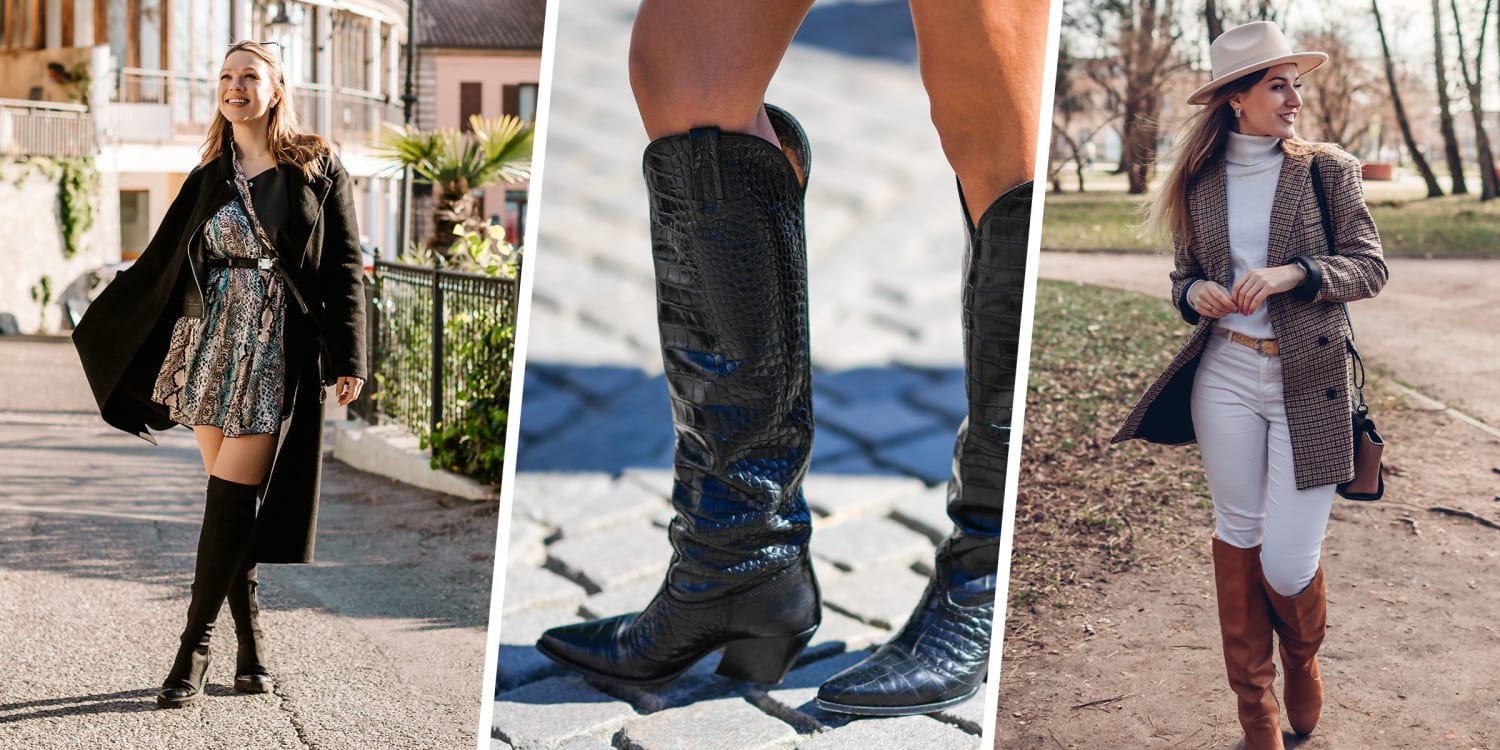
What Do Knee-High Boots Say About Personal Style?
Knee-high boots do not have one universal message. The color, shape, heel, material, and outfit create the overall impression.
Here are common style signals:
- Black leather: Clean, sharp, and easy to pair.
- Brown leather: Warm, classic, and relaxed.
- Suede: Soft, casual, and textured.
- Patent finish: Bright, formal, or dramatic.
- Flat sole: Practical and understated.
- Block heel: Polished with added stability.
- Slim high heel: Formal or striking.
- Chunky lug sole: Bold and outdoorsy.
- Western details: Casual and expressive.
- Minimal design: Simple and modern.
These signals are not rules. Personal style depends on the whole outfit and the setting. A person may also wear the same pair for comfort, habit, or weather rather than to send a message.
Knee-high boots can also be part of gender expression. They are marketed to women often, but footwear has no fixed gender requirement. Anyone can wear a boot that fits their body, clothing, and comfort needs.

Common Mistakes to Avoid
The most common mistake is choosing a boot by appearance alone. A tall boot can look attractive in a photo but feel difficult to wear in daily life.