How To Wear Heeled Boots: Easy Style Tips
Introduction
Heeled boots work with more outfits than many people expect. In the United States, you can wear them with jeans for a casual weekend, tailored pants for the office, or a dress for dinner. The key is to match the boot’s height, shape, color, and fit to the outfit and the setting.
Start with a stable heel and a snug, comfortable fit. Then build the outfit around the boot’s shaft and toe shape. Slim boots suit tailored clothes, while chunky boots balance loose denim, sweaters, and casual layers. If the boots hurt, slip, pinch, or make you feel unsteady, the outfit is not working yet.

What Are Heeled Boots?
Heeled boots are boots with a raised heel. They may reach the ankle, mid-calf, knee, or higher. Common styles include:
- Ankle boots: End at or near the ankle bone.
- Chelsea boots: Have elastic side panels and a close fit.
- Western boots: Often have a slanted heel, pointed toe, and decorative stitching.
- Knee-high boots: Reach below or around the knee.
- Over-the-knee boots: Extend above the knee.
- Block-heel boots: Use a wide, stable heel.
- Stiletto-heel boots: Have a thin, high heel.
- Wedge boots: Use one solid piece under the heel and sole.
The boot’s height changes the visual line of your outfit. An ankle boot shows more of the leg. A knee-high boot creates a longer, continuous line from the foot to the calf or thigh. The heel also changes both the look and the walking demand.
How Should Heeled Boots Fit?
Heeled boots should feel secure at the heel, roomy at the toes, and firm around the ankle or calf without cutting into the skin. Your toes should not press against the front when you stand or walk.
Use this fit check:
- Try the boots on while wearing the socks or tights you plan to use.
- Stand up and let your feet settle naturally.
- Make sure your longest toe does not touch the front.
- Walk on a hard, flat surface for several minutes.
- Check for heel lift, toe pressure, ankle rubbing, and calf tightness.
- Bend your ankle and sit down to test comfort in more than one position.
Some heel movement is normal in a new boot, especially with leather. Excess movement is not. If your heel lifts sharply with each step, the boot may be too large, too wide, or poorly shaped for your foot.
A pointed toe can look sleek, but it should still leave enough room for your toes to lie flat. Do not assume that leather or fabric will stretch enough to fix a painful fit. Material may soften, but it cannot reliably add needed length.
Fit by boot type
| Boot type | Check most closely |
|---|---|
| Ankle boot | Heel lift, ankle rubbing, and the gap at the top |
| Knee-high boot | Calf room, shaft height, and creasing behind the knee |
| Over-the-knee boot | Staying power, thigh comfort, and safe movement |
| Western boot | Instep fit, toe room, and heel slip during break-in |
| Wide-calf boot | Calf measurement and room for pants or tights |
| High-heel boot | Balance, forefoot pressure, and walking control |
Measure both feet if you shop online. Feet can differ in length and width, and size labels vary by brand. Use the brand’s own size chart, then check the return policy before ordering.

How to Choose the Right Heel Height
Choose the lowest heel that gives you the look and support you need for the day. A lower heel usually makes walking, standing, stairs, and uneven sidewalks easier. A block heel often feels more stable than a narrow heel of the same height.
A simple guide:
- Low heel: Good for commuting, work, errands, and long periods on your feet.
- Medium heel: A useful balance for dinners, office outfits, and events.
- High heel: Best for shorter periods when you already feel steady in the boot.
- Platform or wedge: May reduce the angle under the foot, but still needs a secure fit.
Heel height is not the only factor. A broad heel, firm sole, padded footbed, and secure upper can improve confidence. A tall boot with a narrow heel may feel harder to control than a shorter boot with a wide heel.
Before wearing a new pair for a full day, practice at home. Walk, turn, sit, climb a few stairs, and stand still. If your feet tire quickly or you change your stride to avoid discomfort, choose a lower heel or a different shape.
Do not drive in boots that restrict ankle movement or make it hard to feel the pedals. Change into shoes that let you control the vehicle safely.
How to Wear Ankle Boots With Jeans
Ankle boots are one of the easiest heeled boots to style with jeans. The main choice is where the hem ends.
With skinny or slim jeans
Tuck slim jeans into the boots when the shaft has enough room. If the jeans bunch at the ankle, roll the hem once or choose a shorter inseam.
You can also wear cropped slim jeans. Leave a small gap between the hem and boot for a lighter look, or let the hem nearly meet the boot for a longer line.
With straight-leg jeans
Straight-leg jeans look polished when the hem falls just above the boot or lightly covers the shaft. Avoid a hem that stops at the widest part of the boot unless you want a sharper, more casual break.
A medium heel helps the jeans fall cleanly. A pointed toe can make the leg look longer, while a rounded toe feels softer and more relaxed.
With wide-leg jeans
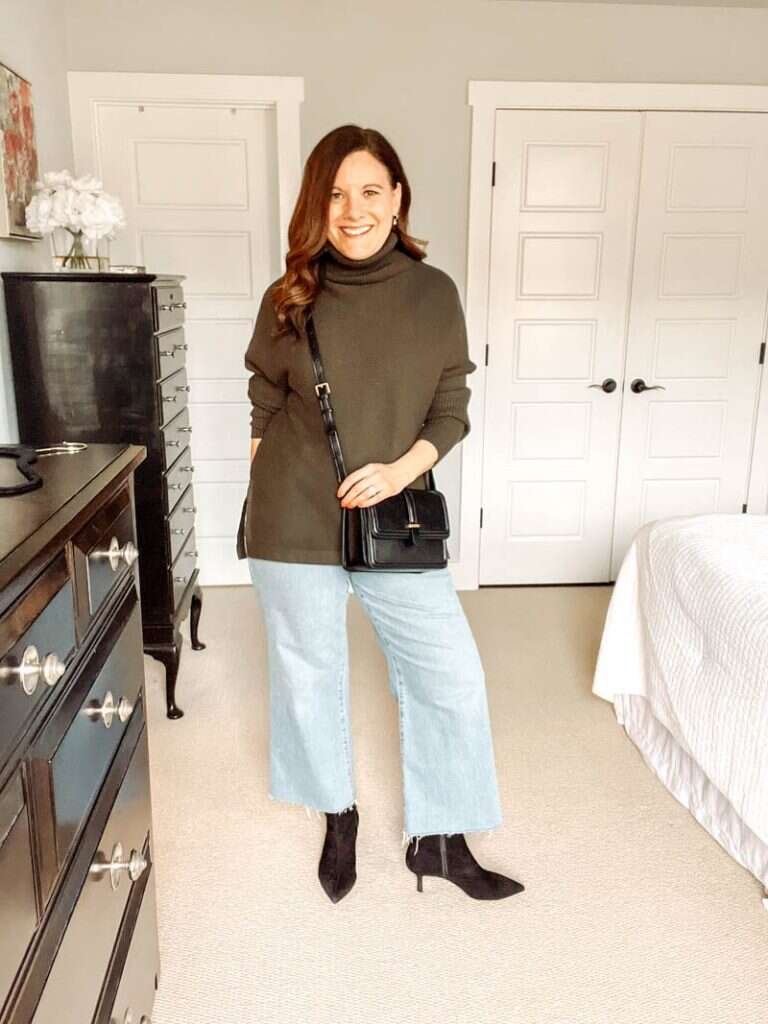
Wear a heel tall enough to keep the hem from dragging. The jeans should skim the floor rather than cover the entire boot. A block heel works well because it supports the wider shape of the jeans.
For a balanced outfit, pair wide-leg jeans with a closer top, such as a fitted sweater, tucked shirt, or cropped jacket.
With cuffed jeans
A small cuff can show the boot and create a casual outfit. Keep the cuff neat and consistent. Large, loose cuffs can make the lower leg look crowded, especially with a bulky boot.

How to Wear Heeled Boots With Dresses and Skirts
Heeled boots can make dresses and skirts feel less formal and more useful across seasons. Match the boot height to the hem and the mood of the outfit.
- Wear ankle boots with midi dresses, mini skirts, and casual dresses.
- Try knee-high boots with short skirts or dresses when you want more coverage.
- Pair sleek boots with tailored dresses.
- Use chunky boots to add weight to a loose knit dress or flowy skirt.
- Match the boot color to tights for a long, simple leg line.
The space between the hem and boot matters. A visible strip of leg can look intentional, but the width should feel balanced. If the gap is very small, it may look accidental. Add tights when you want a smoother transition or more warmth.
A fitted dress with slim boots creates a clean shape. A loose dress often looks better with a stronger boot, such as a block heel or a boot with a wider shaft. This keeps the outfit from appearing top-heavy.
For work, consider the dress code, heel height, boot condition, and amount of exposed skin. A polished ankle boot or knee-high boot may be more suitable than a very tall, distressed, or over-the-knee style.
How to Wear Heeled Boots With Pants
Heeled boots work well with trousers, chinos, leggings, and tailored pants. The best pair depends on the width and length of the pants.
Tailored pants
Choose a slim boot with a pointed, almond, or narrow square toe. The pant hem should either end above the boot or cover most of the shaft without dragging.
A small heel can help the pants fall smoothly. Avoid a thick boot that creates a bump under a narrow pant leg.
Wide-leg trousers
Wide-leg trousers need enough length to clear the ground. A block heel or wedge can add height and keep the hem from pooling.
The boot does not need to be visible. It only needs to provide a stable base and the right amount of lift.
Leggings
Wear leggings with a boot that has a close shaft. The top of the boot should not pinch the calf or create a sharp line under the leggings.
Add a longer sweater, blazer, or shirt jacket if you want more coverage at the hip. A simple black boot creates a clean line, while a contrasting boot becomes the focus.
Cropped pants
Cropped pants show the ankle boot clearly. This works best when the hem ends at a narrow part of the lower leg rather than at the widest part of the calf.
Try a pointed boot for a refined look or a rounded block-heel boot for a softer casual outfit.

How to Match Heeled Boots With Colors
Black, brown, tan, and cream boots are easy to use because they fit many wardrobes. The best color depends on the visual line you want.
- Black boots: Create a strong, sleek look and pair well with dark denim, black pants, jewel tones, and neutrals.
- Brown boots: Work well with blue jeans, olive, cream, rust, camel, and warm gray.
- Tan boots: Lighten an outfit and suit spring, summer, and early fall clothing.
- White or cream boots: Stand out and work best when another item repeats the light color.
- Colored boots: Make the footwear the focal point, so keep the rest of the outfit simple.
Matching the boot to your pants can make the leg look longer. Matching the boot to a belt, bag, or jacket can make a contrasting outfit feel connected. You do not need every accessory to match exactly.
Texture matters, too. Smooth leather looks more formal. Suede often feels softer and more casual. Patent finishes draw attention and may suit evening outfits better than everyday workwear.
How to Make Heeled Boots More Comfortable
Comfort starts with fit, not with add-ons. A cushion cannot correct a boot that is too short, too narrow, or unstable.
Try these steps:
- Wear the boots for short periods first. Start at home before using them for a full day.
- Use the right socks or tights. Thin socks may reduce pressure, while thicker socks may help with mild heel slip.
- Check the footbed. A removable insole may allow room for a supportive insert.
- Protect rubbing areas. Blister patches or soft bandages can reduce friction before skin becomes sore.
- Keep toenails comfortably trimmed. Long nails can add pressure in a closed toe.
- Take breaks. Sit down when possible instead of waiting until your feet hurt.
- Carry a backup option. Flat shoes can help during a long event or commute.
Stop wearing the boots if you develop sharp pain, numbness, swelling, or repeated blisters. Persistent foot pain deserves advice from a qualified health professional, such as a podiatrist.
High heels can shift more pressure toward the front of the foot. That does not mean every person must avoid them, but it does mean heel height, fit, and wearing time matter.

How to Walk Safely in Heeled Boots
Walk with shorter steps than you would in flat shoes. Place the heel down with control, then move through the ball of the foot. Keep your knees soft and look ahead rather than down at every step.
Practice these situations before wearing the boots outside:
- Turning quickly
- Walking on stairs
- Crossing uneven pavement
- Standing on hard floors
- Entering and leaving a car
- Walking on wet surfaces
- Moving across carpet and smooth floors
Use handrails on stairs when needed. Wet leaves, ice, loose gravel, and metal grates can reduce traction. In winter areas of the United States, check the outsole before wearing heeled boots on snow or ice. Fashion boots may not provide the grip needed for those conditions.
If the sole feels slippery, a qualified shoe repair professional may be able to add a suitable sole or traction pad. Do not make permanent changes before checking whether they affect the boot’s fit or warranty.
Common Heeled-Boot Mistakes
Wearing the wrong size
A boot that pinches, slips, or forces your toes forward will remain uncomfortable. Recheck the length, width, instep, and shaft fit.
Choosing height over stability
A very high heel may look striking but fail for commuting, work, or long events. Pick the heel for the actual day you have planned.
Ignoring the hem
The wrong pant length can hide the boot, drag on the ground, or create an awkward break. Try the full outfit before leaving home.
Pairing bulky boots with every outfit
Chunky boots can overpower thin fabrics and narrow pants. Balance them with denim, structured outerwear, heavy knits, or relaxed shapes.
Wearing new boots all day
Break them in gradually. A short indoor test can reveal a problem before it becomes a painful day outside.
Treating discomfort as normal
Mild stiffness during break-in may happen. Sharp pain, numbness, or repeated rubbing is a sign to stop and reassess the fit.

A Simple Outfit Decision Guide
Use the outfit’s shape and purpose to choose the boot.
| If you are wearing… | Try… | Why it works |
|---|---|---|
| Slim jeans | Ankle boots with a slim or medium heel | Keeps the line neat |
| Wide-leg jeans | Block-heel or wedge boots | Supports the wider hem |
| A midi dress | Ankle boots | Adds structure without competing with the hem |
| A short skirt | Knee-high boots | Adds coverage and visual balance |
| Tailored pants | Sleek ankle boots | Fits a polished shape |
| A knit dress | Chunky block-heel boots | Balances soft fabric |
| Leggings | Close-fitting ankle or knee-high boots | Prevents excess volume at the ankle |
| A formal dress | Slim, simple boots | Keeps attention on the outfit |
The best choice also depends on weather, walking distance, dress code, and personal comfort. Style is useful only when the boots work for the situation.