
Are Hoka Shoes Slip Resistant: What You Need To Know
Some Hoka shoes are slip resistant, but not every Hoka model offers reliable protection on wet or oily floors.
Hoka makes many types of shoes, from soft daily trainers to work-ready models with slip-resistant rubber. The key is to check the exact model, outsole design, surface, and workplace needs. This guide explains are Hoka shoes slip resistant, which models perform best, and how to choose a safer pair.
Are Hoka Shoes Slip Resistant?
Are Hoka shoes slip resistant? The answer is sometimes, but it depends on the model. Hoka does not make every shoe with the same rubber compound, tread pattern, or safety rating.
Some Hoka shoes use rubber designed for better grip on roads and sidewalks. Others use a special outsole made for hospitals, restaurants, clinics, and other workplaces where floors may be wet or greasy.
A standard Hoka running shoe may grip well on dry pavement. However, that does not mean it is certified or suitable for slippery work floors. Running shoes focus on comfort, weight, cushioning, and forward movement. Work shoes need extra traction for sudden steps, turns, and spills.
The safest rule is simple:
• Check the product name and specifications.
• Look for the words “slip resistant” or “slip-resistant outsole.”
• Do not assume that a thick sole equals better traction.
• Match the shoe to the surface where you will use it.
What Makes a Shoe Slip Resistant?
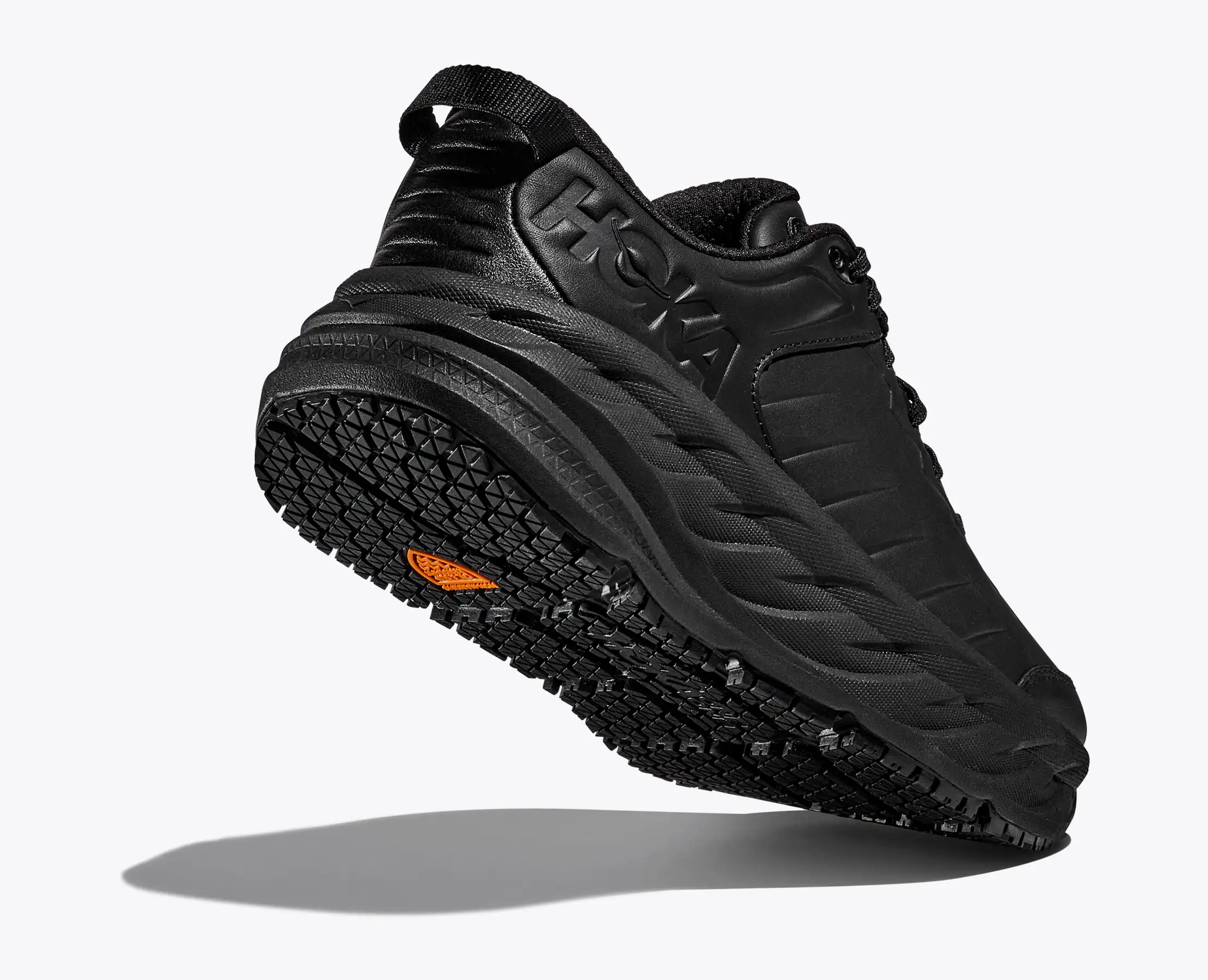
Slip resistance comes from more than the amount of rubber under your foot. It depends on the rubber compound, tread shape, contact area, flexibility, and how the outsole handles water or oil.
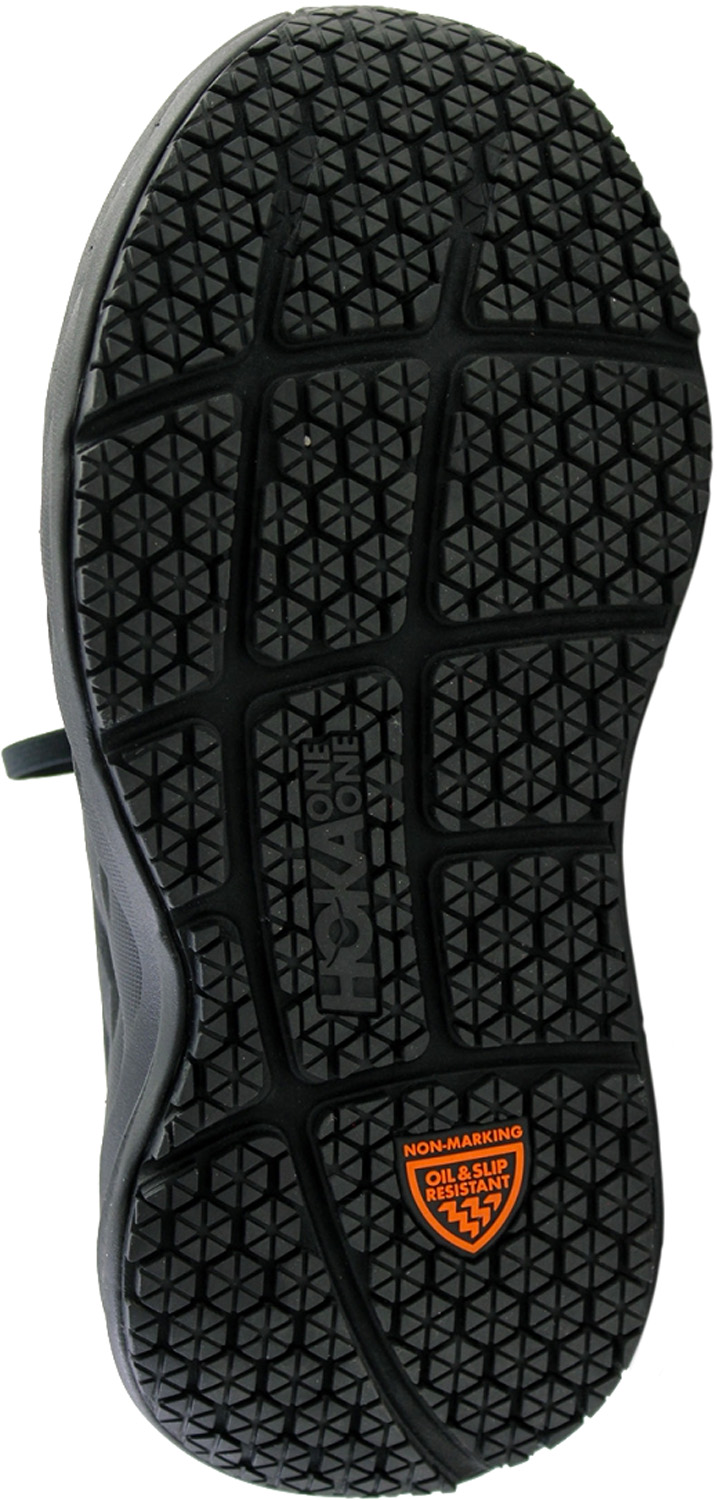
A slip-resistant outsole often has these features:
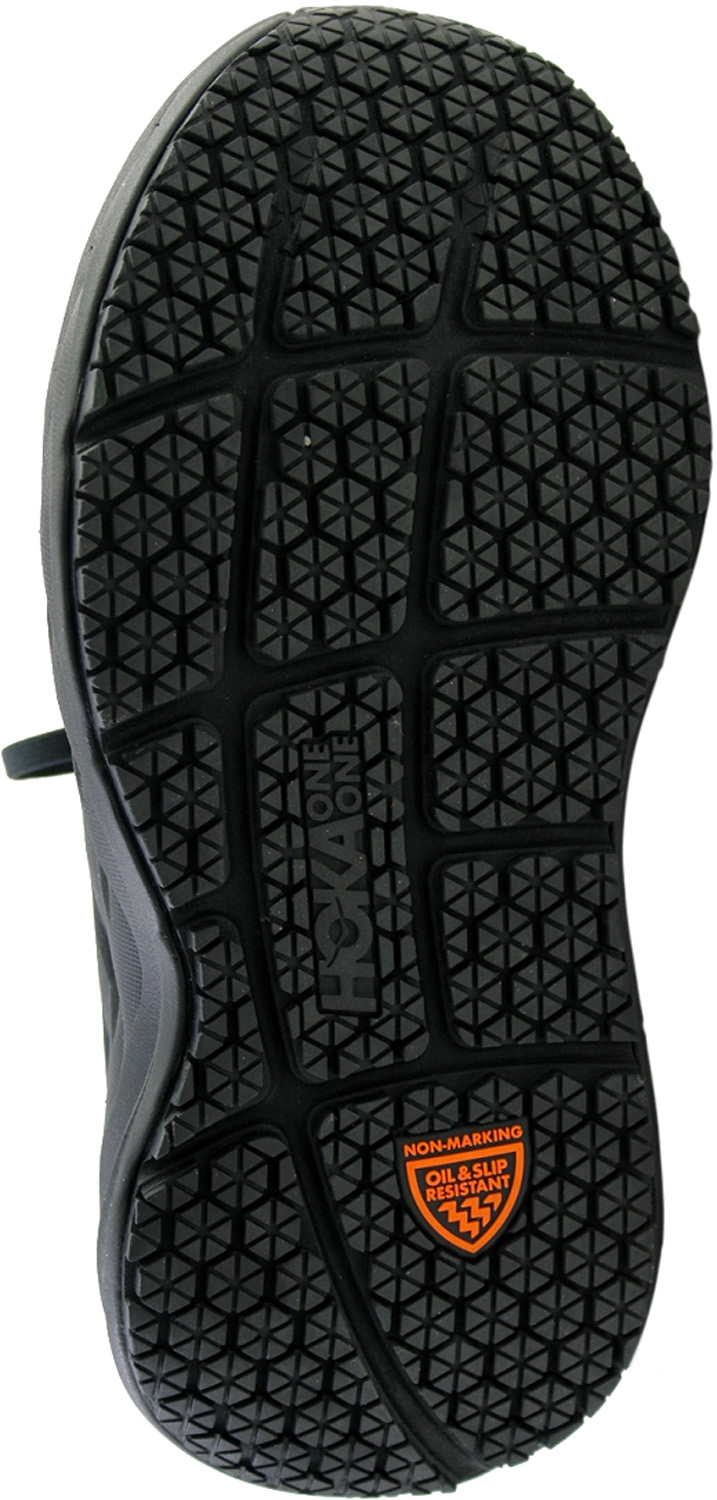
• A rubber compound that stays grippy on smooth floors.
• Small channels that help move water away from the contact area.
• A tread pattern with many edges for better surface contact.
• A stable base that helps your foot stay aligned.
• A design tested for wet or oily surfaces.
Think of the outsole like a car tire. A tire with deep grooves can help in rain, but its rubber and tread pattern also matter. Hoka shoes work in much the same way. A thick foam midsole may feel soft, yet it does not automatically prevent slipping.
Traction also changes with wear. A new outsole may grip well, while a smooth, worn outsole can become risky. Dirt, oil, soap, and loose gravel can reduce traction on almost any shoe.
Which Hoka Shoes Are Slip Resistant?
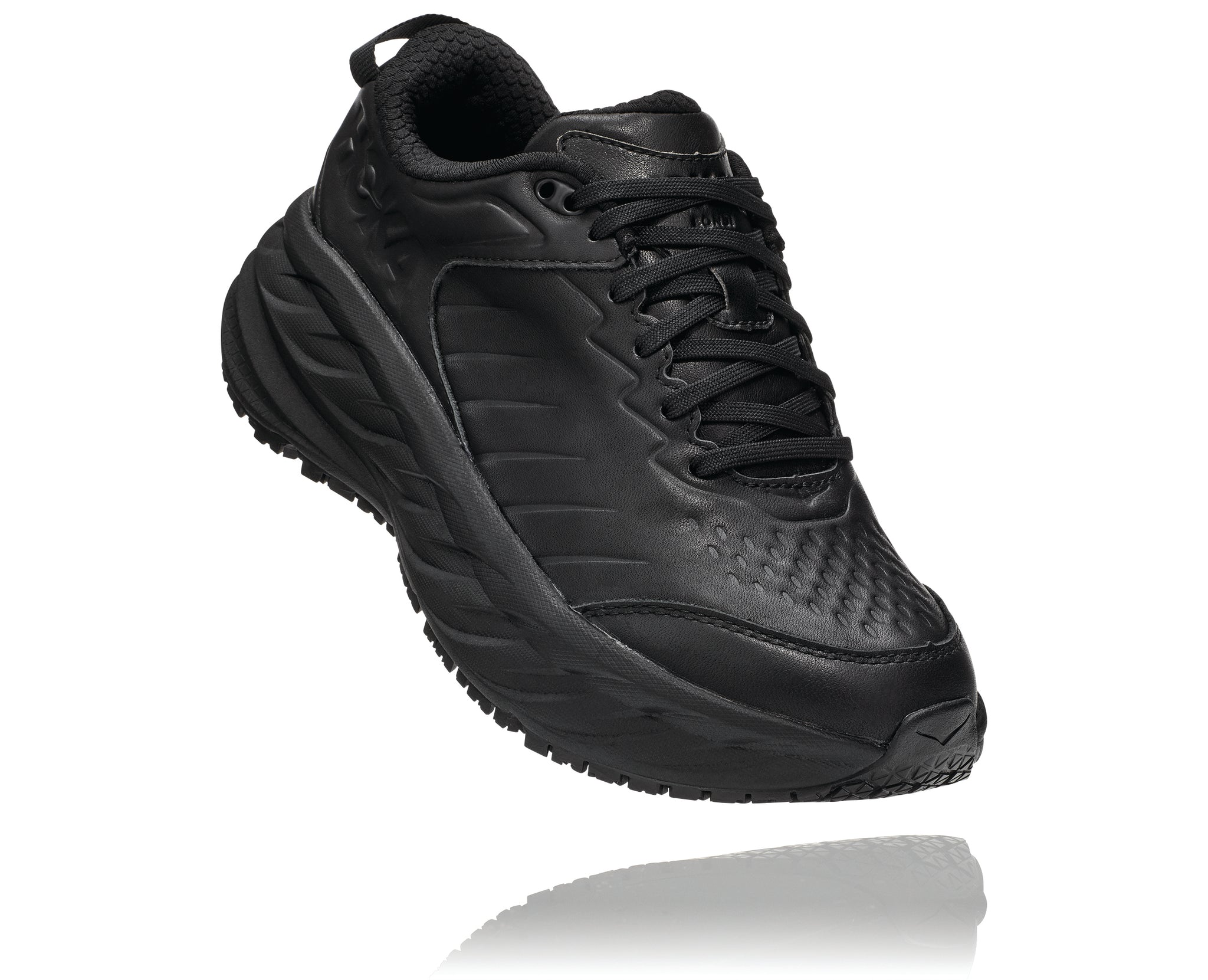
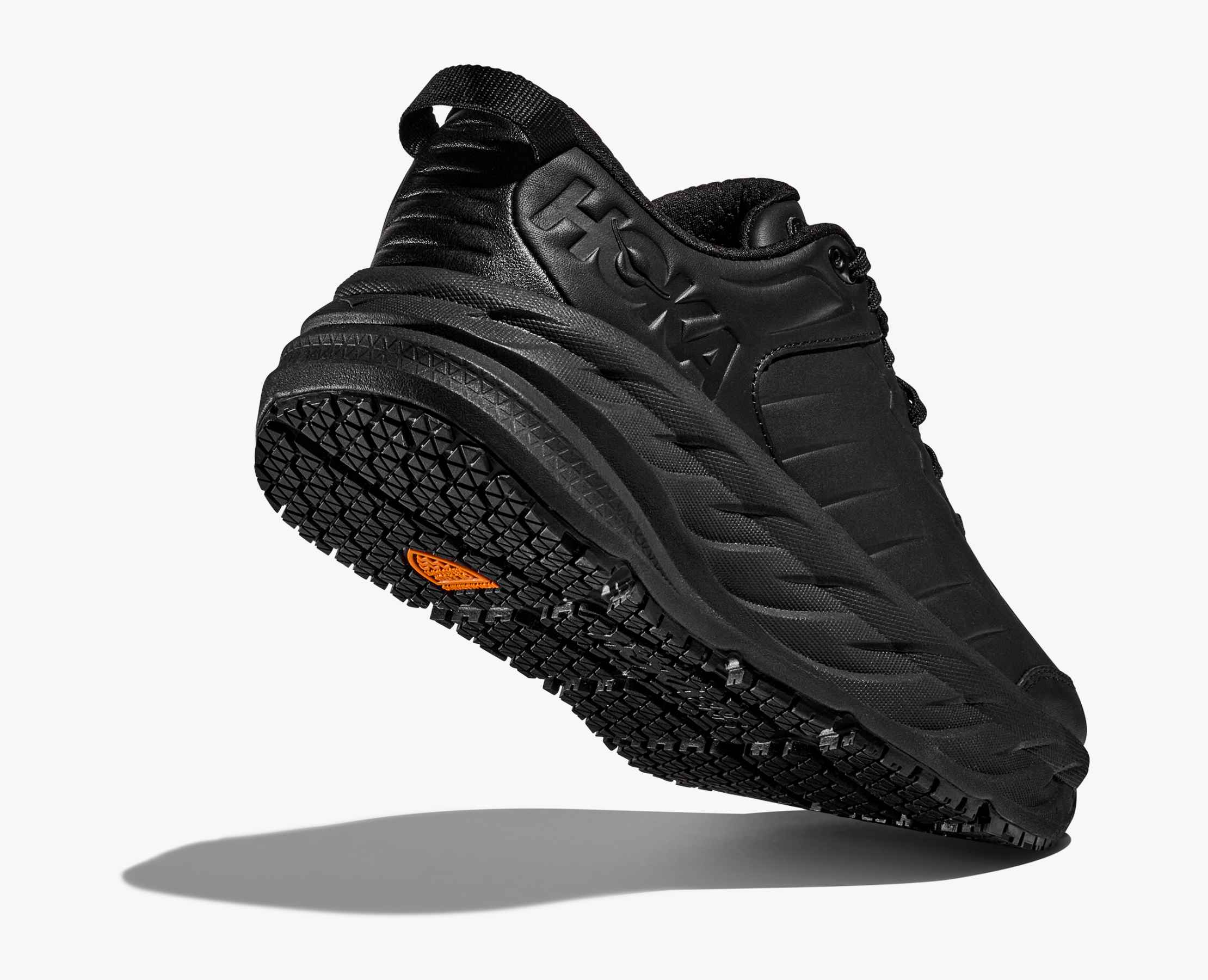
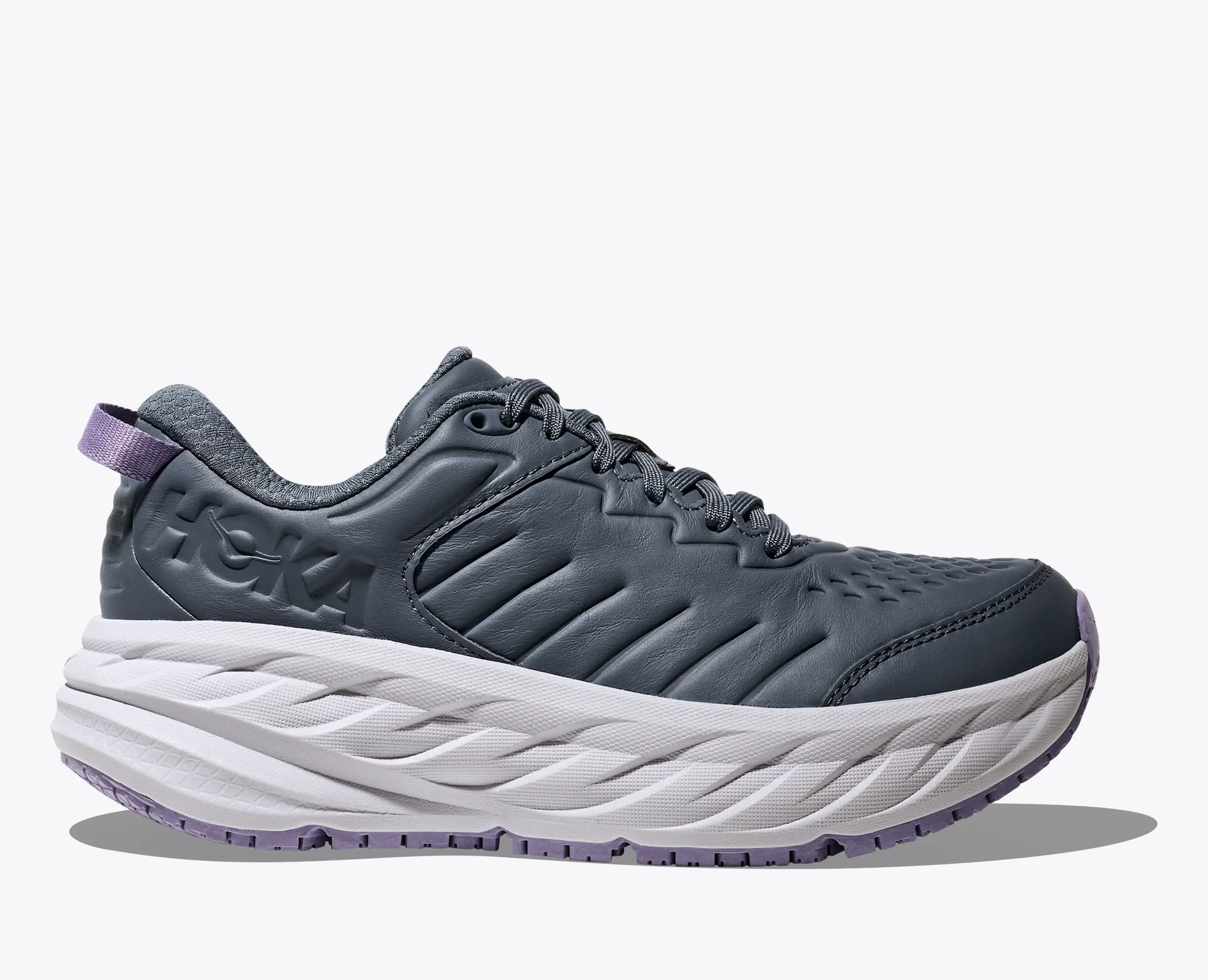
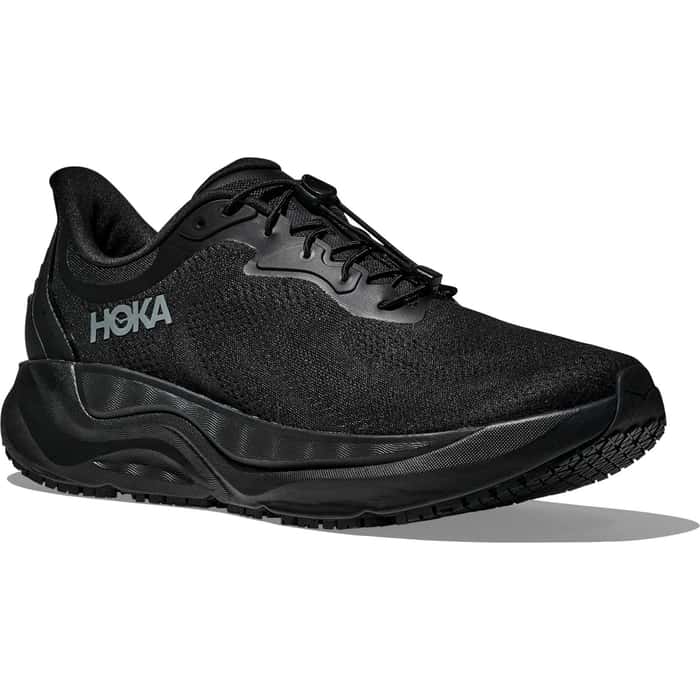
The best-known Hoka work option is the Bondi SR. The “SR” stands for slip resistant. It is built for people who spend long hours on hard floors, including health care workers, food service staff, and retail employees.
The Bondi SR typically includes:
• A slip-resistant rubber outsole.
• A broad, stable platform.
• Strong cushioning for long shifts.
• A water-resistant leather upper on many versions.
• A rocker shape that helps the foot move forward.
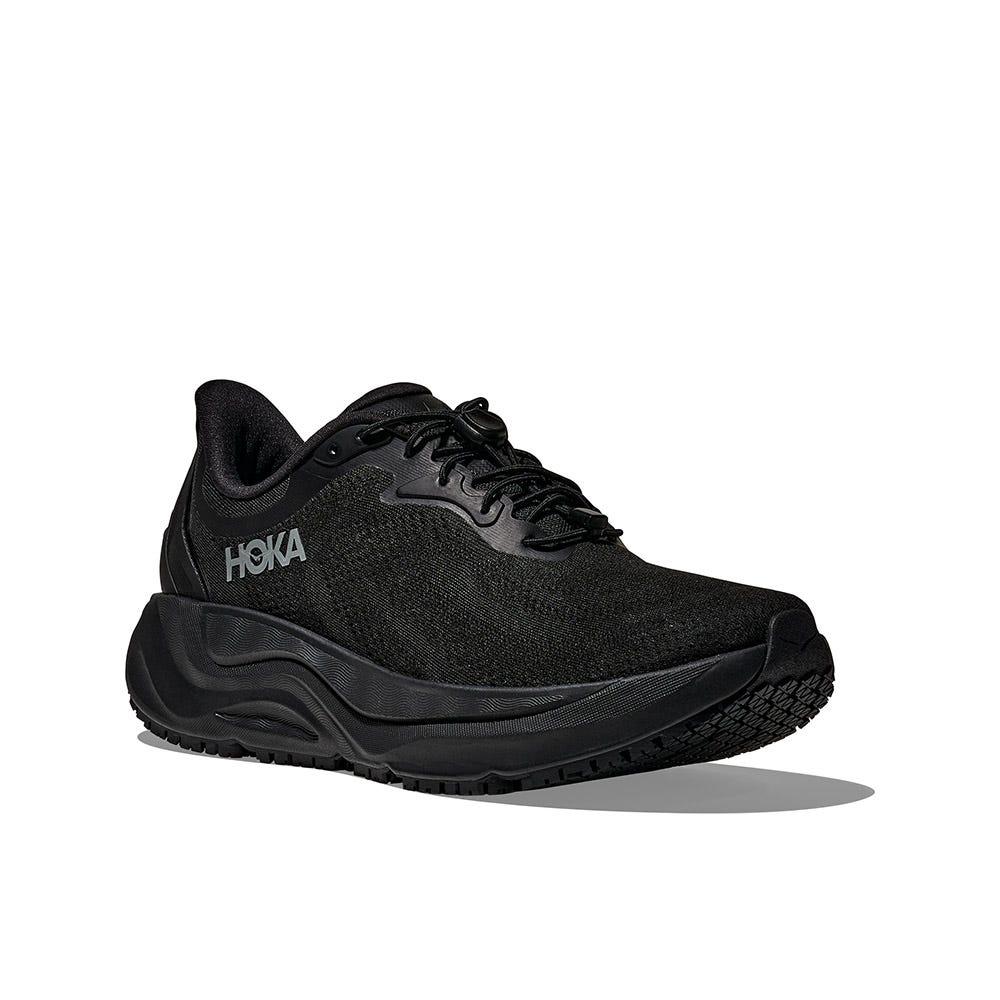
The Bondi SR is not the same as a regular Bondi running shoe. The names are similar, but the outsoles serve different purposes. A regular Bondi may offer good everyday grip, while the Bondi SR is designed more directly for workplace traction.
Other Hoka models may offer useful grip for trails or wet sidewalks. However, trail traction is not automatically the same as slip resistance on smooth indoor floors. A trail shoe may be excellent on dirt and rock but less dependable on oil, grease, or polished tile.
Always check the current product details before buying. Brands can change outsole materials and model specifications between versions.
Is the Hoka Bondi SR Good for Work?
For many workers, the Bondi SR is a strong choice. It combines a cushioned Hoka midsole with an outsole intended for better grip on common workplace surfaces.
It can be useful for:
• Nurses and hospital staff.
• Restaurant servers and kitchen workers.
• Teachers and child care workers.
• Retail and warehouse employees.
• Airport and hotel staff.
The shoe also gives your feet a wide, soft platform. That can help reduce fatigue during long periods of standing or walking. Still, comfort and slip protection are different benefits. A shoe can feel comfortable without being safe on a greasy floor.
The Bondi SR may feel heavier and firmer than a regular running shoe. That is a normal trade-off. Extra outsole rubber and a work-focused upper can add weight, but they may provide better durability and protection.
No shoe can prevent every fall. Even a slip-resistant shoe can slide on heavy oil, loose debris, ice, or a badly contaminated floor. Good cleaning practices and safe walking habits still matter.
How Hoka Shoes Perform on Different Surfaces
Are Hoka shoes slip resistant on every surface? No. Traction depends heavily on the ground beneath you.
Wet floors
Slip-resistant models can perform well on many wet indoor floors. Their tread helps maintain contact when a thin layer of water sits between the shoe and the floor.
A regular running model may also grip wet pavement. However, smooth tile, sealed concrete, and indoor floors can be more difficult than rough outdoor surfaces.
Oily or greasy floors
Oil creates a major traction problem. It can act like a thin film between the rubber and the floor. A shoe labeled slip resistant may handle light exposure better, but no outsole should be treated as oil-proof.
Wipe spills at once and follow workplace safety rules. Do not test a shoe by walking through a known greasy area.
Concrete and asphalt
Most Hoka shoes grip well on ordinary sidewalks and pavement. The rough texture gives the outsole many small points of contact.
Wear and weather still matter. Rain, leaves, sand, and painted markings can make concrete or asphalt slick.
Trails and uneven ground
Trail Hoka models often use deeper lugs. These can help on soil, gravel, mud, and rocks. However, deep lugs may not provide the best grip on smooth indoor floors.
Choose a trail model for outdoor terrain, not simply because the tread looks aggressive.
How to Check if Your Hoka Shoes Have Good Grip
Before buying, inspect the model rather than relying on the Hoka name alone. A short product check can prevent an expensive mistake.
Use these steps:
-
Find the exact model name and version.
-
Read the outsole description on the official product page.
-
Look for “slip resistant,” “slip-resistant rubber,” or workplace traction language.
-
Check whether the shoe is designed for indoor work, running, hiking, or casual use.
-
Examine the outsole for visible rubber coverage and clear tread.
-
Read recent customer reviews for comments about wet floors.
-
Confirm your employer’s footwear requirements.
You can also inspect a pair in person. The rubber should feel firm but not glassy or overly hard. The tread should have several edges and channels rather than one flat slab.
Avoid a home “slip test” on stairs or a wet floor. It is unsafe and cannot reproduce controlled testing. A shoe that feels grippy in a store may behave differently when exposed to water, soap, or oil.

Slip Resistance Compared With Water Resistance
These terms describe different features. Slip resistance relates to traction. Water resistance relates to how much moisture enters the shoe.
A water-resistant upper may keep light rain from soaking your socks. It does not guarantee that the outsole will grip a wet floor. Likewise, a slip-resistant outsole does not mean the upper is waterproof.
For work, look at both features:
• Slip-resistant outsole for better floor traction.
• Water-resistant upper for light spills and moisture.
• Breathable lining for comfort during long shifts.
• Easy-to-clean materials for food service or health care settings.
Some Hoka work shoes use leather or treated materials that are easier to wipe clean. Even so, water can enter through the tongue, seams, or opening around the ankle.
If you work outdoors in heavy rain, snow, or deep puddles, you may need a waterproof boot rather than a slip-resistant sneaker.
Benefits of Slip-Resistant Hoka Shoes
Are Hoka shoes slip resistant enough for long work shifts? A suitable model can offer several useful benefits beyond traction.
Cushioning
Hoka shoes are known for thick midsoles and a soft, supportive feel. This can help people who stand or walk for many hours.
Stable footing
A broad platform may help reduce side-to-side movement. Stability is useful when you turn quickly or carry light loads.
Reduced foot fatigue
Cushioning can make hard floors feel less harsh. It may help reduce discomfort in the feet and legs, though it cannot treat every foot problem.
Rocker-shaped movement
Many Hoka shoes use a curved sole that encourages a smooth forward roll. Some workers find this helpful during long walking shifts.
Supportive fit
A good fit can keep the heel secure and reduce unnecessary foot movement. The shoe should feel snug without squeezing the toes.
Comfort matters because tired workers may take shorter, less stable steps. Still, cushioning should support safe movement, not replace proper workplace training.
Limitations and Common Mistakes
Are Hoka shoes slip resistant if the tread is thick? Not always. Thick foam and deep-looking tread can create a false sense of security.
Here are common mistakes to avoid:
• Buying a regular running shoe for a greasy kitchen.
• Confusing trail traction with indoor slip resistance.
• Ignoring a worn outsole.
• Wearing the wrong size.
• Assuming waterproof means slip resistant.
• Failing to clean oil or food from the outsole.
• Choosing a soft, unstable shoe for a job that requires firm footing.
A loose heel can make you slide inside the shoe. A narrow toe box can change your walking pattern. A very soft midsole can also feel unstable for some people, especially when carrying weight.
If your job requires certified protective footwear, ask your employer which standard or label is required. In the United States, workplace safety rules may depend on the job, surface, and risk of injury. A lifestyle shoe may not meet those requirements.
How to Improve Grip and Extend Outsole Life
Even the best slip-resistant Hoka model needs care. Cleaning the outsole can restore contact when dust or grease fills the tread.
Try this routine:
-
Remove loose dirt with a stiff brush.
-
Wash the outsole with warm water and mild soap.
-
Scrub between the tread grooves.
-
Rinse away the soap.
-
Let the shoes air-dry fully.
-
Check the rubber for cracks, flattening, or smooth patches.
Do not use harsh chemicals unless the care instructions permit them. Strong cleaners can damage rubber or the upper material.
Replace the shoes when the tread becomes smooth, the outsole separates, or the midsole feels uneven. A worn shoe may still look attractive, but its grip and support may have changed.
From practical shoe comparisons, one lesson stands out: people often replace a shoe because the upper looks old, while the outsole is the part that most affects traction. Inspect the bottom regularly, especially if you walk on wet floors each day.
Are Hoka Shoes Slip Resistant for Nurses and Restaurant Workers?
Are Hoka shoes slip resistant for nurses and restaurant workers? Some are, especially models made for work such as the Bondi SR. A regular Hoka running shoe may be comfortable but may not provide the level of protection required in a hospital kitchen, restaurant, or busy clinical setting.
Nurses often need cushioning, easy cleaning, and secure traction on smooth floors. Restaurant workers usually face a greater risk from grease, food, water, and sudden spills. In both cases, the exact outsole matters more than the brand name.
Before purchasing, check:
• Your workplace dress and safety policy.
• The type of floor you use.
• Whether oil or grease is common.
• Whether the shoe must be black or leather.
• Whether your employer requires a specific rating.
A short break-in period can also help. Wear the shoes at home on clean, dry floors before using them for a full shift. This helps you identify pressure points and fit problems early.
How Hoka Compares With Other Slip-Resistant Work Shoes
Hoka stands out for cushioning and a smooth rolling feel. Other work-shoe brands may focus more on a firmer platform, a safety toe, waterproof construction, or a lower price.
When comparing shoes, look beyond appearance. Consider:
• Verified slip-resistant claims.
• Outsole rubber and tread design.
• Comfort during eight to twelve hours of wear.
• Weight and flexibility.
• Ease of cleaning.
• Arch and heel support.
• Return policy.
A firm, traditional work shoe may feel more stable for some jobs. A cushioned Hoka may feel better for workers who walk long distances on hard floors. Neither option is best for everyone.
Try the shoes with the socks you wear at work. Walk, turn, and stand for several minutes. Pay attention to heel lift, toe pressure, and side-to-side movement.
Frequently Asked Questions About Are Hoka Shoes Slip Resistant
Are all Hoka shoes slip resistant?
No. Hoka makes running, hiking, walking, casual, and work shoes with different outsole designs. Check the exact model for a clear slip-resistant claim.
Is the Hoka Bondi SR slip resistant?
Yes, the Bondi SR is designed as a slip-resistant work shoe. It is made for better traction on many common workplace surfaces, but it cannot prevent every slip on heavy oil, ice, or debris.
Are regular Hoka Bondi shoes safe for restaurant work?
A regular Bondi may be comfortable, but it should not be treated as a commercial slip-resistant shoe unless its product details say so. Restaurant workers should choose footwear that matches their employer’s safety rules and floor conditions.
Are Hoka trail shoes good on slippery floors?
Trail Hoka shoes can provide strong grip on dirt, rocks, and uneven outdoor ground. Their lugs are not automatically designed for smooth indoor floors, grease, or polished tile.
Can Hoka shoes become slippery over time?
Yes. Dirt, grease, worn rubber, and flattened tread can reduce traction. Clean the outsole often and replace the shoes when the tread becomes smooth or damaged.
Are slip-resistant Hoka shoes waterproof?
Not necessarily. Slip resistance and waterproofing are separate features, so check the upper material, seams, and product specifications before buying.
Conclusion
Are Hoka shoes slip resistant? Some models are, but the answer depends on the specific shoe. The Bondi SR is the clearest work-focused choice, while regular running and trail models should not be assumed to provide reliable protection on wet or greasy floors.
Check the outsole claim, workplace rules, surface type, fit, and tread condition before you buy. Choose the model that matches your daily risks, then keep the outsole clean and replace it when the grip wears down. Explore the current Hoka work collection, compare the specifications, and share your experience with Hoka traction in the comments.

Michael Smith is the Content Strategist behind The Style Hub, where fashion meets function. With a keen eye for trends and a passion for everyday style, he curates content that helps readers make smarter, more stylish choices—from the perfect pair of sneakers to must-have accessories. Michael specializes in breaking down fashion into practical, wearable insights, making style accessible for everyone. When he’s not researching the latest trends, he’s exploring how comfort, innovation, and timeless design come together in modern fashion.