
Can You Put Shoes In The Dryer: Safe Tips
Usually, you should not put shoes in the dryer because heat can damage materials, glue, and shoe shape.
Knowing whether can you put shoes in the dryer depends on the shoe’s material, construction, and care label. Some sturdy canvas sneakers may tolerate low heat, but leather, suede, rubber, foam, and glued shoes can suffer lasting damage. This guide explains the safest drying methods, when a dryer may be acceptable, and how to avoid common mistakes.
Can You Put Shoes in the Dryer?
The safest answer is usually no. A clothes dryer uses heat and strong tumbling motion. Both can harm shoes, even when the shoes look durable.
High heat may soften or weaken the glue that holds the sole together. It can also shrink fabric, warp foam, crack leather, and change the shape of the shoe. The tumbling motion may cause shoes to strike the drum, which can damage both the shoes and the dryer.
Before deciding can you put shoes in the dryer, check the care label. The label may say:
• Tumble dry low
• Air dry only
• Do not tumble dry
• Dry away from direct heat
If the label says “air dry only” or “do not tumble dry,” follow it. The manufacturer knows how the shoe was made and which materials it contains.

What Happens When Shoes Go in the Dryer?
A dryer can cause several types of damage. Some problems appear at once, while others develop after repeated drying.
Heat damage
Heat can affect the materials in the upper, midsole, and outsole. Synthetic fabrics may shrink or lose their shape. Foam cushioning may become less supportive. Rubber may harden, soften, or crack.
The adhesive used in many modern shoes is also sensitive to heat. When it softens, the sole may begin to separate from the upper. This is one of the most common reasons people regret drying shoes in a machine.
Shape changes
Shoes need to keep a precise shape to support your feet. Heat and pressure can flatten the heel counter, bend the toe box, or twist the sole.
A misshaped shoe may feel uncomfortable. It can also create pressure points and rubbing. If you are asking can you put shoes in the dryer because you need them quickly, remember that a few hours saved may shorten the life of the shoes.
Color fading and marks
Colored fabric can fade when exposed to heat. Dark shoes may develop uneven patches, while bright shoes may lose their original tone.
The dryer drum can also leave scuff marks. Loose laces, metal eyelets, and hard heel parts may cause extra wear as they tumble.
Dryer damage
Shoes can bang against the inside of the drum. This noise is more than annoying. Repeated impact may damage the drum, door, or other parts of the appliance.
Heavy shoes can also place extra stress on the dryer. For this reason, air drying is safer for both the footwear and the machine.

Which Shoes Should Never Go in the Dryer?
Some shoes are especially vulnerable to heat and moisture changes. Avoid placing these types in a dryer unless the care label clearly allows it.
• Leather shoes can dry out, shrink, crack, or lose their finish.
• Suede shoes can become stiff, stained, or rough in texture.
• Nubuck shoes may develop water marks and a damaged nap.
• Shoes with memory foam or soft foam can warp or lose cushioning.
• Shoes with glued soles may separate when the adhesive gets hot.
• Shoes with metal details can scratch the dryer and other shoes.
• Boots with structured panels may lose their shape.
• Shoes with waterproof membranes may lose performance if exposed to high heat.
• Athletic shoes with delicate mesh can shrink or become misshapen.
When considering can you put shoes in the dryer, treat specialty footwear as air-dry only unless the care instructions state otherwise. This includes hiking boots, dress shoes, dance shoes, cleats, and technical running shoes.
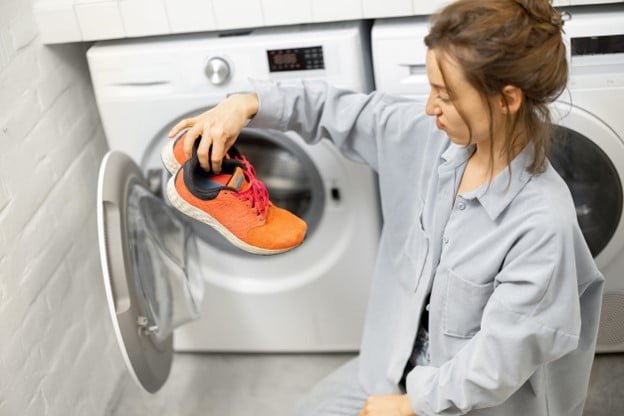
Which Shoes Can Go in the Dryer?
A few shoes may be suitable for machine drying. However, “may be suitable” does not mean “always safe.”
Simple canvas sneakers are often more heat resistant than leather or foam-heavy shoes. Basic cotton slippers may also tolerate low heat if their label allows it. Some washable shoes are designed for machine care and include specific drying instructions.
Look for these conditions:
• The care label permits tumble drying.
• The shoes contain no leather or suede.
• The soles are stitched or firmly attached.
• The shoes have little or no delicate foam.
• The dryer has a low-heat or air-fluff setting.
• The shoes are not expensive, vintage, or difficult to replace.
Even then, use the lowest heat setting. A no-heat air-fluff cycle is generally safer than a heated cycle, but the shoes may still bang around.
If the label is missing, assume the shoes should air dry. This simple rule helps protect unknown materials and construction.

How to Dry Shoes Safely Without a Dryer
Air drying takes longer, but it is the best choice for most shoes. It uses less energy and puts less stress on the shoe’s materials.
Follow these steps:
-
Remove the insoles and laces. Drying these parts separately improves airflow and helps the shoe dry from the inside.
-
Blot away excess water. Use a clean towel and press gently. Do not twist the shoes, since twisting can damage the sole and upper.
-
Open the shoes wide. Pull the tongue forward and loosen the laces so air can reach the toe box.
-
Fill the shoes with plain paper. Newspaper can transfer ink, so use white paper towels or clean packing paper when possible.
-
Replace the paper often. Wet paper slows drying. Change it every few hours until the shoes feel dry.
-
Place the shoes in a cool, well-ventilated area. A fan can improve airflow without adding damaging heat.
-
Keep shoes away from direct sunlight and heaters. Strong heat can cause shrinking, fading, and cracking.
-
Wait until the shoes are fully dry before wearing them. Damp shoes encourage odor and may allow mildew to grow.
Do not place wet shoes on a radiator, heating vent, stove, or hair dryer. Direct heat is often harsher than the gentle warmth produced by a low dryer setting.

How to Dry Sneakers in a Dryer With Less Risk
If the care label allows tumble drying, take steps to reduce heat and impact. This is the safest method to consider when can you put shoes in the dryer has a “yes” answer.
-
Remove the insoles and laces.
-
Place the shoes inside a mesh laundry bag or pillowcase.
-
Add two or three dry towels to reduce noise and cushion the shoes.
-
Choose the lowest heat setting or air-fluff setting.
-
Stop the cycle every 15 to 20 minutes.