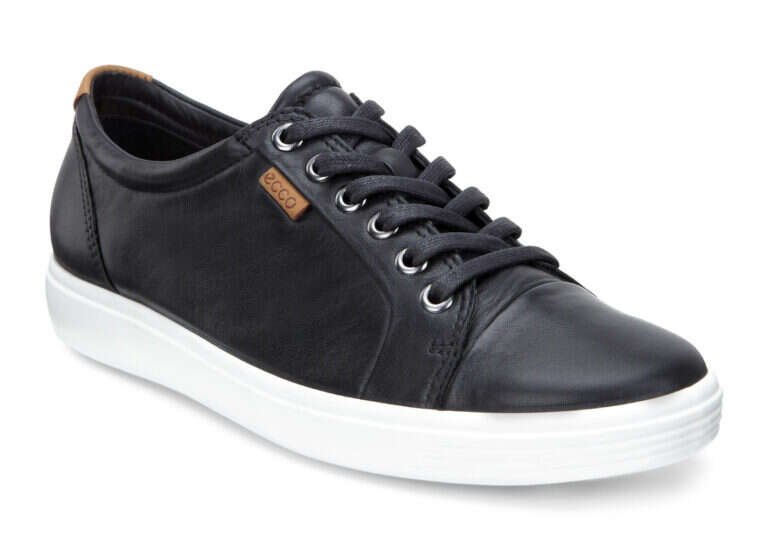
How Long Do Leather Sneakers Last: Lifespan Guide
Leather sneakers usually last 1 to 3 years with regular use. Well-made pairs that are rotated, kept dry, and cleaned often can last 3 to 5 years or longer. Cheap sneakers, heavy daily wear, rain, heat, and poor care can shorten that life to six months to a year.
The upper leather is often not the first part to fail. The sole, heel, stitching, lining, and cushioning may wear out sooner. Your walking habits and the weather where you live in the United States also matter. A pair worn every day in Seattle rain or Arizona heat faces different stress than one worn twice a week in a dry indoor setting.

What Is the Average Lifespan of Leather Sneakers?
For most people, leather sneakers last about 18 to 36 months. That range is a practical estimate, not a fixed industry standard. Shoe brands do not use one universal test or warranty period to promise how long every leather sneaker will last.
Use this table as a starting point:
| Use pattern | Expected lifespan | What usually causes replacement |
|---|---|---|
| Occasional wear, good care | 3–5 years or more | Aging foam, worn lining, style changes |
| Two or three times per week | 2–4 years | Sole wear, creases, heel breakdown |
| Daily city walking | 1–2 years | Flattened cushioning, smooth tread, heel wear |
| Work, travel, or heavy outdoor use | 6–18 months | Water damage, abrasion, sole separation |
| Poor care in wet or hot conditions | 6–12 months | Cracking, stains, odor, glue failure |
These figures describe typical use. They are not guarantees. A high-quality leather upper may remain strong after the sneaker’s foam midsole has lost comfort.
The best way to judge lifespan is to separate the sneaker into its main parts:
- Upper: The leather or leather-like material around the foot.
- Lining: The material inside the shoe.
- Outsole: The part that touches the ground.
- Midsole: The layer that provides cushioning.
- Insole: The removable or built-in footbed.
- Stitching and adhesives: The parts that hold the shoe together.
A sneaker can look clean while its cushioning is already worn out. It can also have a scratched upper while the sole and structure remain usable.
What Determines How Long Leather Sneakers Last?
The largest factors are leather quality, construction, use, climate, and care. No single label tells the whole story.
Leather quality
Full-grain and top-grain leather often resist wear better than thin split leather or heavily coated leather. But the label alone does not guarantee a long life. A good leather upper paired with a weak sole can still produce a short-lived sneaker.
Common leather categories include:
- Full-grain leather: The outer surface of the hide remains mostly intact. It can develop marks and a patina but may resist wear well.
- Top-grain leather: The surface has been lightly corrected or finished. It may feel smooth and look uniform.
- Split leather: The hide is separated into layers and may be coated or finished to resemble smoother leather.
- Suede and nubuck: These use a buffed or napped surface. They need different care and can show water and oil marks more easily.
- Synthetic leather: This may look like leather but uses a plastic coating or textile base. Its surface can peel as it ages.
A thick, flexible leather upper is generally more durable than a thin upper with a brittle finish. Still, thicker does not always mean better. The shoe must bend in the right place and allow the upper to flex without sharp stress lines.
Construction
Construction describes how the parts are joined. Sneakers commonly use adhesives, stitching, or both.
A sneaker with good stitching and strong adhesive bonds may resist separation better than one held together mainly by a thin glue line. However, many sneakers are not designed for full resoling. Their soles may be molded, bonded, or fused to the upper.
Look for:
- Even stitching with no loose threads.
- A sole that sits evenly around the upper.
- No open gaps at the toe or heel.
- A flexible forefoot that bends without sharp creasing.
- A heel counter that does not collapse when pressed.
- A removable insole, if you want easier cleaning or replacement.
A stitched sole does not automatically make a sneaker more durable. The quality of the materials and the way the shoe is built still matter.
Frequency of use
Daily wear gives a sneaker less time to dry and recover. Sweat can affect the lining and insole. Repeated bending also creates permanent creases in the upper.
Rotating two or three pairs can extend the useful life of each pair. This does not stop normal wear, but it gives moisture more time to leave the shoe and reduces the number of flex cycles per day.
Weather and climate in the United States
U.S. weather can damage leather sneakers in several ways:
- Rain and snow can soak the upper and weaken some adhesives.
- Road salt can leave white marks and dry the leather.
- High heat can dry leather and damage finishes.
- Humidity can increase odor and mold risk if shoes stay damp.
- Sand and grit can wear down leather and tread.
- Hot pavement can speed up the aging of rubber and foam.
Water-resistant does not mean waterproof. Most casual leather sneakers should not be treated as rain boots. If they become wet, dry them at room temperature rather than placing them near a heater.
How to Make Leather Sneakers Last Longer
Basic care can add months or years to a pair, especially when you start before damage becomes severe.
1. Remove surface dirt after use
Brush off dry dirt with a soft brush or cloth. Use a slightly damp cloth for light marks. Do not scrub hard, since friction can spread dirt and dull the finish.
For suede or nubuck, use a brush made for that surface. Do not apply standard smooth-leather cream unless the manufacturer says it is safe.
2. Clean with a suitable product
Use a cleaner made for the exact material. Test it first on a hidden area. Strong household cleaners, bleach, alcohol, and dish soap can strip color or dry the leather.
Apply a small amount of cleaner to a cloth rather than soaking the sneaker. Clean in light passes. Let the shoe dry fully before applying any conditioner or protector.
3. Condition smooth leather when it looks dry
Smooth leather may benefit from a small amount of leather conditioner. Conditioner can help keep the surface flexible, but too much can make leather dark, greasy, or soft.
You usually need conditioner when the leather looks dull, feels dry, or develops fine surface lines. You do not need to condition every week. For many casual sneakers, one or two light treatments per year is enough, depending on wear and climate.
Avoid conditioner on suede and nubuck unless the product is made for those materials.
4. Dry wet sneakers slowly
If leather sneakers get wet:
- Remove the laces and insoles.
- Blot away water with a clean towel.
- Fill the shoes loosely with plain paper to help maintain shape.
- Replace the paper if it becomes wet.
- Let the shoes air-dry at room temperature.
- Condition smooth leather only after it is fully dry.
Do not use a hair dryer, clothes dryer, radiator, or direct heater. Fast heat can stiffen leather, warp the shoe, and weaken glue.
5. Use shoe trees or a simple shape support
Shoe trees can help reduce deep creases and allow air to move through the shoe. Cedar trees may also help manage odor, but they are not a substitute for cleaning.
If you do not own shoe trees, use clean, loose paper. Avoid packing the shoe tightly, because pressure can distort the toe box.
6. Protect high-wear areas
The toe, heel, and outer edge of the outsole often wear first. A suitable protector may help repel light moisture and stains, but no spray makes a sneaker immune to damage.
Follow the product directions and test a hidden area. Some protectors can change color or texture, especially on suede, nubuck, and pale leather.
7. Store sneakers in a cool, dry place
Keep leather sneakers away from direct sunlight, damp basements, and enclosed plastic bags. Let them dry after wear before placing them in a box or closet.
Avoid storing them in a hot car. High heat can affect leather finishes, rubber, foam, and adhesives.

How to Tell When Leather Sneakers Need Replacing
Replace leather sneakers when their structure or function has failed, not just because they have cosmetic marks. Scratches, creases, and color changes can often be repaired or accepted as normal wear.
Check these areas:
The outsole
A worn outsole may have:
- Smooth tread with little grip.
- Uneven wear from a changed stride.
- Exposed midsole material.
- Cracks across the sole.
- A loose section near the toe or heel.
If the tread is gone or the sole slips on normal surfaces, stop using the sneakers for activities that require reliable traction.
The midsole and cushioning
Foam cushioning can compress with use. Signs include:
- More foot or joint fatigue than usual.
- A shoe that feels flat on one side.
- Visible creases or compression in the midsole.
- A noticeable difference between an old pair and a newer pair.
- Pain that begins only when wearing the sneakers.
Do not assume the upper is safe to keep wearing just because it looks good. A worn midsole can change comfort and stability.
The heel counter
The heel counter supports the back of the foot. Replace the shoe, or stop using it for long walks, if the heel collapses, folds inward, or rubs your ankle.
A crushed heel can also make the shoe fit poorly and increase sliding inside the sneaker.
The upper and stitching
Small scuffs are usually cosmetic. More serious signs include:
- Cracks that go through the leather.
- A tear that exposes the foot.
- Stitching that has opened.
- Peeling finish over a large area.
- Water damage that leaves the leather stiff and brittle.
Surface scratches may respond to cleaning or a small amount of matching cream. Deep cracks and tears usually cannot be reversed with conditioner.
The smell and lining
Persistent odor may come from damp insoles, bacteria, or a worn lining. Washable or replaceable insoles can help. If the lining is torn and causes blisters, the sneaker may no longer be worth repairing.
If you notice mold, clean the shoe only if the material and damage allow it. For extensive mold or health concerns, discard the pair and address the damp storage area.

Can Leather Sneakers Be Repaired?
Some leather sneaker problems are repairable, but many modern sneakers are not built for complete restoration. A shoe repair shop can often handle small repairs, while major sole replacement depends on the design.
Possible repairs include:
- Replacing insoles.
- Replacing worn laces.
- Stitching a small upper tear.
- Repairing loose stitching.
- Adding a thin heel cap.
- Re-gluing a small section of separated sole.
- Cleaning and recoloring smooth leather.
A repair may be worthwhile when the upper is strong and the shoe fits well. It may not be worthwhile when the midsole is compressed, the outsole is badly worn, or several parts have failed at once.
Ask a local shoe repair professional for an assessment before using strong glue. Household super glue can become hard and brittle. It can also stain leather and make later repair more difficult.
If the sneaker is under a manufacturer warranty, check the warranty terms before making a repair. Self-repair may affect a claim, depending on the brand’s policy.

Leather Sneakers vs. Other Sneaker Materials
Leather is only one part of a sneaker’s durability. The best material depends on the type of wear you expect.
| Material | Main strength | Common weakness |
|---|---|---|
| Smooth leather | Can resist abrasion and may be cleaned or conditioned | Can crack, stain, or stiffen if neglected |
| Suede or nubuck | Soft feel and distinctive finish | More sensitive to water, oil, and rubbing |
| Canvas | Light, breathable, and easy to wash in some cases | Can stain, tear, and lose shape |
| Knit or mesh | Flexible and breathable | Can snag and offers less protection |
| Synthetic leather | Often easy to wipe clean | Coating may peel or crack with age |
Leather sneakers may last longer than mesh sneakers in a rough city setting, but they can be less breathable. They may also feel less comfortable in hot weather. A sneaker made from a lighter material may be the better choice for exercise, while leather may suit casual walking and everyday wear.
Do not use leather sneakers as running shoes unless the design is specifically made for running. Casual sneakers may lack the cushioning, support, and traction needed for repeated high-impact exercise.