How Should Shoes Fit For Running: Perfect Fit Guide
Running shoes should fit snugly at the heel and midfoot, with roomy toe space and no painful pressure.
Knowing how should shoes fit for running can help you avoid blisters, black toenails, numb toes, and sore joints. The right fit is not the same as your everyday shoe fit. Your feet swell as you run, your toes need space to spread, and your heel must stay secure on every step. This guide explains how to test running shoes with confidence, using practical tips supported by foot health research and real-world fitting experience.
Why running shoe fit matters
A running shoe acts like a small platform between your foot and the ground. If that platform is too tight, your toes may hit the front. If it is too loose, your foot may slide and create friction.
The best fit supports natural movement without forcing your foot into a rigid shape. It should feel secure, but not squeezed. Think of the shoe as a comfortable handshake: firm enough to hold you, but not tight enough to hurt.
Poor shoe fit may contribute to:
• Blisters and hot spots
• Black or bruised toenails
• Numbness or tingling
• Heel slipping
• Arch discomfort
• Toe cramps
• Pain in the knees, hips, or lower legs
Research in sports medicine shows that footwear comfort is closely linked with injury prevention and running satisfaction. However, shoes alone cannot prevent every injury. Training load, running form, strength, sleep, and recovery also matter.
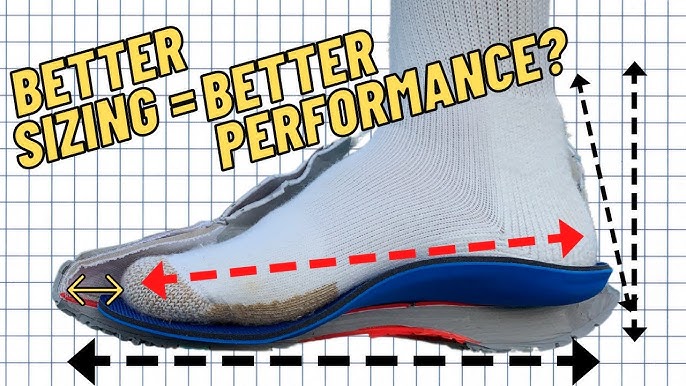
How should shoes fit for running?
When asking how should shoes fit for running, check five key areas: length, width, heel hold, midfoot support, and overall comfort.
Your running shoes should meet these basic standards:
• Your longest toe should sit about half an inch from the front of the shoe.
• Your toes should wiggle and spread without touching the upper.
• Your heel should remain in place when you walk or jog.
• The midfoot should feel secure but not pinched.
• The shoe should bend near the ball of your foot, not in the middle.
• You should feel comfortable as soon as you put the shoes on.
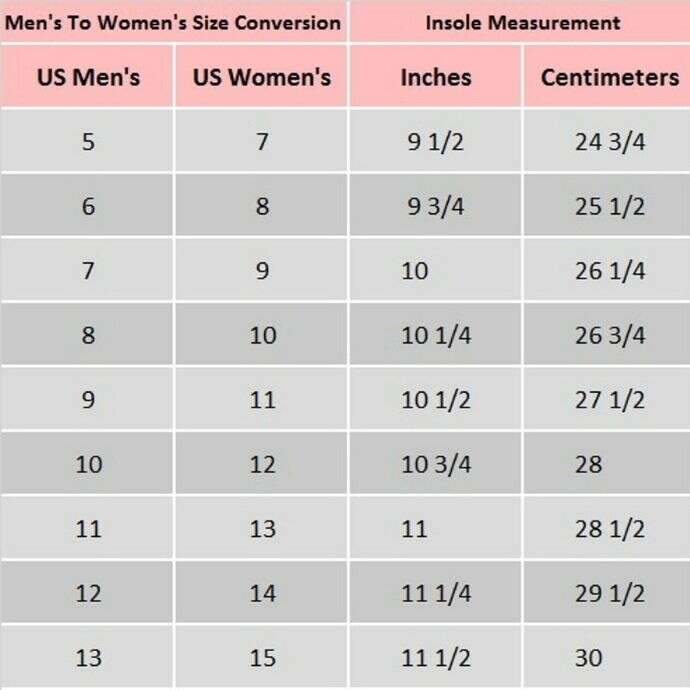
Do not rely only on your usual shoe size. Sizes can vary between brands and models. A size 10 in one shoe may feel like a size 9.5 or 10.5 in another.
Your feet may also differ slightly in length or width. Always fit the larger foot. You can add a thin insole or adjust the lacing if the difference is small.
How much space should be in the toe box?
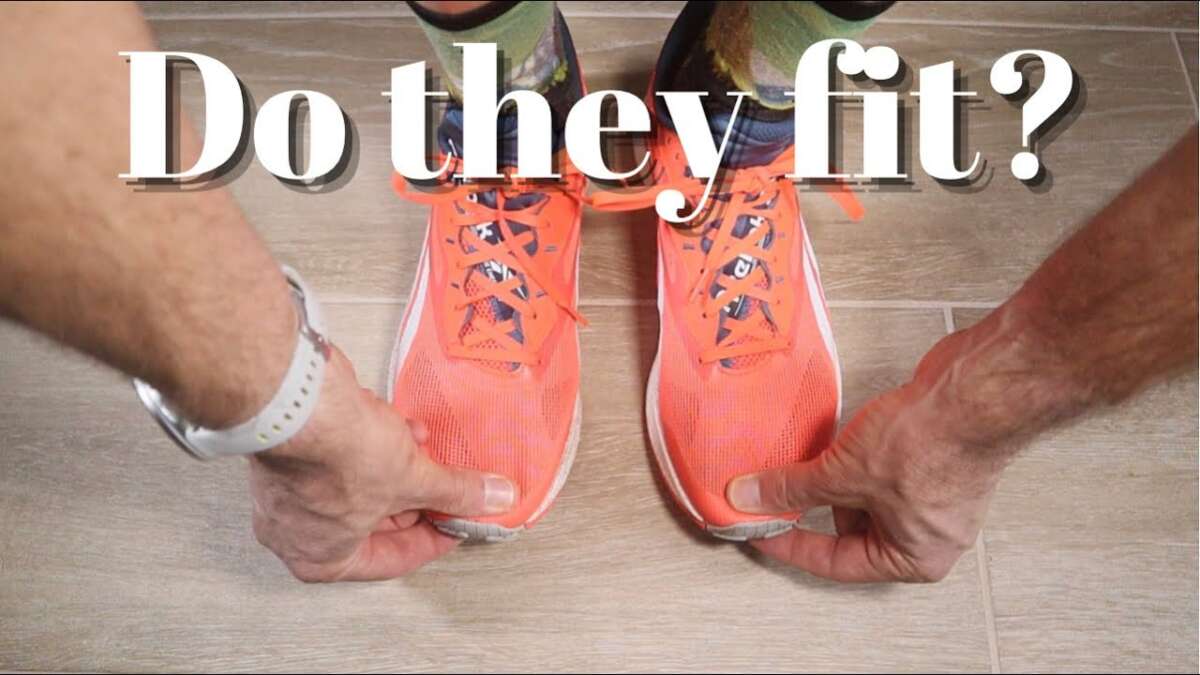
A good running shoe should leave about half an inch, or the width of a thumb, between your longest toe and the front of the shoe. This space allows your foot to move forward during downhill running and longer workouts.
Do not assume your big toe is always the longest. Some people have a second toe that extends farther. Check the longest toe on each foot.
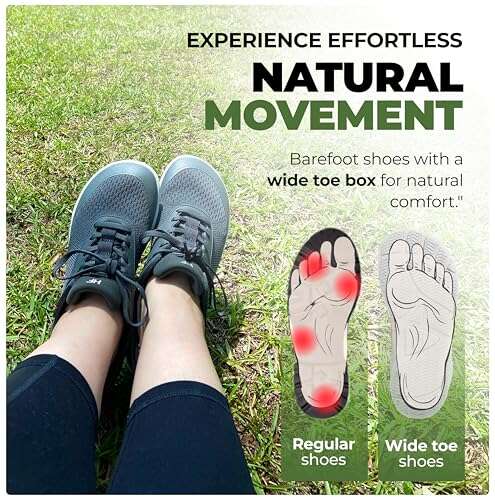
Your toes should also have enough width to spread. A pointed toe box can press the toes together and increase friction. A wide toe box does not mean the whole shoe must feel loose. The heel and midfoot can stay snug while the front gives your toes room.
To test the space:
- Stand up with your full weight on both feet.
- Push your foot forward until your toes touch the front.
- Try to place your index finger behind your heel.
- The gap should feel close to half an inch.
- Walk, jog, and step down a slope if possible.
Do not judge toe space while sitting. Your feet lengthen and widen when you stand.

Should running shoes fit tight or loose?
Running shoes should feel snug, not tight or loose. A tight shoe can restrict circulation and create pressure points. A loose shoe can allow too much movement and cause rubbing.
The heel should stay locked down when you walk or run. Your toes should have room to move. The middle of the shoe should hold your foot without leaving deep marks on your skin.
A useful test is the one-finger rule. After tying the shoes normally, you should be able to slide one finger under the laces. If you need to force your finger in, the shoe may be too tight. If you can fit several fingers under the laces, it may be too loose.
Comfort is a major fitting signal. If a shoe feels painful in the store, it is unlikely to become perfect after a few runs. A short break-in period may soften materials, but it should not correct a poor size or shape.
How to check heel and midfoot fit
Heel movement is one of the most common clues that a running shoe does not fit well. A small amount of movement is normal, but your heel should not lift sharply with each step.
Try these checks:
• Walk up and down stairs.
• Perform a few slow lunges.
• Jog in place.
• Walk on a firm slope.
• Try a runner’s loop with the top eyelets.
The runner’s loop can reduce heel slip. Thread the laces through the final eyelets to create small loops. Then cross the laces through those loops and tighten gently.
Your midfoot should feel held by the laces and upper. Watch for pressure across the top of the foot. If you see deep red marks or feel tingling, loosen the laces or try a different shoe shape.
A secure heel and midfoot help your foot move with the shoe. They also reduce sliding, which is a major cause of blisters.

How to fit running shoes for different foot shapes
Feet come in many shapes. Some runners have wide forefeet, narrow heels, high arches, flat arches, or toes that need extra space. Shoe fit should match your foot shape rather than force your foot to match the shoe.
Look for these features:
• Wide feet: Choose a wide or extra-wide version if your toes spill over the platform.
• Narrow heels: Seek a snug heel counter and use a runner’s loop.
• High insteps: Choose a deeper upper and avoid tight lacing.
• Flat arches: Focus on comfort and stability, not an arch bump alone.
• Broad toes: Look for a rounded or anatomical toe box.
• Bunions: Choose a soft, wide forefoot that does not press on the joint.
A flat foot does not automatically require a motion-control shoe. Likewise, a high arch does not always require maximum cushioning. Comfort, stability, and your running history matter more than a simple foot label.
If you have persistent pain, swelling, numbness, or a major difference between your feet, a podiatrist or qualified running specialist can provide a more personal assessment.
When is the best time to try running shoes?
Try running shoes later in the day or after a light walk. Feet often swell during the day, and they may expand more during long runs.
Wear the same socks you plan to use for training. Thick cotton socks can change the fit. Technical running socks are often better because they manage moisture and reduce friction.
Bring your current shoes if you visit a specialty store. The wear pattern can offer useful clues. For example, uneven wear may show how you land or how your foot moves, although wear patterns cannot diagnose an injury by themselves.
Try both shoes. Walk for several minutes. If possible, run on a treadmill or around the store. Your feet should feel relaxed, and you should not need to “get used to” sharp pressure.

A simple running shoe fit test
Use this test before buying a pair. It takes only a few minutes and can prevent weeks of discomfort.
- Put on your normal running socks.
- Stand and check for half an inch of toe space.
- Wiggle and spread your toes.
- Tie the shoes with normal pressure.
- Walk for several minutes.
- Jog, stop, and turn if the store allows it.
- Check for heel lift, rubbing, or pressure.
- Compare both feet.
- Try a second size or width if anything feels wrong.
The right shoe should disappear from your attention. You may notice cushioning or firmness, but you should not focus on one painful spot.
One practical lesson I have seen many runners learn the hard way is that a shoe can feel fine for five minutes and fail after an hour. Always think about swelling, heat, and repeated impact. A fit that is “just right” in the store may become too tight on a long summer run.

Common signs that running shoes do not fit
Your feet often tell you when a shoe is wrong. Pay attention to small signs before they become injuries.
Watch for:
• Blisters in the same place after each run
• Toenails turning dark or becoming sore
• Toes hitting the front on downhills
• Numbness across the forefoot
• A burning feeling under the ball of the foot
• Red marks that last for hours
• Heel slipping despite careful lacing
• Your foot spilling over the side of the sole
• Pain that starts only when you wear one pair
A shoe may also be too soft, too firm, or poorly matched to your running style. That does not always mean the size is wrong. Still, fit should be your first check.
Do not continue running through repeated numbness or sharp pain. Change the fit, reduce your training, and seek medical advice if symptoms continue.

Mistakes to avoid when buying running shoes
Many runners focus on color, brand, or online reviews before checking fit. Those details matter less than how the shoe works with your feet.
Avoid these common mistakes:
• Buying the same size without trying the new model
• Shopping in the morning when feet are at their smallest
• Wearing casual socks during the fitting
• Choosing a shoe based only on appearance
• Ignoring width and focusing only on length
• Assuming painful shoes will stretch enough
• Buying a shoe that feels loose because it is comfortable at first
• Testing only one foot
• Using old, worn socks with thick seams
• Starting a long race in brand-new shoes
Online shopping can work well if you know the brand and have a clear return policy. Measure both feet, read the width options, and test the shoes indoors before wearing them outside.
The most expensive shoe is not always the best shoe. A well-fitting, moderately priced model can serve you better than a premium shoe that does not match your foot.
How lacing changes running shoe fit
Lacing cannot fix the wrong shoe size, but it can improve small fit problems. Different patterns change pressure across the foot.
Try these options:
• Heel-lock lacing: Helps reduce heel movement.
• Window lacing: Skips an eyelet over a pressure point on the top of the foot.
• Loose forefoot lacing: Gives swollen or wide feet more room.
• Firm midfoot lacing: Adds a more secure feel without tightening the toes.
Tie your shoes firmly enough to hold the foot, but not so tightly that your toes feel cold or numb. Recheck the laces during long runs. Knots can loosen as the shoe flexes.
If you keep changing the lacing and still feel discomfort, try another model. Good lacing is a fine adjustment, not a replacement for proper fit.
How running shoe fit changes over time
Foam, fabric, and rubber change with use. The upper may loosen, while the midsole may lose some of its spring. A shoe may still look clean but no longer feel supportive or comfortable.
Replace running shoes based on condition, not just a mileage number. Many shoes last roughly 300 to 500 miles, but body weight, terrain, pace, shoe design, and running style affect that range.
Consider replacing them when:
• Cushioning feels flat
• The outsole is badly worn
• The midsole has deep creases
• Your usual route causes new soreness
• The upper stretches and your foot slides
• The shoe tilts or feels uneven
Rotate two pairs if possible. This gives the foam time to recover and helps you notice when one pair starts to break down.
Do minimalist and cushioned shoes fit differently?
Minimalist shoes often have a lower heel-to-toe drop and a thinner sole. Cushioned shoes usually provide more material under the foot. Yet the basic fit rules stay the same.
Both types should offer:
• Enough toe room
• A secure heel
• A comfortable midfoot
• No painful pressure
• A stable platform for your stride
Changing suddenly to minimalist shoes can increase stress on the calves and feet. Changing to a highly cushioned shoe can also feel unusual. Move gradually and monitor your body.
No single shoe style works for every runner. The best option is the one that fits your foot, suits your training, and feels comfortable over the distance you plan to run.
Frequently asked questions about how should shoes fit for running
Should running shoes be one size bigger?
Many runners need a half size larger than their casual shoes, but this is not a rule. Choose the size that leaves about half an inch in front of your longest toe and keeps your heel secure.
Should my toes touch the end of my running shoes?
No. Your toes should not press against the front when you stand, run downhill, or stop. Leave enough space for foot swelling and forward movement.
How tight should running shoes be?
Running shoes should be snug around the heel and midfoot, but they should not cause numbness, pain, or deep marks. Your toes should move freely.
Is heel slipping normal in running shoes?
A small amount of movement can happen, but repeated heel lifting may cause blisters and reduce stability. Try a runner’s loop, adjust the laces, or choose a shoe with a better heel shape.
Should running shoes feel comfortable right away?
Yes. They may soften slightly with use, but they should not cause sharp pain or strong pressure when new. Discomfort usually signals a poor shape, size, width, or lacing setup.
How much room should be in the toe box?
Aim for about half an inch between your longest toe and the shoe’s front. Your toes should also have enough width to spread without touching the sides.
Do wide feet need wide running shoes?
Not always, but a wide version may help if your toes feel crowded or your foot spills over the sole. Never use a longer shoe to solve a width problem.
Conclusion
The answer to how should shoes fit for running is simple: secure at the heel, comfortable through the midfoot, and roomy around the toes. Leave about half an inch in front, test the shoes while standing and moving, and use your normal running socks.
Do not ignore numbness, rubbing, heel slip, or toe pressure. A few extra minutes spent checking fit can make every mile more comfortable. Try these steps on your next shoe purchase, and share your best running shoe fitting tip in the comments.

Michael Smith is the Content Strategist behind The Style Hub, where fashion meets function. With a keen eye for trends and a passion for everyday style, he curates content that helps readers make smarter, more stylish choices—from the perfect pair of sneakers to must-have accessories. Michael specializes in breaking down fashion into practical, wearable insights, making style accessible for everyone. When he’s not researching the latest trends, he’s exploring how comfort, innovation, and timeless design come together in modern fashion.