How To Get Grass Stains Out Of Shoes: Easy Cleaning Guide
Fresh grass stains usually lift from shoes with gentle brushing, mild soap, and careful air-drying.
Grass stains can make clean shoes look worn after one game, hike, or afternoon in the yard. The good news is that most stains are not permanent. Knowing how to get grass stains out of shoes depends on the shoe material, how old the mark is, and which cleaner you use. This guide shares safe, tested methods for canvas, mesh, leather, suede, and synthetic shoes, plus simple ways to prevent damage while cleaning.
Why Grass Stains Stick to Shoes
Grass stains come from chlorophyll, plant oils, soil, and moisture. Chlorophyll gives grass its green color and can cling to fabric fibers. Mud and crushed plant matter may also press deeper into the shoe when you keep walking.
Fresh stains are easier to remove because they have not fully dried. Heat can make some stains harder to lift, so avoid hot water, hair dryers, and direct sunlight until the mark is gone.
The best approach for how to get grass stains out of shoes is to remove loose dirt first, then use the mildest cleaner that suits the material. Strong chemicals may remove color, weaken glue, or leave a pale patch around the stain.

Check the Shoe Material First
Before cleaning, look at the care label or the brand’s cleaning instructions. A method that works well on canvas may damage suede or untreated leather.
Canvas and cotton shoes
Canvas is usually durable and responds well to mild soap and water. Still, too much water can cause yellow marks or loosen the sole.
Mesh and knit shoes
Mesh and knit uppers can trap grass particles between the fibers. Use a soft brush and light pressure. Scrubbing hard can stretch the fabric or create fuzz.
Leather shoes
Smooth leather should not be soaked. Use a damp cloth, mild soap, and a leather conditioner after cleaning to help prevent dryness.
Suede and nubuck shoes
Suede needs special care. Water can leave dark rings, while strong soap can flatten the nap. Use a suede brush or suede cleaner when possible.
Synthetic shoes
Synthetic leather and rubber often tolerate mild dish soap well. Test the cleaner first, since some finishes can fade or become dull.
A small hidden patch test is one of the most important steps in how to get grass stains out of shoes safely. Apply a little cleaner inside the heel or under the tongue, wait several minutes, and check for color change.

How to Get Grass Stains Out of Shoes Step by Step
This basic method works for many canvas, mesh, knit, and synthetic shoes.
What you need
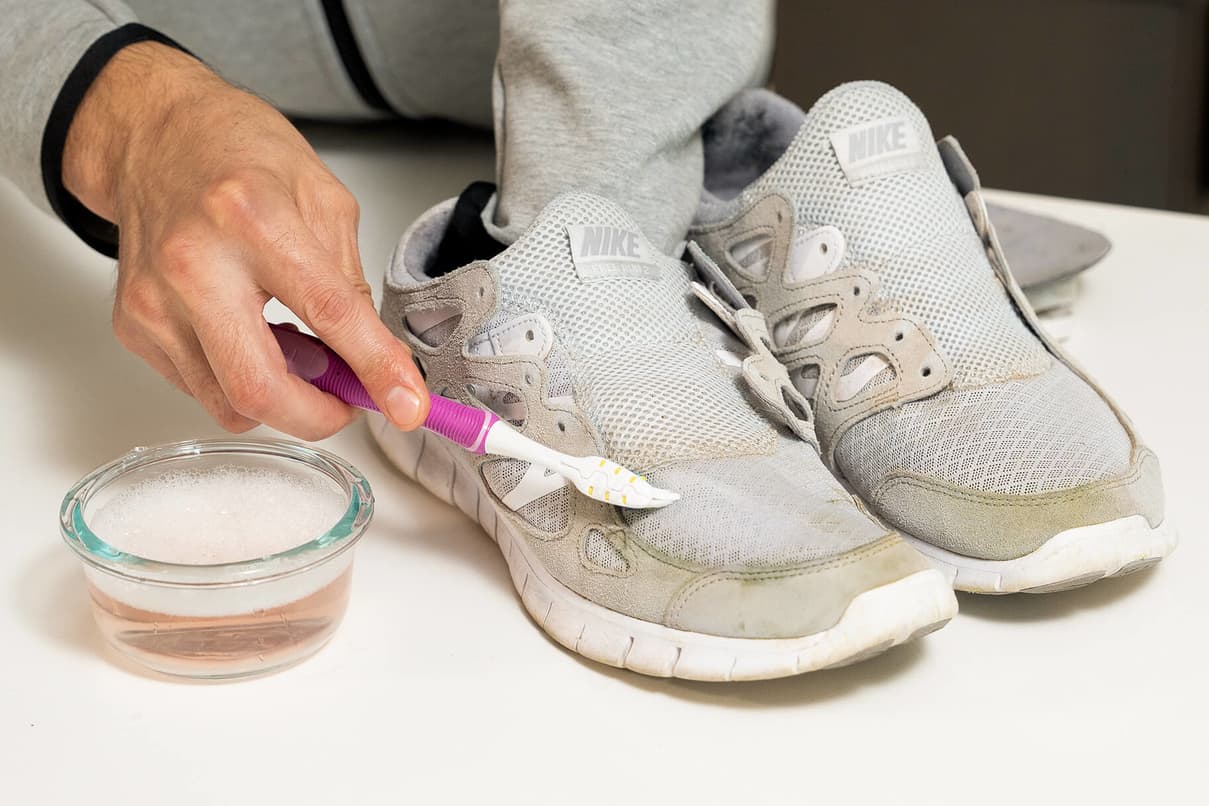
- A soft shoe brush or old toothbrush
- A clean white cloth
- Mild liquid laundry detergent or dish soap
- A small bowl
- Cool or lukewarm water
- Paper towels
- Baking soda for odor, if needed
Avoid colored cloths because dye can transfer to light shoes.
Follow these steps
-
Remove the laces and insoles if they are washable. Cleaning these parts separately helps you reach the stained areas.
-
Let wet mud dry before brushing. Removing wet mud may spread it across the upper.
-
Brush away loose grass and dirt with a soft brush. Move in one direction instead of grinding the debris into the fabric.
-
Mix a few drops of mild soap with lukewarm water. The water should feel cool or slightly warm, not hot.
-
Dip the cloth or brush into the mixture and wring it out well. The shoe should become damp, not soaked.
-
Dab the grass stain from the outside toward the center. This keeps the mark from spreading.
-
Gently brush the area for 30 to 60 seconds. Use short strokes and pause often to check your progress.
-
Wipe away soap with a clean, damp white cloth. Leftover soap can attract more dirt.
-
Stuff the shoes with white paper towels. This helps them keep their shape and absorbs extra moisture.
-
Let the shoes air-dry at room temperature. Replace the paper towels if they become wet.
-
Brush the dry surface again. This can restore the texture of canvas, mesh, or suede.
When learning how to get grass stains out of shoes, patience matters more than force. Two gentle cleaning rounds are safer than one aggressive scrub.

How to Remove Fresh Grass Stains
Fresh marks often need only a quick response. Blot moisture with a paper towel, then lift loose grass with a soft brush. Do not rub the stain while it is wet, because rubbing can push green color farther into the fibers.
For canvas or synthetic shoes, apply a small amount of diluted detergent to the stain. Let it sit for about five minutes, then wipe and rinse with a damp cloth.
For leather, wipe the mark with a damp cloth as soon as possible. Dry the leather with a soft towel, then apply a small amount of suitable leather conditioner once the surface is fully dry.
A useful lesson from cleaning athletic shoes is to keep a small cloth in your gym or hiking bag. Treating a grass stain before it dries can save time and reduce the need for stronger products.

How to Remove Dried or Set-In Grass Stains
Dried grass stains need more time, but they can still improve. First, use a dry brush to break up the crusted dirt. Do not start with a soaking wet shoe.
For washable canvas or mesh, place a little diluted laundry detergent on the stain. Wait 10 to 15 minutes, then brush gently and wipe with clean water. Repeat once if needed.
For white fabric shoes, a small amount of oxygen-based stain remover may help. Follow the product label, dilute it as directed, and test a hidden area first. Oxygen bleach is usually less harsh than chlorine bleach, but it can still change the color of some materials.
Do not use chlorine bleach on colored shoes. It may cause yellowing, uneven fading, and damage to fabric fibers or adhesives.
If the stain remains after two or three gentle attempts, professional shoe cleaning may be safer. A dark green shadow may have reached the fibers, and continued scrubbing could damage the upper more than it helps.

Material-Specific Cleaning Methods
Canvas shoes
Mix one teaspoon of mild detergent with one cup of lukewarm water. Dip a soft toothbrush into the mixture and work over the grass stain with light strokes.
Wipe the area with a clean damp cloth. Clean the whole panel lightly if a water ring appears, then let the shoes dry evenly.
Mesh running shoes
Brush away dry debris first. Use very little water because mesh dries slowly and may hold moisture near the lining.
Work from the outside of the stain inward. A white melamine sponge may remove marks from rubber midsoles, but do not use it on the fabric upper because it acts like fine sandpaper.
Leather shoes
Remove dirt with a dry cloth. Use a damp cloth with a tiny amount of mild soap, and wipe gently rather than scrubbing.
After drying, apply a leather conditioner that matches the shoe’s finish. Avoid household oils, which may darken leather or leave a greasy surface.
Suede and nubuck shoes
Wait until the stain is dry. Brush the area with a suede brush, using short strokes that follow the nap.
For a stubborn mark, use a product made for suede or nubuck. Avoid soaking, dish soap, and ordinary laundry detergent unless the manufacturer specifically permits them.
White shoes
White shoes can show a stain even after most of the grass is gone. Use mild detergent first, then consider an oxygen-based cleaner made for washable fabric.
Clean both shoes evenly if one has a visible water mark. This helps prevent one shoe from looking brighter than the other.
These material-specific methods are central to how to get grass stains out of shoes without creating a new problem. The safest cleaner is always the one designed for the shoe’s surface.

How to Clean Grass Stains From Shoe Soles
Grass stains on rubber soles are usually easier to remove than stains on fabric. Brush off dry dirt, then apply a mixture of dish soap and water with an old toothbrush.
For stubborn marks on white rubber, use a damp melamine sponge with light pressure. Keep the sponge on the rubber sidewall and away from suede, leather, knit, and painted sections.
Wipe the sole with a clean cloth and let it dry. Do not use gasoline, nail polish remover, or harsh solvents. These products can weaken rubber and damage the glue that holds the sole together.

Common Mistakes to Avoid
The wrong method can turn a small stain into permanent damage. Avoid these common errors:
-
Scrubbing hard before removing loose dirt. This pushes grit into the fibers.
-
Using hot water. Heat may set plant pigments and can affect adhesives.