
How To Make Shoes Smaller: Easy Fit Fixes
Use insoles, heel grips, tongue pads, or careful fitting changes to make loose shoes feel smaller and more secure.
Shoes that slip, crease, or rub can turn a good day into a painful one. Learning how to make shoes smaller is often cheaper than replacing them, but the best method depends on where the extra space is. This guide explains safe home fixes for sneakers, boots, flats, heels, and leather shoes, along with mistakes that can damage footwear or cause foot pain.
Why Shoes Feel Too Big
Shoes may feel too large for several reasons. You may have chosen the wrong size, bought a pair that stretched with wear, or received shoes with a wide design. Feet can also change size during the day because heat and activity cause mild swelling.
A shoe can feel loose in different areas:
• The heel may lift as you walk.
• The toes may have too much space.
• The top of the shoe may not hold your foot firmly.
• The whole shoe may be slightly too long or wide.
• One foot may need a different fit from the other.
Before learning how to make shoes smaller, walk indoors for a few minutes. Notice where your foot moves. This simple check helps you choose the right fix instead of adding padding in the wrong place.
A little space near the toes is normal. Your longest toe should not touch the front of the shoe. The goal is not to crush your toes. The goal is to reduce unwanted movement while keeping natural comfort and balance.
How to Make Shoes Smaller With Insoles
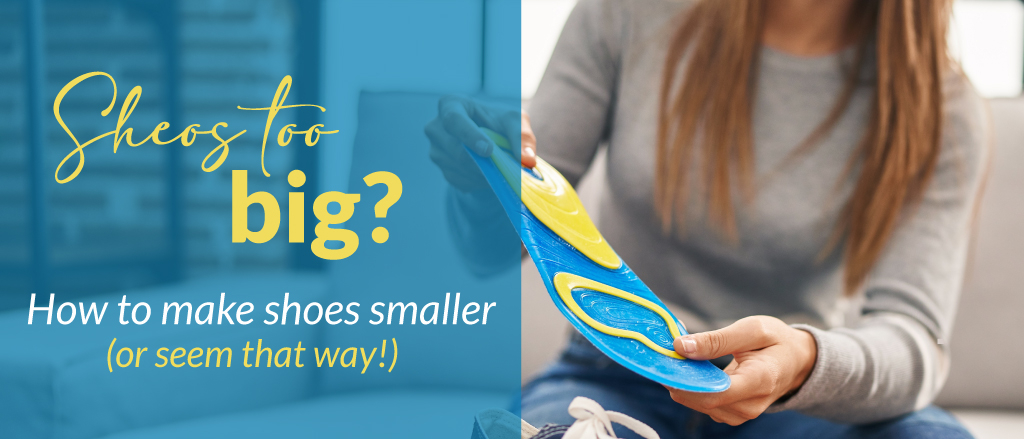
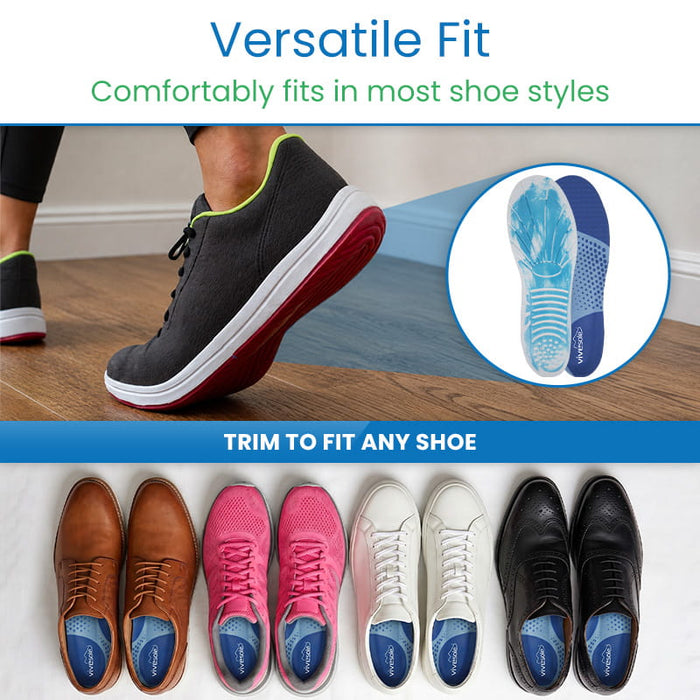
Full-length insoles are one of the easiest ways to make shoes smaller. They take up space under your foot and can improve support at the same time. Insoles work well in sneakers, casual shoes, boots, and some flats.
Choose an insole based on the amount of extra room:
• Use a thin foam insole for a small fit problem.
• Choose a cushioned insole for moderate extra space.
• Use a thicker insole only if the shoe has enough height.
• Pick a firm support insole if your foot slides because the shoe lacks structure.
Remove the original insole first if it is removable. Place the new insole inside the shoe and check that it lies flat. If the shoe feels tight across the top of your foot, the insole may be too thick.
A half insole can help when the shoe fits well in the toe area but feels loose near the heel. It adds volume under the back or middle of the foot without pushing your toes forward.
A common fitting mistake is using two thick insoles at once. This can squeeze the foot, reduce toe movement, and create pressure on the top of the foot. Add one layer at a time and test the shoes indoors.

Use Heel Grips to Stop Slipping
Heel grips are small adhesive pads that attach to the inside back of a shoe. They reduce space around the heel and help stop your foot from sliding out. They are useful for pumps, loafers, flats, boots, and some dress shoes.
To apply heel grips correctly:
- Clean the inside heel with a dry cloth.
- Try the shoe on and mark where your heel rubs.
- Remove the backing from the grip.
- Place it at the back of the shoe, not under your heel.
- Press firmly for several seconds.
- Let the adhesive settle before wearing the shoe outside.
Heel grips work best when the shoe is only slightly too large. They may not solve a shoe that is more than one full size too big. In that case, your foot may still slide forward even after the heel feels secure.
Some heel grips use soft foam, while others use fabric or gel. Foam gives more volume. Gel can reduce friction. If you have sensitive skin, test the material for a short time before wearing it all day.

Add Tongue Pads for Loose Shoes
Tongue pads attach beneath the shoe tongue. They press gently against the top of your foot and reduce extra space. This makes them a useful answer to how to make shoes smaller when the shoe feels loose across the instep.
Tongue pads are especially helpful for:
• Sneakers with a loose lace area.
• Loafers that have no adjustable laces.
• Flats that gape when you walk.
• Boots with extra room above the foot.
• Dress shoes that feel loose but have the right length.
Place the pad under the tongue, where it touches the top of your foot. Do not place it so low that it presses against your toes. Lace the shoe normally and walk indoors to check the pressure.
Tongue pads can work with heel grips or thin insoles. Still, avoid adding too many layers at once. Too much padding can restrict blood flow and cause numbness, tingling, or pain.
Wear Thicker Socks
Thicker socks are a simple way to fill extra space in sneakers, boots, and casual shoes. They are often the fastest method when you need a temporary fit change.
Try these options:
• Cushion socks for sneakers and walking shoes.
• Wool socks for boots in cool weather.
• Athletic socks with extra padding under the heel and ball of the foot.
• Layered thin socks for a short-term adjustment.
Avoid wearing several tight pairs of socks for long periods. Excess pressure can cause blisters, heat, and poor circulation. Your toes should still move freely inside the shoe.
Thicker socks are not ideal for tight dress shoes or warm weather. They may make your feet sweat and can increase friction. Use breathable materials when possible, and change socks if they become damp.

Use Ball-of-Foot Pads in Heels and Flats
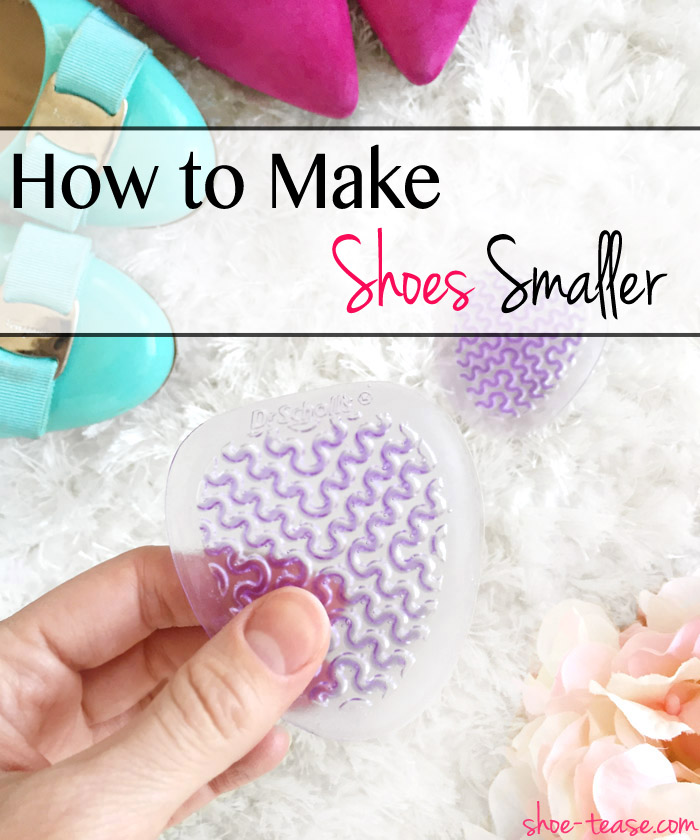
Ball-of-foot pads sit under the front part of the foot. They help reduce forward sliding in high heels and loose flats. This is important because your foot often moves toward the toe box when the shoe slopes downward.
To use a ball-of-foot pad:
- Place the shoe on a flat surface.
- Find the area under the ball of your foot.
- Position the pad slightly behind the toe area.
- Press it down firmly.
- Walk indoors and adjust it if needed.
These pads can make shoes smaller by taking up space and improving grip. They may also reduce pressure on the forefoot, though they cannot correct a heel that is much too large.
Do not place the pad directly under your toes. That position can push the toes upward and create crowding. Replace the pad when its surface becomes flat or loses its grip.
How to Make Leather Shoes Smaller
Leather shoes may loosen over time because natural fibers relax with heat, moisture, and repeated movement. You usually cannot safely shrink a finished leather shoe by a large amount. Aggressive heat or soaking can cause cracks, stains, stiff areas, and uneven shape.
The safest way to make leather shoes smaller is to adjust the fit from inside:
• Add a leather-safe insole.
• Use a thin heel grip.
• Add a tongue pad if the instep feels loose.
• Ask a professional shoe repair worker about fitting strips.
• Use shoe trees to help maintain the shape, not to reduce size.
Some leather shoes can be professionally altered. A cobbler may add padding, adjust straps, or change certain parts of the shoe. This is safer than using a hair dryer or placing wet shoes near a heater.
Suede needs extra care. Adhesive products may leave marks, and moisture can change the nap. Test any product in a hidden area and follow the shoe maker’s care instructions.

How to Make Shoes Smaller Without Damaging Them
Many online tips suggest soaking shoes, freezing them, or applying strong heat. These methods are risky because different materials react in different ways. Canvas may shrink slightly, but synthetic materials may warp, and leather may dry out.
Avoid these methods:
• Do not soak leather, suede, or glued shoes.
• Do not use a clothes dryer unless the manufacturer allows it.
• Do not heat shoes with a hair dryer for a long time.
• Do not stuff shoes so tightly that the upper stretches.
• Do not add hard objects that can press into your foot.
• Do not use household glue on the inside of the shoe.
The best approach is gradual. Start with a removable insole or heel grip. Wear the shoes indoors for 10 to 15 minutes. Check your feet for red marks, numbness, or rubbing before increasing wear time.
A practical repair lesson is that small changes usually work better than one large change. A thin insole plus a heel grip may feel secure, while one very thick insole may create pressure across the top of the foot.
How to Make Different Types of Shoes Smaller
The right method depends on the shoe style and material. A fix that works for a sneaker may look bulky inside a ballet flat.
Sneakers
Start with a full-length insole. If the heel still moves, add a heel grip. Thicker socks can help during exercise, but make sure your toes have room and the shoe still bends naturally.
Boots
Use a supportive insole and thicker socks. For tall boots, check both the foot area and the calf area. A cobbler can sometimes adjust loose straps or add internal padding.
High heels
Use a ball-of-foot pad to limit forward sliding. A thin insole or tongue pad may help if the upper feels loose. Avoid overpadding, since tight heels can increase pressure on the toes.
Flats and loafers
Heel grips and tongue pads often work well. If the shoe slips because it has no strap, consider a removable shoe strap designed for flats.
Sandals
Use only products that will not show or interfere with straps. A professional may be able to adjust a loose strap. Do not place thick padding where it changes your balance.
Canvas shoes
A thin insole and thicker socks are usually safe starting points. Washable canvas may change shape after cleaning, so follow the care label and let the shoes air-dry naturally.
How to Check Whether the Fit Is Safe
A shoe that feels secure is not always a shoe that fits well. Check the fit at the end of the day, when feet are often slightly larger than in the morning.
Look for these signs:
• Your heel stays in place while walking.
• Your toes can move without pressure.
• The shoe does not pinch across the top of your foot.
• You do not feel numbness or tingling.
• Your foot does not slide forward on stairs.
• There are no painful red spots after wear.
Wear the shoes on a clean indoor floor first. This lets you test the fit without marking the soles or losing the option to return them.
If the shoe causes pain after padding, remove the padding and reassess. Foot pain is not proof that the shoe is “breaking in.” Persistent rubbing can lead to blisters, thickened skin, or other problems.
People with diabetes, reduced sensation, circulation problems, or foot deformities should ask a qualified health professional for fitting advice. A small change in pressure may be harder to notice and more serious in these cases.
When to Replace or Professionally Alter the Shoes
Home fixes are best for shoes that are slightly too large. They are not a substitute for the correct size when the shoe is much too long or wide.
Consider returning or replacing the shoes when:
• Your toes slide into the front.
• Your heel lifts more than a small amount.
• The shoe bends in the wrong place.
• You need several thick layers to feel secure.
• Your foot hurts after a short walk.
• The shoe changes your natural stride.
A shoe repair professional may help with straps, internal padding, insoles, and certain leather alterations. Ask about the cost before approving the work. For inexpensive shoes, professional alteration may cost more than a replacement.
When shopping for new shoes, measure both feet and fit the larger foot. Try shoes with the socks you plan to wear. Stand, walk, and check the fit before removing tags or wearing them outdoors.
Common Mistakes to Avoid
Learning how to make shoes smaller also means knowing what not to do. Many fit problems become worse when people add too much padding or use heat.
Avoid these common mistakes:
• Adding a thick insole without checking shoe height.
• Using heel grips on dirty or oily surfaces.
• Placing ball-of-foot pads too close to the toes.
• Wearing tight socks to force a loose shoe to fit.
• Shrinking shoes with water or strong heat.
• Ignoring pain, numbness, or blisters.
• Testing new adhesive pads during a long event.
• Assuming both feet need the same amount of padding.
A better method is to change one thing at a time. Test the shoes indoors, take notes on the fit, and adjust slowly. Think of it like tuning a bicycle: small changes can make the whole ride smoother.
How to Make Shoes Smaller: A Simple Step-by-Step Plan
Use this plan when you are unsure where to begin:
- Identify the loose area. Check the heel, toe space, instep, or entire shoe.
- Start with the least invasive fix. Try thicker socks or a thin insole.
- Add targeted support. Use a heel grip for heel movement or a tongue pad for loose uppers.
- Test the shoes indoors. Walk, climb stairs, and sit for 15 minutes.
- Check your feet. Look for rubbing, pressure, numbness, or red marks.
- Adjust or remove the product. Comfort and safe movement matter more than a tight feel.
- Seek professional help if the shoe remains unstable.
This process makes it easier to make shoes smaller without wasting money on products you do not need. It also protects the shoe from unnecessary changes.
Frequently Asked Questions About How to Make Shoes Smaller
Can I shrink shoes with water?
Water may damage leather, suede, adhesives, and some synthetic materials. Insoles, heel grips, and professional alterations are safer options for most shoes.
How can I make shoes smaller without inserts?
Try thicker socks, a removable shoe strap, or a professional strap adjustment. These methods can help, but inserts often provide more precise control over extra space.
Do heel grips make shoes smaller?
Heel grips reduce space at the back of the shoe and help stop heel slipping. They work best when the shoes are only slightly too large.
Can I make shoes one size smaller?
You may improve the fit of shoes that are slightly too large, but home methods rarely reduce a shoe by a full size. If the shoe is much too big, replacing it or seeing a cobbler is usually the better choice.
How do I make high heels smaller?
Use a ball-of-foot pad to reduce forward sliding and a thin heel grip if the heel slips. Avoid thick padding that crowds your toes or changes your balance.
Can a cobbler make shoes smaller?
A cobbler may add internal padding, adjust straps, or make certain material changes. The available repair depends on the shoe design, material, and amount of extra space.
Is it safe to wear two insoles?
Two insoles can create too much pressure and reduce the shoe’s internal height. Test one insole first, and stop if you feel numbness, pain, or tightness.
Conclusion
The safest way to make shoes smaller is to reduce extra space with the right tool for the problem. Use insoles for overall looseness, heel grips for heel movement, tongue pads for loose uppers, and ball-of-foot pads for sliding in heels and flats.
Avoid soaking or overheating shoes, especially leather and suede. Test every adjustment indoors, keep your toes comfortable, and replace shoes that remain painful or unstable. Try one small change today, and share your fitting experience or explore more practical shoe-care guides.

Michael Smith is the Content Strategist behind The Style Hub, where fashion meets function. With a keen eye for trends and a passion for everyday style, he curates content that helps readers make smarter, more stylish choices—from the perfect pair of sneakers to must-have accessories. Michael specializes in breaking down fashion into practical, wearable insights, making style accessible for everyone. When he’s not researching the latest trends, he’s exploring how comfort, innovation, and timeless design come together in modern fashion.