
How To Tell If Running Shoes Are Done: 7 Clear Signs
Running shoes are done when their cushioning, grip, structure, or fit no longer protects and supports your feet.
Knowing how to tell if running shoes are done can help you avoid pain, poor form, and preventable injuries. Mileage offers a useful clue, but wear signs matter more. This guide explains what to check, when to replace your shoes, and how to make your next pair last longer.
How Long Do Running Shoes Usually Last?
Most running shoes last about 300 to 500 miles. Some runners replace them sooner, while others safely reach 600 miles or more. The right time depends on your body weight, running style, shoe type, terrain, pace, and how often you wear the shoes for daily use.
Mileage is only an estimate. A lightweight runner on smooth roads may get more life from a pair than a heavier runner who trains on rough trails. If you walk in your running shoes every day, they may wear out faster than your running log suggests.
Use these factors as a guide:
• Road shoes often last around 300 to 500 miles.
• Lightweight racing shoes may wear out sooner.
• Trail shoes can lose grip before their cushioning fails.
• Walking and gym use add hidden mileage.
• Heat, moisture, and poor storage can weaken materials.
A shoe that looks clean may still be worn out inside. The foam under your foot can lose its spring before the outer rubber shows major damage. That is why learning how to tell if running shoes are done requires more than looking at the tread.

The Main Signs Your Running Shoes Are Done
The clearest answer to how to tell if running shoes are done is to look for several warning signs at the same time. One small scuff does not mean you need new shoes. A mix of flat cushioning, uneven wear, pain, and poor fit is much more important.
The Midsole Feels Flat
The midsole is the foam layer between your foot and the outsole. It provides much of the shoe’s cushioning and support.
Press the foam with your thumb. Compare it with a new pair of the same model if possible. Worn foam may look compressed, feel hard, or show deep creases near the ball of the foot and heel.
A tired midsole can make a shoe feel dull. Your feet may feel more impact after a normal run. You may also notice that the shoe no longer feels as smooth during landing and push-off.
The Outsole Has Little Grip
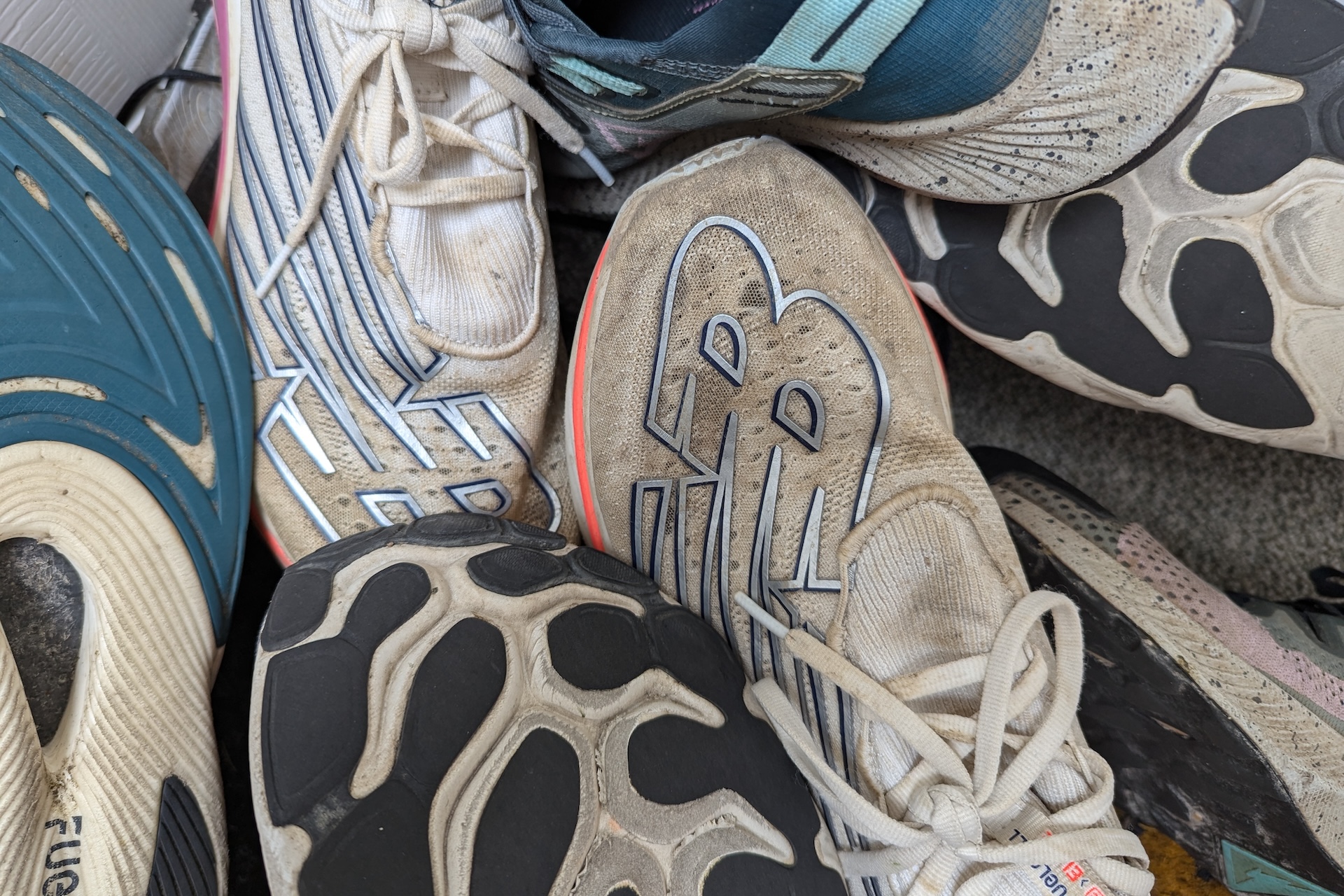
The outsole is the rubber layer that touches the ground. Check the heel, forefoot, and outer edges for smooth spots.
Replace your shoes when the rubber is worn through or when the foam is exposed in areas that affect your stride. Loss of grip matters even more for runners who train in rain, snow, or on trails.
Do not wait for the entire outsole to disappear. A small worn area under your main landing point can change how your foot meets the ground.
The Shoes Lean to One Side
Set both shoes on a flat table and look at them from behind. Do they tilt inward or outward? A strong tilt can show that the foam or outsole has broken down unevenly.
Turn the shoes over and compare the wear pattern. Heavy wear on one side may reflect your natural gait, but it can also mean the shoe no longer offers a stable platform.
Shoe tilt alone does not prove that a pair is finished. However, it becomes a strong warning when it appears with pain or a noticeable change in your running form.
You Feel New Aches or Pain
New pain is one of the most useful signs when learning how to tell if running shoes are done. Watch for discomfort in your feet, ankles, shins, knees, hips, or lower back.
Common warning symptoms include:
• Sore arches after normal runs
• Repeated heel pain
• New shin pain
• Knee discomfort that was not present before
• Blisters in familiar places
• Numbness or tingling
Pain can have many causes, including a sudden increase in training, weak muscles, or a running surface change. Still, worn shoes deserve an immediate check. If pain continues, becomes severe, or changes your walking pattern, speak with a qualified health professional.
The Upper No Longer Holds Your Foot
The upper is the fabric or mesh around your foot. It should hold your heel and midfoot in place without squeezing your toes.
Look for:
• Torn mesh
• Stretched side panels
• Broken eyelets
• A loose heel collar
• A heel counter that feels soft or collapsed
A small cosmetic hole may not matter. A torn area near the heel or midfoot can change fit and cause your foot to slide inside the shoe.
The Shoe Feels Different
Many runners know their shoes by feel. A pair that once felt lively may begin to feel stiff, heavy, or flat. The heel may feel lower, or the forefoot may seem less flexible.
This change is easy to miss because it happens slowly. Try alternating your old shoes with a newer pair for one run. The difference often becomes clear right away.

A Simple At-Home Test for Worn Running Shoes
You do not need special tools to check your shoes. A few simple tests can help you decide whether to keep running in them.
Use the Five-Step Check
-
Look at the outsole. Find smooth areas, missing rubber, or exposed foam.
-
Check the midsole. Look for deep creases, compression, or a flat appearance.
-
Place the shoes on a table. Notice whether either shoe leans or rocks.
-
Inspect the upper. Check for tears, stretched fabric, and a loose heel.
-
Think about your body. Recall any new pain, blisters, or unusual fatigue.
If several signs appear, the shoes are likely done. If only one sign appears, reduce hard workouts and monitor the pair closely.
Compare Both Shoes
Most runners wear one shoe more than the other. Your dominant foot may land with more force, or one side may show greater wear because of road camber.
Place the shoes side by side. Compare the heel height, outsole pattern, foam creases, and upper shape. A major difference between the shoes can signal uneven breakdown.
Try the Twist and Fold Test Carefully
Hold the heel in one hand and the forefoot in the other. Gently twist the shoe. Then bend it at the forefoot.
A running shoe should flex near the ball of the foot, not fold easily through the middle. If the shoe twists with almost no resistance or feels unusually soft, its structure may be worn.
This test is not perfect. Some flexible shoes are designed to bend more than firm stability shoes. Use it with the other signs rather than treating it as a final answer.
Why Running Shoes Wear Out
Understanding why shoes fail makes it easier to tell when running shoes are done. The materials change with every landing, even when the damage is not visible.
Repeated Impact Compresses the Foam
Each step places a large load on the midsole. Over time, foam loses some of its ability to rebound. This process is often called compression set.
The foam may still look intact, but it can feel less protective. That is why a shoe’s age and mileage should be tracked along with its appearance.
Heat and Moisture Affect Materials
Sweat can weaken adhesives and make the upper smell or stretch. Heat can also speed up material aging. Avoid leaving running shoes in a hot car or beside a heater.
Let wet shoes dry at room temperature. Remove the insoles and place paper inside if needed. Do not use a clothes dryer, as high heat can damage foam and glue.