What Sneakers Are Safe For Everyday Fashion Gifting: Guide
For shoppers in the United States, the safest everyday fashion gift is usually a sneaker with a roomy toe box, secure fit, light cushioning, a flexible sole, and a simple style the recipient can wear often. Classic low-top sneakers in neutral colors are easy to pair with jeans, chinos, dresses, and casual work clothes.
No sneaker is safe for every foot. The best gift depends on the person’s size, foot shape, daily use, and any pain or medical needs. When you do not know those details, choose a widely available style with easy returns rather than a narrow, stiff, or highly specialized shoe.

What makes a sneaker safe for everyday wear?
A safe everyday sneaker should support normal walking without squeezing the foot or forcing it into an awkward position. The American Podiatric Medical Association advises shoppers to look for a good fit, enough room for the toes, and shoes that match the activity.
For a fashion gift, check these features:
- Enough toe room: The toes should not press against the front or rub the sides.
- A secure heel: The heel should stay in place without painful pressure.
- Moderate cushioning: Some padding can improve comfort, but very soft foam is not automatically better.
- A flexible forefoot: The shoe should bend near the ball of the foot, not fold in the middle.
- A stable sole: The shoe should not twist like a towel when held at both ends.
- Breathable materials: Mesh, canvas, or perforated leather may help reduce heat.
- A removable or comfortable insole: This can help people who use custom inserts.
- A low or moderate heel-to-toe drop: A level, everyday shape is often easier to wear than an extreme platform or high heel.
The word “safe” needs care here. A sneaker can be well made and still feel wrong on a certain foot. Fit, comfort, and the activity matter more than the logo.
Everyday sneaker safety is not the same as athletic shoe safety
Fashion sneakers are made mainly for walking and casual use. They are not always suitable for running, court sports, hiking, warehouse work, or long shifts on hard floors.
A fashion sneaker may lack:
- The support needed for repeated impact
- A sole designed for wet or uneven ground
- The traction needed for sports
- Room for swelling during long workdays
- The structure required by a workplace
If the gift recipient needs shoes for a specific job or sport, buy for that activity instead of choosing a fashion sneaker.
Best sneaker styles for fashion gifting
The best gift style is one that suits the recipient’s wardrobe and does not depend on a precise trend. The following categories are usually easy to wear in the United States.
| Sneaker style | Why it works as a gift | Main limitation |
|---|---|---|
| Minimal leather sneaker | Looks polished with casual outfits | Leather may feel stiff at first |
| Canvas low-top | Light, simple, and often affordable | Less protection and cushioning |
| Retro running-inspired sneaker | Often offers more padding and visual interest | The shape may be bulky |
| Court-style sneaker | Clean lines and broad outfit range | Some models are stiff or heavy |
| Slip-on sneaker | Easy to put on and remove | May not hold the heel securely |
| High-top sneaker | Adds ankle coverage and a bold look | Harder to style and may feel warm |
Minimal leather sneakers
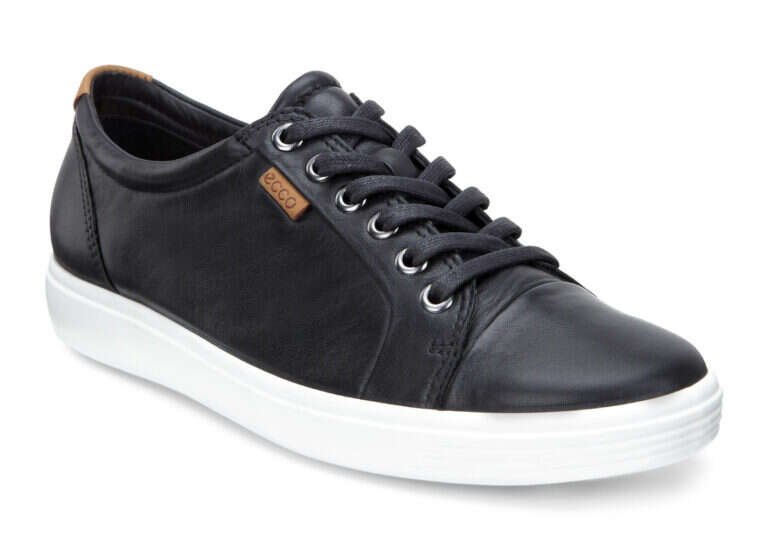
A plain white, cream, black, or navy leather sneaker can work with jeans, trousers, skirts, and casual dresses. Its simple shape also makes it less risky as a gift.
Look for:
- A padded collar
- A soft lining
- Flexible leather or synthetic material
- A rounded toe
- A rubber outsole with visible tread
Common examples include clean court-inspired styles such as the Adidas Stan Smith, Nike Air Force 1 Low, Reebok Club C, and similar models. These names describe familiar options, not a guarantee of comfort. Each version can differ in width, weight, materials, and fit.
White shoes need more care. If the recipient dislikes cleaning shoes, black, gray, navy, or cream may be a better choice.
Canvas sneakers
Canvas sneakers are often light and casual. They can suit warm-weather outfits and simple wardrobes. Classic low-top and high-top designs from brands such as Converse and Vans are widely recognized in the United States.
Their limits are just as clear:
- Canvas may offer less structure than leather.
- Flat soles may not suit every foot.
- Thin insoles can feel tiring during long walks.
- High-tops may rub the ankle if the fit is wrong.
For a safer gift, choose a version with a padded footbed or an insole that the recipient can replace.
Retro running-inspired sneakers
These sneakers borrow the look of older running shoes but are usually sold for casual wear. Their layered upper and cushioned midsole can make them more comfortable for walking than very flat fashion shoes.
New Balance 574-style designs, ASICS lifestyle models, and similar retro sneakers are common examples. Check the actual model before buying. One model may come in several widths, while another may have a narrow shape.
These sneakers work well for someone who likes:
- A sporty look
- More visual texture
- Gray, beige, navy, or muted color mixes
- A little more underfoot padding
They may not suit someone who wants a sleek shoe or a very light pair.
Slip-on sneakers
Slip-ons can be useful for people who dislike laces or have trouble bending down. However, the shoe must still grip the heel. A loose slip-on may cause the toes to curl to keep the shoe on.
Before gifting one, check for:
- Elastic panels that hold the foot
- A shaped heel counter
- A secure fit when walking
- A sole that bends in the right place
Slip-ons are not automatically safer or easier. Convenience matters only when the shoe stays secure.
How to choose the right sneaker gift without knowing the size
Size is the biggest gift risk. Shoe sizes vary across brands, styles, and countries. A US women’s 8 in one brand may not feel like a US women’s 8 in another.
Use this process:
- Check a shoe the recipient already wears. Look at the size, width, brand, and model.
- Ask a family member or close friend to confirm. This avoids relying on memory.
- Find out whether they wear men’s, women’s, or unisex sizing. Unisex sneakers may use different size charts.
- Check width options. A wide size can matter more than going up in length.
- Buy from a seller with a clear return window.
- Keep the box, tags, and receipt. The recipient may need to exchange the shoes.
Do not secretly measure someone’s foot while they sleep. It is unreliable and can spoil the gift. A discreet question about their favorite sneakers often works better.
Should you size up for a gift?
Usually, do not size up automatically. A shoe that is too long can slide at the heel and make walking less stable. A shoe that is too short can press on the toes.
If the recipient is between sizes, the correct choice depends on the brand, width, socks, and shape of the shoe. A returnable purchase is safer than guessing.
What about wide feet?
Look for models offered in wide or extra-wide sizes. A wide version is often better than buying a longer shoe. Length does not create proper width; it can instead cause heel movement and poor fit.
A shoe may also feel narrow because of:
- A pointed toe
- Thick side panels
- A firm overlay
- A steeply sloped toe box
- A high arch area
Read the brand’s fit notes, but treat them as guidance rather than proof. Personal try-on still matters.
A practical gift decision table
Use the recipient’s habits, not only the sneaker’s appearance.
| Recipient profile | Good starting point | Avoid as a first choice |
|---|---|---|
| Wears simple casual outfits | Minimal leather or plain canvas | Loud colors and large logos |
| Walks often for errands | Cushioned retro sneaker or walking-inspired model | Very flat, thin soles |
| Prefers light shoes | Canvas or lightweight mesh | Heavy platform soles |
| Has wide feet | Wide-fit model with a rounded toe | Narrow court shoes |
| Wants easy on-and-off | Secure slip-on or elastic-lace design | Loose backless shoes |
| Dresses in neutral colors | White, black, gray, navy, or cream | Hard-to-match seasonal colors |
| Works on their feet | Walking shoe designed for that use | Fashion sneaker chosen only for looks |
| Likes bold streetwear | High-top, platform, or colorful retro model | A plain style they may not wear |
This table is a starting point, not a medical recommendation. If the recipient has ongoing foot pain, numbness, swelling, or a diagnosed foot condition, style advice should not replace professional care.
The safest color choices
Neutral colors reduce gifting risk:
- White
- Black
- Gray
- Navy
- Beige
- Cream
- Brown
White is versatile but can show dirt. Black is easy to maintain but may look more formal or heavy. Gray and cream often offer the best balance between matching clothes and hiding minor marks.
Materials and weather
Think about the recipient’s local routine in the United States. Someone in Seattle may need a different everyday shoe from someone in Phoenix or Miami.
- Mesh: Often airy, but may be harder to clean.
- Canvas: Casual and light, but can absorb water.
- Leather: Easier to wipe clean, but may feel warmer or stiffer.
- Suede: Stylish, but more sensitive to water and stains.
- Knit: Flexible, but may offer less structure.
No casual sneaker is fully waterproof unless the maker specifically states that it is. Water-resistant materials also do not guarantee dry feet in heavy rain.
How to check the fit after the gift is opened
Ask the recipient to try the sneakers indoors on a clean floor. They should wear the socks they plan to use with the shoes.
Check these points:
- The longest toe should have a small amount of space in front.
- The toes should be able to move without touching the upper.
- The widest part of the foot should not bulge over the sole.
- The heel should stay in place while walking.
- The shoe should bend near the ball of the foot.
- There should be no sharp seam, rubbing spot, or pressure point.
- Both feet should feel comfortable.
Feet are not always the same size. Fit the larger foot, and do not assume that discomfort will disappear after a break-in period.
Signs the sneaker is the wrong gift
Return or exchange the shoes if the recipient has:
- Numbness or tingling
- Toe pressure
- Heel lifting
- Blisters after short indoor wear
- Pain under the arch or ball of the foot
- A feeling that the foot slides forward
- Red marks that remain after removing the shoe
- Trouble walking normally
“Breaking in” can explain mild stiffness in some leather shoes. It should not be used to excuse pain, numbness, or a poor fit.
When a fashion sneaker is not a safe choice
Some people need more than general gift advice. If the recipient has diabetes, reduced feeling in the feet, circulation problems, a recent foot injury, significant swelling, or a custom orthotic, ask them before buying.
Reduced sensation can make it hard to notice pressure or skin damage. The CDC advises people with diabetes to take foot care seriously and check their feet as part of daily care. A health professional can give advice based on the person’s condition.
A fashion sneaker may also be the wrong gift for:
- Someone recovering from surgery
- Someone with a prescribed brace
- Someone who needs a medical shoe
- Someone who stands on hard floors for many hours
- Someone who needs slip-resistant work footwear
- Someone training for running or court sports
In these cases, the most thoughtful gift may be a gift card, a planned shopping trip, or permission to choose the exact model.
Common gifting mistakes to avoid
Buying only by appearance
A sleek shoe can have a narrow toe, stiff upper, or poor heel fit. Look inside the shoe and check the sole. Style is useful, but it should not be the only filter.
Assuming expensive means comfortable
Price can reflect materials, design, or branding. It does not prove that a shoe will fit the recipient.
Choosing a limited-edition color
A rare color may look exciting but can be hard to exchange. A standard color from a current line is usually a safer gift.
Ignoring return rules
Check the seller’s rules before buying. Some retailers limit returns on worn shoes, final-sale items, customized products, or purchases made during special promotions.
Giving shoes for a job without checking requirements
A fashion sneaker may not meet a workplace’s traction, color, or safety rules. Ask first if the shoes are for work.
Buying used shoes for someone with foot concerns
Used shoes may have compressed cushioning or a changed shape. They can also carry hygiene concerns. New shoes with a return option are usually the lower-risk gift.