What Are The Best Shoe Inserts For Lower Back Pain: Best Choices
Shoe inserts may help some people with lower back pain, but there is no single best insert for everyone in the United States. The right choice depends on your foot shape, walking pattern, shoes, and the cause of your pain.
For most people, a firm but comfortable over-the-counter insole with moderate arch support is a sensible first trial. A podiatrist or physical therapist may suggest custom orthotics when you have a clear foot problem, major asymmetry, or pain that does not improve with a careful trial.
Shoe inserts do not “put the spine back in place.” They may reduce stress that travels from the feet through the ankles, knees, hips, and pelvis. Research on inserts for low back pain remains mixed, so use them as one part of care—not as a cure.

Quick answer: Which shoe inserts are best for lower back pain?
The best shoe inserts for lower back pain are usually those that:
- Fit your arch without pressing hard into it
- Hold your heel steady
- Do not tilt your foot sharply inward or outward
- Fit your shoes without making them tight
- Feel better after walking, not worse
- Match your activity and foot needs
For a first trial, look for a semi-rigid insole with moderate support and a cushioned heel. Avoid very soft foam if it allows your foot to sink or roll. Avoid very rigid inserts unless a clinician has identified a reason to use them.
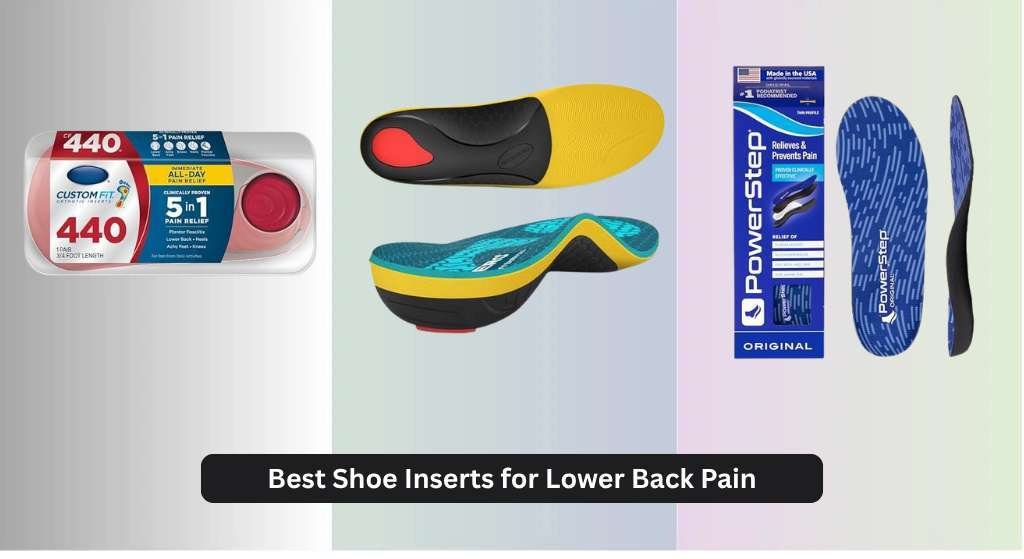
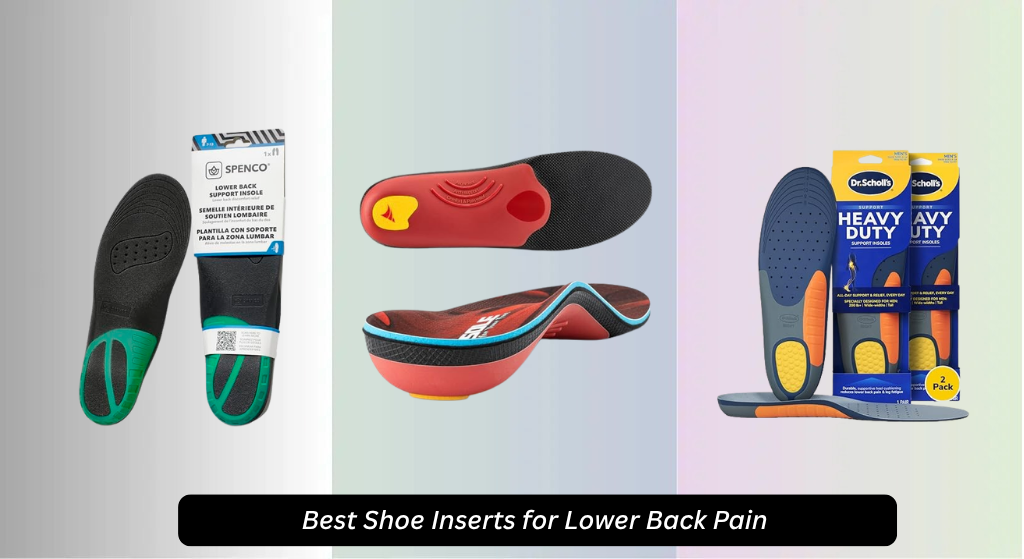
A few common U.S. options include:
- PowerStep Pinnacle: A semi-rigid design with a built-in arch and heel cushion. It may suit people who want more structure than a soft drugstore insole.
- Superfeet Run or Everyday styles: These offer different levels of structure and heel support. The correct model depends on your shoe and activity.
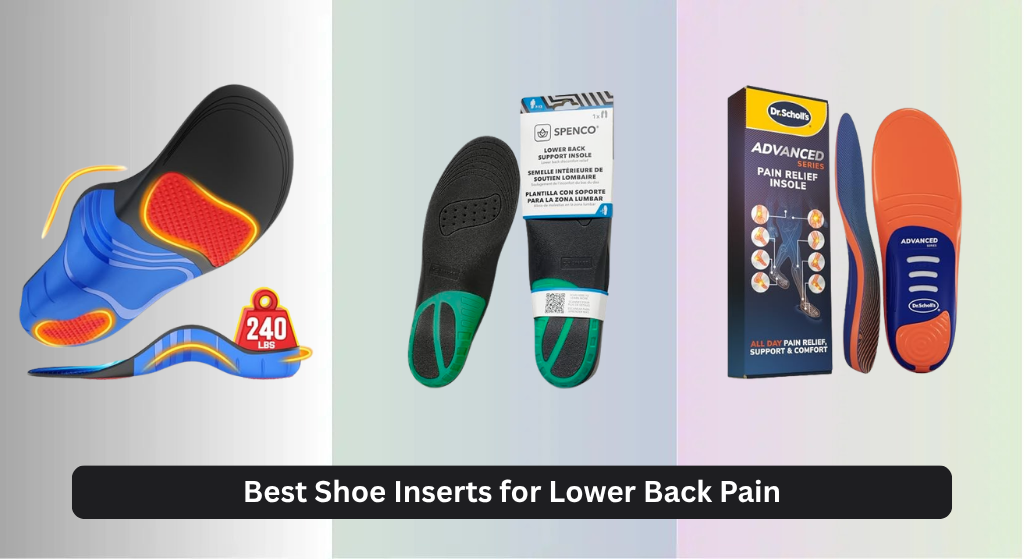
- Dr. Scholl’s pain-relief insoles: These are often less costly and easy to find. They may work for mild symptoms, but they may not provide enough structure for every foot type.
- Custom orthotics from a licensed clinician: These may help when a specific foot problem is present. Custom does not automatically mean better for general back pain.
These examples are not a medical ranking. Product fit, shoe fit, and your response matter more than the brand name.
How foot support may affect your back
Your feet are the base of your walking system. When you walk, forces move from the ground through your feet and legs. Changes in foot motion can also change movement at the knees, hips, and pelvis.
An insert may help by:
- Spreading pressure across the sole
- Supporting a low or flexible arch
- Limiting excessive heel motion
- Improving heel stability
- Reducing discomfort during standing or walking
That does not mean every foot problem causes back pain. Lower back pain can also come from muscles, joints, discs, nerves, hip problems, poor sleep, stress, or other health conditions.
The evidence does not show that shoe inserts reliably fix low back pain in all adults. A systematic review in the Journal of Bodywork & Movement Therapies found limited and mixed evidence for foot orthoses and low back pain. Clinical guidance for low back pain generally places more emphasis on staying active, exercise, education, and treatment based on the person’s symptoms.
The practical lesson is simple: an insert is worth trying when walking or standing seems to trigger your pain, but stop if it makes your symptoms worse.

The best type of insert for different needs
The best design changes with the problem you are trying to solve. Use this table as a starting point, not a diagnosis.
| Your main need | Insert features to consider | Main trade-off |
|---|---|---|
| General standing or walking discomfort | Moderate arch support and heel cushioning | May not correct a specific foot issue |
| Flat or flexible arches | Semi-rigid support with a stable heel cup | Can feel too firm at first |
| High arches | Cushioning with gentle support | Too much arch pressure may cause pain |
| Heel pain with back discomfort | Heel cushioning plus a stable base | Cushion alone may not change walking mechanics |
| Uneven wear or a suspected leg-length difference | Professional assessment before using a lift | The wrong lift can increase symptoms |
| Running or long walks | Activity-specific support and low weight | A running insert may not fit dress shoes |
| Work boots or safety shoes | Low-volume, durable design | Some boots have limited room |
| Diabetes or reduced foot feeling | Clinician-approved fit and pressure control | Do not self-treat pressure spots |
Semi-rigid insoles
Semi-rigid insoles are often the most reasonable first option. They provide structure while allowing some flex. They may suit people who feel unstable in soft shoes or whose feet roll inward during walking.
A semi-rigid insole should not create sharp arch pain. It should support the arch, not act like a hard lump under it.
Cushioned insoles
Cushioned insoles reduce the feel of impact. They may feel good on hard floors or during long periods of standing. However, very soft foam can compress quickly and may allow the foot to move more than you want.
Cushion is useful when comfort is the main issue. It is less useful when you need control or stability.
Custom orthotics
A custom orthotic is made from an assessment of your feet, gait, symptoms, and shoes. It may be reasonable when you have a diagnosed foot condition, repeated failure with correctly fitted inserts, or a complex walking problem.
Custom devices can be costly. They also require adjustment in some cases. A custom insert that does not fit your shoe or your symptoms is not automatically a good insert.

How to choose shoe inserts step by step
Follow these steps before buying a new pair.
1. Identify when your pain starts
Track whether pain appears during:
- Standing
- Walking
- Running
- Work shifts
- Long car trips
- The first steps in the morning
- A specific pair of shoes
If pain is present all the time, an insert may not be the main answer. If it appears mainly during weight-bearing activity, foot and shoe factors may deserve more attention.
2. Check your current shoes
Look for:
- A worn-down heel on one side
- A twisted or collapsed midsole
- A narrow toe box
- Little room above the foot
- A loose heel
- Uneven wear between the left and right shoes
An insert cannot fully fix a worn-out or poorly fitting shoe. A stable, comfortable shoe may help more than adding another layer inside it.
3. Remove the original insole if possible
Many shoes have removable liners. Take them out before adding a full-length insert. If the original liner cannot be removed, choose a thin replacement or a three-quarter-length design.
Do not force an insert into a shoe that makes your toes cramped. Tight shoes can create new foot pain and change the way you walk.
4. Match the arch shape
Place the insert beside your foot or stand on it briefly. The arch should contact your foot without a sharp edge or strong pressure point.
A high arch insert is not automatically better. More support can be helpful for one person and painful for another.
5. Start with short wear periods
Wear the inserts for about 30 to 60 minutes on the first day. Add time slowly over several days if they feel comfortable.
Mild awareness of a new support can occur. Sharp pain, numbness, blisters, or worsening back pain are reasons to remove the inserts.
6. Compare the result
Use the same type of activity before and after the trial when possible. Ask:
- Do I walk more comfortably?
- Is my back pain lower during or after walking?
- Do my feet feel supported rather than pushed?
- Did a new pain appear in my knees, hips, or feet?
- Can I wear the insert without crowding my toes?
A useful insert should improve function, not simply feel firm.
Common mistakes to avoid
The most common mistake is assuming that more support is always better. A hard, tall arch can change pressure under the foot and make symptoms worse.
Avoid these errors:
- Buying an insert only because it is labeled “orthopedic”
- Using the same insert in every shoe
- Adding an insert without removing the old liner
- Ignoring a narrow toe box
- Wearing a new insert all day at once
- Using a heel lift without checking leg length
- Continuing after numbness, burning, or sharp pain starts
- Expecting an insert to replace exercise or medical care
- Choosing a product based only on online ratings
Do not cut an insert in a way that removes its support or causes an unstable edge. If you trim it, use the old liner as a guide and check the fit before walking outside.

Do heel lifts help lower back pain?
Heel lifts should not be used casually for back pain. They are sometimes prescribed when a clinician finds a meaningful leg-length difference or another reason to change heel height.
A small difference in leg length is common. It does not always cause pain. A lift can also change your ankle, knee, hip, and pelvic position. The wrong height may increase discomfort.
If one shoe wears down much more than the other, or you feel uneven when standing, ask a podiatrist, physical therapist, or other qualified clinician for an assessment. Do not stack random heel pads to test a theory.

When shoe inserts are not enough
Lower back pain often needs more than a change in footwear. Staying gently active is commonly recommended unless a medical professional tells you otherwise. Walking, strength work, and exercises chosen for your symptoms may provide more lasting benefit than an insert alone.
Consider professional care if:
- Pain lasts more than a few weeks
- Pain keeps returning despite activity changes
- You have leg weakness or increasing numbness
- Pain travels below the knee
- You have balance problems
- You cannot walk normally
- The pain began after a fall or crash
- You have unexplained weight loss, fever, or a history of cancer
- You have new trouble controlling your bladder or bowel
- You have numbness around the groin or inner thighs
Seek urgent medical care for new bladder or bowel loss, severe weakness, or numbness in the saddle area. These symptoms can signal a serious nerve problem.
People with diabetes, poor circulation, neuropathy, arthritis, or reduced sensation should have footwear checked by a clinician. A pressure spot may become a wound before you feel it.

How long should you try an insert?
Give a correctly fitted insert a short, structured trial rather than wearing it indefinitely. Many people can judge basic comfort within days. The effect on activity-related back pain may take longer to assess.
Keep a simple record for one to two weeks:
- Activity
- Time spent standing or walking
- Back pain before activity
- Back pain after activity
- Foot, knee, or hip symptoms
- Whether the insert stayed comfortable
If symptoms are steadily improving, continue to increase use as tolerated. If symptoms stay the same, the insert may not address the cause. If symptoms worsen, stop using it and reassess the shoe, insert, and diagnosis.
Most inserts also wear out over time. Replace one when the foam is compressed, the shell is cracked, the heel cup is distorted, or your symptoms return. The replacement schedule depends on use, body weight, activity, and material. Follow the manufacturer’s guidance and inspect the insert rather than relying only on a calendar.

What the research can—and cannot—tell you
Research supports a cautious approach. Foot orthoses can change pressure and movement under the foot. Some people report less pain or better comfort. But studies of low back pain have used different devices, groups, and treatment plans, so their results do not point to one universally best product.
The American College of Physicians recommends non-drug treatments such as exercise and other active approaches for many types of low back pain. The World Health Organization also emphasizes education, physical activity, and individualized care for chronic primary low back pain.
These recommendations do not mean inserts never help. They mean inserts should fit into a broader plan. The strongest practical test is whether a properly fitted insert helps you move with less pain and without creating new problems.

FAQs about inserts for lower back pain
Can arch support make lower back pain worse?
Yes. An insert can make pain worse if its arch is too high, its heel is unstable, or it changes your gait too much. Remove it if you develop sharp foot pain, numbness, new knee or hip pain, or worse back pain.