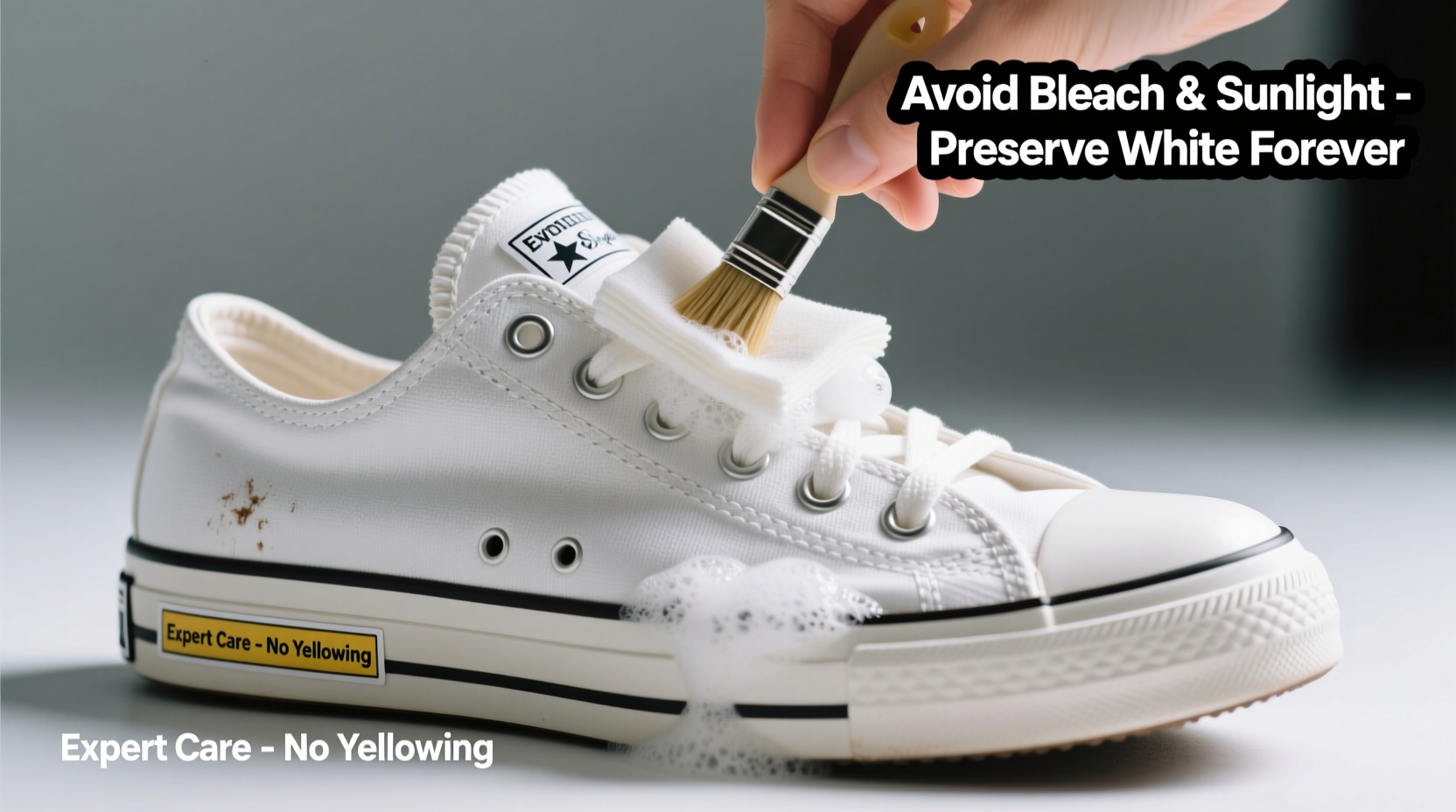
White canvas shoes can look bright again without harsh bleach or high heat. The safest method is to remove dry dirt first, wash with a small amount of mild detergent and cool or lukewarm water, rinse well, and let the shoes air-dry in the shade. Yellow stains often come from bleach damage, soap residue, rust, or heat—not from dirt alone.
This guide is written for shoe owners in the United States. It works for many cotton or synthetic canvas sneakers, including common casual shoes with rubber soles. Always check the care label or the brand’s care guide first, since some shoes have leather, suede, special coatings, or glued parts that need different care.

Why White Canvas Shoes Turn Yellow After Cleaning
Yellowing usually happens when a cleaning product or drying method leaves a chemical change or residue behind. The most common causes are chlorine bleach, too much detergent, direct heat, and incomplete rinsing.
Chlorine bleach can weaken fabric fibers and may leave a yellow or cream cast on white canvas. It can also damage colored stitching, rubber, printed details, and shoe glue. A shoe may look whiter at first, then yellow as it dries.
Soap and detergent can cause a similar problem when they are not fully rinsed out. Any leftover cleaner can dry on the fabric and attract more dirt. This is why using more soap does not produce a better result.
Heat is another common cause. A clothes dryer, radiator, hair dryer, or hot car can dry canvas too quickly and may affect glue, rubber, and fabric coatings. Bright sunlight can also cause uneven fading or yellow marks as moisture and cleaner move through the fabric.
Rust is less common but easy to miss. Metal eyelets, shoe hardware, or rusty washing surfaces can leave orange or yellow-brown marks. Treat these as rust stains rather than scrubbing harder with detergent.
What You Need Before You Start
Gather simple supplies before cleaning:
- A soft shoe brush or clean toothbrush
- A white or colorfast microfiber cloth
- A small bowl
- Mild liquid laundry detergent or mild dish soap
- Cool or lukewarm water
- A clean white towel
- White paper towels or plain white paper
- An old toothbrush for the rubber sole
Use white cloths and paper when possible. Colored towels can transfer dye to wet canvas.
Avoid these products unless the shoe maker specifically allows them:
- Chlorine bleach
- Strong bathroom or kitchen cleaners
- Acetone or nail polish remover
- Ammonia
- Abrasive powders
- Wire brushes
- Hot water
- Fabric softener
Do not mix cleaning products. In particular, never mix bleach with ammonia, acids, vinegar, or other cleaners. The mixture can release dangerous gases.
Before wet cleaning, remove the laces and insoles if they come out easily. Check the shoes for leather, suede, mesh, painted areas, or glued decorations. These materials may react differently to water.
Test the cleaner first
Mix a small amount of mild detergent with water. Dab it on a hidden part of the shoe, such as the inside edge near the heel. Wait until the area dries.
The cleaner is suitable if the fabric stays even in color, the texture remains normal, and no sticky film appears. A test cannot guarantee that every part of the shoe will react the same way, but it can prevent an obvious mistake.
How to Clean White Canvas Shoes Step by Step
Follow this order to clean the canvas while reducing the risk of yellow marks.
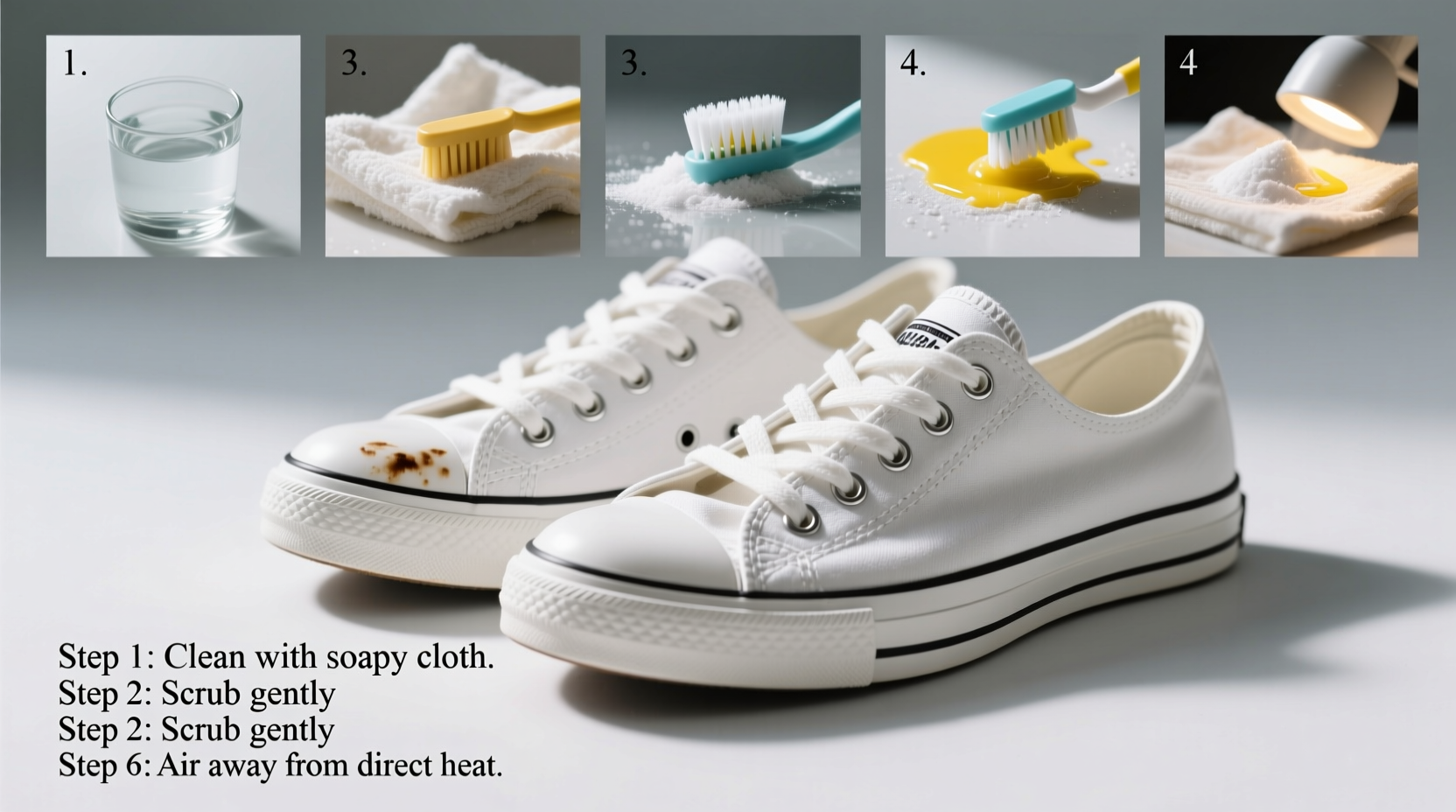
1. Remove the laces and loose dirt
Take out the laces and insoles. Shake the shoes over a trash can or outdoors to remove grit.
Brush the dry canvas gently. Work from the top of the shoe toward the sole. Do not wet the shoes before removing loose dirt. Water can turn dust into mud and push it deeper into the weave.
Clean the rubber soles separately with a damp cloth or soft toothbrush. A small amount of mild detergent is usually enough for rubber. Keep heavy scrubbing away from the canvas edge.
2. Make a mild cleaning solution
Add a few drops of mild liquid detergent to a bowl of cool or lukewarm water. The water should feel slightly soapy, not thick or slippery.
A good rule is to start with less cleaner than you think you need. Stronger is not safer. Extra detergent increases the chance of residue and yellowing.
Do not use hot water. Hot water can affect adhesives, set some stains, and make the shoe harder to rinse clean.
3. Clean small sections
Dip a soft brush or cloth into the solution, then squeeze out excess water. Work on one small section at a time.
Use light circular strokes on the canvas. Let the cleaning solution do the work. Pressing hard can flatten the fabric, spread a stain, or push dirt into the weave.
For scuff marks on the rubber sole, use a separate toothbrush. Keep the brush used on the sole away from the white canvas. Rubber can release dark residue during scrubbing.
If a stain does not lift after a few gentle passes, stop and identify it. Grease, rust, ink, and mildew may need different treatment. Repeatedly scrubbing the same spot can create a lighter or fuzzy patch.
4. Rinse out all cleaner
Use a clean cloth dampened with plain water. Blot and wipe the canvas several times to remove detergent.
Rinse the cloth often. The goal is to remove the cleaner, not soak the shoe. Continue until the cloth no longer picks up suds.
This step is one of the best ways to prevent yellowing. Detergent left in the fabric can dry into a visible film. It can also make the canvas feel stiff or attract new dirt.
5. Blot, shape, and air-dry
Press a clean white towel against the shoes to remove excess water. Do not twist or wring the canvas.
Put white paper towels or plain white paper inside the shoes. This helps them hold their shape and draws out some moisture. Avoid newspaper because its ink may transfer to wet fabric.
Let the shoes air-dry at room temperature in a well-ventilated place. Keep them away from direct heat, strong sun, fireplaces, radiators, and clothes dryers.
Allow the shoes to dry fully before wearing them. The drying time depends on the fabric, room airflow, and how wet the shoes became. Do not judge the final color while the canvas is still damp.

How to Clean White Shoelaces Without Yellowing Them
Wash white cotton or synthetic laces apart from the shoes. Removing them prevents dirt from the laces from spreading back onto clean canvas.
Place the laces in a bowl of cool or lukewarm water with a small amount of mild detergent. Let them sit for a short time, then rub them gently between your fingers. Rinse until the water runs clear and no slippery feel remains.
Press the laces in a white towel and hang them or lay them flat to dry. Do not use chlorine bleach as a routine whitening step. It may weaken the fibers and create a yellow cast.
If the laces remain gray after washing, replacement may be safer than repeated bleaching. New laces can improve the look of old shoes without exposing the canvas to a harsh chemical.

How to Remove Common Stains From White Canvas
The right treatment depends on the stain. Begin with the mild detergent method, rinse well, and let the area dry before using anything stronger.
| Stain | Safer first step | What to avoid |
|---|---|---|
| Mud or dirt | Let it dry, brush it off, then clean with mild detergent | Scrubbing wet mud deeper into the fabric |
| Grease or oil | Blot at once, then use a small amount of mild detergent | Rubbing hard or using solvent without a material test |
| Rubber scuff | Use a damp cloth or soft brush on the rubber | Aggressive erasers on the canvas |
| Grass | Use mild detergent and cool water, then rinse well | Hot water or chlorine bleach |
| Rust | Stop and use a product labeled for rust on fabric, after testing | Chlorine bleach, which can worsen some rust stains |
| Ink | Blot without spreading and seek a cleaner made for the specific fabric | Acetone or nail polish remover |
| Mildew odor or spots | Clean promptly and dry completely; discard shoes with deep, persistent growth | Sealing damp shoes in a bag |
Rust stains need special care
Rust does not respond to ordinary soap in the same way as dirt. Chlorine bleach can make rust-colored stains more difficult to remove, so avoid it.
A fabric-safe rust remover may help, but follow the product label and test a hidden area first. Keep acidic rust removers away from skin, eyes, metal hardware, and other surfaces that may be damaged. Rinse the treated area fully and let it dry.
If rust comes from a metal eyelet, clean and dry that hardware too. Otherwise, the stain may return.
Grease stains may leave a shadow
Oil can spread through canvas and leave a darker outline. Blot fresh grease with a clean towel. Do not rub it outward.
Apply a small amount of mild detergent to the spot, work gently, and rinse the area well. Several mild treatments are usually safer than one aggressive treatment. If the stain remains after the shoe dries, a professional cleaner may be a better choice than a harsh solvent.
Should You Use Baking Soda, Hydrogen Peroxide, or Oxygen Bleach?
These products are often suggested for white shoes, but they are not risk-free.
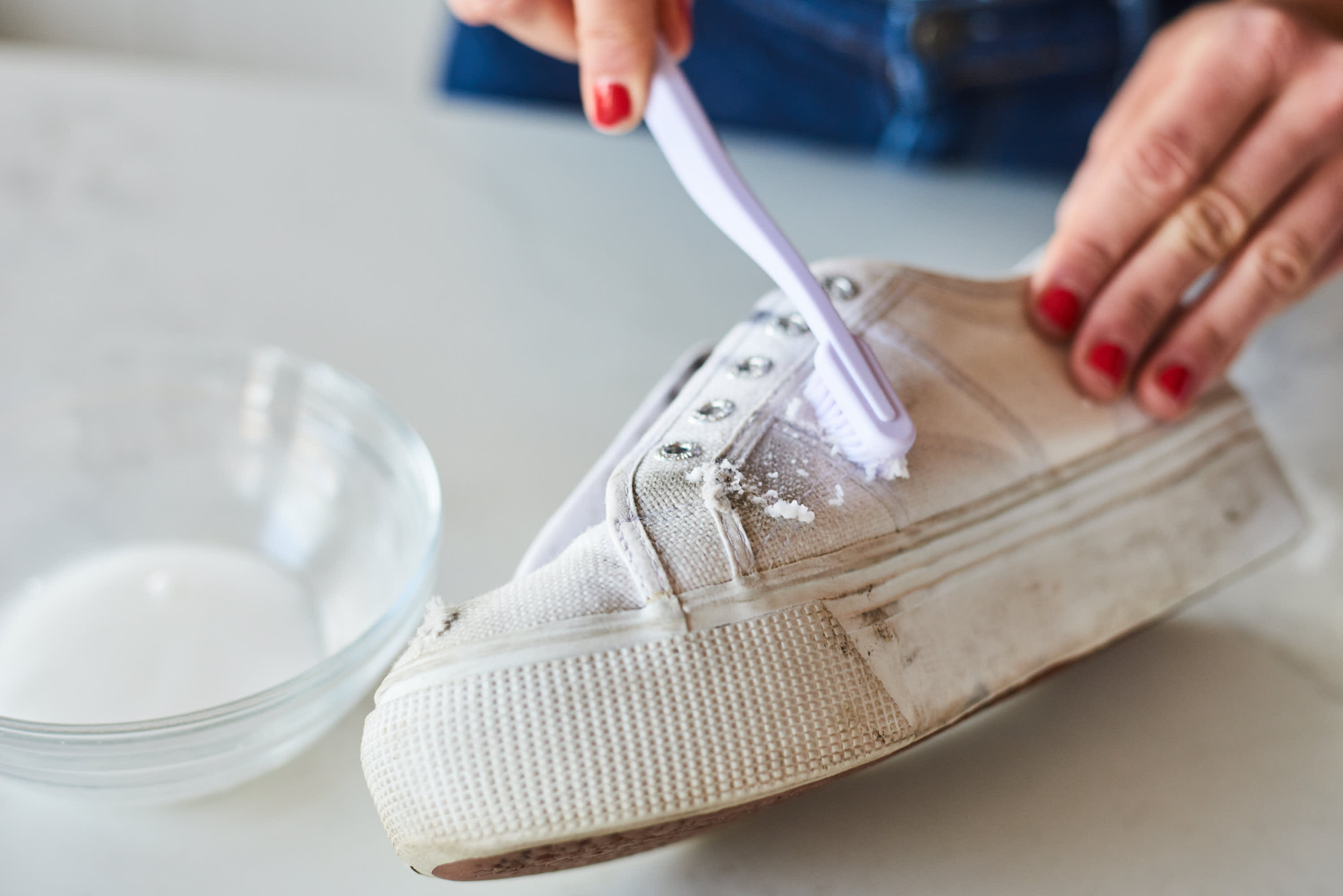
Baking soda can help absorb odor and provide mild abrasion, but it may leave powder in the canvas if you do not rinse it well. It is not a guaranteed whitening treatment.
Hydrogen peroxide can lighten some stains, but it may affect dyes, stitching, finishes, and older fabric. It also does not replace proper rinsing. Test it on a hidden area and follow the product label if you decide to use it.
Oxygen-based bleach is different from chlorine bleach and is often less harsh, but “less harsh” does not mean safe for every shoe. It may damage special finishes or colored details. Use it only if the shoe maker permits it and the product label gives directions for the material.
The safest default for unknown canvas is still mild detergent, gentle brushing, thorough rinsing, and shade drying.

What to Do If White Canvas Shoes Turn Yellow
First, work out what caused the yellow color. A pale, even yellow cast may indicate bleach or heat damage. A stiff, chalky, or sticky surface often points to cleaner residue. Orange-brown spots may be rust.
Start with a plain-water rinse using a clean damp cloth. Blot the affected area several times, then air-dry the shoes in the shade. This may remove residue without adding another chemical.
If the yellowing remains, do not keep repeating stronger treatments. Bleach damage, heat damage, and dye changes may be permanent. A shoe repair or specialty cleaner may be able to assess the material, but no cleaner can restore every damaged fiber.
Do not paint over the whole shoe as a first response. Fabric paint may change the texture, cover the original finish unevenly, and make later cleaning harder.
If only the rubber sole is yellow, the canvas may be fine. Rubber can discolor with age, sunlight, oxidation, or exposure to certain cleaners. Treating the canvas will not always restore aged rubber.
Common Mistakes That Cause Yellowing
Avoid these cleaning errors:
- Using chlorine bleach to make canvas “extra white.” It can weaken fibers and leave yellow discoloration.
- Using too much detergent. More soap means more residue, not necessarily more cleaning power.
- Skipping the rinse. Cleaner left in the fabric can dry into a film.
- Drying shoes with heat. Heat can affect glue, rubber, and canvas.
- Drying in strong direct sunlight. Uneven drying may leave marks or fade parts of the shoe.
- Cleaning the sole and canvas with the same dirty brush. Dark rubber residue can transfer to white fabric.
- Soaking the whole shoe for a long time. Extended soaking can weaken adhesives and change the shoe’s shape.
- Washing without checking the materials. Leather, suede, and decorative parts may not tolerate the canvas method.
- Scrubbing while the shoe is covered in grit. Grit acts like sandpaper and can roughen the fabric.
- Putting damp shoes into a closed container. Trapped moisture can create odor and encourage mildew.

How to Keep White Canvas Shoes Cleaner Longer
Clean small marks early. A fresh stain is often easier to remove than one that has dried and spread.
Brush off dry dust after outdoor use. Store the shoes in a dry, ventilated place rather than a sealed plastic bag. Keep them away from damp floors, wet backpacks, and poorly ventilated closets.
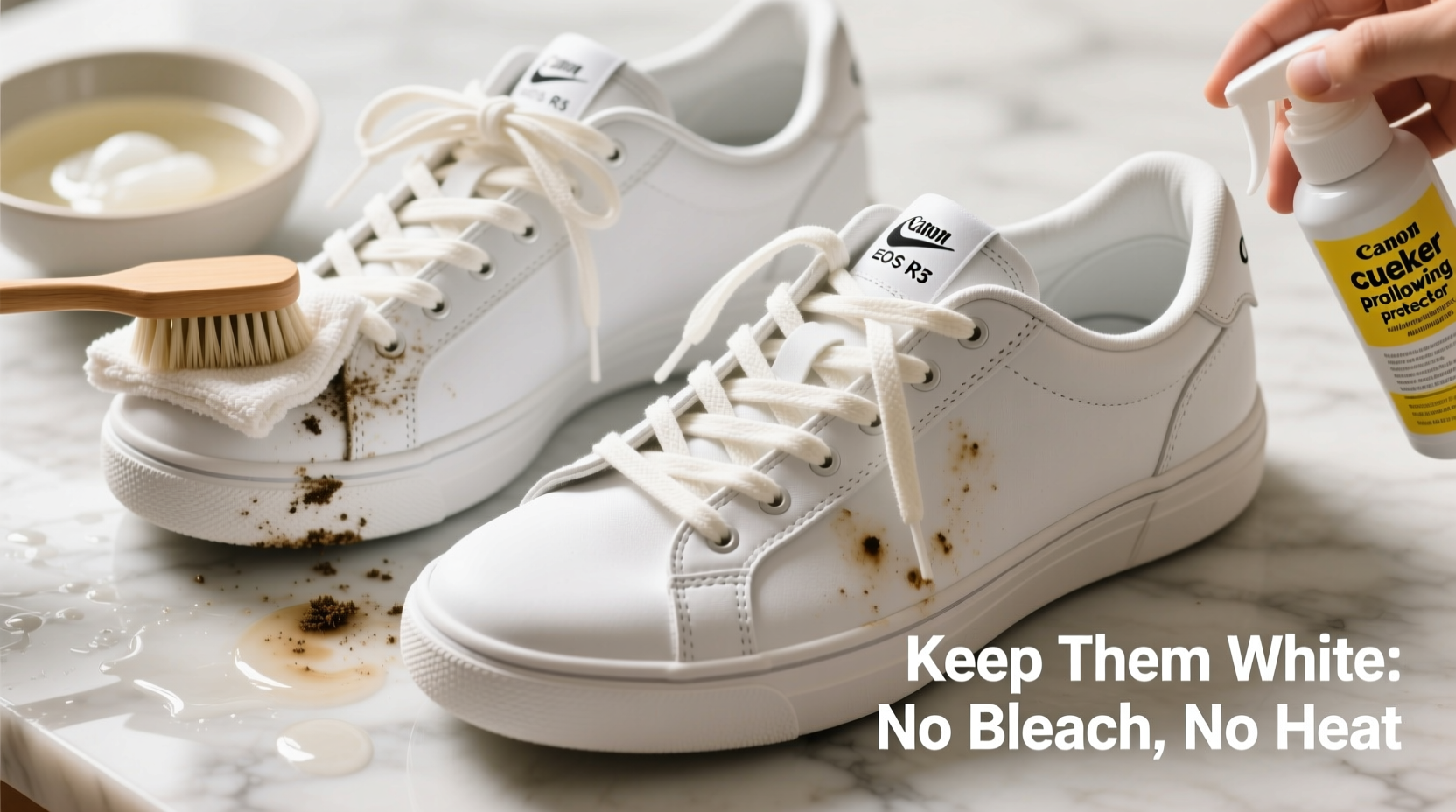
A fabric protector may help some canvas shoes resist water and stains, but check that the product is made for canvas. Test it first. Some sprays can change the shade or feel of white fabric.
Do not apply a protector to wet or dirty shoes. Clean them, let them dry fully, and follow the product label for use and ventilation.
Clean the insoles when they begin to smell. If they are removable, wash them according to their care instructions and dry them completely before putting them back. Odor control works better when the inside of the shoe is dry.

Key Takeaways
- Use cool or lukewarm water and a small amount of mild detergent.
- Brush off dry dirt before adding water.
- Rinse the canvas well to remove all cleaner.
- Avoid chlorine bleach, hot water, and heated drying.
- Air-dry white canvas shoes in the shade with white paper inside.
- Treat rust, ink, and deep mildew as special stains.
- Test any stronger product on a hidden area first.
FAQs
Can I put white canvas shoes in the washing machine?
Only if the shoe manufacturer allows machine washing. A machine may expose shoes to too much water, agitation, heat, and detergent. Those conditions can affect glue, rubber, shape, and color. Hand cleaning is the safer default for shoes with unknown care instructions.
Can I use toothpaste to clean white canvas shoes?
Toothpaste is not a reliable canvas cleaner. Some formulas contain colorants, oils, or abrasive particles that can leave residue or roughen fabric. Mild detergent and water give you better control.
Why did my shoes turn yellow after using baking soda?
Baking soda itself is not always the cause. Yellowing may come from leftover detergent, another mixed ingredient, heat, fabric damage, or dirt moving to the surface during drying. Rinse the shoes with plain water, blot them, and dry them away from heat.
Can I dry white canvas shoes in the sun?
Air-drying in indirect light or shade is safer. Strong direct sunlight can dry one area faster than another and may fade fabric or affect rubber. Good airflow matters more than high heat.
How often should I clean white canvas shoes?
Clean them when they show visible dirt or develop odor. Light brushing after wear can reduce the need for full washing. Frequent deep cleaning can wear canvas and adhesives, so use the mildest method that solves the problem.
Conclusion
The best way to clean white canvas shoes without turning them yellow is to use less product, not more. Brush away dry dirt, clean gently with diluted mild detergent, rinse until no residue remains, and let the shoes dry naturally in the shade.
If the shoes have already yellowed, first try removing cleaner residue with plain water. If the color change came from bleach, heat, rust, or age, more scrubbing may cause more damage. Identify the cause before choosing the next treatment.

Michael Smith is the Content Strategist behind The Style Hub, where fashion meets function. With a keen eye for trends and a passion for everyday style, he curates content that helps readers make smarter, more stylish choices—from the perfect pair of sneakers to must-have accessories. Michael specializes in breaking down fashion into practical, wearable insights, making style accessible for everyone. When he’s not researching the latest trends, he’s exploring how comfort, innovation, and timeless design come together in modern fashion.