Women’s sneakers can work well in many U.S. offices. The best pair looks neat, feels stable, and fits your workplace dress code. It should also handle your commute, stairs, and time on your feet.
For most business-casual offices, choose clean leather, suede, knit, or low-profile mesh sneakers in neutral colors. For formal offices, select a sleek leather pair with a simple sole. For active jobs, focus first on grip, support, and comfort. Style comes second when safety is involved.
This guide explains how to choose women’s work sneakers, what styles look polished, what to avoid, and how to match sneakers to your job.

What Makes a Sneaker Work Appropriate?
A work sneaker has a clean shape, quiet colors, and little visual clutter. It should look more refined than a gym shoe but still feel like a sneaker.
Look for these traits:
- A simple upper with few bright logos
- Neutral colors such as black, white, cream, gray, navy, or tan
- Clean laces or a neat slip-on design
- A low or moderate sole
- Minimal contrast between the upper and sole
- No visible damage, stains, or heavy wear
- A shape that does not look like a running shoe
A sleek sneaker can fit a business-casual dress code. A bright training shoe may not. The line depends on your workplace, your industry, and your manager’s expectations.
Casual sneakers versus work sneakers
Casual sneakers often have bold colors, thick soles, or athletic details. Work sneakers usually have a simpler profile.
| Feature | More work-friendly | Less work-friendly |
|---|---|---|
| Color | Black, white, cream, gray, navy | Neon or many bright colors |
| Shape | Low-profile and streamlined | Bulky or highly technical |
| Logo | Small or subtle | Large or repeated |
| Sole | Clean and moderate | Very tall, rugged, or bright |
| Upper | Leather, suede, smooth knit | Mesh with strong running-shoe details |
| Condition | Clean and intact | Scuffed, dirty, or worn down |
The right choice is not only about fashion. It is also about how the shoe fits your daily work. A stylish shoe that causes heel pain is not a good work shoe.

Best Types of Women’s Sneakers for Work
The best type depends on your dress code, commute, and time spent standing. No single sneaker works for every U.S. workplace.
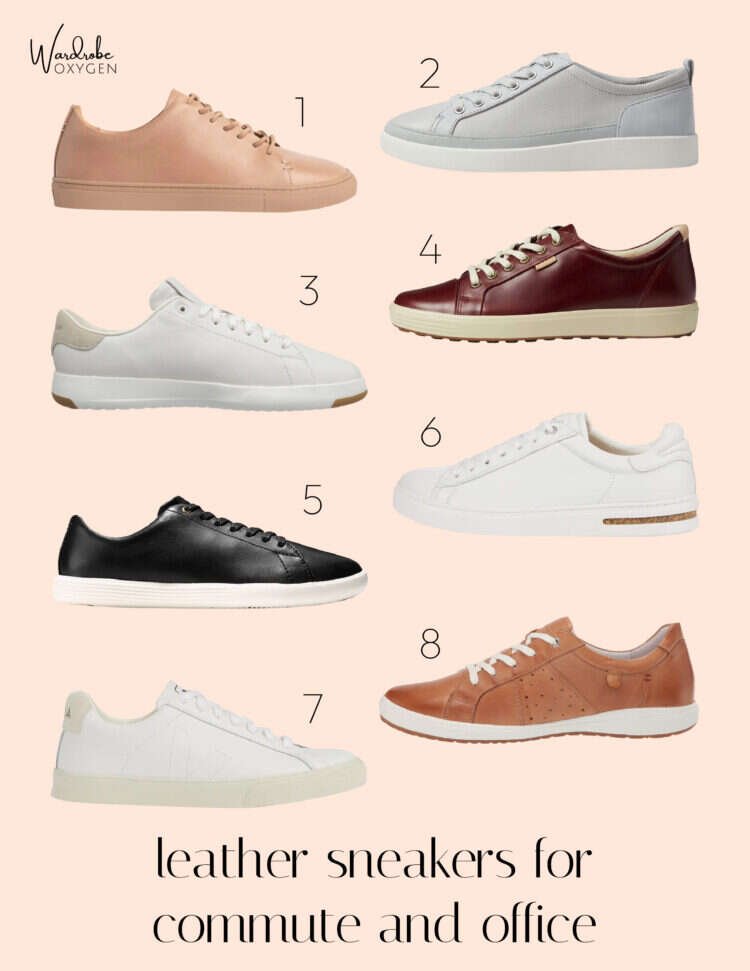
1. Minimal leather sneakers
Minimal leather sneakers are often the safest choice for business-casual offices. Their smooth surface looks polished with trousers, chinos, ankle pants, and casual dresses.
Choose a pair with:
- A plain white, black, cream, or tan upper
- A slim rubber sole
- Few seams
- Small branding
- A cushioned insole
- A firm heel counter, if possible
White leather can look sharp, but it needs regular cleaning. Black leather hides marks better and often looks more formal.
2. Court-style sneakers
Court sneakers have a simple, low-cut shape. They often resemble classic tennis or indoor court shoes.
They work well with:
- Straight-leg pants
- Wide-leg trousers
- Cropped pants
- Midi skirts
- Casual dresses
- Dark denim, where allowed
Avoid styles with bright color panels or a very thick platform if your office has a conservative dress code.
3. Knit or sock-style sneakers
Knit sneakers can offer more flexibility and airflow. They may suit a casual office, a long commute, or a job that involves frequent walking.
Their main drawback is appearance. Some knit uppers look like running shoes. Pick a dark, solid color and a simple sole if you want a more polished look.
Knit fabric can also hold dust and odors. Follow the care instructions. Do not assume every pair is safe to place in a washing machine.
4. Fashion sneakers with a platform sole
A modest platform can add height and cushioning. It may work in a creative office or relaxed workplace.
Check the sole before buying. A very tall platform can make stairs, uneven sidewalks, and quick turns less stable. It can also look too casual with tailored clothing.
5. Slip-on sneakers
Slip-on sneakers are useful for commuting and travel. They are easy to remove at airport security and simple to wear with casual office clothes.
Make sure the shoe stays on without gripping it with your toes. A loose heel can increase rubbing and make walking less stable.
6. Walking sneakers for active jobs
If your job requires long periods of standing or walking, comfort and traction matter more than a dressy look. A clean walking sneaker may be suitable for retail, education, health care support, hospitality, or warehouse office roles.
Check your employer’s footwear rules first. Some jobs require protective footwear, closed toes, slip resistance, or specific safety ratings. A fashion sneaker may not meet those needs.

How to Choose Work Sneakers for Your Job
Start with your workplace rules. Then assess your daily movement.
Step 1: Read the dress code
Look for terms such as:
- Business formal
- Business professional
- Business casual
- Smart casual
- Casual
- Closed-toe shoes
- Non-slip shoes
- Protective footwear
“Business casual” does not mean the same thing at every U.S. employer. One office may allow clean white sneakers. Another may allow only black leather shoes.
If the policy is unclear, ask your manager or human resources team. A simple question can prevent an awkward first day.
Step 2: Match the sneaker to your work setting
| Workplace setting | Good starting point | Use caution with |
|---|---|---|
| Law, finance, or formal corporate office | Sleek black or white leather sneaker | Mesh, bright colors, thick soles |
| Business-casual office | Minimal leather, court, or dark knit sneaker | Loud logos and athletic shapes |
| Creative studio or media office | Clean fashion sneaker or simple platform | Dirty or damaged shoes |
| School or campus job | Supportive walking sneaker in a neutral color | Smooth soles with poor grip |
| Retail or hospitality | Cushioned, stable, slip-resistant work shoe | Fashion sneakers without traction |
| Health care support role | Employer-approved closed-toe work sneaker | Open panels or noncompliant soles |
| Outdoor or industrial setting | Required safety footwear | Regular lifestyle sneakers |
Step 3: Estimate how much you will walk
A desk worker may value appearance and easy commuting. A retail worker may need cushioning, stability, and traction for many hours.
Ask yourself:
- Do I walk to public transit?
- Do I climb stairs several times a day?
- Do I stand for most of my shift?
- Do I move between indoor and outdoor areas?
- Do I work on smooth, wet, or uneven floors?
- Do I carry items or use ladders?
The more you move, the more you should inspect the outsole and fit.
Step 4: Try shoes on late in the day
Feet can swell during the day. Trying shoes on later can give you a more realistic fit.
Wear the socks you expect to use at work. Walk on a hard surface. Check the following:
- Your toes can move freely.
- Your heel does not lift excessively.
- The widest part of your foot sits over the widest part of the shoe.
- Your foot does not slide forward.
- The upper does not press on your toes.
- The sole bends near the ball of your foot.
- The shoe feels stable during a turn.
Do not expect a painful shoe to “break in” safely. Softening may help a little, but it will not fix the wrong size or shape.

The Most Polished Colors and Materials
Color and material can change how formal a sneaker looks.
Best colors for a conservative office
Black is the easiest choice for formal settings. It blends with black trousers, gray suits, navy pants, and dark dresses.
White and cream look fresh with business-casual clothing. They need more care because dirt and scuffs show quickly.
Gray, navy, and tan offer more variety while staying quiet. They work well with denim, chinos, and lighter trousers.
Leather
Smooth leather usually looks the most polished. It also resists light splashes better than many fabric uppers.
Leather can feel warm. It may also require more care. Wipe away dirt with a soft cloth and use a cleaner made for the type of leather.
Suede
Suede adds texture and can look refined. It is less practical in rain, snow, and muddy conditions.
Use a suede brush and protect the material with a product made for suede. Test any care product on a hidden area first.
Knit and mesh
Knit and mesh can feel light and breathable. They often suit casual offices and long commutes.
They may look more athletic and can absorb water or stains. Choose a dark, simple style if you need a more professional appearance.
Vegan and synthetic materials
Synthetic materials vary widely. Some look like smooth leather, while others crease or shine in a less formal way.
Check the upper in natural light. A very glossy finish can make a sneaker look less refined than expected.

How to Style Sneakers for the Office
A polished outfit helps a casual sneaker look intentional.
With trousers
Pair low-profile sneakers with:
- Ankle-length trousers
- Straight-leg trousers
- Wide-leg trousers with a clean hem
- Cropped pants
- Tailored pants in wool, cotton, or a blend
Keep the pants hem neat. A hem that drags on the floor can make the entire outfit look untidy.
With jeans
If your workplace allows denim, choose dark or medium-wash jeans without large rips. Pair them with a blazer, cardigan, button-down shirt, or knit top.
Simple white, black, or cream sneakers work best with jeans. Avoid combining distressed denim with very athletic shoes if you want a polished look.
With skirts and dresses
A low-profile sneaker can balance a midi skirt or a casual dress. Choose a clean pair with a shape that matches the outfit.
A bulky running shoe may look out of place with a tailored dress. A simple court sneaker usually creates a smoother transition.
With suits
Sneakers with suits are more acceptable in some U.S. offices than others. Use a minimal leather style in one neutral color.
Keep the rest of the outfit sharp. A clean shirt, structured jacket, and pressed trousers can make the look feel deliberate rather than careless.
Socks matter
Visible socks can change the look. Try:
- No-show socks with cropped pants
- Neutral crew socks with casual trousers
- Fine-rib socks with a more classic outfit
- Dark socks with dark sneakers and pants
Avoid worn, stretched, or brightly printed socks in a formal setting.

Comfort and Support: What to Check
Comfort comes from fit, cushioning, stability, and the demands of the job. A soft shoe is not always a supportive shoe.
Fit
The shoe should hold your foot without squeezing it. You should not need to tighten the laces so much that they press into the top of your foot.
If you have a wide forefoot, look for wide sizes or a naturally wider toe box. Do not simply size up. A longer shoe may leave too much space at the heel.
Cushioning
Cushioning can reduce the harsh feel of hard floors. It does not guarantee that a shoe will prevent pain.
More cushioning can also reduce ground feel. Some people prefer a firmer, more stable platform for standing and walking.
Arch shape
A shoe does not need to have a dramatic arch to be supportive. The best match depends on your foot shape and comfort.
If you use orthotics, check whether the insole can be removed. Make sure the shoe has enough depth for the insert without pressing on your toes.
Heel security
A stable heel can reduce rubbing and sliding. Look for a firm heel area and a lacing system that lets you adjust the fit.
Heel slipping during the first few steps may mean the shoe is too loose, too wide, or the wrong shape for your foot.
Toe room
Your toes should not touch the front when you walk downhill or stop quickly. Leave enough length for normal movement, but avoid excess space.
Numbness, tingling, blisters, or repeated pressure marks are signs to stop wearing the shoe and reassess the fit.

Safety Rules for Sneakers at Work
Regular office sneakers are not the same as safety footwear.
Under the U.S. Occupational Safety and Health Administration’s general requirements, employers must provide or require protective equipment when workplace hazards call for it. OSHA’s foot protection standard, 29 CFR 1910.136, addresses protective footwear where foot injury hazards exist.
A regular fashion sneaker may not protect against:
- Falling or rolling objects
- Punctures
- Electrical hazards
- Chemical exposure
- Heavy equipment
- Hot surfaces
- Wet or oily floors
Some employers also require slip-resistant footwear. Do not assume that a rubber sole is slip resistant on every surface. Traction depends on the tread, material, floor, and presence of water, oil, or other substances.
Follow your employer’s written policy. If the job includes hazards, ask which footwear standards or markings are required. OSHA’s personal protective equipment guidance is a useful starting point, but your employer’s hazard assessment controls the practical decision.
If you have ongoing foot pain, swelling, numbness, or balance problems, consider speaking with a qualified health professional. A shoe guide cannot diagnose the cause.

Examples of Work-Friendly Sneaker Categories
Product names and designs change, so shop by features rather than by a fixed list. These categories can help you narrow your search.
For a formal office
Choose:
- Black leather sneakers
- Plain white leather sneakers
- Slim court sneakers
- Dark loafers with sneaker-like cushioning
Prioritize a quiet sole and small branding. Avoid running-shoe mesh and bright panels.
For a business-casual office
Choose:
- Minimal leather sneakers
- Neutral court sneakers
- Dark knit sneakers
- Clean slip-ons
- Low-profile retro sneakers
This is the most flexible group. Your clothing and the sneaker’s condition will affect the final look.
For commuting by foot or transit
Choose:
- Lightweight walking sneakers
- Cushioned knit sneakers
- Supportive low-profile trainers
- Water-resistant styles for wet climates
Keep a second pair at work if your commute involves rain, snow, or salt. This helps your office pair stay clean and dry.
For standing all day
Choose:
- A stable walking sneaker
- A pair with a removable insole, if needed
- A shoe with secure heel fit
- A sole with suitable traction for your floor
Do not select a shoe only because it feels soft in the store. Walk in it for several minutes and check whether your foot slides or your toes feel crowded.
For travel and work trips
Choose:
- A neutral slip-on or lace-up sneaker
- A pair that works with trousers and jeans
- A washable or easy-care upper, if appropriate
- A design that does not need special outfits
A versatile color can reduce the number of shoes you need to pack.

Common Mistakes to Avoid
Wearing gym shoes in a formal office
Running shoes are built for movement, not always for polished workwear. Their mesh, bright details, and tall soles can look too casual.
A clean, dark walking shoe may work better than a colorful performance shoe.
Choosing style over fit
A beautiful shoe will not help if it causes blisters or numb toes. Fit should come before color and brand.
Ignoring the outsole
A smooth outsole may slide on wet sidewalks or polished floors. A deep, aggressive tread may look too casual indoors. Match the tread to the surfaces you use.
Wearing dirty sneakers
Even a high-quality sneaker can look unprofessional when it is stained. Wipe the upper and sole edge often. Let shoes dry fully before wearing them again.
Buying too tight
Feet can swell during a long shift. A tight toe box may feel acceptable for five minutes and painful after several hours.
Assuming “comfortable” means supportive
Marketing terms do not replace fit. Test the shoe for heel security, toe room, and stability.
Wearing new shoes for a full shift
Break in new shoes at home or during short outings first. This can reveal rubbing before you commit to a long workday.

How to Care for Work Sneakers
Care can extend the useful life of a work sneaker and keep it presentable.
- Remove surface dirt with a soft brush or cloth.
- Clean the material with the maker’s recommended method.
- Let the shoes air-dry away from direct heat.
- Use shoe trees or paper to help the upper hold its shape.
- Rotate between two pairs when possible.
- Replace worn laces.
- Check the outsole for smooth areas, cracks, or separation.
- Replace the shoes when the structure no longer feels stable.
Do not use bleach or strong cleaners unless the manufacturer allows them. Heat from a dryer or radiator can damage glue, foam, leather, and synthetic materials.
A sneaker that looks clean may still be worn out. If the midsole feels flat, the heel tilts, or the outsole has lost its tread, it may no longer support your normal work routine.
A Simple Buying Checklist
Before you buy women’s sneakers for work, confirm these points:
- The style fits your dress code.
- The color works with most of your work clothes.
- The shoe fits both feet comfortably.
- Your toes have room to move.
- Your heel stays secure.
- The sole suits your work surface.
- The shoe meets any employer safety rule.
- The upper is practical for your weather and commute.
- You can clean and maintain it.
- You can return it if the fit fails at home.
A good first purchase is usually a neutral, low-profile sneaker with a clean upper. Add a more supportive or weather-ready pair if your work demands more walking or outdoor travel.
Key Takeaways
- Choose sleek leather or simple court sneakers for conservative offices.
- Pick neutral colors and small logos for the most flexible look.
- Match support and traction to the amount of walking and standing you do.
- Check your employer’s rules before wearing sneakers to work.
- Do not use regular sneakers where protective footwear is required.
- Fit matters more than brand, color, or trend.
- Keep work sneakers clean, dry, and in good condition.
FAQs
Are sneakers acceptable for business casual?
Often, yes. Clean, low-profile sneakers may fit a business-casual dress code. The answer depends on your employer, industry, and office culture. When in doubt, choose a simple black or leather pair and confirm the policy.
What color sneakers look most professional?
Black, white, cream, gray, navy, and tan are usually the easiest colors to style. Black often looks most formal. White and cream look polished but need more cleaning.
Can I wear running shoes to work?
You can in some casual workplaces, but running shoes may look too sporty for a formal or conservative office. Choose a simple, neutral walking shoe if you need comfort without a strong athletic look.
Are white sneakers appropriate for the office?
Yes, in many business-casual U.S. offices. Keep them clean and choose a simple design. White sneakers may not fit a formal dress code or jobs with strict uniform rules.
What sneakers are best for standing all day?
Look for a secure fit, stable sole, adequate cushioning, and suitable traction. The best pair depends on your foot shape and workplace surface. Test the shoes before wearing them for a full shift.
Can I wear sneakers with a suit?
Some workplaces allow this combination. Use a clean, minimal leather sneaker in black, white, or another quiet color. Formal offices may still require traditional dress shoes.
How many pairs of work sneakers should I own?
One versatile pair may be enough for a desk job. Two pairs can help if you commute in wet weather, stand all day, or want to rotate shoes while each pair dries and rests.
Final Recommendation
For most U.S. business-casual offices, start with a clean, low-profile sneaker in black, white, cream, gray, or navy. Choose leather for a more polished look and knit or walking materials when comfort and commuting matter more.
Before your first full workday, check the dress code, walk in the shoes at home, and inspect the fit late in the day. If your job has floor hazards or long periods of standing, follow the employer’s safety rules and choose footwear for that work—not only for its appearance.

Michael Smith is the Content Strategist behind The Style Hub, where fashion meets function. With a keen eye for trends and a passion for everyday style, he curates content that helps readers make smarter, more stylish choices—from the perfect pair of sneakers to must-have accessories. Michael specializes in breaking down fashion into practical, wearable insights, making style accessible for everyone. When he’s not researching the latest trends, he’s exploring how comfort, innovation, and timeless design come together in modern fashion.