Men’s and women’s sneakers often differ in size ranges, width labels, shape, cushioning, and design details. However, these are general patterns, not strict rules. The best sneaker is the one that matches your foot shape, activity, and comfort needs.
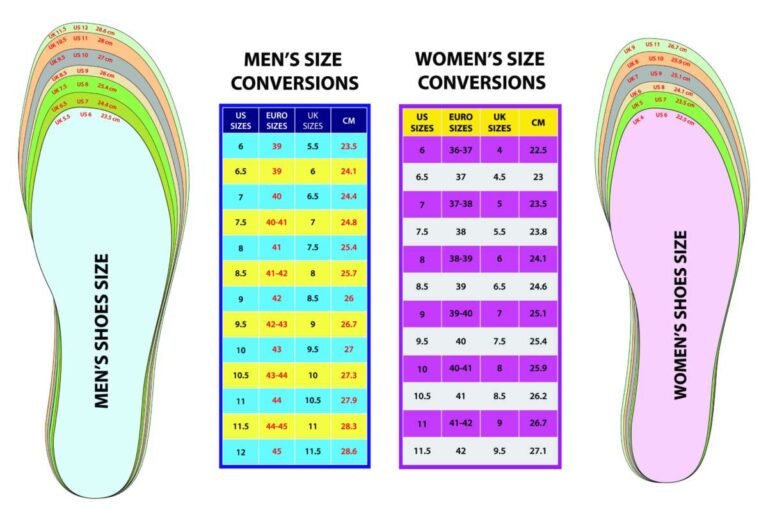
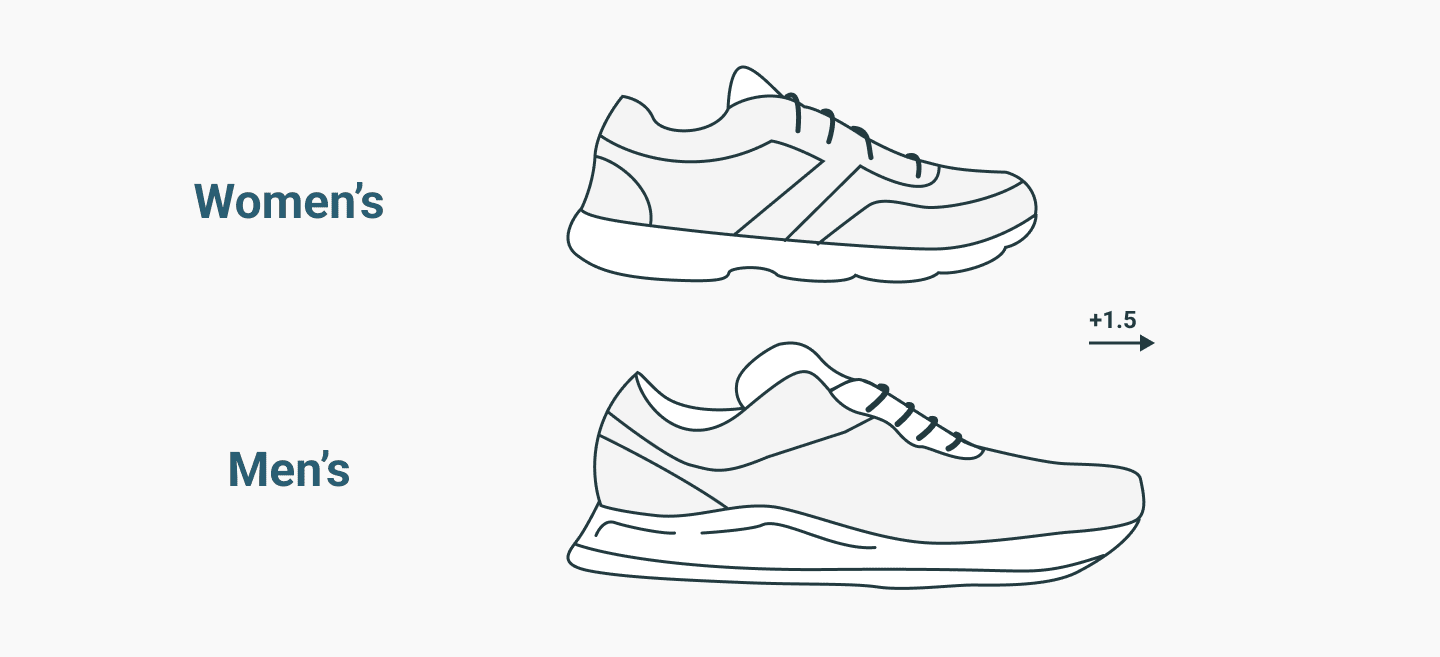
In the United States, men’s and women’s sneakers usually use different size scales. A women’s U.S. size is often about 1.5 sizes larger than the equivalent men’s size, but the exact conversion can change by brand. Width labels also differ: women’s standard width is often B, while men’s standard width is often D.
The main point is simple: shop by fit, not by the gender label on the box.
The Main Differences Between Men’s and Women’s Sneakers
The biggest differences are usually found in the shoe’s last, width, sizing system, and intended fit.
A last is the mold used to shape a sneaker. It controls the length, width, toe shape, heel shape, and overall fit. A women’s sneaker may use a narrower heel and a different balance between the heel and forefoot. A men’s sneaker may offer more total volume and a wider standard fit.
These are common design trends:
| Feature | Men’s sneakers | Women’s sneakers |
|---|---|---|
| U.S. size scale | Uses men’s sizing | Uses women’s sizing |
| Standard width | Often D | Often B |
| Typical heel shape | May have more heel volume | May have a narrower heel |
| Overall volume | Often higher | Often lower |
| Color and styling | More traditional men’s color options in some lines | More color and style options in some lines |
| Cushioning | Varies by model | Varies by model |
| Support | Depends on the shoe, not gender alone | Depends on the shoe, not gender alone |
These differences do not apply to every brand or model. Some brands use the same shoe shape for both versions. Others make separate versions with different midsoles, uppers, or widths.
A men’s sneaker is not automatically stronger. A women’s sneaker is not automatically softer. Materials, construction, use, and fit matter more than the label.
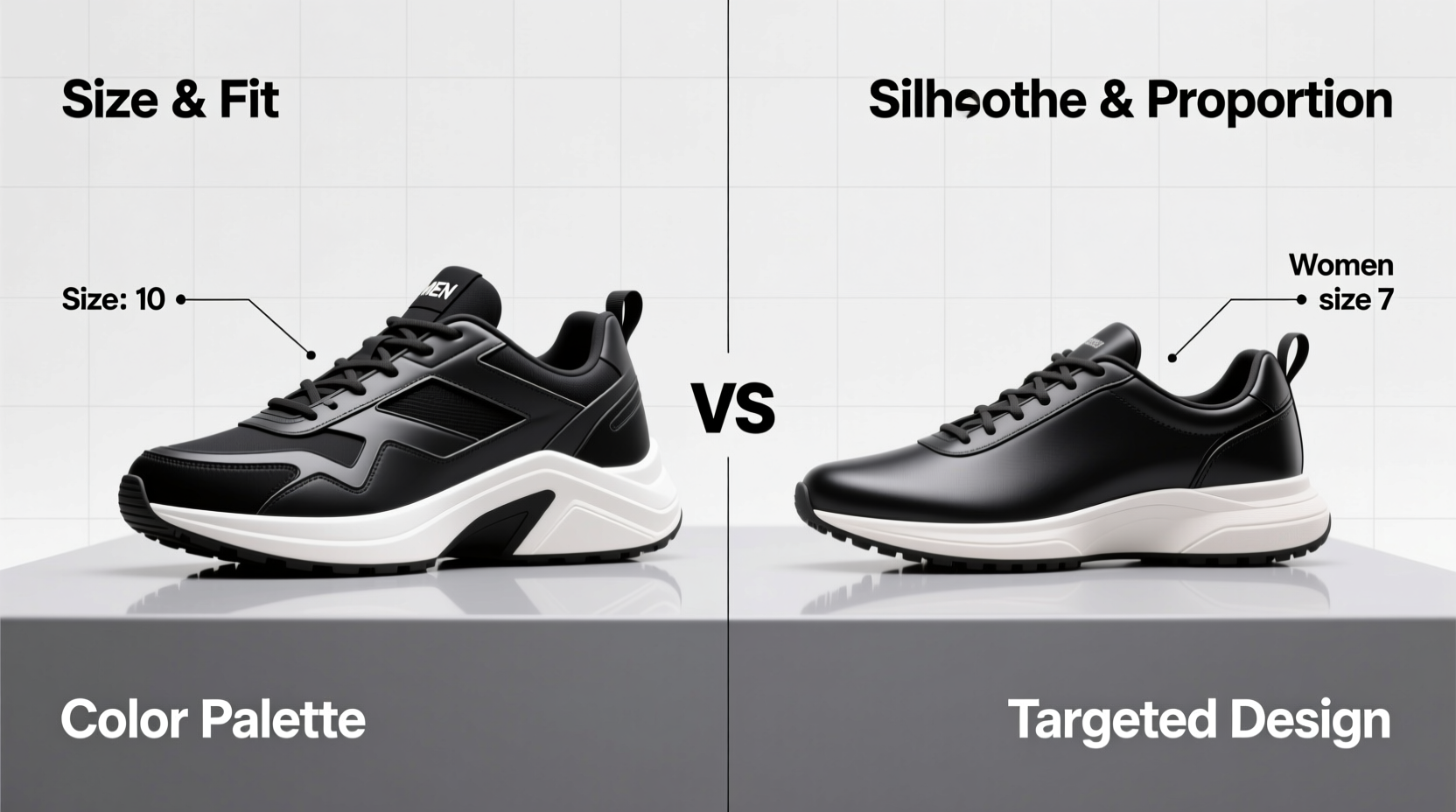
How Men’s and Women’s Feet Commonly Differ
On average, men’s feet tend to be longer and wider than women’s feet. But averages do not describe every individual.
Foot shape can vary due to genetics, age, body size, activity, injury, pregnancy, swelling, and medical conditions. Two people with the same foot length may need different widths or toe shapes.
Research on foot shape has found some average sex-related patterns, such as:
- A narrower heel compared with the forefoot in many women’s feet
- More overall foot volume in many men’s feet
- Differences in arch shape and forefoot proportions
- Different average ratios between foot length and foot width
These findings help shoe designers create a starting point. They do not tell you which sneaker will fit your foot.
For example, a woman with a broad forefoot may fit better in a men’s wide sneaker. A man with a narrow heel may prefer a women’s model if the length and overall shape work well. That is a fit decision, not a problem.
The american Academy of Orthopaedic Surgeons notes that foot shape and footwear fit can affect comfort and foot health. A shoe that pinches, slips, or forces the toes into a cramped position is a poor choice, regardless of its category.

Men’s and Women’s Sneaker Sizes: What the Numbers Mean
U.S. men’s and women’s sneaker sizes are not the same. A common starting conversion is:
Women’s U.S. size = men’s U.S. size + 1.5
For example:
| Men’s U.S. size | Approximate women’s U.S. size |
|---|---|
| 7 | 8.5 |
| 8 | 9.5 |
| 9 | 10.5 |
| 10 | 11.5 |
| 11 | 12.5 |
This is only a guide. Nike, adidas, New Balance, Brooks, ASICS, and other brands may use slightly different charts. Some shoes also have a unisex size chart, which can remove some confusion.
Do not convert sizes based on the number alone. Check:
- The brand’s official size chart.
- The shoe’s listed width.
- The foot-length measurement in inches or centimeters.
- The return policy if you are buying online.
A size 9 in one brand may not feel the same as a size 9 in another. The shape of the toe box, heel, and upper can change the fit even when the measured length is similar.
Is a men’s sneaker wider than a women’s sneaker?
Often, yes—but not always.
In many U.S. sizing systems, a men’s standard D width is wider than a women’s standard B width. However, a women’s wide shoe may be wider than a men’s standard shoe. Width letters are more useful than the gender label.
Common U.S. width labels include:
- Women’s B: standard or medium
- Women’s D: wide
- Women’s 2E: extra wide
- Men’s D: standard or medium
- Men’s 2E: wide
- Men’s 4E: extra wide
Width names and availability vary by brand. Always read the brand’s chart before ordering.
Do men’s and women’s sneakers have different lengths?
They can have different size scales, but the physical length may be similar after conversion. A men’s size 8 and a women’s size 9.5 are often intended for a similar foot length.
Still, the internal shape may differ. One version may have a narrower heel, a higher instep, or a different toe box. That is why a correct size conversion does not guarantee a correct fit.

Do Women’s Sneakers Have Different Cushioning or Support?
Some women’s sneakers have different cushioning or support, but there is no universal rule.
A brand may change the foam, heel structure, upper, or stiffness in a women’s version. In running shoes, these changes may reflect average differences in body weight, foot shape, or movement patterns. Some models use a softer foam or a different support setup. Other models use the same platform for men and women.
Those changes are product-specific. They should not be assumed from the gender category alone.
Cushioning
Cushioning affects how soft or firm a sneaker feels under the foot. It does not automatically correct overpronation, arch pain, or poor running form.
A softer shoe may feel comfortable during walking. A firmer shoe may feel more stable for some users. Neither is best for everyone.
Stability
Stability features may include:
- A wider base
- Firmer foam on part of the midsole
- A structured heel counter
- A stiff platform
- A guidance feature built into the midsole
These features are not exclusive to men’s or women’s sneakers. Choose them based on how the shoe feels and how you move, not only on the label.
Weight and foam tuning
Some brands adjust the amount or firmness of foam in a women’s model. A lighter person may compress a given foam less than a heavier person, but body weight alone does not determine the best shoe.
Running style, pace, surface, injury history, and personal comfort also matter. A shoe’s official product page can tell you whether the men’s and women’s versions use different materials. It cannot guarantee that one version will perform better for every person.

How to Choose Between a Men’s and Women’s Sneaker
Choose the version that gives you the best fit at the heel, midfoot, and toes. Use the following process when both versions are available.
1. Measure both feet
Measure your feet at the end of the day, when they may be slightly larger. Wear the socks you plan to use with the sneakers.
Measure:
- Heel to longest toe
- Widest part of the forefoot
- Both left and right feet
Most people have one foot that is slightly larger. Use the larger foot when choosing a size.
2. Check the toe room
Your toes should not touch the front of the shoe when you stand. For walking and running, many people need about a thumb’s width of space in front of the longest toe.
The exact amount depends on the activity and shoe design. Too little room can cause pressure, black toenails, blisters, or numbness. Too much room can make your foot slide.
3. Check the heel
The heel should stay in place when you walk. A small amount of movement may be normal, but your heel should not lift with every step.
Try the runner’s loop, also called a heel-lock lacing method, if the shoe fits well elsewhere but the heel slips. Do not use tighter laces to fix a shoe that is too short or too narrow.
4. Check the width
Your toes should spread without pressing against the sides. The upper should not create strong pressure over the widest part of your foot.
If the shoe feels tight across the forefoot, try a wider size or another shape. Going up in length may not solve a width problem.
5. Walk or run in the sneakers
Try the shoes on a clean indoor surface first. Walk, bend, and move as you would during normal use.
For running shoes, test them with a short, easy session before using them for a long race or demanding workout. Stop if you feel pain, numbness, rubbing, or unusual pressure.
6. Compare versions by measurements, not color
If you are choosing between a men’s and women’s version of the same sneaker, compare:
- Weight
- Heel-to-toe drop
- Midsole foam
- Width options
- Upper material
- Stack height
- Outsole design
- Return policy
The gender label should be one of the least important factors.

Can Men Wear Women’s Sneakers and Can Women Wear Men’s Sneakers?
Yes. Anyone can wear a sneaker made for another gender category if it fits and works for the intended activity.
A woman may prefer a men’s sneaker because it offers a wider forefoot, more volume, or a preferred color. A man may prefer a women’s sneaker because it has a narrower heel or a better fit through the midfoot.
The main challenge is size conversion. Start with the brand’s own chart, then check the physical measurements and width. Do not assume that a simple 1.5-size conversion will work for every model.
A cross-category sneaker may not be a good choice when:
- The heel slips badly.
- The toes touch the front.
- The upper presses on a bunion or joint.
- The shoe bends in the wrong place.
- The shoe causes pain during normal use.
- You need a medical shoe or custom orthotic fit.
People with diabetes, reduced foot sensation, major swelling, persistent pain, or a history of foot injury should ask a qualified health professional or podiatrist for specific advice. A general size guide cannot replace an examination.

Common Mistakes When Comparing Men’s and Women’s Sneakers
The most common mistake is treating the gender label as a medical or performance category. It is usually a design and sizing category based on average measurements.
Avoid these errors:
Assuming women’s sneakers are always narrower
Some women’s sneakers are narrow in the standard width. Others come in wide and extra-wide options. A men’s standard sneaker may fit better than a women’s standard sneaker, but a women’s wide model may work better than both.
Assuming men’s sneakers are always more durable
Durability depends on the outsole rubber, upper, stitching, foam, use, and care. The gender category does not prove that one version will last longer.
Choosing a smaller or larger size to fix width
Changing length does not always fix width. A longer shoe may cause heel slip while still feeling tight across the forefoot.
Try a different width or shoe shape first.
Buying the same size in every brand
Sizing varies across brands and models. Use the official chart and read the return terms before buying online.
Using discomfort as something to “break in”
A new sneaker may soften slightly, but sharp pain, numbness, strong pressure, or repeated blisters are warning signs. Do not expect a badly fitting shoe to become comfortable with time.

Men’s vs. Women’s Sneakers: Which Should You Buy?
Buy the sneaker that matches your foot measurements and activity, even if it comes from the other category.
A women’s sneaker may be the better choice if you need:
- A narrower heel
- A lower-volume fit
- A women’s-specific size range
- A particular width option
- A shape that holds your foot securely
A men’s sneaker may be the better choice if you need:
- More room through the forefoot
- More overall volume
- A men’s wide or extra-wide option
- A longer available size
- A different heel or toe shape
For most people, the best decision is based on length, width, heel security, toe room, comfort, and intended use. Gender labeling is only a shortcut used by brands.

Frequently Asked Questions
Are men’s and women’s sneakers built differently?
Sometimes. Brands may change the last, width, heel shape, foam, upper, or support features. Other models use nearly the same construction in both versions. Check the product specifications rather than assuming.
Is a women’s size 10 the same as a men’s size 8.5?
Often, that is the approximate conversion in U.S. sizing. It is not guaranteed. Brand charts may differ, and the shoe shape may still feel different.
Are women’s sneakers better for women?
Not automatically. A women’s version may fit a narrower heel or lower-volume foot well. A wide-footed woman may prefer a men’s model. Fit matters more than the category.
Are men’s sneakers better for wide feet?
They can be, especially when the men’s standard width is wider than the women’s standard width. But women’s wide and extra-wide sneakers may offer a better fit because they can combine a wider forefoot with a shape that better matches your heel.
Can I use running sneakers for everyday walking?
Often, yes, if they fit well and suit your needs. Running shoes may feel light and cushioned for walking. Lifestyle sneakers may offer a flatter, firmer platform. Choose based on comfort, stability, and how long you will wear them.
Should I size up for sneakers?
Only when the shoe is too short and the width is otherwise suitable. If the shoe is tight across the sides, try a wider version instead of simply sizing up.
Conclusion
The difference between men’s and women’s sneakers is usually found in U.S. sizing, width, foot shape, heel fit, and sometimes cushioning or support design. These differences reflect average measurements, not rules about who can wear each shoe.
Measure both feet, check the brand’s chart, compare widths, and test the fit while standing and walking. If a men’s sneaker fits better, wear it. If a women’s sneaker fits better, wear that one. Comfort, security, and the right use matter more than the label.

Michael Smith is the Content Strategist behind The Style Hub, where fashion meets function. With a keen eye for trends and a passion for everyday style, he curates content that helps readers make smarter, more stylish choices—from the perfect pair of sneakers to must-have accessories. Michael specializes in breaking down fashion into practical, wearable insights, making style accessible for everyone. When he’s not researching the latest trends, he’s exploring how comfort, innovation, and timeless design come together in modern fashion.