Yes. You can wear Salt-Water sandals in the sea. The brand designs these sandals to handle water, and the leather uppers can get wet. Their rubber soles also give useful grip on many beach surfaces.
Still, sea water is not harmless to any shoe. Salt, sand, sun, and repeated soaking can wear down leather, stain the footbed, and affect the metal buckles. Rinse the sandals with clean water after use, then let them dry in a cool place.
This guide explains how to wear Salt-Water sandals in the ocean, how to care for them, and when another type of water shoe may be safer.
Are Salt-Water sandals made for sea water?
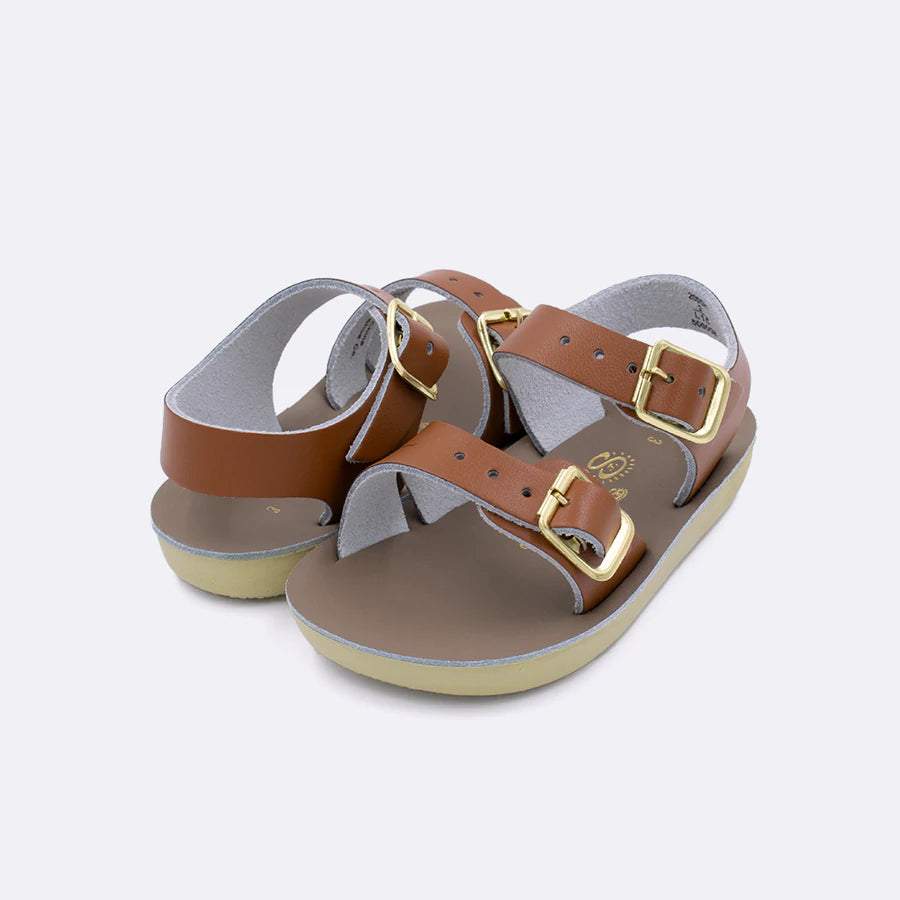
Yes. Salt-Water sandals are made to be worn in water, including ocean water. The brand uses leather uppers, water-friendly construction, and rubber soles. The name also reflects their original use as children’s water sandals.
However, “water-friendly” does not mean “damage-proof.” The sandals can get wet, but they still need care after a swim. Sea salt can dry on the leather and metal parts. Sand can also collect under the straps and rub the skin.
The sandals work well for:
- Walking along a sandy beach
- Wading in shallow ocean water
- Crossing a wet boardwalk
- Wearing on a boat or at a lake
- Walking from a beach chair to the water
They are less suitable for:
- Long swims
- Fast water sports
- Sharp rocks or coral
- Rough surf
- Hiking over wet, uneven ground
- Water activities that need a secure heel lock
Salt-Water sandals are sandals, not technical water shoes. They leave much of the foot open, and their straps may not hold the foot firmly in strong waves.
What happens when Salt-Water sandals get wet?
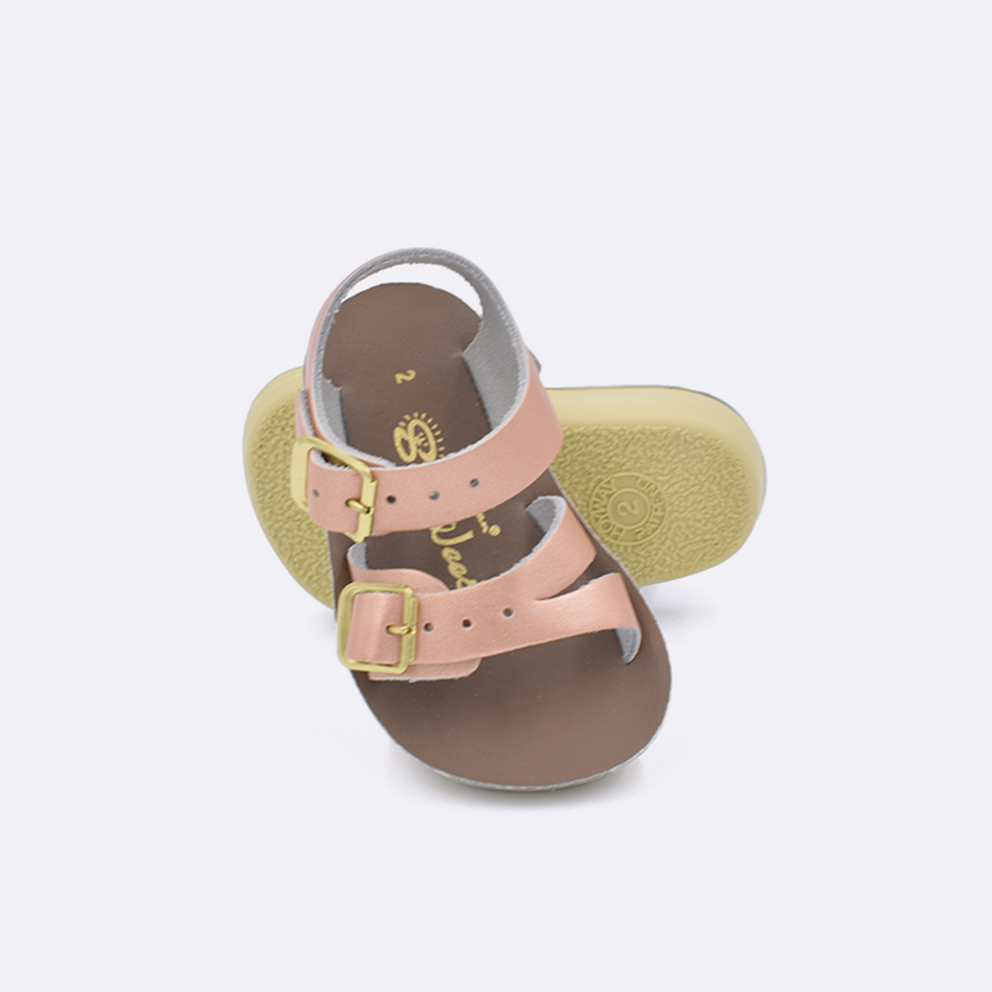
The leather may darken when wet, then return to a lighter color as it dries. This change is normal. Wet leather can also feel softer at first and may become stiff if it dries too fast.
Sea water can cause several changes:
- Salt marks: White residue may form as sea water dries.
- Stiff leather: The straps may feel hard if salt stays on them.
- Color changes: Some leather colors may fade or darken.
- Metal wear: Salt may speed up corrosion on buckles or rivets.
- Skin rubbing: Sand trapped under a wet strap can cause blisters.
- Odor: Damp sandals may smell if they stay wet for too long.
These effects do not mean the sandals failed. They show why rinsing and drying matter.
The exact result can vary by color, leather finish, age, and how often the sandals enter the water. A new pair may also need time to soften and fit your feet.

How to wear Salt-Water sandals in the sea
Follow these steps before and during your beach visit.
1. Check the fit before entering the water
The straps should hold the foot without cutting into the skin. Your heel should sit on the footbed, and your toes should not hang over the front.
A loose sandal can slip off in waves. A tight sandal can rub more once sand and water get under the straps.
Walk in the sandals on dry ground first. If they already pinch, sea water will not fix the fit.
2. Adjust the straps
set the straps so the sandals feel secure but not tight. Check the buckle before walking into the surf.
Salt-Water sandals often soften with wear. Do not assume a loose strap will become secure after it gets wet. Water may make the leather feel more flexible, but it will not correct a poor fit.
3. Start in shallow water
Test the sandals in shallow water before moving farther out. Walk slowly and check whether your feet slide inside them.
Stop if:
- A strap rubs your skin
- Your heel lifts with each step
- The sandal twists under your foot
- Sand feels trapped under the footbed
- The sole slips on the surface
4. Watch the bottom
Sandy beaches are usually easier on the sandals than rocky shorelines. Be careful on:
- Rocks
- Shell beds
- Barnacles
- Coral
- Seaweed-covered surfaces
- Wet wooden steps
A rubber sole may grip well on one surface and slip on another. No sandal can prevent every fall.
5. Rinse them after leaving the sea
Use cool or lukewarm fresh water. Rinse the straps, buckles, footbed, and sole.
Pay special attention to places where sand collects. You do not need strong soap for normal beach use. A gentle rinse is often enough.
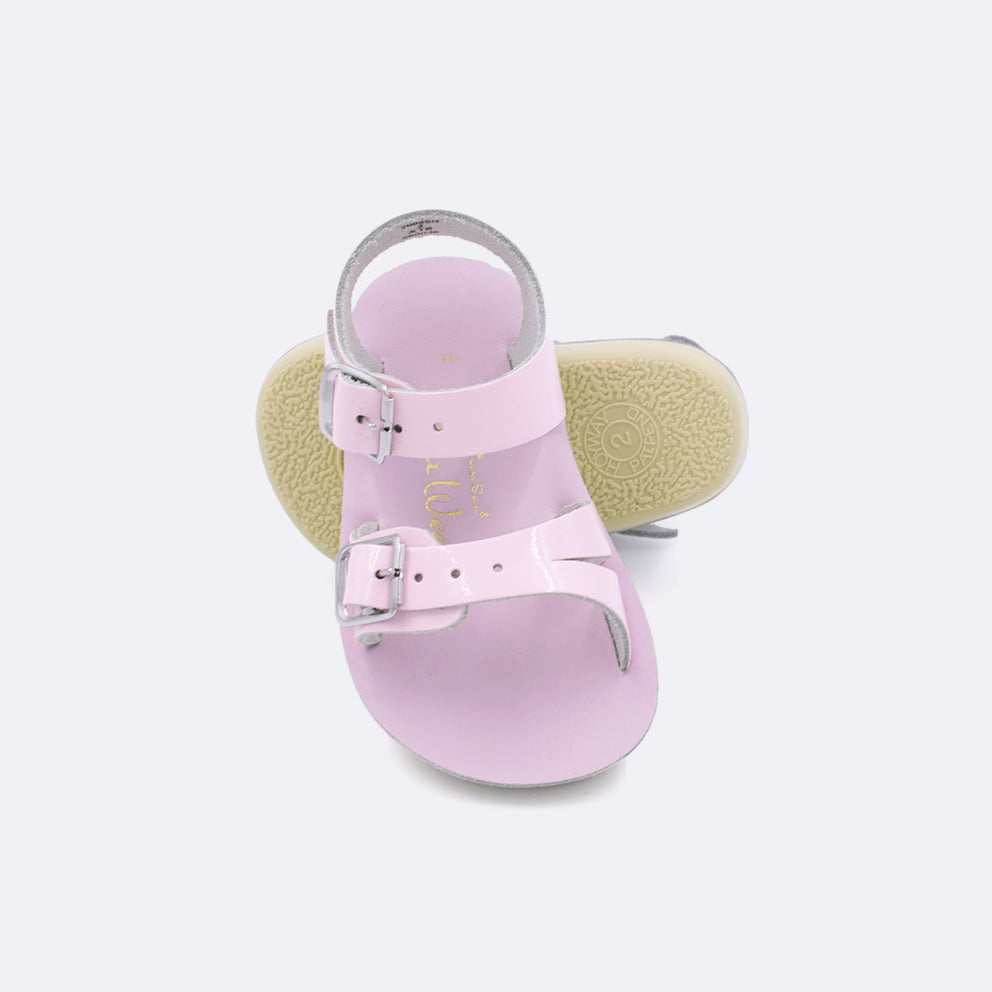
How to clean Salt-Water sandals after the beach
Cleaning them after each ocean visit is the best way to limit salt and sand damage.
-
Rinse both sandals with fresh water.
Remove salt from the leather, footbed, buckles, and sole. -
Remove loose sand.
Shake the sandals gently. Use your fingers or a soft brush for sand around the straps. -
Wipe away marks.
Use a damp, soft cloth. Avoid harsh cleaners, bleach, and strong detergents. -
Shape the leather.
Place the straps in their normal position while the sandals are damp. -
Dry them in the shade.
Keep them in a cool, airy spot. Avoid a heater, hair dryer, clothes dryer, or hot car. -
Wait until they are fully dry.
Do not store damp sandals in a closed bag. Moisture can lead to odor and material damage.
The manufacturer’s care advice should take priority for your exact Salt-Water model. Some versions may have different materials or finishes.

Can you dry Salt-Water sandals in the sun?
Brief outdoor drying is usually fine, but strong heat and long direct sun can damage leather. A hot porch, dashboard, or car trunk is a poor drying place.
Leather can shrink, stiffen, crack, or change color when it dries too fast. Heat can also affect adhesives and synthetic parts.
For better results:
- Blot excess water with a towel.
- Leave the sandals in moving air.
- Keep them out of intense midday sun.
- Do not use a hair dryer.
- Do not place them on a radiator.
- Do not put them in a washing machine or dryer.
If the leather feels stiff after drying, flex the straps gently by hand. Do not force them. Stop if you see cracks or the stitching begins to pull.
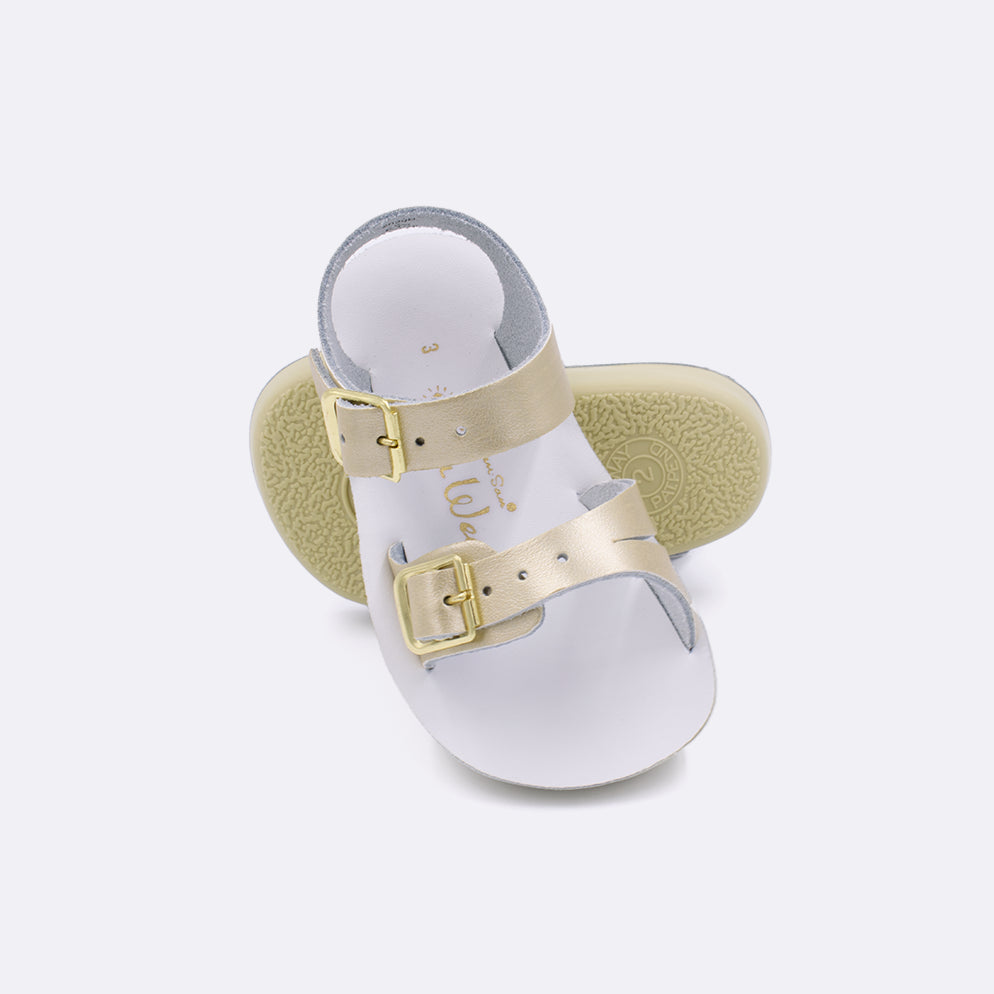
Salt-Water sandals in the sea versus a water shoe
Salt-Water sandals are a good choice when you want an open sandal that can handle casual water use. A closed water shoe is often better when foot protection, firm support, or secure movement matters most.
| Situation | Salt-Water sandals | Closed water shoes |
|---|---|---|
| Sandy beach walk | Usually suitable | Suitable |
| Shallow wading | Suitable with care | Suitable |
| Sharp rocks | Limited protection | Better protection |
| Strong waves | May slip or come off | Usually more secure |
| Snorkeling from shore | Not ideal | Usually better |
| Hot sand | Good coverage from some angles | Good coverage |
| Quick beach use | Convenient | May feel warmer |
| Long water activity | Not the best choice | Often the better choice |
Choose Salt-Water sandals for light beach use and style. Choose water shoes when the bottom is rough, the water moves fast, or you need the shoe to stay firmly attached.
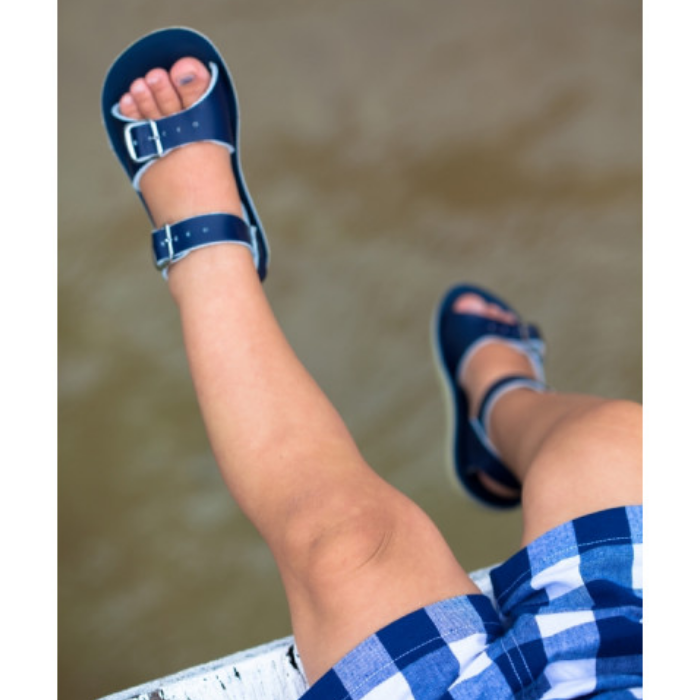
Do Salt-Water sandals get slippery in the sea?
They can. The sole may grip well on dry pavement and sand but feel less secure on wet rocks, algae, seaweed, or smooth boat decks.
Several factors affect traction:
- The surface under the sandal
- The amount of sand or algae
- Wave force
- Sole wear
- Your walking speed
- Whether the foot is sliding inside the sandal
Do not treat the rubber sole as a guarantee against slipping. Take short steps on wet surfaces. Use a handrail on steps and avoid rocks covered with green or dark growth.
If the sole is badly worn, replace the sandals. A smooth, worn tread gives you less protection than a newer sole.

Can children wear Salt-Water sandals in the ocean?
Yes, children can wear them in shallow ocean water when the fit is secure and an adult is close by. Check the sandals before each use.
Look for:
- A snug heel
- Straps that do not pinch
- No loose buckle
- No torn stitching
- A sole with usable tread
- No rough edge that can cut the skin
Children should not rely on sandals for safety in waves, currents, or deep water. Footwear does not replace close supervision, life jackets where needed, or local beach safety rules.
For rocky beaches, stronger water shoes may protect a child’s feet better. Children may also outgrow sandals quickly, so check toe room often.

Common mistakes to avoid
Wearing them in deep or rough water
A wave can remove an open sandal in seconds. It can also pull your foot sideways and cause a fall.
Leaving sea salt on the leather
Salt residue can make the leather stiff and may speed up wear on metal parts. Rinse the sandals after each sea visit.
Drying them with high heat
Heat can dry leather too quickly. Use shade and airflow instead.
Scrubbing with harsh chemicals
Strong cleaners can strip color and affect the leather finish. Start with fresh water and a soft cloth.
Ignoring sand under the straps
Wet sand can act like rough grit. Remove it before walking far.
Wearing them when they no longer fit
Loose or stretched straps can cause slipping. Tight, hard straps can cause blisters. Replace the pair or have the fit checked when the sandals no longer feel secure.

How long do Salt-Water sandals last in sea water?
There is no single lifespan for every pair. Use frequency, care, fit, and exposure matter more than a fixed number of days or swims.
A pair used for occasional beach walks may last much longer than one worn in the ocean every day. Rinsing helps remove salt, but it cannot stop normal wear.
Replace or retire the sandals when you notice:
- Cracked leather
- Loose stitching
- A buckle that will not hold
- A detached sole
- Deeply worn tread
- Sharp edges
- Straps that stay loose
- Repeated skin rubbing
Do not keep wearing damaged sandals simply because they still look usable. A loose strap or worn sole can create a trip or slip risk.

Frequently asked questions
Can you wear Salt-Water sandals in salt water every day?
You can, but daily sea use will likely increase wear. Rinse them after every use and let them dry fully. For frequent swimming or water work, a purpose-built water shoe may last better and offer more protection.
Can you wear Salt-Water sandals in the pool?
Usually, yes. Chlorinated pool water can still dry or discolor leather, so rinse the sandals with fresh water afterward. Check the pool’s rules, since some facilities do not allow outdoor footwear on the pool deck.
Should you treat Salt-Water sandals with leather conditioner?
Only use a product that the manufacturer approves for your exact model. Some conditioners can darken leather, change its finish, or make the surface too soft. When in doubt, use fresh water, a soft cloth, and careful air drying.
Can you put Salt-Water sandals in the washing machine?
Do not assume they are machine washable. A washing machine can bend the sandals, damage the leather, loosen parts, and cause excess water exposure. Hand rinsing is the safer care method unless the product instructions say otherwise.
Can you wear Salt-Water sandals on rocky beaches?
You can, but they offer limited protection from sharp rocks, shells, and coral. For a rocky beach, reef walk, or shoreline hike, choose closed water shoes with a secure fit and a sole made for uneven ground.
Final answer
Yes, you can wear Salt-Water sandals in the sea. They are suited to casual beach use and shallow wading, but they are not a replacement for secure water shoes in rough surf, deep water, or rocky areas.
For the best results, check the fit, rinse away salt and sand after each use, and dry the sandals slowly in the shade. If you need strong foot protection or a sandal that stays firmly attached during active water sports, choose footwear made for that specific task.
Sources and care guidance
- Salt-Water Sandals official website
- Salt-Water Sandals care information
- National Oceanic and Atmospheric Administration: Beach and ocean safety

Michael Smith is the Content Strategist behind The Style Hub, where fashion meets function. With a keen eye for trends and a passion for everyday style, he curates content that helps readers make smarter, more stylish choices—from the perfect pair of sneakers to must-have accessories. Michael specializes in breaking down fashion into practical, wearable insights, making style accessible for everyone. When he’s not researching the latest trends, he’s exploring how comfort, innovation, and timeless design come together in modern fashion.