Women’s sneakers can work in many U.S. offices when they look clean, fit well, and match the workplace dress code. The safest approach is to choose simple sneakers in leather, suede, or a polished knit, then pair them with tailored clothes such as trousers, ankle pants, midi skirts, or structured dresses.
The right choice depends on your office, industry, clients, and daily tasks. A sleek white leather sneaker may suit a business-casual office in New York or Chicago, while a creative workplace in Los Angeles or Austin may allow bolder colors and shapes. Always check your employer’s dress policy first.

Are Women’s Sneakers Appropriate for the Office?
Women’s sneakers are office-appropriate when they look intentional rather than athletic. Clean lines, subtle branding, neutral colors, and a neat fit help sneakers blend with professional clothing.
A simple rule works well:
The more formal the outfit, the more refined the sneaker should be.
For example, minimalist leather sneakers can work with tailored pants and a blazer. Running shoes with bright mesh, thick performance soles, or visible wear may look too casual in the same setting.
Sneakers usually work best in these offices
- Business-casual corporate offices
- Creative agencies and design studios
- Technology companies
- Startups
- Universities and nonprofit workplaces
- Retail, media, and marketing offices
- Offices with casual Friday policies
Use more caution in these settings
- Law firms
- Financial services
- High-end sales environments
- Formal client meetings
- Courtrooms
- Interviews
- Conservative executive offices
This does not mean sneakers are always forbidden in formal workplaces. It means the rest of the outfit must do more work. A tailored suit, polished bag, and simple leather sneakers may look more suitable than sneakers worn with casual jeans and a T-shirt.
Also consider your work area. Sneakers that look stylish may not meet safety rules in a warehouse, laboratory, commercial kitchen, construction site, or medical setting. Follow required footwear and personal protective equipment rules before styling comes first.
Choose Office-Ready Sneakers
The best office sneakers have a polished shape, clean finish, and restrained design. They should look like part of the outfit, not like shoes chosen only for exercise.
1. Pick a refined material
The material sets the tone.
- Leather: Polished, easy to dress up, and often the safest choice for business casual.
- Suede: Soft and stylish, but less practical in rain and snow.
- Canvas: Light and casual; better for relaxed offices.
- Knit or mesh: Comfortable but often reads as athletic.
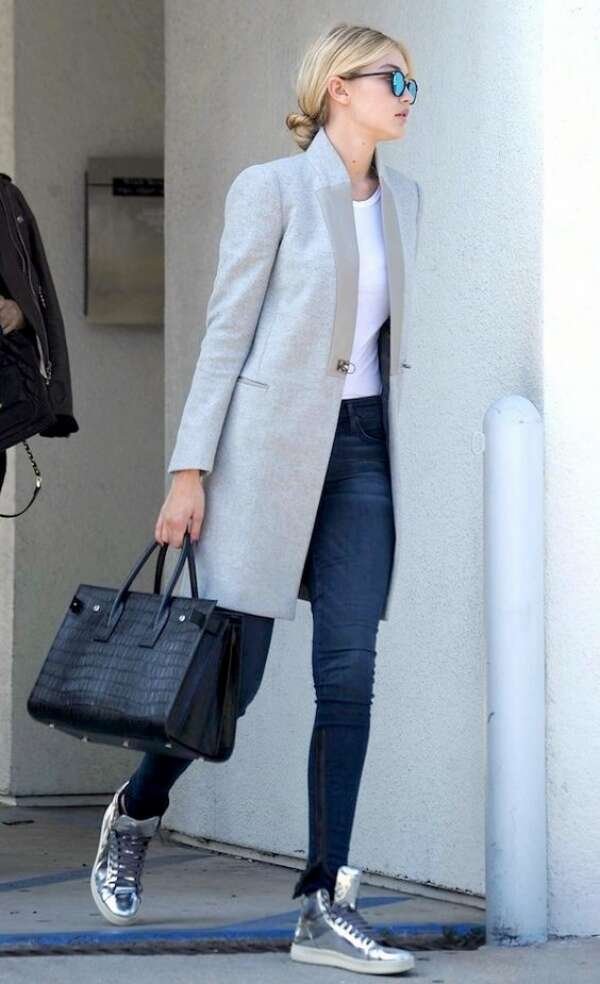
- Patent or metallic finishes: Can work as a fashion accent, but may feel too bold in conservative settings.
For a first office sneaker, smooth leather in white, black, cream, gray, or tan is a useful starting point.
2. Look for a low or moderate sole
A flat or low-profile sole usually looks more professional than a large performance sole. A modest platform can work, but very thick soles may make an outfit feel casual or trendy.
The goal is visual balance. Wide-leg trousers can support a slightly stronger sole. Slim ankle pants often look better with a sleek, lower-profile sneaker.
3. Keep branding quiet
Small logos are usually easier to style than large brand marks. Avoid designs with loud text, neon panels, racing stripes, or several contrasting colors unless your workplace welcomes statement fashion.
4. Check the shape
Choose a shape that works with your clothes:
- Low-top sneakers: Versatile with trousers, skirts, dresses, and jeans.
- High-top sneakers: More casual and harder to pair with formal clothes.
- Court-style sneakers: Clean and simple for business-casual outfits.
- Slip-on sneakers: Convenient, but choose a structured pair rather than a soft house-shoe shape.
- Fashion sneakers: Can work in creative offices if the outfit remains balanced.
- Running shoes: Best saved for commuting unless your office is very casual.
5. Prioritize comfort without hiding the professional details
Comfort matters when you walk, stand, or commute. Look for a stable fit, enough toe room, and cushioning that suits your feet. A shoe that causes pain will not look polished for long.
Do not assume that a sneaker is comfortable just because it is labeled athletic. Fit, support, and personal foot needs vary. If you have ongoing foot pain or a medical condition, ask a qualified health professional for advice rather than relying on fashion guidance.

Match Sneakers to Your Office Dress Code
Your office dress code gives you the basic boundaries. Use it as a guide, not as a reason to dress in one fixed way every day.
| Office setting | Safer sneaker choice | Outfit direction |
|---|---|---|
| Business formal | Minimal leather sneaker only if allowed | Tailored suit or polished separates |
| Business casual | Clean leather or suede sneaker | Trousers, blouse, blazer, or knit dress |
| Smart casual | Low-top, slip-on, or simple fashion sneaker | Dark denim, midi skirt, cardigan, or relaxed blazer |
| Creative casual | Refined or statement sneaker | Wide-leg pants, dress, denim, or layered pieces |
| Very casual | Canvas, knit, or fashion sneaker | Casual trousers, jeans, and relaxed tops |
If the policy uses vague terms such as “professional,” “presentable,” or “business casual,” study what coworkers wear at your level. Look at regular workdays, not only special events.
When in doubt, dress one step more formally. You can always wear a more casual sneaker later after you understand the culture.
Client meetings and presentations
Use your most polished pair for external meetings. Black, white, cream, gray, or tan sneakers are usually easier to blend with professional clothing than bright colors.
A blazer, pressed trousers, and a structured tote can make simple sneakers feel more deliberate. However, if the client expects traditional business attire, choose loafers, ballet flats, pumps, or another approved option instead.
Interviews and first days
Sneakers are a riskier choice for interviews because you may not yet know the workplace norm. If you choose them, select a clean, understated pair and wear formal clothing around them.
For a first day, follow the same rule. A polished sneaker with tailored clothes is safer than a visibly sporty sneaker with casual clothes.

How to Style Women’s Sneakers With Office Clothes
The easiest way to make sneakers look professional is to combine them with structure. Tailoring, pressed fabrics, neat layers, and a simple color plan create that structure.
Sneakers with trousers
Trousers are one of the most reliable pairings. Try:
- Straight-leg pants with low-profile white sneakers
- Cropped ankle pants with black or tan sneakers
- Wide-leg trousers with a slightly thicker sole
- Pleated pants with a simple leather court sneaker
- Slim trousers with a clean slip-on sneaker
Make sure the trouser length works with the shoe. The hem should not drag on the floor or bunch heavily over the sneaker.
Sneakers with a blazer
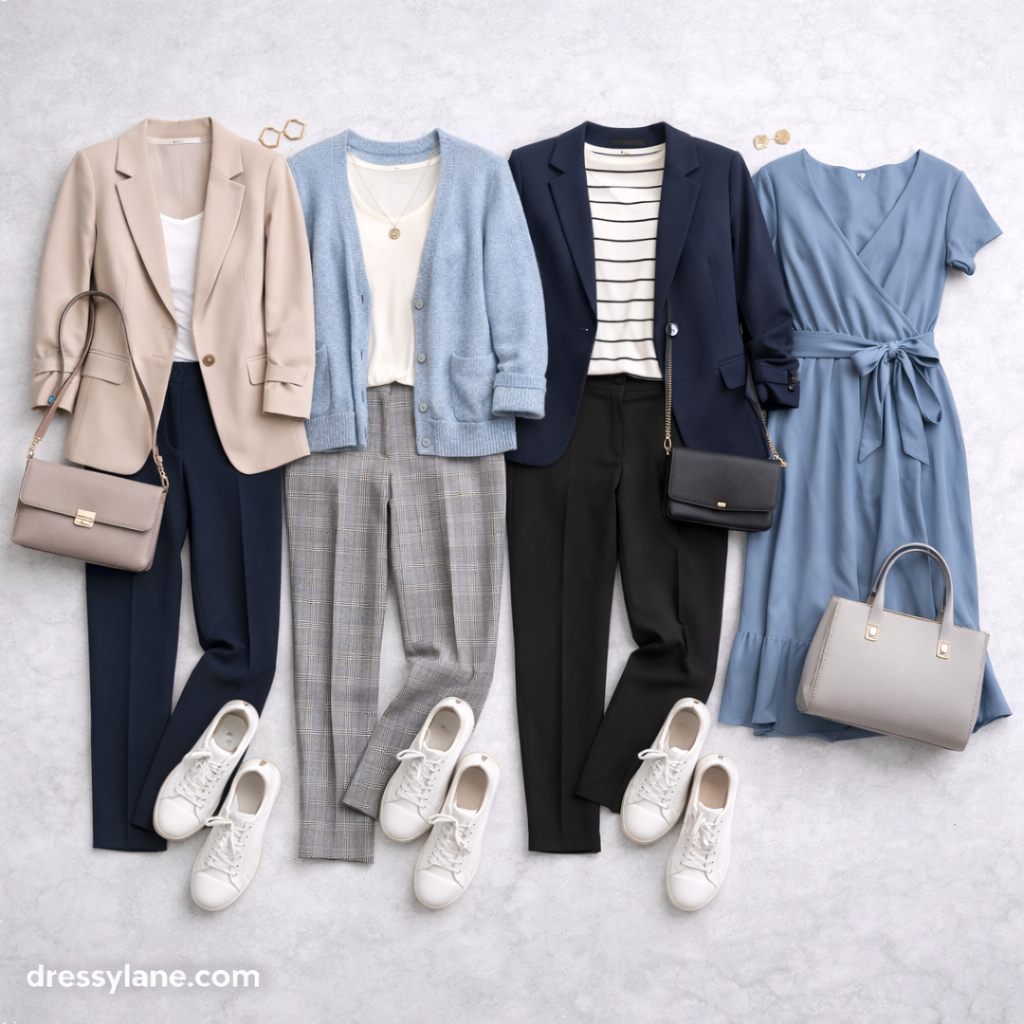
A blazer adds shape and formality. Pair it with a knit top, tailored pants, and minimalist sneakers for a balanced business-casual outfit.
A matching blazer and trouser set can also work with sneakers, provided the shoes are clean and understated. Keep accessories simple so the outfit looks planned rather than mixed by accident.
Sneakers with dresses
Sneakers can make a work dress feel more modern and comfortable. Choose a dress with a clear shape, such as:
- A shirt dress
- A knit midi dress
- A simple sheath dress
- A structured A-line dress
- A wrap-style dress, if appropriate for your workplace
Low-top sneakers usually work best. Add a blazer or cardigan if the dress feels too relaxed on its own.
Sneakers with skirts
Midi skirts pair well with simple sneakers because the longer hem creates balance. Try a pleated, straight, denim, or knit midi skirt with a tucked-in blouse or fine-gauge sweater.
Mini skirts need more care in a professional setting. If you wear one where permitted, balance it with opaque tights, a longer jacket, and a conservative top.
Sneakers with jeans
Jeans can work in casual or smart-casual offices. Choose dark, clean denim without heavy distressing. Pair it with a blazer, button-down shirt, fine sweater, or polished blouse.
Avoid combining casual jeans, a graphic T-shirt, and sporty sneakers unless your workplace is clearly casual. Three relaxed pieces may look too informal together.

Use Color and Proportion to Look Polished
Color coordination makes office sneakers easier to wear. The shoe does not need to match your outfit exactly, but it should connect with at least one other element.
Reliable color combinations
- White sneakers with navy, gray, black, tan, or denim
- Black sneakers with black, charcoal, burgundy, olive, or dark denim
- Cream sneakers with beige, brown, camel, navy, or soft colors
- Gray sneakers with cool neutrals and denim
- Tan or cognac sneakers with brown, cream, navy, and olive
- Metallic sneakers with a neutral outfit and limited jewelry
If you wear a colorful sneaker, keep the rest of the outfit calm. One statement item often looks more polished than several competing accents.
Match visual weight
A delicate shoe may look lost under very wide or heavy trousers. A large sneaker may overwhelm a slim dress or narrow ankle pants.
Use this simple proportion guide:
- Slim clothes usually suit slim sneakers.
- Wide-leg pants can suit a stronger sole.
- Long skirts often suit low-top sneakers.
- Cropped pants draw attention to the shoe, so choose a polished pair.
- Structured clothing can handle a slightly casual sneaker.
- Soft, oversized clothing may need a more refined shoe to keep the look professional.
Socks also affect the outfit. No-show socks create a clean look with ankle pants. Ribbed crew socks can work with trousers or skirts in a casual office, but bright athletic socks may make the outfit look sporty.

Common Mistakes to Avoid
Small details often determine whether office sneakers look polished or careless.
Wearing visibly worn shoes
Scuffed toes, dirty soles, loose laces, and peeling materials can make even a high-quality outfit look unfinished. Clean sneakers often matter more than the brand.
Choosing gym shoes for a professional outfit
Running shoes are built for movement, not office styling. Their mesh panels, technical details, reflective strips, and thick soles may clash with tailored clothing.
If you need athletic shoes for your commute, carry a second pair for work when possible.
Ignoring the rest of the outfit
Sneakers rarely look formal when every other item is casual. Balance them with at least one structured element:
- A blazer
- Tailored pants
- A crisp shirt
- A structured handbag
- A neat belt
- A polished dress
- A refined coat
Wearing shoes that are too tight
A professional look is not worth foot pain. Tight shoes can cause blisters and pressure points. Walk indoors before wearing a new pair for a full workday.
Forgetting weather and travel
U.S. weather varies widely. Suede may be difficult during wet winters, while canvas may not suit heavy rain. In snowy areas, wear weather-ready shoes for the commute and change at work if needed.
Also check whether your shoes provide enough grip for wet floors. Fashion sneakers are not a substitute for required slip-resistant footwear.
Overdoing the trend
Extreme soles, large logos, unusual shapes, and bright color blocking may suit a creative workplace but not a conservative one. If you are unsure, choose the quietest version of the trend.
Keep Your Office Sneakers Clean and Ready
A simple care routine helps sneakers stay office-appropriate.
- Remove surface dirt after wear. Use a soft brush or dry cloth when the material allows it.
- Follow the care label. Leather, suede, canvas, and knit need different cleaning methods.
- Protect the shape. Do not crush the heel or store shoes under heavy items.
- Air them out. Let shoes dry fully between wears.
- Rotate pairs. Alternating shoes can help each pair recover between workdays.
- Replace worn soles or damaged shoes. Visible damage can affect both appearance and comfort.
Do not put every sneaker in a washing machine. Heat, water, and agitation can damage glue, leather, suede, or shape. Use the manufacturer’s care instructions when available.
Keep one dependable pair at work if you commute in boots, sandals, or athletic shoes. This also gives you a backup for unexpected meetings.

Simple Office Sneaker Outfit Formulas
Use these formulas as starting points, then adjust them to your workplace.
Formula 1: Classic business casual
- White leather low-top sneakers
- Navy ankle trousers
- Light blouse
- Gray or camel blazer
- Structured tote
Formula 2: Minimal creative office
- Black sneakers
- Wide-leg black trousers
- Fine knit top
- Long cardigan or relaxed blazer
- Small metal jewelry
Formula 3: Casual Friday
- Dark straight-leg jeans
- Cream sneakers
- Button-down shirt
- Belt
- Lightweight jacket
Formula 4: Dress and sneakers
- Solid midi dress
- Clean low-top sneakers
- Blazer or cardigan
- Simple work bag
Formula 5: Color accent
- Neutral trousers and top
- One colorful sneaker
- Matching belt, scarf, or small accessory
- Simple outer layer
These combinations work because each outfit has a clear base. The sneakers add comfort and a modern touch without taking over the entire look.

Quick Decision Guide
Before leaving home, ask:
- Does my workplace allow sneakers?
- Are these shoes clean and in good condition?
- Do they look more like lifestyle shoes than gym shoes?
- Does my outfit include at least one structured piece?
- Are the colors calm enough for my office?
- Do the shoes fit well enough for the full day?
- Do I have a meeting, presentation, or client visit?
- Are the shoes suitable for my work area and safety rules?
If you answer “no” to the first question or the safety question, choose different footwear. If the concern is only style, add structure or switch to a more refined sneaker.

Frequently Asked Questions
Can I wear white sneakers to the office?
Yes, white sneakers can work in a business-casual or casual office when they are clean and simple. Leather or leather-like styles often look more polished than heavily textured athletic shoes.
Are sneakers appropriate for business casual?
They can be, but the workplace definition of business casual varies. Choose a low-profile sneaker and pair it with tailored trousers, a blazer, a blouse, or a structured dress.
Can I wear sneakers with a suit?
Sometimes. A simple suit with minimalist sneakers can work in a modern or creative office. For a conservative office, formal meeting, interview, or court-related setting, traditional dress shoes may be safer.
What color sneakers are most versatile for work?
White, black, cream, gray, and tan are usually the easiest to style. Choose the color that works with your existing work wardrobe and suits your office culture.
Can I wear running shoes at work?
Running shoes are usually too sporty for a polished office outfit. They may be acceptable in a very casual workplace, but commuters often get a better result by changing into cleaner lifestyle sneakers at work.
Final Takeaway
To wear women’s sneakers in the office, start with the dress code and choose a clean, simple pair that fits the formality of your clothes. Leather low-tops in white, black, cream, gray, or tan are the safest starting point.
Balance sneakers with tailored pieces, keep the shoes clean, and use more caution for interviews, client meetings, conservative offices, and jobs with footwear safety rules. When the outfit looks deliberate and the shoes suit the setting, sneakers can be a comfortable and polished part of a professional wardrobe.

Michael Smith is the Content Strategist behind The Style Hub, where fashion meets function. With a keen eye for trends and a passion for everyday style, he curates content that helps readers make smarter, more stylish choices—from the perfect pair of sneakers to must-have accessories. Michael specializes in breaking down fashion into practical, wearable insights, making style accessible for everyone. When he’s not researching the latest trends, he’s exploring how comfort, innovation, and timeless design come together in modern fashion.