How Should Tennis Shoes Fit: Find Your Perfect Fit
Tennis shoes should feel snug at the heel, secure in the midfoot, and roomy at the toes.
Knowing how should tennis shoes fit can prevent blisters, sore toes, rolled ankles, and lost confidence on the court. The right fit is not simply about choosing your usual size. It depends on toe space, heel hold, width, arch comfort, socks, and the way your feet move during quick stops and side-to-side cuts. This guide explains how should tennis shoes fit, how to test them, and which mistakes to avoid before you buy.
Why proper tennis shoe fit matters
Tennis creates more side-to-side stress than most daily activities. You may sprint forward, stop fast, slide, and push off at an angle within a few seconds. Tennis shoes must keep your foot stable while still allowing natural movement.
A poor fit can change how you move. Shoes that are too loose may let your foot slide inside the upper. Shoes that are too tight can press on your toes and reduce comfort during long matches.
Research on athletic footwear often links poor fit with pressure, rubbing, and foot pain. However, no shoe can prevent every injury. Court surface, playing style, strength, technique, and previous injuries also matter.
The main benefits of learning how should tennis shoes fit include:
• Better comfort during practice and matches
• More control during lateral movement
• Less heel movement and rubbing
• Fewer hot spots and blisters
• More even pressure across the foot
• Better confidence when stopping and changing direction

What should a well-fitting tennis shoe feel like?
A well-fitting tennis shoe should feel secure from the first try. It should not feel painfully tight, stiff around the toes, or loose around the heel. Think of the shoe as a supportive handshake: firm enough to hold your foot, but not so tight that it squeezes.
Here is what to look for when deciding how should tennis shoes fit:
The heel should stay in place
Your heel should remain mostly still when you walk, jog, and make a gentle side step. A small amount of movement is normal, but your heel should not lift with every step.
If your heel slips, try tightening the laces through the top eyelets. You can also use a runner’s loop, sometimes called a heel-lock lacing method. If the heel still moves, the shoe may be too wide, too long, or shaped differently from your foot.
The midfoot should feel secure
The middle of the shoe should hold your foot without creating pressure points. You should feel even contact across the top and sides of your foot.
Your laces should close the shoe comfortably. If the eyelets spread widely when you lace up, the shoe may be too narrow. If you must pull the laces very tight to stop your foot from sliding, the shoe may be too roomy.
The toes need space
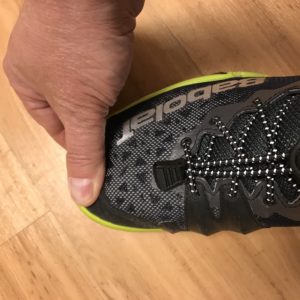
Your longest toe should sit about one thumb’s width from the front of the shoe. For many adults, this equals about ⅜ to ½ inch of space, but foot shape matters more than a fixed number.
You need this room because feet can swell during play. Extra space also helps prevent your toes from hitting the front when you stop. Your toes should be able to move slightly, but they should not slide from side to side.
The ball of your foot should match the widest part
The widest part of your foot should sit near the widest part of the shoe. This allows the shoe to bend in the right place.
If your foot hangs over the side of the sole, the shoe is too narrow. If the shoe bends far beyond the ball of your foot, it may be too long or poorly shaped for you.
How should tennis shoes fit compared with running shoes?
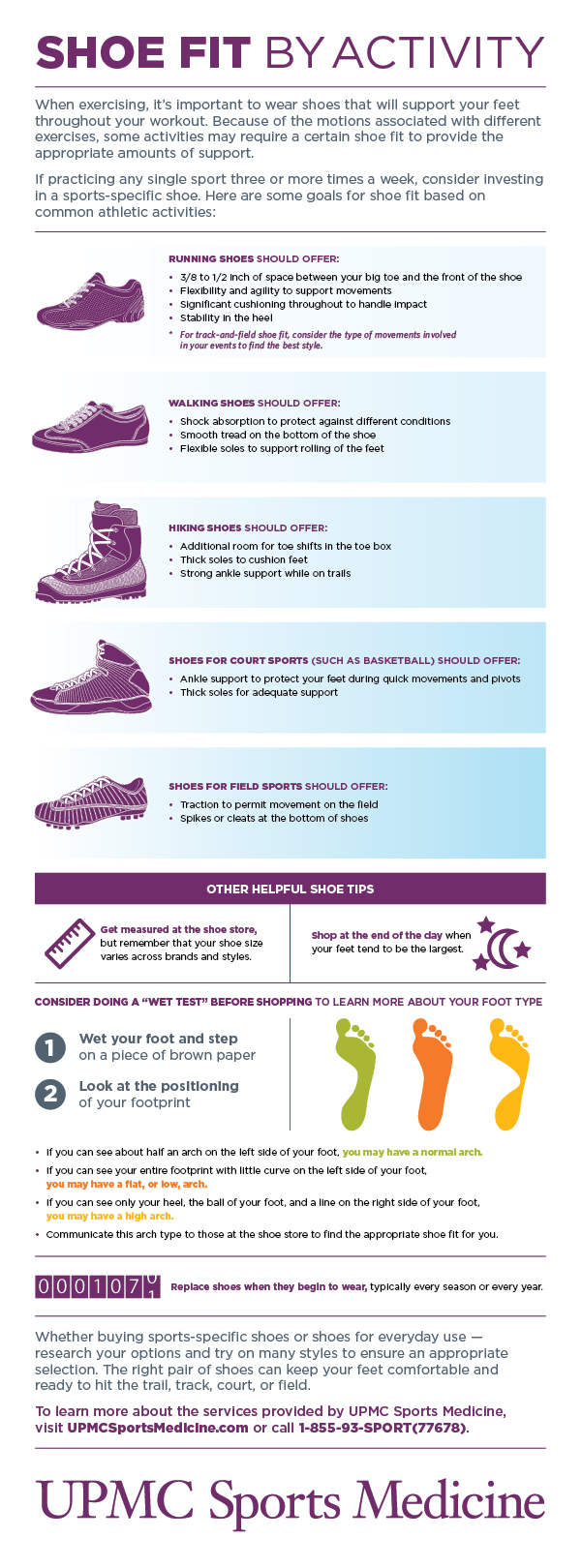
Tennis shoes and running shoes serve different needs. Running shoes focus on forward motion, while tennis shoes support quick lateral movement, braking, and court contact.
A tennis shoe often feels more stable and structured than a running shoe. The sole may be flatter, and the upper may offer stronger support around the sides. This can make the shoe feel less soft, but that does not mean it fits poorly.
When comparing how should tennis shoes fit with running shoes, remember these points:
• Tennis shoes should hold the foot during side-to-side cuts.
• Running shoes may allow more forward flex.
• Tennis shoes often have a firmer platform.
• Tennis shoes should not feel loose during sudden stops.
• Running shoes are not always built for repeated court movement.
Do not use running shoes for regular tennis if you can avoid it. Their tread and upper may wear faster during lateral play. They may also provide less side support.

How to measure your feet for tennis shoes
Foot size can change over time. Pregnancy, aging, injury, swelling, and changes in activity may affect foot length and width. Measuring both feet can help you choose more accurately.
Follow these steps:
-
Measure your feet late in the day. Feet often expand slightly after hours of standing and walking.
-
Wear the socks you plan to use for tennis.
-
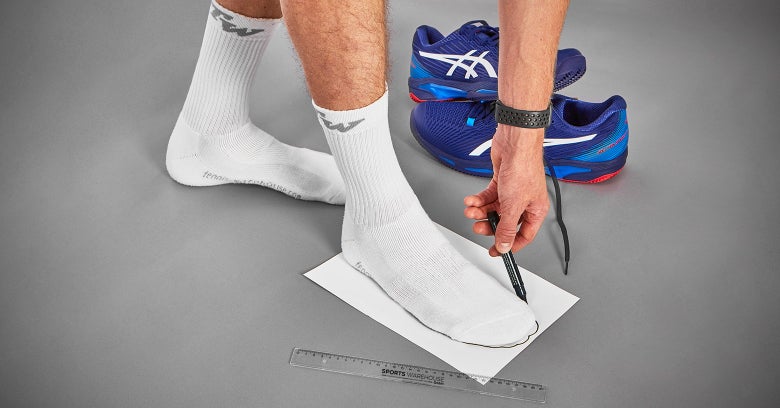
Stand on a sheet of paper with your full weight on the foot.
-
Trace around each foot, or ask someone to mark the heel and longest toe.
-
Measure from the back of the heel to the longest toe.
-
Measure the widest part of the foot.
-
Use the brand’s size chart, not only your usual shoe size.
Always measure both feet because one foot may be longer or wider. Choose a shoe that fits the larger foot. You can adjust the smaller side with lacing, a thin insole, or a suitable athletic sock.
Sizing numbers are not fully consistent between brands. A size 9 in one model may not feel like a size 9 in another. The shape of the toe box, heel cup, and upper can matter as much as the printed size.
How to test the fit before buying
Knowing how should tennis shoes fit is easier when you test the shoes in a realistic way. Try them indoors on a clean floor so you can return them if they fail the test.
Use this simple fitting routine:
• Walk forward and backward.
• Rise onto your toes.
• Bend your knees as if preparing to hit a low ball.
• Step quickly from side to side.
• Stop suddenly without slamming your foot.
• Check whether your toes touch the front.
• Notice any pressure over the little toe or big toe.
• Check for heel lifting or rubbing.
Your foot should not slide inside the shoe during these movements. The shoe should feel stable without forcing your toes into a cramped position.
Try both shoes. Stand for several minutes. Some problems appear only after the foot warms up or begins to swell.
A fitting lesson I have seen many players learn the hard way is this: a shoe that feels “almost right” in the store may feel wrong after an hour of play. Small pressure points can become painful once you add sweat, repeated stops, and foot swelling.

How much toe room should tennis shoes have?
Most players need roughly ⅜ to ½ inch between the longest toe and the end of the shoe. This space gives your foot room during movement without making the shoe feel sloppy.
Do not judge toe room while sitting. Stand up and place your full weight on the foot. Your foot may spread and lengthen slightly when you stand.
Your longest toe may not be your big toe. Some people have a second toe that extends farther forward. Check the actual longest toe on each foot.
Too little space may cause:
• Black or bruised toenails
• Blisters on the toe tips
• Pain when stopping
• Numbness or tingling
• Pressure on bunions
Too much space may cause:
• Sliding inside the shoe
• Reduced court control
• Heel rubbing
• Extra movement during cuts
• A greater chance of losing balance
Toe room should feel like a small safety margin, not an empty box.
How should tennis shoes fit for wide or narrow feet?
Foot width is just as important as foot length. A shoe can have the correct length but still fit badly if it does not match your width.
Players with wide feet may need a wide or extra-wide version. Do not simply buy a longer shoe to gain width. A longer shoe can create too much space in front and still squeeze the sides.
Signs that a tennis shoe is too narrow include:
• Pressure on the little toe
• Red marks along the side of the foot
• Numbness during play
• A bulge in the upper near the forefoot
• Pain around a bunion
Signs that a shoe is too wide include:
• The foot shifting during side steps
• Wrinkles across the upper
• Loose laces despite tight adjustment
• Repeated heel movement
• A lack of control when stopping
Some brands offer different width options. Others use a naturally broad or narrow shape. Read customer feedback carefully, but treat it as a clue rather than proof. Your own foot and the shoe’s shape are the final test.
How should tennis shoes fit for different foot problems?
A good fit may reduce irritation, but tennis shoes do not treat medical conditions. If you have ongoing pain, swelling, numbness, or a history of injury, speak with a podiatrist or qualified health professional.
For common concerns, these fitting ideas may help:
High arches
A foot with a high arch may prefer a shoe with comfortable cushioning and a supportive insole. Avoid lacing so tightly that it creates pressure across the top of the foot.
Flat feet
Many players with flat feet prefer a stable shoe with a firm base. Still, “flat feet” vary widely. Comfort and control matter more than choosing a shoe based only on an arch label.
Bunions
Look for a roomy toe box with a smooth upper. The shoe should not press against the big toe joint.
Plantar heel pain
A cushioned insole and stable platform may feel helpful, but comfort differs from person to person. Replace worn shoes and seek medical advice if pain continues.
Ankle instability
A stable tennis shoe may help you feel more secure, but it cannot replace strength work, balance training, or professional care. Avoid shoes that let your foot move freely inside the upper.

When should you replace tennis shoes?
Tennis shoes lose performance even when they still look clean. The foam can flatten, the outsole can wear down, and the upper can lose its ability to hold your foot.
Replace your tennis shoes when you notice:
• Smooth or worn tread
• Uneven wear on the outsole
• Creasing that reduces support
• New foot or knee discomfort
• A loose heel that was not present before
• A compressed or tilted midsole
• Reduced grip on the court
How long shoes last depends on your weight, playing frequency, court type, movement style, and shoe construction. A recreational player may use one pair for much longer than a tournament player. There is no reliable replacement date for everyone.
Check the sole and feel of the shoe often. Your feet can detect wear before your eyes do.
Common mistakes when choosing tennis shoes
Many fitting problems come from shopping habits rather than bad shoes. Avoid these common errors:
• Buying only by size number
• Trying shoes on with thin everyday socks
• Shopping early in the morning
• Choosing comfort over stability without testing movement
• Assuming shoes will stretch a full size
• Ignoring width
• Keeping a shoe that causes pain
• Using worn running shoes for tennis
• Buying based only on color or a professional player’s model
A tennis shoe may soften slightly with use, but it should not need a painful break-in period. If the upper presses on your toes or the heel slips badly, do not expect time to solve the problem.
My practical rule is simple: discomfort is information. A shoe does not become a good fit because you spent money on it.
Tips for getting the best fit at home
If you order online, you can still check how should tennis shoes fit with care. Keep the shoes clean and test them indoors until you are sure they work.
Use this checklist:
-
Try the shoes at the end of the day.
-
Wear your normal tennis socks.
-
Lace them as you would for play.
-
Stand and check toe room.
-
Walk, bend, and move side to side.
-
Look for heel slip and pressure points.
-
Compare the fit with both feet.
-
Check the return policy before outdoor use.
Keep a short note about what you feel. For example, write “secure heel, roomy toe box, tight over arch.” This helps you compare models without relying on memory.
If you use orthotics, test the shoes with the orthotics inside. The insole may change the amount of space and can affect the fit. Never assume a shoe will fit the same way with and without an insert.
Frequently Asked Questions: How Should Tennis Shoes Fit?
Should tennis shoes fit tighter than regular shoes?
Tennis shoes should feel more secure than casual shoes, especially around the heel and midfoot. They should not squeeze your toes or create painful pressure.
Should my toes touch the end of my tennis shoes?
Your toes should not touch the end during normal standing or movement. Leave about ⅜ to ½ inch of space, or enough room to avoid contact when stopping.
Is it normal for new tennis shoes to feel stiff?
Some stiffness is normal because tennis shoes need stability. Pain, numbness, sharp pressure, or severe rubbing is not normal and usually signals a poor fit or unsuitable shape.
Should I size up in tennis shoes?
You may need a different size if your toes touch the front or your feet swell during play. Do not size up automatically, because extra length can cause sliding and reduce control.
How do I know if tennis shoes are too wide?
They may be too wide if your foot shifts during side steps, your heel lifts, or you must over-tighten the laces. Wrinkles in the upper can also show that the shoe does not hold your foot well.
Can tennis shoes prevent ankle injuries?
Tennis shoes can provide traction and lateral stability, but they cannot prevent every ankle injury. Training, balance, court awareness, and proper movement technique also play important roles.
Should tennis shoes feel comfortable right away?
They should feel comfortable and secure from the start. A short adjustment period may be normal, but you should not need to endure pain while waiting for the shoes to change.
How often should I replace tennis shoes?
Replace them when the tread, cushioning, or support has clearly declined. Playing frequency and court surface affect lifespan, so inspect the shoes instead of following a fixed calendar.
Conclusion
The best way to understand how should tennis shoes fit is to focus on balance. Your heel should stay secure, your midfoot should feel supported, and your toes should have enough room to move without sliding.
Measure both feet, try shoes on with tennis socks, and test them with realistic court movements. Do not ignore pressure, rubbing, numbness, or heel lift. Use these checks the next time you shop, and you will be much more likely to find shoes that support every serve, stop, and change of direction. Share your fitting experience or explore more tennis gear guides to make your next purchase with confidence.

Michael Smith is the Content Strategist behind The Style Hub, where fashion meets function. With a keen eye for trends and a passion for everyday style, he curates content that helps readers make smarter, more stylish choices—from the perfect pair of sneakers to must-have accessories. Michael specializes in breaking down fashion into practical, wearable insights, making style accessible for everyone. When he’s not researching the latest trends, he’s exploring how comfort, innovation, and timeless design come together in modern fashion.