What Shoes To Wear For Pickleball: Best Shoe Guide
For pickleball, wear court shoes with strong lateral support, a stable sole, and reliable grip.
Knowing what shoes to wear for pickleball can make every step safer and more comfortable. Pickleball involves quick stops, side-to-side slides, short sprints, and repeated pivots, so regular running shoes often fall short. This guide explains how to choose pickleball shoes based on court type, foot shape, playing style, comfort, and injury prevention.
Why the Right Pickleball Shoes Matter
Pickleball may look gentle at first. The court is smaller than a tennis court, and rallies often seem relaxed. Yet players make many fast movements in a small space. You may lunge wide, stop suddenly, move backward, or twist to reach a low shot.
That is why what shoes to wear for pickleball matters more than many new players expect. The right pair helps your feet stay planted while your body changes direction.
Running shoes are built for forward motion. Their tall, soft soles can feel great during a jog, but they may roll during a side step. Court shoes use a flatter base and stronger side support. These features better match the movement demands of pickleball.
Good court shoes may also reduce foot fatigue. They cannot prevent every injury, but they can improve stability and help you move with more control. Shoe choice works best alongside a proper warm-up, good technique, and gradual increases in playing time.
What Shoes to Wear for Pickleball
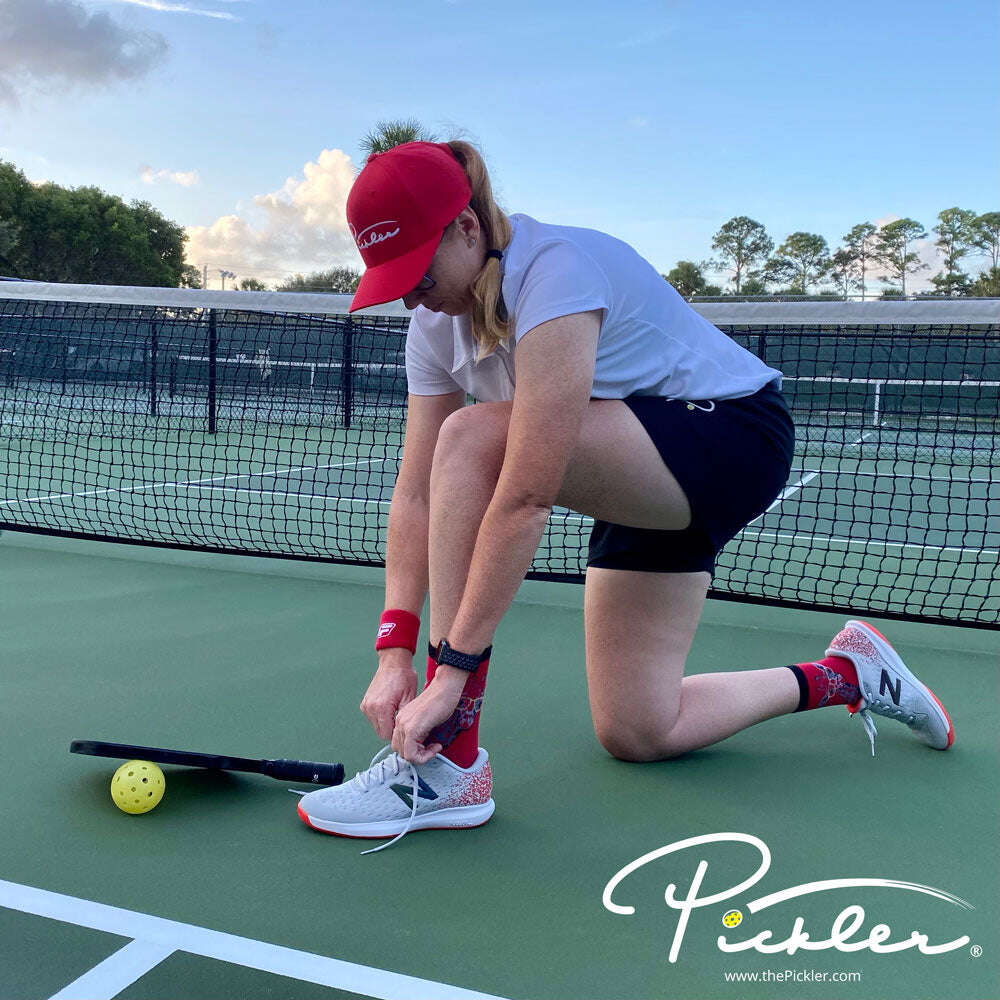
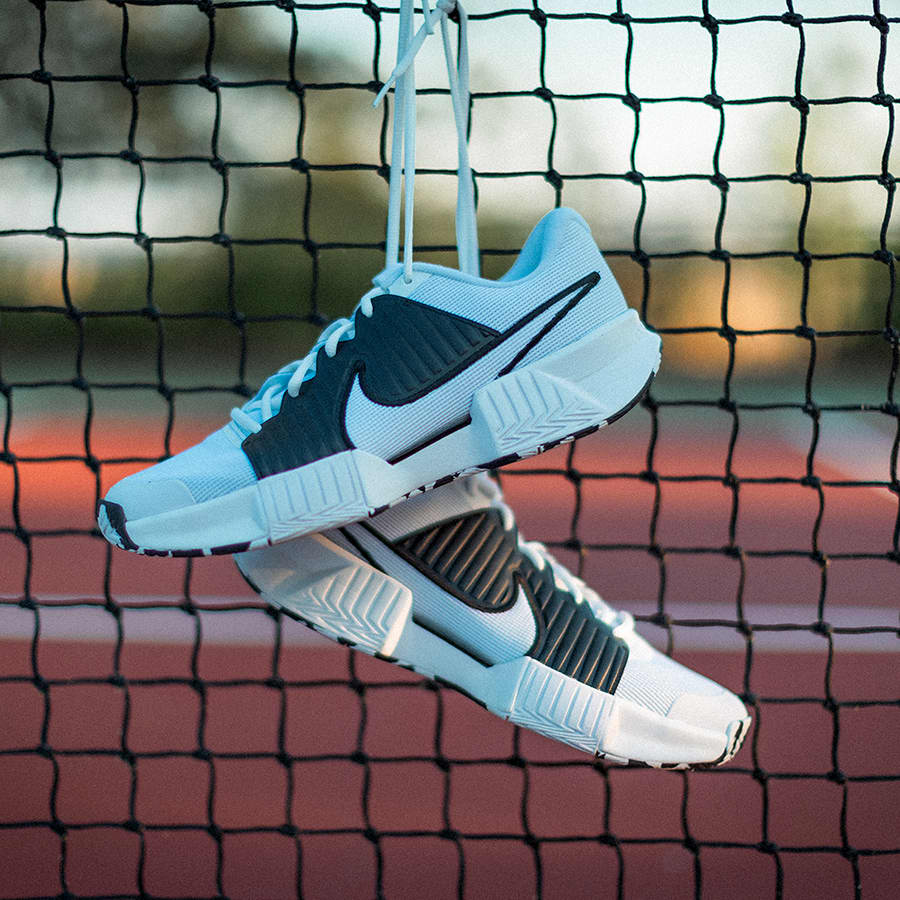
The best shoes for pickleball are indoor or outdoor court shoes made for lateral movement. Tennis shoes are often a strong choice because tennis and pickleball share many movements, including quick cuts, split steps, and side shuffles.
When deciding what shoes to wear for pickleball, look for these core features:
- A stable, low-to-the-ground platform
- Strong lateral support around the heel and midfoot
- A rubber outsole with good court traction
- Enough cushioning for repeated impact
- A firm heel counter that keeps the heel secure
- A breathable upper that helps control heat and sweat
- A comfortable toe box that lets your toes spread naturally
- A fit that holds the foot without squeezing it
You do not need the most expensive shoe on the shelf. A well-fitted mid-range court shoe can work better than a premium model that does not match your foot.
For most recreational players, an all-court tennis shoe is a useful starting point. It offers a balance of grip, support, and comfort on common pickleball surfaces.

Court Shoes Versus Running Shoes
Running shoes support a heel-to-toe stride. They usually have more foam, a curved sole, and less protection against side movement. Those traits help runners move forward, but pickleball asks your shoes to do much more.
Court shoes are usually flatter and wider at the base. This design helps you stay balanced during side steps and quick stops. The outsole also tends to cover more of the shoe’s edge, which can help during lateral movement.
Here is a simple comparison:
| Feature | Pickleball or court shoes | Running shoes |
|---|---|---|
| Main movement | Side-to-side and forward | Mostly forward |
| Base | Flat and stable | Often curved and soft |
| Side support | Stronger | Usually limited |
| Traction | Designed for court surfaces | Designed for roads or trails |
| Best use | Pickleball, tennis, and similar sports | Jogging and running |
Can you play pickleball in running shoes? Yes, especially for a short casual game. However, they may not offer enough stability for frequent play, competitive rallies, or players with a history of ankle rolls.
One common mistake is choosing a shoe because it feels soft in the store. Softness matters, but too much softness can make quick cuts feel less secure. A good pickleball shoe should feel cushioned without feeling unstable.
Indoor and Outdoor Pickleball Shoes
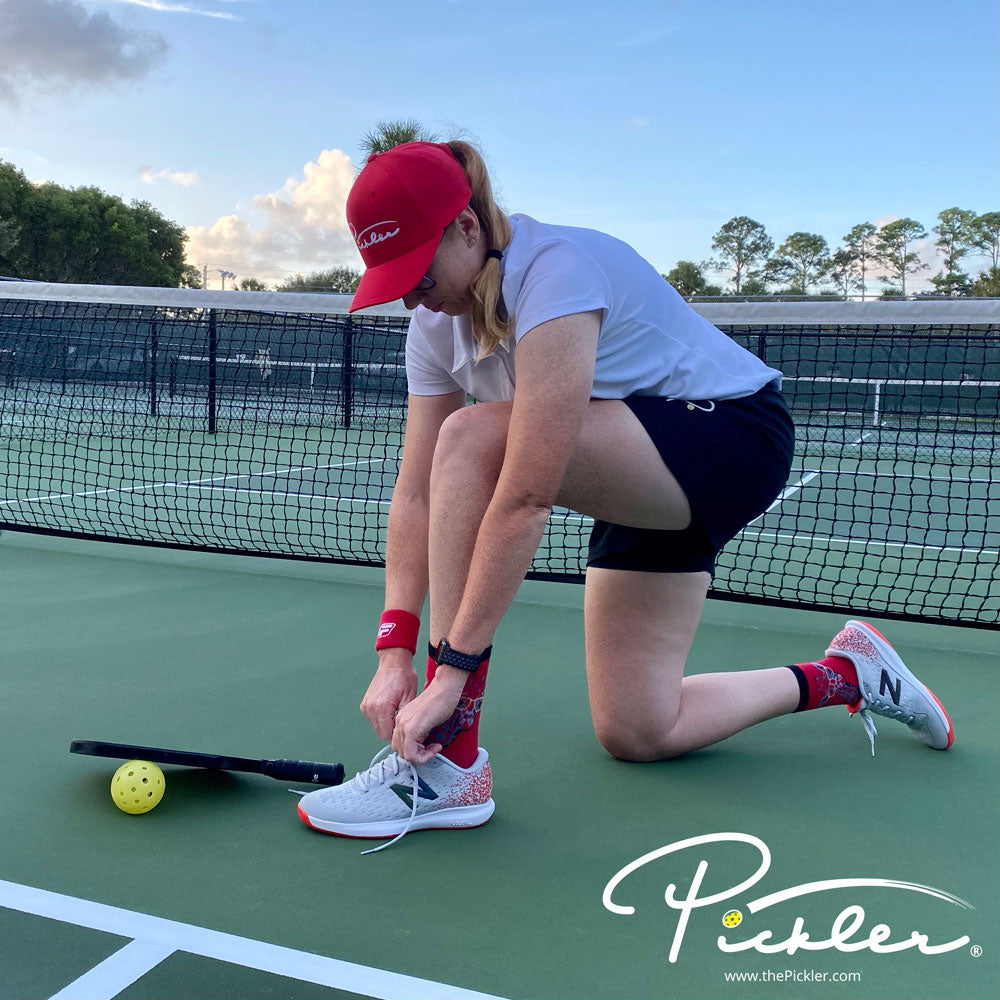
The best shoe can change with the court surface. Indoor pickleball courts often use wood, sport tile, or polished gym flooring. Outdoor courts commonly use acrylic coatings over asphalt or concrete.
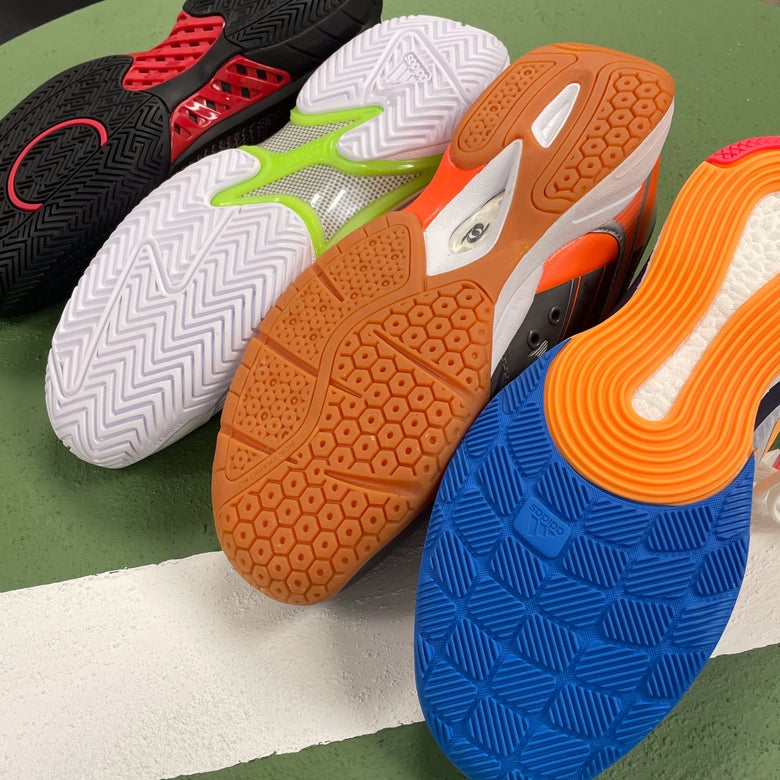
For indoor play, choose a non-marking rubber outsole. The tread should grip the floor without leaving dark marks. Volleyball shoes and indoor court shoes can work well if they provide enough side support and have a durable upper.
For outdoor play, choose an outsole designed for hard courts. Outdoor shoes often have deeper tread and more durable rubber. They also tend to offer more protection from rough surfaces.
Use these basic guidelines:
- Indoor courts: Choose non-marking gum or rubber soles with controlled grip.
- Outdoor courts: Choose durable rubber soles made for tennis or hard courts.
- Mixed play: Choose an all-court shoe, but check that the sole is allowed at your facility.
- Concrete play: Use strong cushioning and avoid very thin, flexible soles.
Indoor shoes can wear down fast on rough outdoor courts. Outdoor shoes may feel heavy or too firm indoors. If you play often on both surfaces, owning one pair for each setting can improve comfort and extend shoe life.

Key Features to Look For in Pickleball Shoes
Lateral support
Lateral support keeps your foot from sliding over the edge of the sole. Look for a firm midsole, reinforced side panels, and a secure lace system.
A shoe should bend near the toes, but it should not fold easily in the middle. Try holding the shoe at both ends and gently twisting it. Some flexibility is useful, but the shoe should still resist excessive twisting.
Traction
Traction helps you stop and push off without unwanted slipping. Too little grip can make you feel unsafe. Too much grip may make it harder to pivot smoothly, especially if the sole sticks to the court.
The ideal outsole gives controlled traction. It should support quick movement without catching your foot during a turn.
Cushioning
Pickleball includes repeated steps, lunges, and short jumps. Cushioning can reduce the harsh feel of hard courts and make long sessions more comfortable.
Still, cushioning is personal. A heavier player or someone with sensitive knees may prefer more underfoot protection. A quick player may prefer a firmer, more responsive feel.
Heel security
Your heel should stay in place when you move. A loose heel can cause rubbing, blisters, and poor control.
Try a runner’s knot if your shoe has extra lace holes. This method can improve heel hold without tightening the entire shoe. Do not lace so tightly that your toes become numb.
Toe room
Your toes need space to move, but your foot should not slide inside the shoe. Leave about a thumb’s width between your longest toe and the front of the shoe.
Try shoes late in the day, when feet may be slightly larger. Wear the socks you normally use for pickleball. This creates a more accurate fit.
How to Choose Shoes for Your Foot Type
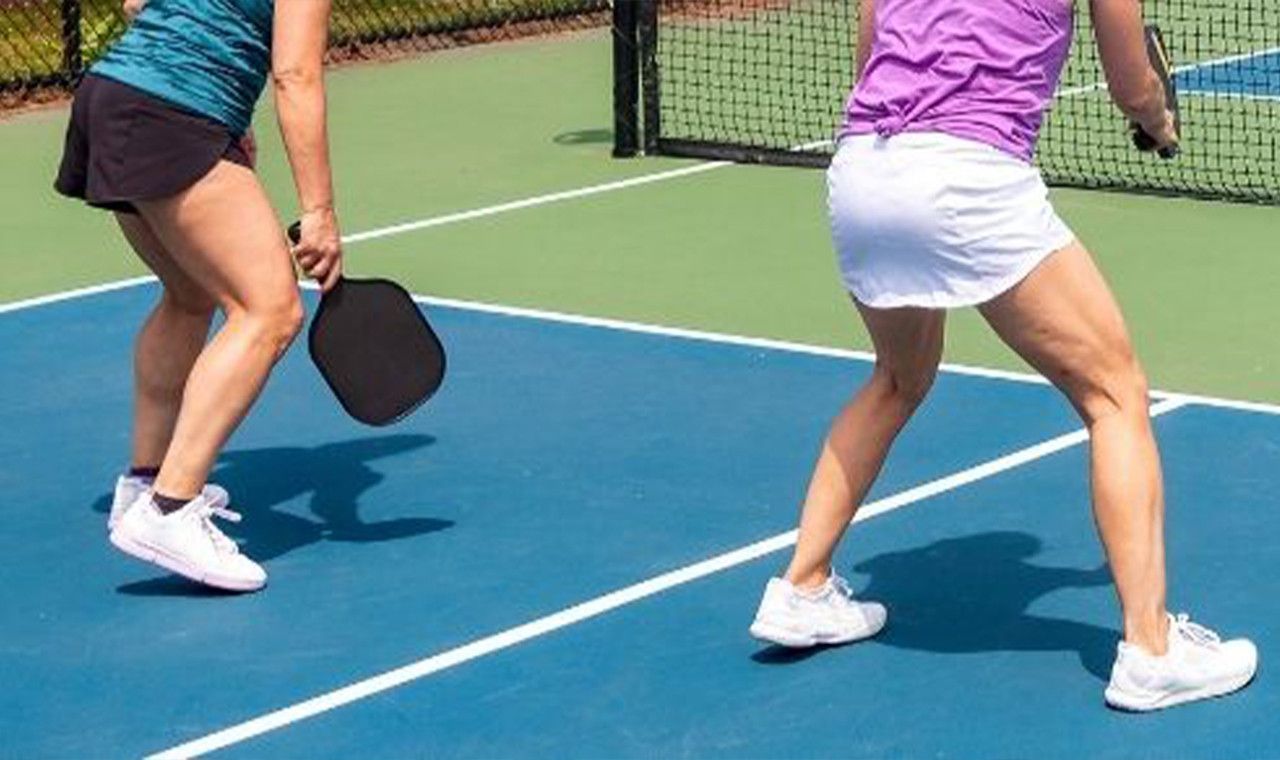
Your foot shape affects what shoes to wear for pickleball. A shoe that feels perfect for one player may create pressure for another.
If you have wide feet, look for a wide version or a shoe with a roomy toe box. Do not assume that a shoe will stretch enough. Excess pressure can cause hot spots and numbness.
If you have flat feet, focus on stability and a secure midfoot fit. You may benefit from supportive insoles, but avoid adding an insole that makes the shoe too tight.
If you have high arches, you may prefer more cushioning under the heel and forefoot. Comfort matters, but the shoe should still hold your foot during side movement.
If you have sensitive heels, look for a padded collar and a cushioned heel area. A gradual break-in period can help, but a shoe should never cause sharp pain.
A useful fitting test includes these steps:
- Put on both shoes and stand normally.
- Walk, shuffle, and make a few gentle side steps.
- Check for heel lift.
- Check for pressure across the toes and arch.
- Bend your knees and mimic a lunge.
- Choose the pair that feels secure without needing extreme tightness.
Pain is not a normal part of breaking in court shoes. Mild stiffness may improve, but rubbing, numbness, or sharp pressure is a warning sign.
Pickleball Shoe Fit and Sizing Tips
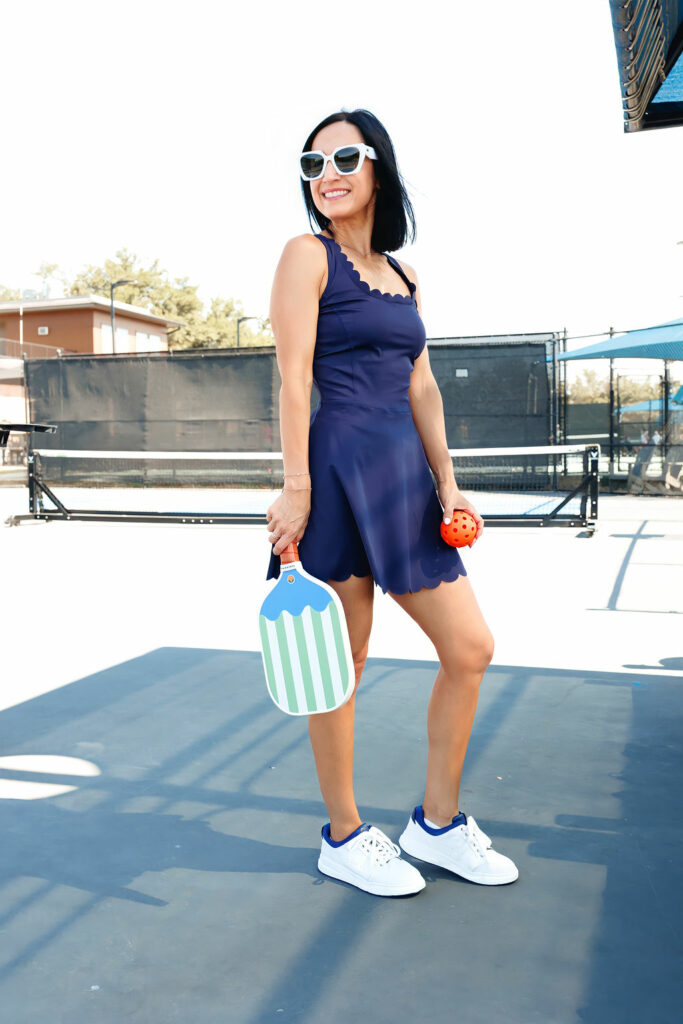
Shoe size can vary between brands. Never rely on the number alone. Compare the actual fit, width, and shape of the shoe.
Your heel should remain stable, while your toes should have room to spread. The widest part of your foot should sit over the widest part of the shoe. If your foot bulges over the sole, the shoe is too narrow.
Wear medium-weight athletic socks when trying shoes. Very thin socks can hide pressure points, while thick socks may make a shoe seem too small.
Your feet may swell during a long match. A little extra room is helpful, but too much space creates sliding. Sliding increases friction and can make your toes hit the front of the shoe during sudden stops.
A simple rule is this: the shoe should feel secure on your first try. You should not need to hope that it will become comfortable later.
Common Mistakes When Choosing Pickleball Shoes
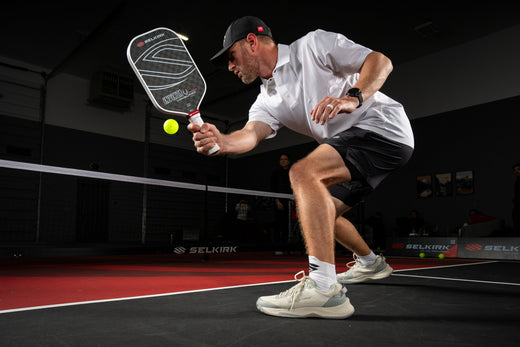
Many players focus only on color, brand, or price. Those factors can matter, but they do not tell you whether the shoe suits your movement.
Avoid these common errors:
- Wearing worn-out running shoes for frequent pickleball sessions
- Choosing a shoe with a loose heel
- Buying a very soft shoe with poor side support
- Using indoor shoes on rough outdoor courts
- Ignoring width and toe pressure
- Playing through blisters or numbness
- Buying shoes without trying side-to-side movement
- Keeping shoes long after the tread becomes smooth
I have seen players blame their knees or ankles when the real problem was an unstable or worn shoe. A shoe does not need to look damaged to lose performance. If the tread feels smooth, the midsole feels compressed, or your foot moves inside the shoe, it may be time for a replacement.
Keep your court shoes for court use when possible. Wearing them for errands adds extra wear and brings dirt onto the playing surface.

How Often Should You Replace Pickleball Shoes?
There is no perfect replacement date. Shoe life depends on your weight, playing frequency, court surface, movement style, and shoe quality.
A recreational player may use the same pair for many months. A player who competes several times each week may need replacements much sooner. Outdoor courts usually wear down soles faster than clean indoor courts.
Watch for these signs:
- The outsole has smooth areas or visible wear
- Your foot slides during side steps
- The heel feels less stable
- Cushioning feels flat
- New aches appear after normal play
- The upper separates from the sole
- The shoe no longer feels comfortable
Track how many hours you play rather than only counting months. A shoe used twice a week ages differently from one used every day.
Rotating two pairs can help each pair dry and recover between sessions. This may also make it easier to notice when one pair starts to lose support.
Can Pickleball Shoes Help Prevent Injury?
Proper shoes can support safer movement, but they cannot guarantee injury prevention. Ankle sprains, knee pain, plantar fascia irritation, and blisters can have many causes.
Court shoes may help by improving grip and reducing unwanted foot movement. A stable base may also make it easier to control a lunge or stop. However, shoes cannot replace strength training, balance work, rest, or sound technique.
Warm up before play with easy movement. Include ankle circles, calf raises, gentle lunges, and a few slow side steps. Start your first rally at a moderate pace rather than moving at full speed immediately.
If pain continues, worsens, or changes the way you walk, stop playing and seek advice from a qualified medical professional. This guide can help with shoe selection, but it cannot diagnose an injury.
What to Wear With Pickleball Shoes
The right socks can improve the comfort of what shoes to wear for pickleball. Choose moisture-wicking athletic socks that fit smoothly and do not bunch under the toes.
Cotton socks may feel comfortable at first, but they can hold sweat. Damp fabric can increase friction and raise the chance of blisters.
You may also consider:
- Cushioned socks for extra heel comfort
- Low-cut socks for warm weather
- Crew socks for more ankle coverage
- Seamless toe socks if you often develop toe blisters
Do not use socks that are too thick for the shoe. If your toes feel cramped, the problem may be the combination of sock and shoe rather than the shoe alone.
Keep a spare pair of socks in your bag. This small habit can make a long tournament day much more comfortable.
A Practical Shoe-Buying Checklist
Use this checklist when shopping for pickleball shoes:
- Identify where you play most often.
- Choose an indoor, outdoor, or all-court outsole.
- Check for lateral support.
- Confirm that the heel feels secure.
- Make sure your toes can move freely.
- Test the shoe with side steps and a short lunge.
- Wear your normal pickleball socks.
- Compare comfort between both feet.
- Review the store’s return policy.
- Replace shoes when grip and support decline.
If you shop online, read measurements and customer comments about width. Product names can be confusing, and “training” or “performance” does not always mean the shoe is suitable for court play.
When possible, buy from a retailer that allows returns after an indoor try-on. Never play outdoors in a new pair until you are sure the fit is right.
What Shoes to Wear for Pickleball: Expert Tips by Playing Style
Beginners should prioritize comfort, stability, and a reliable fit. An all-court tennis shoe is often enough for learning basic movement.
Aggressive players who move wide and stop hard may want stronger sidewalls and a firm base. These features can feel less soft, but they often provide better control during fast rallies.
Players who spend most of the game near the kitchen line may value light weight and quick response. They still need enough grip for short lateral movements.
Doubles players often make frequent small adjustments. A flexible forefoot with a stable midfoot can work well for this style.
If you play mostly outdoors, durability should be a major concern. A shoe with a strong outsole may last longer, even if it weighs a little more.
Your ideal shoe is not always the lightest or most cushioned option. It is the shoe that helps you move naturally and confidently.
Frequently Asked Questions About What Shoes to Wear for Pickleball
Can I wear regular sneakers for pickleball?
You can wear regular sneakers for a casual game, but they may not provide enough lateral support or court grip. Court shoes are safer and more comfortable for frequent play.
Are tennis shoes good for pickleball?
Yes, tennis shoes are often excellent for pickleball. They are designed for side-to-side movement, quick stops, and court traction.
Are running shoes bad for pickleball?
Running shoes are not automatically bad, but they are not built for repeated lateral movement. Their taller, softer soles may feel unstable during sharp turns and side steps.
Do indoor and outdoor pickleball shoes differ?
Yes. Indoor shoes usually have non-marking soles made for smooth floors, while outdoor shoes use more durable rubber for rough hard courts. Using the wrong type can reduce traction and shorten shoe life.
How tight should pickleball shoes be?
Pickleball shoes should feel secure without squeezing your toes or causing numbness. Your heel should stay in place, and your toes should have enough room to move.
Can pickleball shoes help with knee pain?
A stable, well-cushioned shoe may improve comfort, but it cannot treat knee pain. Persistent pain should be assessed by a qualified health professional.
How do I know when to replace pickleball shoes?
Replace them when the tread becomes smooth, the heel slips, cushioning feels flat, or new aches appear. The number of months matters less than the shoe’s condition and your playing schedule.
Conclusion
The best answer to what shoes to wear for pickleball is simple: choose court shoes with strong side support, dependable grip, balanced cushioning, and a secure fit. Pick indoor or outdoor soles based on where you play, and never ignore pressure, slipping, or pain.
A good pair should feel like a steady partner. It should help you stop, turn, and reach without distracting you. Try your shoes with your usual socks, test side movement before buying, and replace them when support and traction fade.
Use these tips before your next game, and share your favorite pickleball shoe features or questions in the comments.
Michael Smith is the Content Strategist behind The Style Hub, where fashion meets function. With a keen eye for trends and a passion for everyday style, he curates content that helps readers make smarter, more stylish choices—from the perfect pair of sneakers to must-have accessories. Michael specializes in breaking down fashion into practical, wearable insights, making style accessible for everyone. When he’s not researching the latest trends, he’s exploring how comfort, innovation, and timeless design come together in modern fashion.