Where Are Salt Water Sandals Made: Brand Origins
Introduction
For shoppers in the United States, the short answer is clear: current Salt-Water Sandals are made in China, while the brand is based in the United States and designed there.
Salt-Water Sandals are made by the Hoy Shoe Company, a family-owned American footwear business based in St. Louis, Missouri. The brand began in the United States in the 1940s, but its current production takes place overseas.
That distinction matters. A company can be American-owned and American-designed without making every product in the United States. Product labels, packaging, and the official brand FAQ are the best ways to confirm the origin of a specific pair.

Are Salt-Water Sandals made in the USA?
New Salt-Water Sandals are not generally made in the USA. They are manufactured in China.
The Salt-Water brand has American roots. Hoy Shoe Company created the original sandals in the 1940s. Early production took place in the United States, which is why some older descriptions still connect Salt-Water Sandals with American manufacturing.
The brand later moved production to China. This change does not mean that the company itself moved. Hoy Shoe Company remains a U.S. business, and Salt-Water Sandals continue to be sold through American retailers and the brand’s U.S. website.
It helps to separate three terms:
| Term | What it means for Salt-Water Sandals |
|---|---|
| Brand owner | Hoy Shoe Company, a U.S. footwear company |
| Brand and product design | Associated with the United States |
| Current manufacturing | China for current production |
A pair bought in the United States may therefore have a U.S. brand identity but a “Made in China” label.
Why do some pages say Salt-Water Sandals are made in America?
Older articles, vintage listings, and brand history pages may refer to the sandals’ original U.S. production. Those statements can be accurate for their time, but they may not describe current pairs.
Manufacturing details can also change by model, year, or production run. If a seller claims that a new pair was made in the United States, check the physical country-of-origin label before buying.

Who makes Salt-Water Sandals?
Hoy Shoe Company makes Salt-Water Sandals.
Hoy Shoe Company is the American company behind the Salt-Water and Sun-San sandal brands. Salt-Water is the classic line. Sun-San is a related line with updated colors, shapes, and styles.
The company controls the brand, product range, and retail distribution. A contracted factory in China handles the manufacturing of current sandals.
This is common in the footwear industry. The brand owner may develop the design, select the materials, set quality standards, and manage sales. A separate factory then cuts, assembles, finishes, and packs the shoes.
That arrangement does not by itself show whether a sandal is well made or poorly made. Country of origin tells you where the product was made. It does not prove its comfort, durability, fit, or value.
What materials are used?
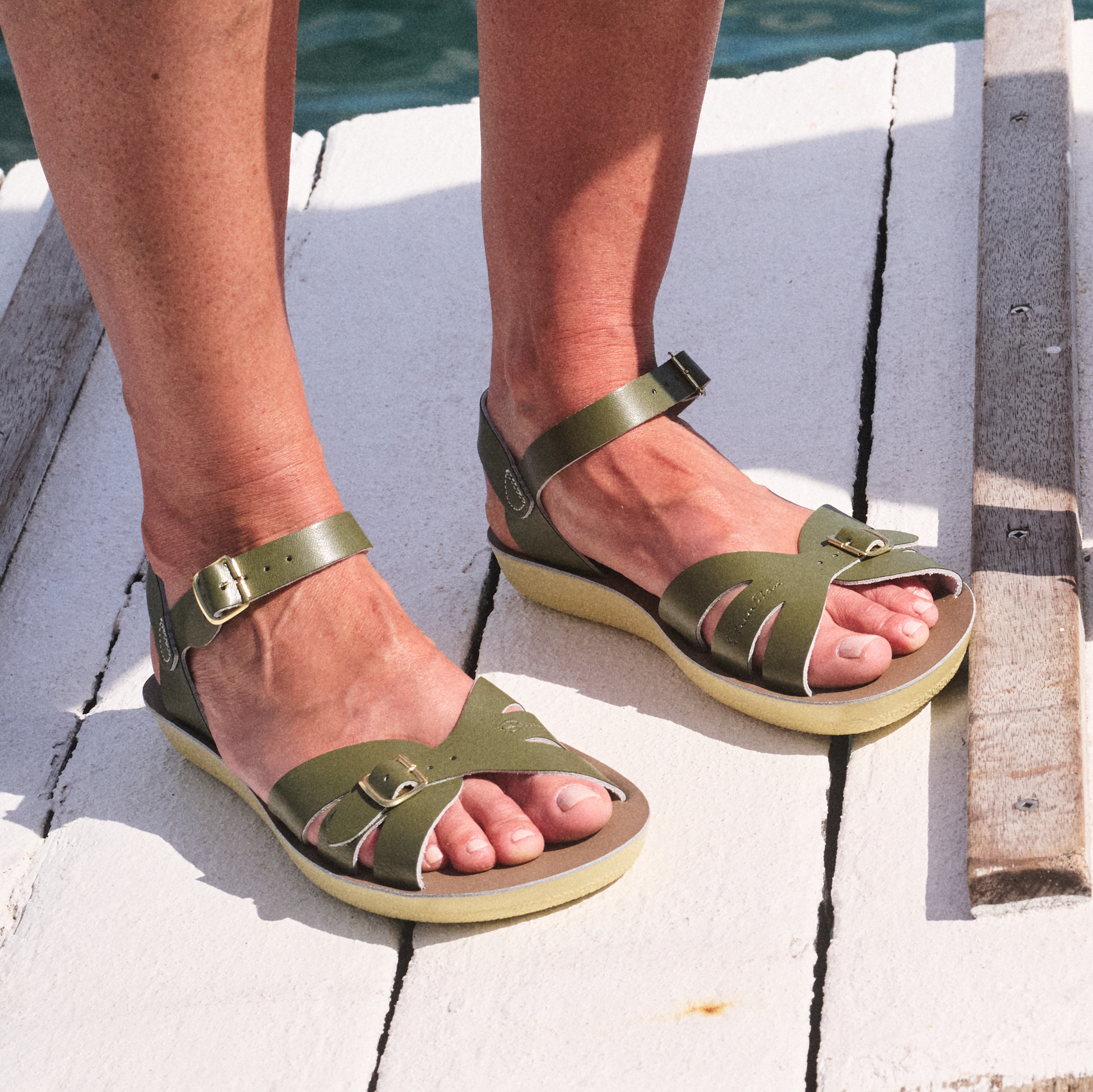
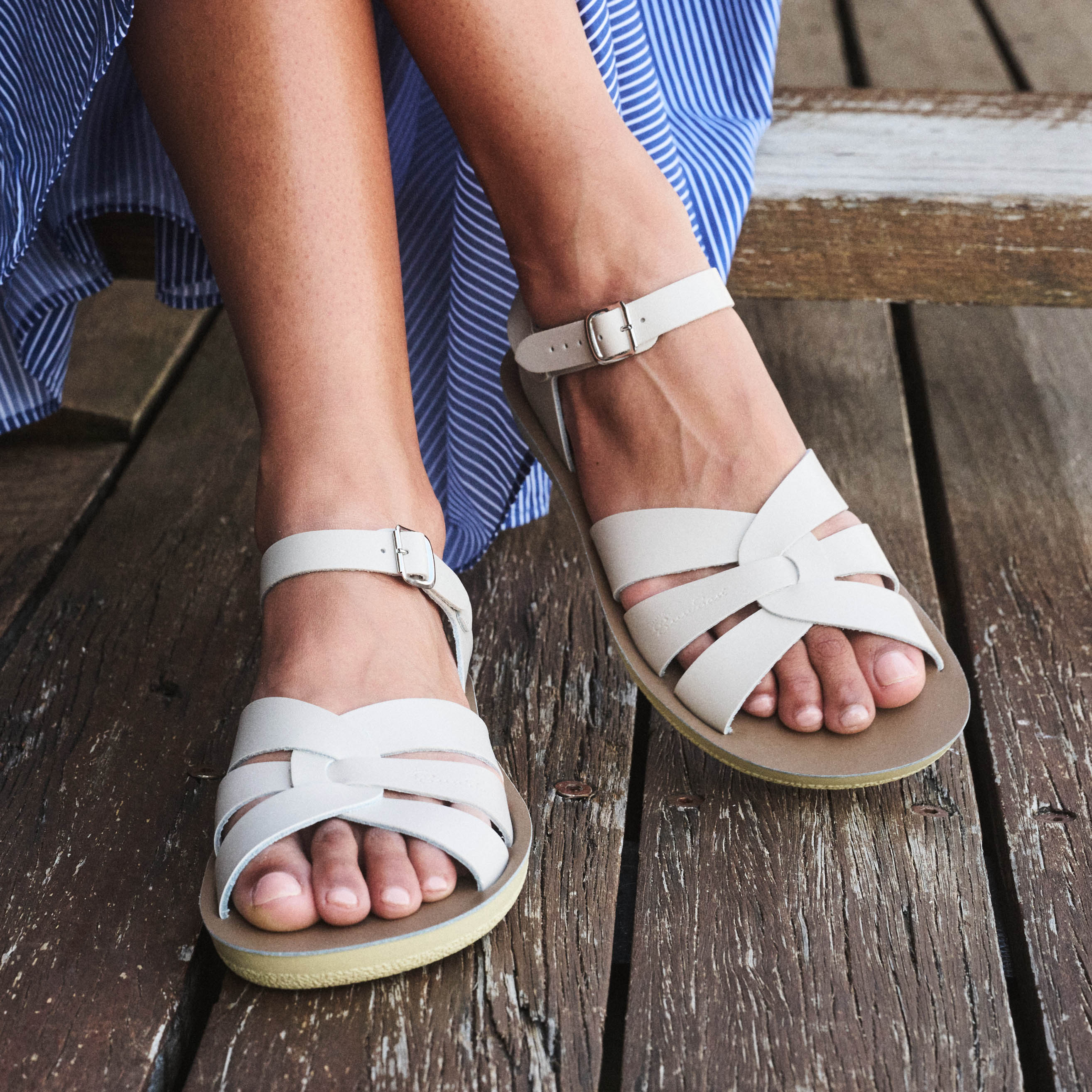
Salt-Water Sandals are known for several traditional design features:
- Leather uppers
- Rubber soles
- Metal buckles
- Water-friendly construction
- A flat, casual sandal shape
The leather is designed to handle contact with water, but that does not make the sandals immune to wear. Salt water, chlorine, mud, and repeated soaking can still affect leather, stitching, buckles, and color.
“Water-friendly” also does not mean that every part will last forever in water. The sandal may be worn near pools, beaches, and lakes, but good care still matters.
How can you verify where your pair was made?
The most reliable way to check a specific pair is to inspect its label and packaging.
Follow these steps:
- Look inside the sandal. Check the footbed, lining, or underside of the straps for a country-of-origin mark.
- Inspect the box or hangtag. The packaging may state the manufacturing country.
- Check the product page. Use the official Salt-Water Sandals website or an authorized U.S. retailer.
- Ask the seller for a label photo. This is useful when buying vintage, resale, or marketplace footwear.
- Compare the model and year. Older pairs may have a different origin from newer pairs.
- Keep the answer specific. Say “This pair is made in China” rather than assuming every historic pair had the same origin.
A seller’s location is not the same as the product’s manufacturing location. A U.S. retailer can sell sandals made in China. A secondhand seller in another country can sell an older pair made elsewhere.
What if the label is missing?
A missing label makes the answer less certain. Style, color, buckle shape, and sole design may help identify the model, but they cannot prove the country of manufacture.
For a new purchase, ask the retailer before placing the order. For a used pair, treat an unverified origin claim as uncertain. Do not rely only on phrases such as “American classic” or “U.S. brand.”
Does “made in China” mean Salt-Water Sandals are poor quality?
No. The country label alone does not determine quality.
A sandal’s quality depends on its materials, pattern, assembly, stitching, sole bonding, hardware, and quality checks. Production in China can meet many different quality levels, just as production in the United States can.
Salt-Water Sandals have a long-running design and a recognizable construction. Still, buyers should judge the pair in front of them. Look for:
- Even stitching
- Secure straps
- A firmly attached sole
- Smooth leather edges
- A buckle that opens and closes correctly
- No large gaps in the sole or upper
- Matching size information on both sandals
A country-of-origin label also does not prove that a sandal is handmade, ethically produced, or made from a particular grade of leather. Those claims need separate evidence from the company or seller.
Are Salt-Water Sandals ethically made?
The manufacturing location does not answer that question. “Made in China” describes place, not labor conditions.
To assess ethical production, look for current information about factory standards, audits, labor policies, materials, and supply-chain reporting. If the brand does not publish enough detail, the most accurate answer is that the available public information does not establish every working condition.
Be wary of broad claims such as “ethical,” “sustainable,” or “responsibly made” unless the company explains what those terms mean and provides supporting information.

Are Salt-Water Sandals worth buying if they are made in China?
That depends on what you want from the sandal.
Salt-Water Sandals may suit buyers who want:
- A classic leather sandal style
- A flat sole
- A sandal that can handle occasional water exposure
- Adjustable straps
- A long-running design with many color options
They may not suit buyers who need:
- Strong arch support
- A thick cushioning system
- A performance sandal for long hikes
- A fully synthetic, vegan upper
- A U.S.-made product
Fit is often more important than country of origin. The flat shape may feel comfortable to some people and too firm or narrow to others. Check the retailer’s return policy, especially when buying online.
What should U.S. buyers check before ordering?
Before you buy, confirm:
- The exact model
- The size system used by the seller
- Whether the pair is new or vintage
- The material of the upper
- The return policy
- The country-of-origin information, if it matters to you
- Whether the seller is authorized or reputable
For a new pair, the official brand website or a known U.S. retailer is usually easier to verify than an anonymous marketplace listing.

How should you care for Salt-Water Sandals?
Care can help leather sandals last longer, no matter where they were made.
After exposure to salt water or chlorinated water:
- Rinse away salt, sand, or pool chemicals with clean water.
- Wipe off dirt with a soft cloth.
- Let the sandals dry at room temperature.
- Keep them away from direct heat, radiators, and clothes dryers.
- Do not store them while they are damp.
- Check the straps and sole for early signs of damage.
Do not use harsh bleach or strong solvents. These can dry out leather, weaken color, or damage the sole.
If the sandals smell, stay wet, or begin to separate at the sole, stop wearing them until they are dry and inspected. A cobbler may be able to repair minor strap or sole problems, but repair options depend on the damage.

Frequently asked questions
Are Salt-Water Sandals an American brand?
Yes. Salt-Water Sandals are an American brand associated with Hoy Shoe Company in St. Louis, Missouri. Their current manufacturing, however, is in China.
Were Salt-Water Sandals ever made in the USA?
Yes. The brand has historic U.S. production dating back to its early years. Vintage pairs may therefore have a different country of origin from current pairs.
Are Salt-Water Sandals made from real leather?
Many classic Salt-Water styles use leather uppers. Check the material details for the exact model because materials can vary by style and product line.
Can I wear Salt-Water Sandals in the ocean?
They are designed to tolerate water, but ocean use still exposes them to salt, sand, and strong wear. Rinse them with clean water and let them dry naturally afterward.
Are Salt-Water Sandals made in China or Vietnam?
Current Salt-Water Sandals are generally identified by the brand as made in China. Check the label on the exact pair because production details can change over time.
Conclusion
Current Salt-Water Sandals are made in China by or for Hoy Shoe Company, a U.S.-based footwear business. The brand has American origins and a long history, but its current manufacturing location is not the United States.
If country of origin is important, inspect the sandal label, box, and official product listing before buying. For vintage pairs, do not assume that the current manufacturing location applies to an older model.
The best next step is simple: find the exact style you want, then ask the seller to confirm the country-of-origin label for that pair.

Michael Smith is the Content Strategist behind The Style Hub, where fashion meets function. With a keen eye for trends and a passion for everyday style, he curates content that helps readers make smarter, more stylish choices—from the perfect pair of sneakers to must-have accessories. Michael specializes in breaking down fashion into practical, wearable insights, making style accessible for everyone. When he’s not researching the latest trends, he’s exploring how comfort, innovation, and timeless design come together in modern fashion.