Do Hoka Shoes Run Big: Find Your Perfect Fit
Most Hoka shoes do not run big, but their roomy shape can feel larger than standard running shoes.
The answer depends on the Hoka model, your foot shape, and how much space you prefer in the toe box. After comparing Hoka fits across road, trail, walking, and recovery shoes, I found that most pairs fit true to size, while some models feel wider or longer because of their cushioned design. This guide explains do Hoka shoes run big, how to choose the right size, and what to do if your fit feels wrong.

Do Hoka shoes run big?
In most cases, Hoka shoes run true to size. You usually do not need to size down simply because the shoes look large or have thick midsoles.
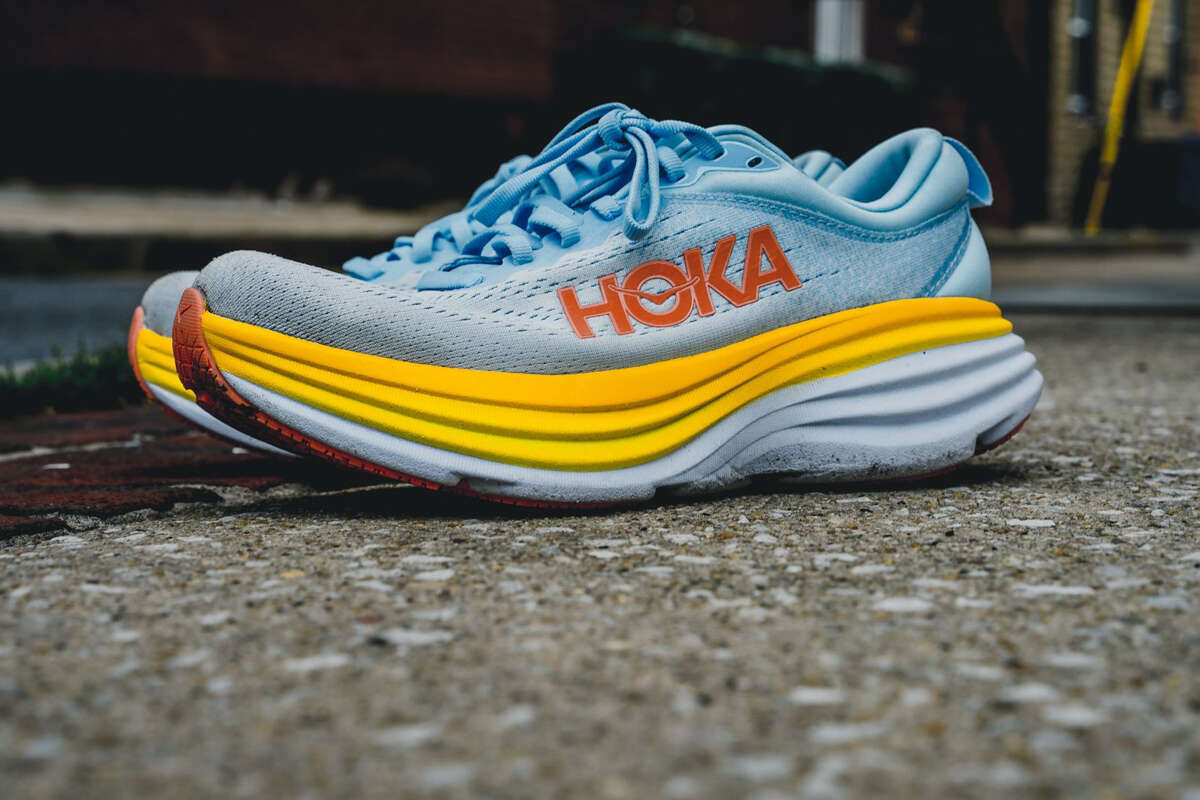
Hoka shoes often appear bigger than other sneakers because they have:
• Thick foam midsoles
• Broad outsoles
• High heel cushioning
• Curved rocker shapes
• Roomy forefoot designs on some models
These features can make the shoes look oversized from the side. They do not always mean the inside is longer.
So, do Hoka shoes run big? Usually, no. They often feel normal in length but may feel more spacious in the toe area than narrow lifestyle shoes.
The biggest difference comes from the model. A Hoka Clifton may feel different from a Hoka Bondi, Speedgoat, Arahi, or Transport. Some have a snug upper, while others offer more room near the toes.
How Hoka shoes usually fit
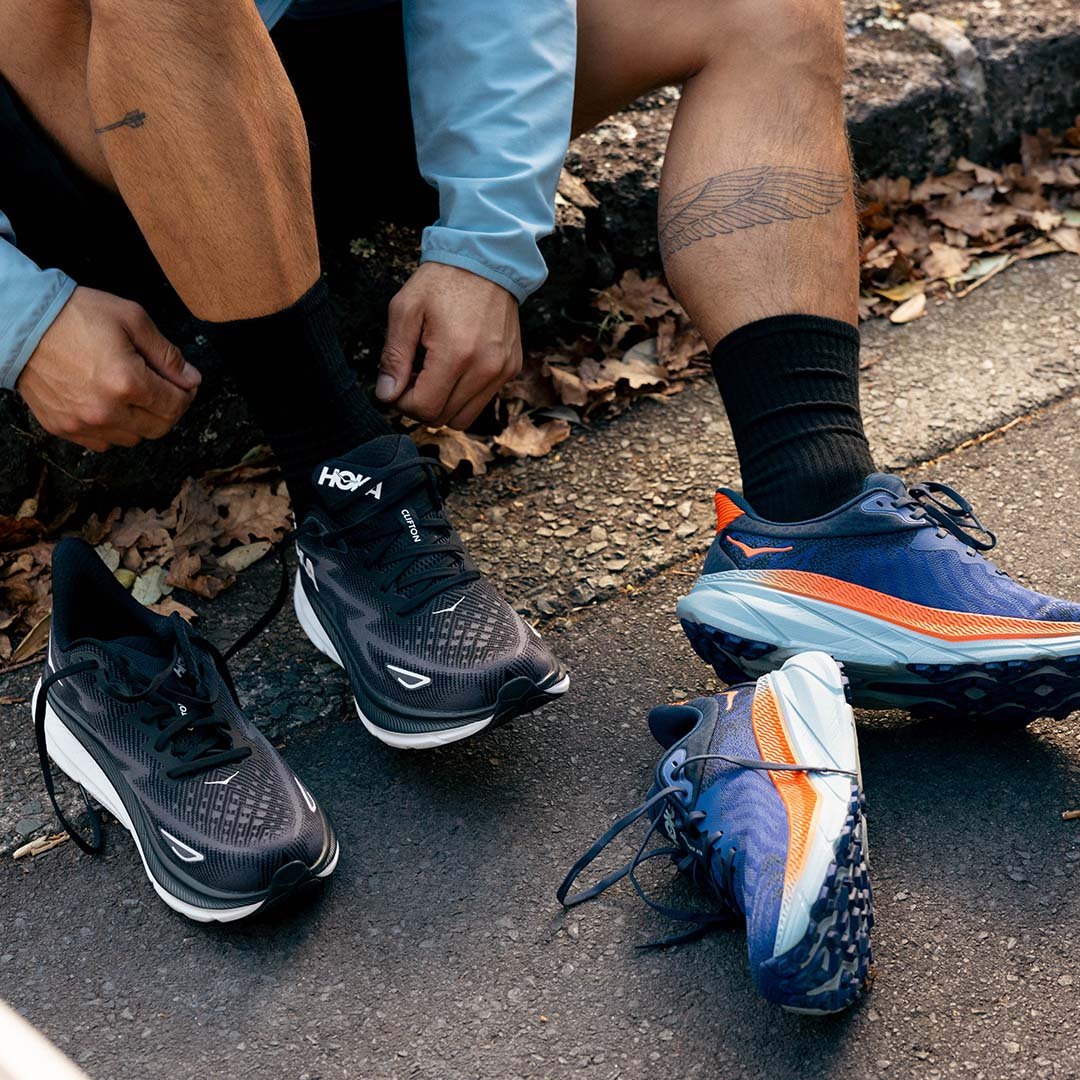
Hoka shoes use a performance fit. This means the heel should feel secure, the middle of the foot should feel supported, and the toes should have enough room to move.
A well-fitting Hoka shoe should feel:
• Secure around the heel
• Comfortable across the midfoot
• Slightly roomy near the toes
• Stable when you walk or run
• Free from pressure on the big toe and little toe
Your toes should not touch the front of the shoe. You should also avoid excessive movement at the heel.
Many people expect running shoes to fit like casual sneakers. That can lead to a mistake. Running shoes need extra space because feet swell during long walks, runs, and work shifts.
A useful rule is to leave about a thumb’s width between your longest toe and the front of the shoe. This space may feel unusual at first, especially if you normally wear snug shoes.
Length versus volume
Length and volume are not the same thing.
A shoe can have the correct length but still feel too large because it has more space above the toes. Hoka shoes can create this feeling due to their tall toe box and soft upper materials.
If your toes have room but your heel stays secure, the shoe may fit correctly. If your foot slides forward, the shoe may be too long or too loose.

Why some Hoka shoes feel bigger
Several design features explain why people ask, “do Hoka shoes run big?”
Wide platforms
Hoka shoes often have broad bases. The wider platform helps create a stable feel under the foot. It also makes the shoe look larger than a traditional running shoe.
A broad platform does not always mean a wide upper. Your foot may still feel held in place across the midfoot.
Thick cushioning
Hoka is known for high-cushion shoes. The Bondi and Clifton, for example, use thick midsoles that add height and visual bulk.
That extra foam changes the shoe’s appearance. It can also change how your foot sits above the ground. The result may feel different, even when the length matches your usual size.
Rocker geometry
Many Hoka models use a curved sole. This rocker helps the foot move from heel to toe.
The curved shape can make the shoe feel longer at the front. It may also change how your toes rest inside the shoe. A short break-in period can help, but your toes should never press against the front.
Soft upper materials
Some Hoka uppers stretch slightly after a few wears. If the shoe already feels loose in the store, it may become too roomy later.
Do Hoka shoes run big when the upper stretches? Not necessarily. The shoe may still match its labeled size, but the fit can feel less secure over time.
Do Hoka models fit differently?
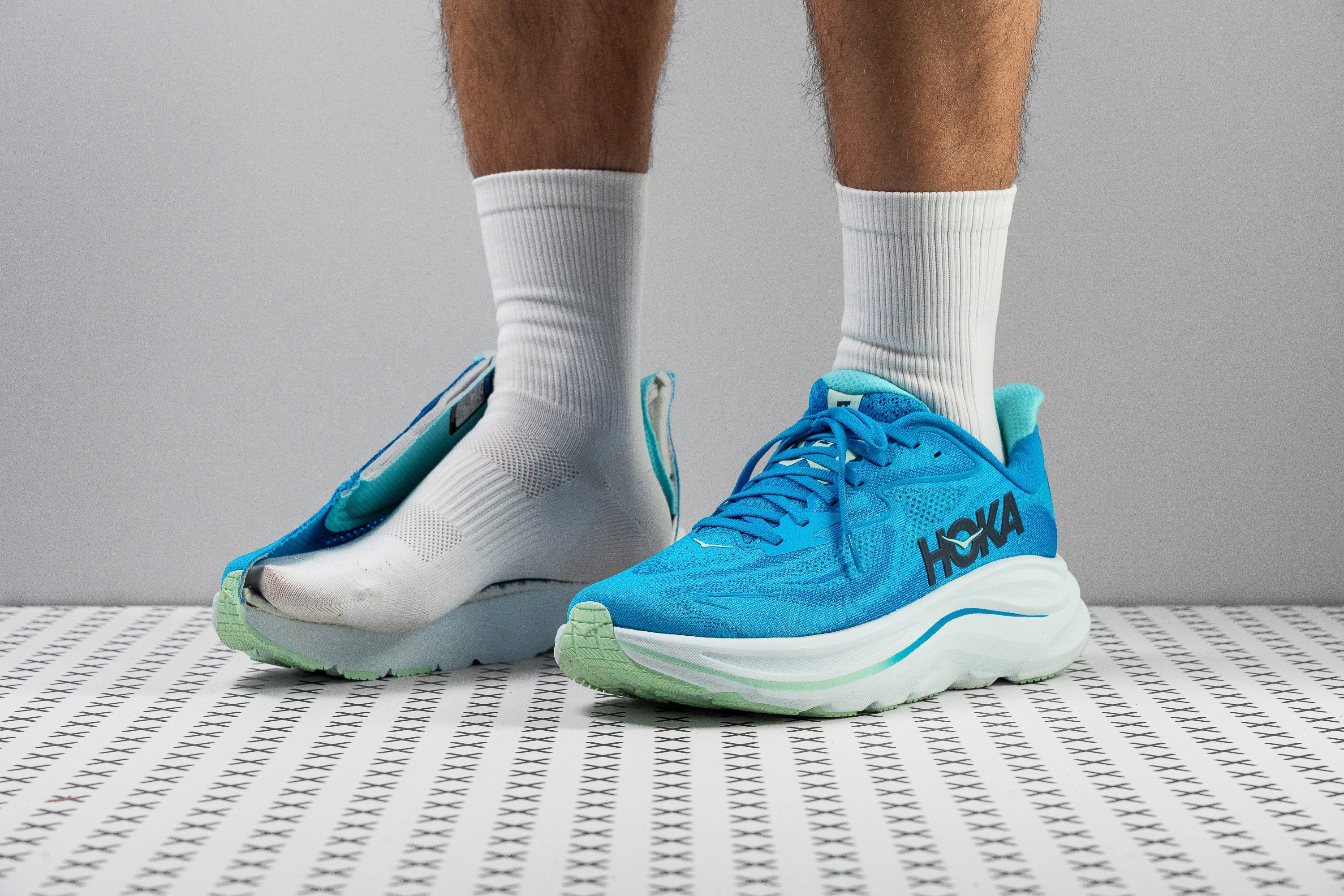
Yes. Hoka sizing is not identical across every model. The upper shape, cushioning level, intended use, and width options all affect the fit.
Hoka Clifton
The Clifton often fits true to size. It has a light feel and a moderate amount of room in the front.
Some people with narrow feet find the Clifton slightly loose in the heel. A runner’s knot can improve heel hold without changing the shoe size.
Hoka Bondi
The Bondi has a plush feel and a broad base. It may feel larger because of its thick cushioning and generous structure.
Most shoppers should begin with their usual running shoe size. If the toe area feels too long, compare the standard width with a narrower option instead of immediately sizing down.
Hoka Arahi
The Arahi has a more structured upper and support features for runners who prefer guidance. It can feel snugger through the midfoot than softer, neutral models.
If you are between sizes, try the shoe with your usual running socks. A thick sock can change the fit more than expected.
Hoka Speedgoat
The Speedgoat is made for trails. Its toe protection and firm upper can make it feel more secure than a road shoe.
For downhill hiking, you need enough toe space to prevent contact with the front. Do Hoka shoes run big in the Speedgoat? The length is usually true to size, but the fit may feel snug across the forefoot.
Hoka Transport
The Transport is designed for walking and daily use. Its fit may feel more like a casual shoe than a soft road runner.
Try it later in the day if you plan to wear it for commuting or travel. Feet often swell after hours of standing.
Should you size up or down in Hoka shoes?
Start with your normal running shoe size. Then adjust only when the fit test shows a clear problem.
You may need to size up if:
• Your longest toe touches the front
• Your toes feel cramped on descents
• Your feet swell during use
• You wear thick hiking socks
• Your foot is between two sizes
• The shoe feels short when you bend your toes
You may need to size down only if:
• Your heel slips badly
• Your foot slides forward
• You have more than a thumb’s width of extra space
• The laces cannot hold your foot securely
• The shoe feels loose even with normal socks
Do Hoka shoes run big for people with narrow feet? Sometimes, but sizing down is not always the best fix. A smaller shoe may reduce heel space while making the toe area too short.
A narrower width is often a better choice. Hoka offers different width options on many models, including standard, wide, and extra-wide versions. Availability can vary by model and color.
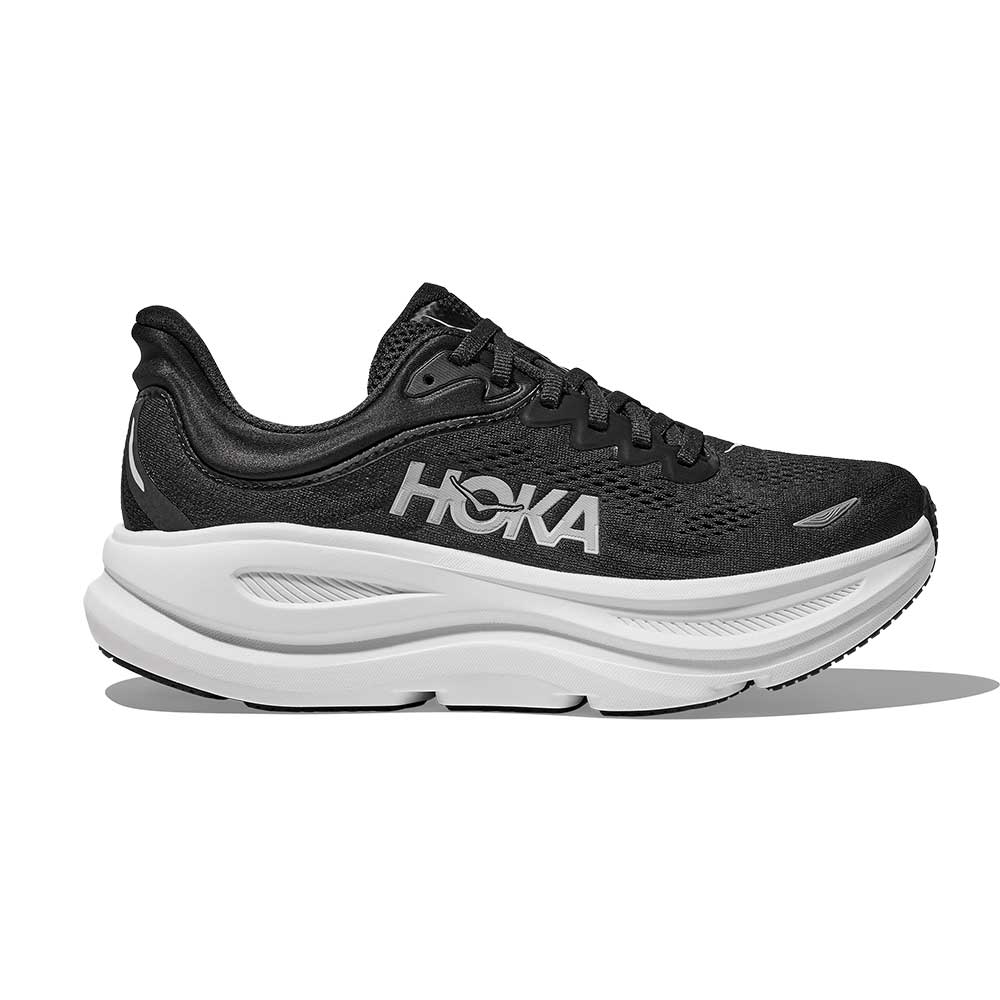
How to measure your feet for Hoka shoes
Measuring your feet at home can reduce sizing mistakes. Your feet may differ slightly in length, so measure both.
Follow these steps:
- Place a sheet of paper on a hard floor.
- Stand on the paper while wearing the socks you plan to use.
- Keep your heel against a wall.
- Mark the end of your longest toe.
- Measure from the wall to the mark.
- Repeat with the other foot.
- Use the measurement of your larger foot.
- Compare it with the current Hoka size chart.
Measure your feet near the end of the day. Feet often become longer and wider after walking.
Do not measure while sitting. Your foot spreads when you stand, and that change can affect shoe length and width.
Also, do not rely only on your old shoe size. Brands use different lasts and shapes. A size 9 in one brand may not feel the same as a size 9 in Hoka.
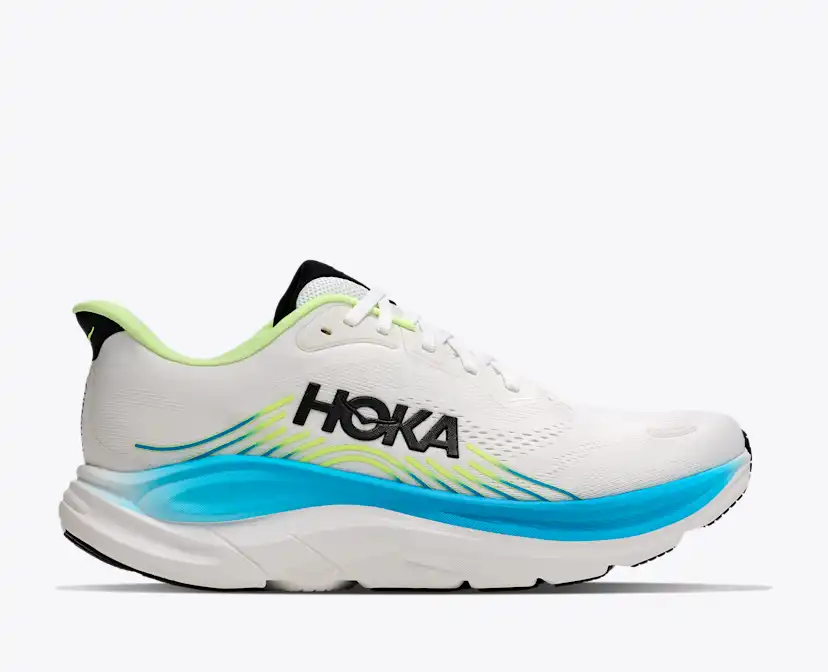
How to check the fit at home
Try your Hoka shoes indoors on a clean floor. Wear the socks you normally use. Give yourself enough time to walk, climb stairs, and stand.
Check each area carefully:
Toe room
Your toes should move freely. They should not curl, hit the front, or feel pressed from above.
Heel hold
Your heel should stay in place when you walk. A small amount of movement can be normal, but repeated lifting can cause blisters.
Midfoot comfort
The laces should hold your foot without creating pressure. If you must tighten them extremely hard, the shoe may not match your foot shape.
Width
Your little toe should not sit on the edge of the sole. Look for red marks or pressure after a short indoor test.
Walking feel
Walk on a flat surface first. Then try stairs and a gentle incline. The shoe should feel stable and natural, not loose or awkward.
One fitting mistake I see often is judging the shoe only while sitting. A pair can feel perfect in a chair but become too short once the foot spreads under body weight.
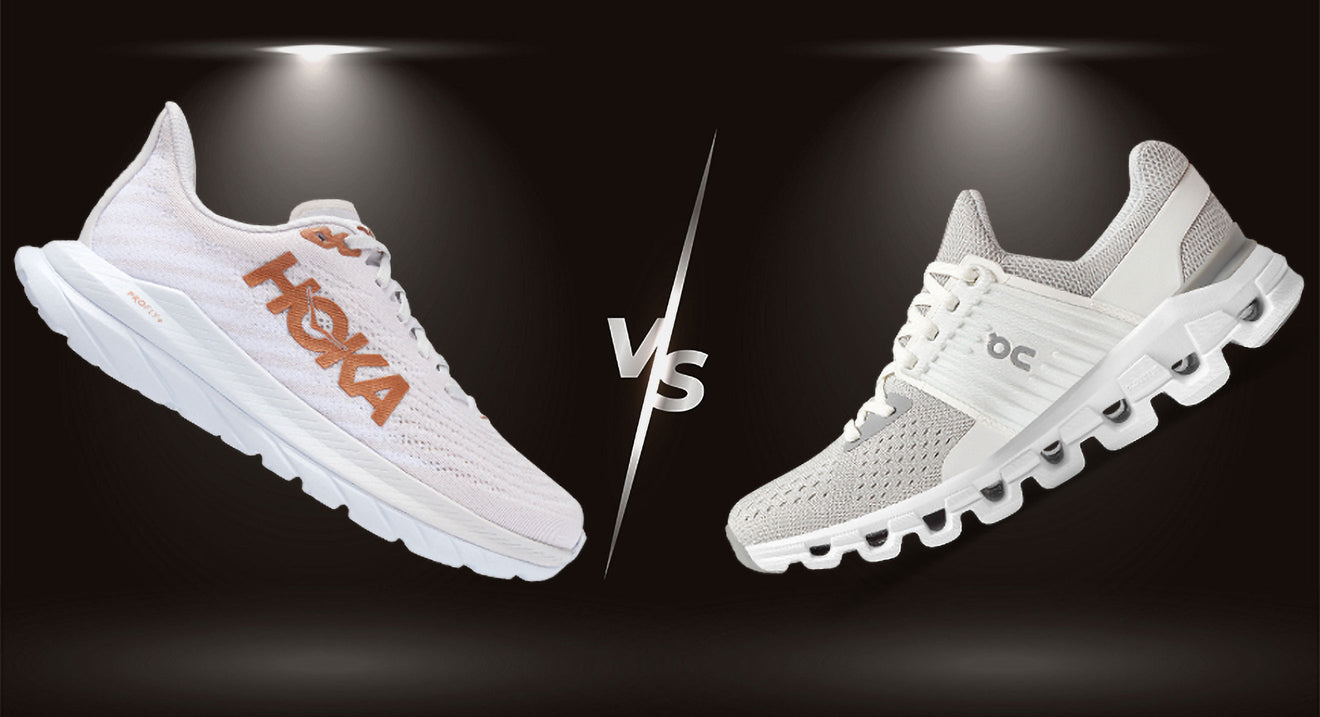
Hoka sizing tips for wide and narrow feet
Your foot width matters as much as your foot length. A correct length cannot fix a poor width match.
If you have wide feet:
• Look for a wide or extra-wide version
• Check for pressure at the little toe
• Avoid sizing down to control heel movement
• Try the shoe with your normal socks
• Test the shoe late in the day
If you have narrow feet:
• Look for a narrow option when available
• Use a runner’s knot for mild heel slip
• Avoid overly thick socks as a first solution
• Check that your foot does not slide side to side
• Consider a model with a more structured upper
Do Hoka shoes run big for narrow feet? They can feel that way in models with a roomy upper. The issue is often width or volume, not length.
A runner’s knot can help. Thread the laces through the extra top eyelets to create a small loop, then pull the laces through the loops before tying them. This improves heel security without crushing the forefoot.
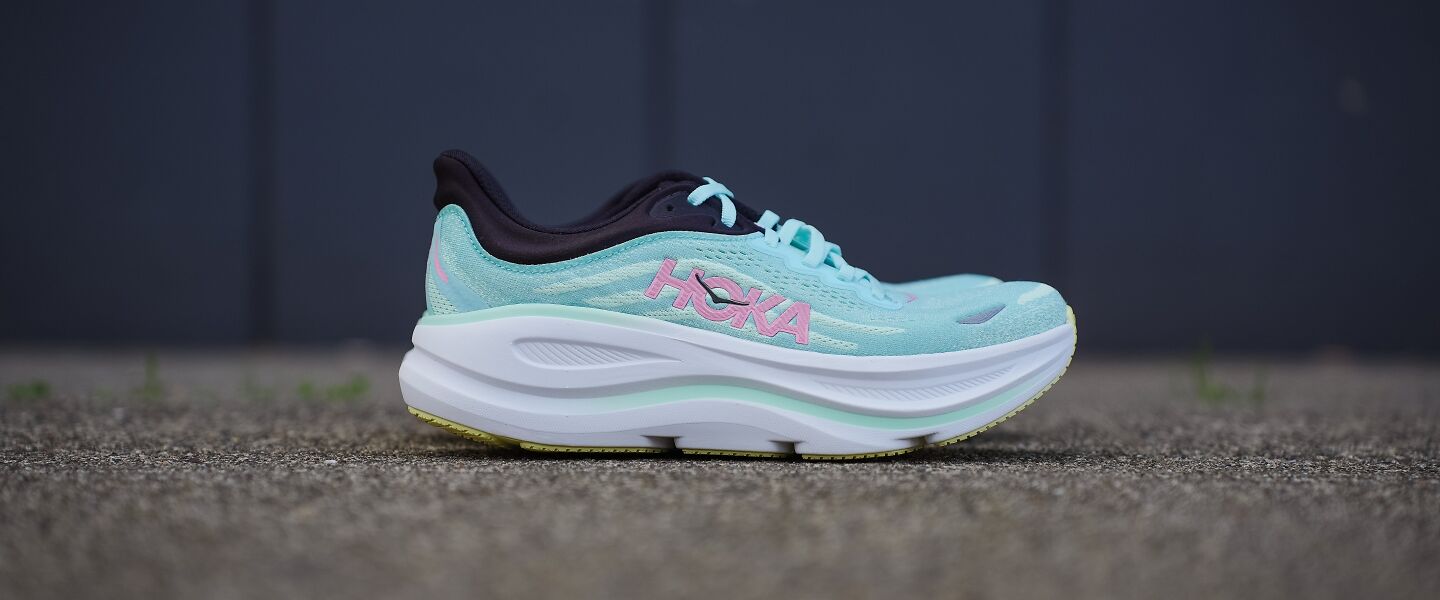
Do Hoka shoes stretch over time?
Hoka shoes may soften with wear, but they usually do not stretch dramatically in length. The upper can become more flexible, while the cushioning gradually changes with use.
A shoe that feels slightly firm may become more comfortable. A shoe that feels too long or loose will not usually become smaller.
Allow a short break-in period for walking shoes and trail models. However, do not use break-in time to excuse pain, numbness, toe pressure, or major heel slipping.
Running shoe research consistently shows that comfort is a strong part of fit. Your feet should feel supported from the first wear, even if the materials become softer later.
Replace shoes when the cushioning feels flat, the outsole is badly worn, or the upper no longer holds your foot. Mileage varies by runner, surface, body weight, and shoe design.
Common Hoka fitting mistakes to avoid
Many poor fit experiences come from choosing a size based on appearance or habit.
Avoid these mistakes:
• Buying the same size in every Hoka model
• Sizing down because the shoe looks bulky
• Ignoring your larger foot
• Trying shoes with the wrong socks
• Testing only while sitting
• Keeping a shoe that causes pain
• Assuming more toe room always means a larger size
• Ignoring width choices
Another common error is shopping early in the morning. Your feet may be at their smallest then. A shoe that feels close at 8 a.m. may feel tight after a full day.
Always check the seller’s return policy. Wear new shoes indoors first, and keep the box and tags until you are sure the fit works.
Are Hoka shoes good for walking and standing?
Hoka shoes are popular for walking, travel, and jobs that require long periods on your feet. Their cushioning can reduce the harsh feel of hard floors for some wearers.
Still, cushioning is personal. A softer shoe is not automatically better for every foot. Some people prefer a firmer platform for balance and control.
For work or daily walking, focus on:
• Secure heel fit
• Comfortable toe space
• Enough width for swelling
• A stable outsole
• Breathable materials
• A shape that matches your arch and foot
Do Hoka shoes run big when used for standing all day? They may feel roomier after your feet swell, which is often helpful. Your shoes should allow that natural change without letting your foot slide.
How to buy Hoka shoes online
Online shopping can work well if you use a careful process.
- Measure both feet.
- Check the model-specific size chart.
- Read reviews from people with similar foot shapes.
- Confirm the width option.
- Review the return window.
- Try the shoes indoors.
- Compare the fit with your current comfortable shoes.
Reviews can help, but they are not universal. One person may call a model narrow, while another finds it roomy. Differences in foot shape, socks, and use explain much of this conflict.
If possible, order from a retailer with free returns or visit a store for a professional fitting. A trained fitter can compare your foot length and width with the shoe’s internal shape.
Frequently Asked Questions About Do Hoka Shoes Run Big
Do Hoka shoes run true to size?
Most Hoka shoes run true to size in length. Start with your usual running shoe size, then check the model’s fit and width options.
Should I size down in Hoka shoes?
Usually, you should not size down just because Hoka shoes look large. Size down only when the shoe is clearly too long and your toes still have enough room.
Do Hoka shoes run big in the toe box?
Some Hoka models have a roomy toe box, while others feel more secure and narrow. A roomy toe box is not a problem if your heel stays secure and your foot does not slide.
Are Hoka shoes good for wide feet?
Many Hoka models are available in wide and extra-wide sizes. Choose the correct width instead of sizing up, since a longer shoe may cause heel movement.
Do Hoka shoes stretch after wearing them?
The upper may soften and become more flexible, but the shoe will not usually stretch much in length. A shoe that is already too long or loose will probably remain that way.
How much space should be in Hoka shoes?
Aim for about a thumb’s width between your longest toe and the front of the shoe. Your heel should stay secure, and your toes should move without pressure.
Why do my Hoka shoes feel loose?
Loose Hoka shoes may have the wrong width, too much internal volume, or excess length. Try a runner’s knot or a narrower version before choosing a smaller size.
Conclusion
So, do Hoka shoes run big? Most models fit true to size, but their thick cushioning, broad soles, and roomy toe shapes can make them feel larger than other shoes.
Start with your normal running shoe size. Measure both feet, allow space for swelling, compare width options, and test the shoes indoors with your usual socks. Do not size down unless the shoe is clearly too long, and do not ignore heel slipping or toe pressure.
The best Hoka fit should feel secure, calm, and comfortable from the first walk. Use these tips before your next purchase, and share your Hoka model and sizing experience in the comments.

Michael Smith is the Content Strategist behind The Style Hub, where fashion meets function. With a keen eye for trends and a passion for everyday style, he curates content that helps readers make smarter, more stylish choices—from the perfect pair of sneakers to must-have accessories. Michael specializes in breaking down fashion into practical, wearable insights, making style accessible for everyone. When he’s not researching the latest trends, he’s exploring how comfort, innovation, and timeless design come together in modern fashion.