What Is Stack Height In Shoes: A Simple Guide
Stack height is the total thickness of a shoe’s sole, measured from the ground to the footbed beneath your foot.
Understanding what is stack height in shoes can make shoe shopping much easier. This measurement affects cushioning, ground feel, stability, weight, and even how your stride feels. Whether you run, hike, walk, or spend long hours on your feet, learning to read stack height helps you choose footwear with more confidence.
What Is Stack Height in Shoes?
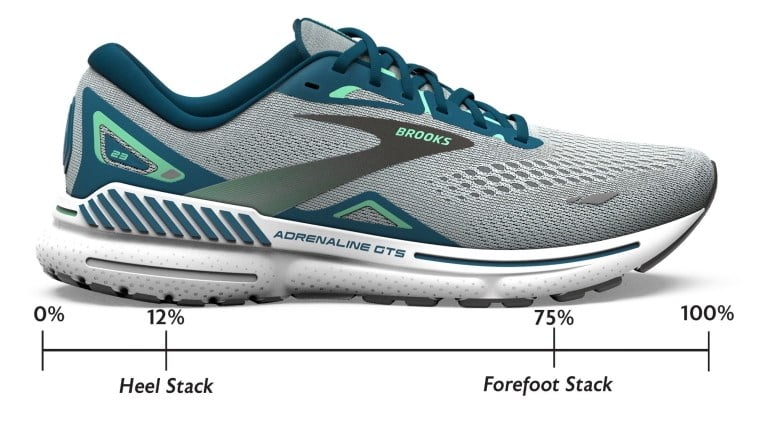
Stack height is the distance between the ground and the bottom of your foot when you wear a shoe. It includes the outsole, midsole, insole, and any other material under your foot.
In simple terms, stack height tells you how much shoe sits between your foot and the ground. A shoe with a low stack height feels close to the surface. A shoe with a high stack height feels more cushioned and raised.
When people ask, “what is stack height in shoes?” they are often asking about the shoe’s total underfoot thickness. However, brands do not always measure it in the same way. Some include the insole, while others measure only the midsole and outsole.
Stack height is usually listed in millimeters. For example, a running shoe may have a 25-millimeter stack under the heel and a 17-millimeter stack under the toe.

How Is Shoe Stack Height Measured?
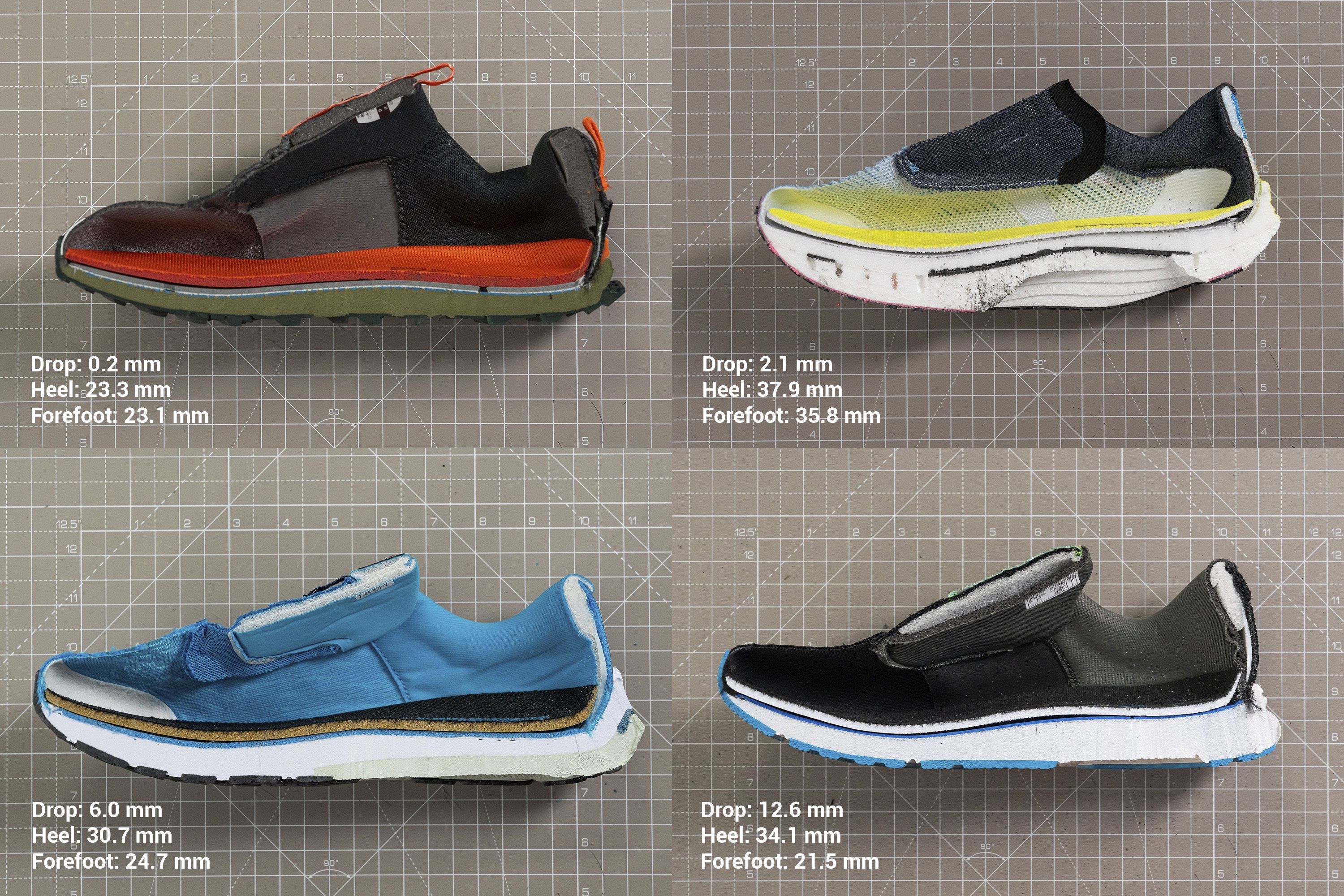
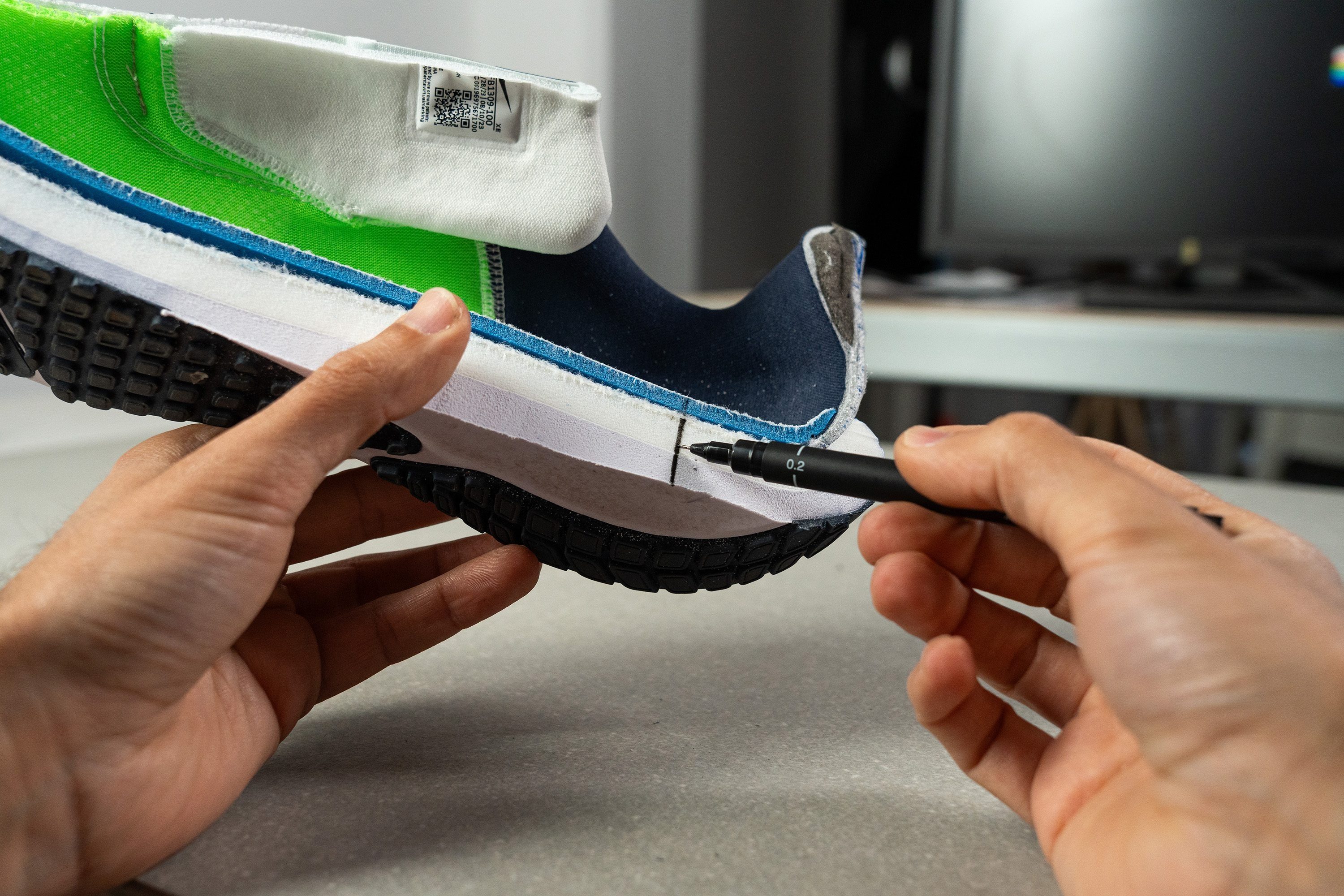
Manufacturers measure stack height from the ground up to the footbed. The measurement often includes several layers:
• Outsole: The rubber or foam layer that touches the ground.
• Midsole: The main cushioning layer, often made from EVA, TPU, PEBA, or similar foam.
• Insole: The removable or built-in layer beneath your foot.
• Internal plates or inserts: Carbon fiber plates and other parts may add structure without adding much visible height.
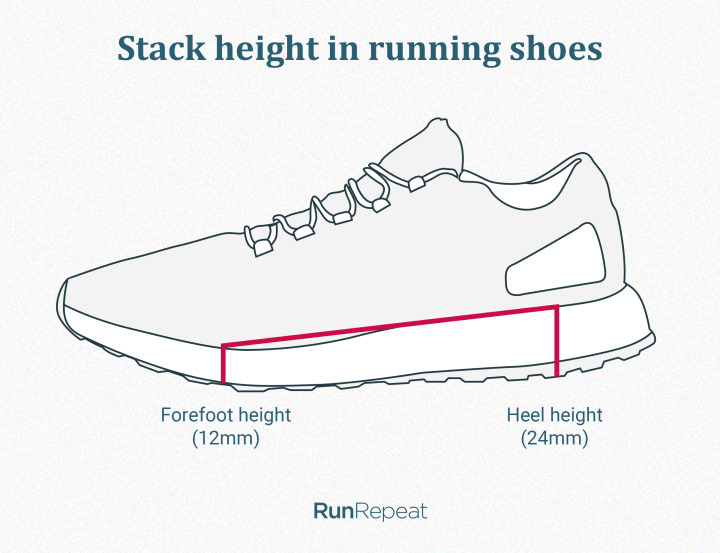
A shoe can have different stack heights at the heel and toe. The difference between those measurements is called the heel-to-toe drop.
For example, a shoe with a 32-millimeter heel and a 24-millimeter toe has an 8-millimeter drop. The total stack height is not the same as the drop. Stack height describes the overall sole thickness, while drop describes the difference between the heel and toe.
This distinction is important when learning what is stack height in shoes. Two shoes may have the same 8-millimeter drop but very different stack heights. One may feel firm and close to the ground, while the other may feel soft and highly cushioned.
Why Does Stack Height Matter?
Stack height changes how a shoe feels and performs. It can influence comfort, impact protection, balance, flexibility, and your sense of the ground.
Here are the main effects.
Cushioning and impact protection
A higher stack often provides more foam under the foot. This can reduce the sharp feeling of hard pavement, especially during long runs or walks.
However, more foam does not always mean better cushioning. Foam density, shape, and resilience matter too. A thick shoe with firm foam may feel less comfortable than a thinner shoe with well-tuned foam.
Ground feel
Low-stack shoes usually let you feel the ground more clearly. This can help you notice changes in terrain and adjust your foot position quickly.
High-stack shoes create more distance between your foot and the surface. They may feel smoother and more protective, but they can reduce the direct feedback you receive from the ground.
Stability
A low center of gravity can make a shoe feel stable. This is one reason some trail shoes, walking shoes, and minimalist shoes use lower stacks.
A high-stack shoe is not automatically unstable. A wide base, firm sidewalls, good heel structure, and a stable foam compound can make a tall shoe feel secure.
Weight
More material often adds weight, although modern foams can reduce this effect. A high-stack racing shoe may still be light if it uses advanced foam and a thin upper.
Flexibility
A thick sole may bend less than a thin sole, especially when it includes a stiff plate. Still, stack height alone does not determine flexibility. The foam, grooves, plate, and rubber layout also matter.
The practical meaning of what is stack height in shoes depends on how all these features work together. Treat stack height as one part of the shoe’s design, not the entire story.
Common Stack Height Categories
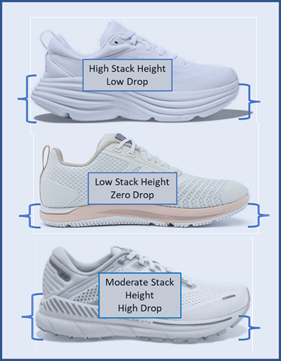
There is no universal rule for low, medium, or high stack height. The categories vary by sport and shoe type. Still, these general ranges can help.
Low stack height
Low-stack shoes often measure about 15 to 25 millimeters under the heel. They usually offer a close-to-the-ground feel and quick response.
They may suit:
• Short runs
• Gym workouts
• Agility drills
• Natural-feeling walking
• Firm, predictable surfaces
Low-stack shoes may not provide enough protection for every runner. If your feet are sensitive or you walk on hard ground for hours, you may prefer more cushioning.
Medium stack height
Medium-stack shoes often fall near 25 to 35 millimeters at the heel. They aim to balance cushioning, stability, flexibility, and ground feel.
This range is common in daily running shoes and walking shoes. It can work well for people who want one reliable pair for regular use.
High stack height
High-stack shoes often measure more than 35 millimeters at the heel. They provide a thick layer of foam and may feel soft, smooth, or highly protective.
They can be helpful for:
• Long-distance running
• Recovery days
• Hard roads and sidewalks
• Hikers carrying heavy packs
• People who prefer a soft ride
A tall shoe may feel less natural at first. Give your body time to adjust, especially if the shoe also has a wide rocker shape or a stiff plate.
Stack Height vs. Heel-to-Toe Drop
Stack height and heel-to-toe drop are related, but they are not the same measurement.
Stack height tells you how much material sits under your foot. Heel-to-toe drop tells you how much higher your heel sits than your toes.
Consider these two examples:
• Shoe A has a 30-millimeter heel and a 22-millimeter toe. Its stack height is 30 millimeters at the heel, and its drop is 8 millimeters.
• Shoe B has a 40-millimeter heel and a 32-millimeter toe. Its stack height is 40 millimeters at the heel, but its drop is also 8 millimeters.
Both shoes have the same drop. Yet Shoe B has more material under the entire foot and may feel more cushioned.
Drop can influence how your ankle, calf, and Achilles tendon feel. A higher drop may feel easier on the calf for some people. A lower drop may encourage a more level foot position. Neither option is best for everyone.
When researching what is stack height in shoes, always check both the stack height and the heel-to-toe drop. Looking at only one number can give you an incomplete picture.
How Stack Height Affects Running and Walking
Runners often notice stack height during long efforts. More foam may help the shoe feel comfortable as the legs become tired. A lower stack may feel faster and more controlled during sharp turns.
For walking, comfort usually matters more than speed. A medium or high stack can soften the repeated impact of sidewalks and hard floors. Yet a very soft shoe may feel unstable if you have balance concerns.
Trail shoes require extra care. A high stack can protect your feet from rocks, but it may also make uneven ground feel less predictable. A broad base and strong sidewalls can help offset this issue.
Stack height can also change how a shoe fits. A taller midsole may raise your foot closer to the edge of the upper. If the shoe has a shallow heel cup or loose laces, your foot may feel less secure.
From a practical fitting standpoint, I would never choose a shoe based on stack height alone. I look at the surface, distance, pace, foot comfort, and how stable the shoe feels during turns. That simple habit prevents many poor purchases.
What Stack Height Should You Choose?
The right stack height depends on your activity, body, preferences, and the surface beneath you. Use these guidelines as a starting point.
Choose lower stack shoes if you want:
• Strong ground feedback
• A lighter, more direct feel
• Quick movement during workouts
• A closer connection to the ground
• More natural foot movement
Choose medium stack shoes if you want:
• A balanced daily trainer
• Moderate cushioning
• A mix of comfort and stability
• Versatility for walking and running
• A familiar feel with few surprises
Choose higher stack shoes if you want:
• More underfoot cushioning
• Greater protection from hard surfaces
• Comfort during long sessions
• A soft or smooth ride
• Help reducing foot fatigue
Your body also matters. A heavier runner may appreciate a sturdy, well-cushioned platform. A lighter runner may prefer a flexible, lower shoe. These are tendencies, not strict rules.
If you are moving from a low-stack shoe to a high-stack shoe, begin with short walks or easy runs. If you notice ankle soreness, calf tightness, foot pain, or unusual knee discomfort, reduce use and reassess the fit.

Stack Height in Road, Trail, and Minimalist Shoes
Different shoe categories use stack height for different goals.
Road running shoes
Road shoes often use moderate or high stack heights. Their foam is designed to manage repeated contact with pavement. Many modern road shoes also use rocker shapes or plates to support forward movement.
Trail running shoes
Trail shoes balance cushioning with protection and control. Some use a low stack for better terrain awareness. Others use a high stack to protect the foot from rocks and roots.
The best choice depends on the trail. Smooth dirt paths may suit a taller, cushioned shoe. Rocky, technical trails may reward a lower and more stable platform.
Minimalist shoes
Minimalist shoes usually have a low stack and a small heel-to-toe drop. They often provide more flexibility and ground feel.
Minimalist footwear is not automatically healthier or better. A sudden switch can place more demand on the calves, feet, and Achilles tendon. Transition slowly, and stop if pain develops.
Walking and work shoes
Walking and work shoes often use medium stack heights. Their design usually focuses on comfort, durability, and stable footing rather than racing speed.
For long shifts, look for a supportive upper, secure heel, enough toe room, and cushioning that does not feel unstable.
Benefits and Limitations of High Stack Shoes
High stack shoes have become popular because they can feel comfortable and protective. They may reduce the sensation of impact and help tired legs feel fresher during long activities.
Still, they have limits.
Potential benefits
• More foam under the foot
• Better protection from rough surfaces
• Comfortable long-distance performance
• Reduced feeling of hard ground
• Smooth transitions in some designs
Potential limitations
• Less direct ground feedback
• A taller platform that may feel less stable
• Extra weight in some models
• A higher price for advanced foam
• More adjustment time for new users
Research in running biomechanics shows that shoe comfort is highly individual. Laboratory results do not always predict how a shoe will feel for every person. This is why a short test walk or trial period is valuable.
When considering what is stack height in shoes, remember that thick foam cannot correct a poor fit. A shoe can have excellent cushioning and still cause blisters, heel slip, or toe pressure.
Common Mistakes When Choosing Stack Height
Many shoppers focus on the biggest number on the product page. That can lead to the wrong choice.
Mistake 1: Assuming higher always means better
A taller shoe may offer more cushioning, but it may not suit your balance, gait, or activity. Comfort must include stability and fit.
Mistake 2: Confusing stack height with drop
A shoe can have a high stack and a low drop. Check both measurements before comparing models.
Mistake 3: Ignoring the foam
Two shoes with the same stack height can feel completely different. Foam firmness, rebound, and compression are major factors.
Mistake 4: Changing too fast
Switching from a thin shoe to a thick shoe, or the other way around, can change how your muscles work. Use new footwear for short sessions first.
Mistake 5: Trusting the label without testing the shoe
Numbers help you compare shoes, but your feet provide the final answer. Walk, jog, turn, and stand in the shoes before committing when possible.
One lesson I often apply when comparing footwear is simple: the best shoe is not the one with the most technology. It is the one that feels secure, comfortable, and suitable for the task.
How to Compare Stack Height Before Buying
Use this simple process when shopping online or in a store.
-
Find the heel and toe stack measurements.
-
Calculate or confirm the heel-to-toe drop.
-
Check the midsole foam and shoe weight.
-
Read whether the shoe is designed for roads, trails, walking, or training.
-
Look for information about the outsole and surface grip.
-
Compare the width of the platform, not just its height.
-
Read user feedback for fit, stability, and durability.
-
Test the shoe with the socks you normally wear.
-
Start with a short session before using it for a long event.
Remember that brand measurements may not be perfectly identical. Independent testing can also vary because measuring methods differ. Use published numbers as useful guides, not exact scientific limits.
A good comparison asks more than what is stack height in shoes. It also asks how the stack is built, how the shoe moves, and whether it matches your needs.
Frequently Asked Questions About What Is Stack Height in Shoes
Is a higher stack height better?
A higher stack height can offer more cushioning and protection, but it is not automatically better. The right choice depends on your activity, comfort needs, balance, and preferred ground feel.
What is a good stack height for everyday walking?
A medium stack height is a practical choice for many walkers because it balances cushioning and stability. However, fit, width, heel security, and foam feel matter just as much as the measurement.
Does stack height affect shoe stability?
It can. A taller shoe may feel less stable because your foot sits farther from the ground, but a wide base and supportive design can make a high-stack shoe very stable.
Is stack height the same as shoe cushioning?
No. Stack height describes the amount of material under your foot, while cushioning describes how that material absorbs and returns energy. Foam type and firmness strongly affect the cushioning experience.
What is the difference between stack height and shoe drop?
Stack height is the total thickness under the foot at a given point. Shoe drop is the height difference between the heel and toe.
Can stack height cause foot or leg pain?
Stack height alone does not usually explain pain. A poor fit, sudden change, unsuitable drop, weak support, or excessive use of a new shoe may be more important factors.
How do I know what is stack height in shoes I already own?
Check the product page or the manufacturer’s specifications. If no measurement is available, a shoe specialist or footwear laboratory can measure it, but home measurements may not match the brand’s method.
Conclusion
Stack height is the amount of sole material between your foot and the ground. It affects cushioning, ground feel, stability, weight, and comfort, but it does not work alone. Heel-to-toe drop, foam, fit, shoe width, and intended use all matter.
Use stack height as a helpful comparison tool rather than a final answer. Think about where you will wear the shoe, how long you will use it, and how secure it feels during movement. Try new footwear gradually, listen to your body, and choose comfort over marketing claims.
Now that you understand what is stack height in shoes, compare your current pair with your next option and share your experience or questions in the comments.

Michael Smith is the Content Strategist behind The Style Hub, where fashion meets function. With a keen eye for trends and a passion for everyday style, he curates content that helps readers make smarter, more stylish choices—from the perfect pair of sneakers to must-have accessories. Michael specializes in breaking down fashion into practical, wearable insights, making style accessible for everyone. When he’s not researching the latest trends, he’s exploring how comfort, innovation, and timeless design come together in modern fashion.