The best way to clean white shoe soles is to remove dry dirt first, then scrub the rubber with warm water, dish soap, and a soft or medium brush. For dark marks, use a melamine sponge lightly. Rinse with a damp cloth and let the shoes air-dry away from heat.
White soles collect dust, road salt, grass stains, and black scuff marks fast. This is common on sneakers worn on sidewalks, school floors, gyms, and sports courts across the United States. The good news is that most rubber soles need only simple household supplies.
The method below works for white rubber outsoles, midsoles, and many foam soles. Always check the shoe maker’s care label first. Some soles contain painted details, soft foam, suede, or materials that can react badly to strong cleaners.

What You Need Before You Start
Gather mild dish soap, warm water, an old toothbrush or soft scrub brush, a microfiber cloth, and a dry towel. You may also use a melamine sponge for stubborn marks.
You do not need a large amount of water. Too much water can soak the upper, loosen glue, or leave moisture inside the shoe.
Basic supplies
- Mild dish soap
- Warm, not hot, water
- Soft or medium-bristle brush
- Old toothbrush for grooves
- Microfiber cloth or clean rag
- Dry towel
- Small bowl
- Melamine sponge, used with care
- Baking soda, only when extra cleaning power is needed
Avoid starting with bleach, harsh solvents, gasoline, acetone, or strong household cleaners. These products may yellow white rubber, remove paint, weaken glue, or damage the shoe upper.
Before cleaning, remove the laces if they are dirty. Take out the insoles if the shoe has a removable insole. This keeps water and cleaner away from parts that may dry slowly.
How to Clean White Shoe Soles Step by Step
Follow a gentle-to-strong cleaning order. Start with the least aggressive method and increase the effort only when needed.
1. Remove loose dirt
Take the shoes outside or hold them over a trash can. Tap the soles together gently to remove dried mud and grit.
Use a dry brush to clear dirt from the tread. A toothbrush works well around small grooves. Removing grit first keeps hard particles from rubbing against the sole and causing more marks.
2. Make a mild cleaning mix
Add a few drops of dish soap to a bowl of warm water. The water should feel warm but not hot.
Mix until the water looks slightly cloudy. You want a weak soap solution, not thick foam. Stronger soap does not always clean better and may leave a sticky film.
3. Scrub the sole
Dip the brush into the mixture. Tap off extra water, then scrub the white sole in small circles.
Work around the edge first. This area often holds a gray line of dirt. Then clean the flat part of the midsole and finish with the tread.
Use short strokes on black scuff marks. Do not press so hard that the brush roughs up the rubber. A rough surface can collect dirt more easily later.
4. Clean the grooves
Use an old toothbrush for deep tread lines and narrow gaps. If mud is packed into a groove, loosen it with a wooden toothpick.
Do not use a sharp metal tool. It can cut the rubber or leave marks that look like cracks.
5. Wipe away the soap
Dampen a clean microfiber cloth with plain water. Wipe the sole until no soap remains.
This step matters. Leftover soap can attract dust and make the sole look dull after it dries.
6. Dry the shoes safely
Pat the soles with a dry towel. Let the shoes air-dry at room temperature.
Keep them away from clothes dryers, radiators, hair dryers, and strong direct sun. High heat can warp foam, shrink fabric, and weaken adhesives. Open the tongue and remove the insoles so air can move through the shoe.
Signs the cleaning worked
The sole should look even in color. The tread should be free of loose dirt. It should not feel sticky or greasy.
Some marks may remain if they are cuts, paint transfer, permanent dye, or wear. Cleaning cannot restore rubber that has been scraped away.

How to Remove Black Scuff Marks From White Soles
A melamine sponge can help with black scuffs that remain after soap and water. Wet the sponge, squeeze out most of the water, and rub the mark very lightly.
Melamine foam works by gentle abrasion. It can remove a thin layer of surface dirt, but it may also dull glossy rubber or remove printed details. Use it only on the white rubber area.
Test a hidden spot first. Stop if the surface changes color or texture.
For a scuff that does not respond to a sponge, try this order:
- Wipe the area with the dish-soap mix.
- Scrub with a soft brush.
- Use a damp melamine sponge with light pressure.
- Wipe with clean water.
- Let the sole dry before judging the result.
Do not use acetone or nail polish remover on most shoe soles. These solvents can affect painted rubber, synthetic leather, plastic, and glue. They may also create a larger faded patch than the original scuff.
How to Clean Yellow or Gray White Soles
Yellowing and gray color are not always surface dirt. Rubber and foam can change color from age, sunlight, oxidation, heat, or contact with certain chemicals.
Start with mild soap and water. If the color does not change, do not keep scrubbing harder. Heavy scrubbing may damage the sole without reversing chemical aging.
Avoid household chlorine bleach unless the shoe manufacturer specifically allows it. Bleach can weaken materials and may make some white rubber look more yellow. It can also stain nearby fabric or colored sections.
Some online methods use hydrogen peroxide and strong sunlight to brighten old soles. These methods can produce uneven color and may affect paint, glue, or foam. They are not a safe default for every shoe.
If the sole is deeply yellow and the shoe is valuable, vintage, or made with mixed materials, ask a professional shoe repair shop before using a whitening treatment.

How to Clean Different Types of White Soles
The sole material changes how much water, brushing, and pressure it can handle.
| Sole type | Best first method | Main caution |
|---|---|---|
| White rubber | Dish soap, water, and a brush | Avoid harsh solvents |
| Foam or EVA | Damp cloth and mild soap | Do not soak or use high heat |
| Painted sole | Damp cloth only at first | Scrubbing can remove paint |
| Textured rubber | Soft brush and toothbrush | Clean grooves gently |
| Leather or suede near the sole | Protect the upper before cleaning | Water may stain the upper |
Rubber soles
Rubber usually handles gentle brushing well. Use a soft or medium brush and keep the upper as dry as possible.
White rubber can have a smooth, glossy, or textured finish. A melamine sponge may dull a glossy finish, so test it first.
Foam and EVA soles
Many modern sneakers use EVA or other foam compounds in the midsole. These materials are lighter than rubber and may mark or compress more easily.
Use a damp cloth and mild soap. Do not soak the shoe. Avoid stiff brushes, abrasive powders, and heat.
Painted or printed soles
Some white soles have painted lines, logos, or colored sections. Treat these like a delicate surface.
Use a damp cloth first. Avoid a melamine sponge unless you have tested it in a hidden area.
Shoes with leather or suede uppers
Cover the upper with a dry towel while you clean the sole. Keep the brush below the seam.
Water and soap that spread onto suede can leave a dark or stiff patch. Leather may also need a separate cleaner made for leather.

What to Do When the Sole Still Looks Dirty
First, decide whether the mark is dirt or damage. Dirt usually fades when wet and changes as you scrub. A cut, scrape, dye mark, or yellowed rubber may not change much.
If the sole feels sticky, soap residue may remain. Wipe it several times with a clean damp cloth and dry it fully.
If it looks chalky, the rubber may be drying out or breaking down. More scrubbing will not repair that condition.
If one section is darker than the rest, check for:
- Uneven wear
- Paint transfer
- Asphalt or tar
- Grass dye
- Road salt
- Oxidation
- A stained or painted area
For tar or gum, place the shoe in a cool area and gently lift the material with a plastic scraper. Do not use a knife. A small amount of dish soap may help with oily residue, but test it first.
For road salt, wipe the sole with a damp cloth soon after exposure. Salt can leave a pale crust when it dries. Do not rub dry salt aggressively across the surface.
Common Mistakes to Avoid
Avoid soaking the entire shoe. Water can reach the insole, padding, and glue. It may also create odor if the inside stays damp.
Do not clean white soles with boiling water. Heat can change the shape of foam and affect adhesive bonds.
Do not mix cleaners. In particular, never mix bleach with ammonia, vinegar, or other household products. Chemical mixtures can release harmful fumes.
Do not use a rough kitchen scrub pad on smooth white rubber. It may leave scratches that hold dirt.
Do not put wet sneakers in a clothes dryer unless the manufacturer clearly permits it. Air-drying is slower but safer for most shoes.
Do not judge the result while the sole is wet. Wet rubber can look brighter than it will after drying. Wait until the shoes are fully dry before repeating the process.

How to Keep White Soles Clean Longer
Clean small marks as soon as you see them. Fresh dirt usually needs less pressure than dried dirt.
After wearing the shoes outdoors, brush away loose grit. Store the shoes in a dry, ventilated place. Avoid leaving white sneakers in a hot car or in direct sun for long periods.
A simple maintenance routine works well:
- Brush off loose dirt after outdoor use.
- Wipe small scuffs with a damp cloth.
- Clean the soles fully when they look gray.
- Let the shoes dry before storing them.
- Keep them away from muddy or oily surfaces when possible.
You can also carry a small damp cloth when traveling. It is easier to remove a fresh mark at the end of the day than an old mark weeks later.
Key Takeaways
- Start with warm water, mild dish soap, and a soft brush.
- Remove dry dirt before adding water.
- Use a melamine sponge lightly and only on suitable white rubber.
- Avoid bleach, acetone, harsh solvents, and high heat.
- Do not soak foam shoes or shoes with delicate uppers.
- Some yellowing, scratches, and dye marks cannot be removed by cleaning.
- Let shoes air-dry fully before wearing or storing them.
Frequently Asked Questions
Can I use baking soda to clean white shoe soles?
Yes, but use it gently. Mix a small amount of baking soda with water to make a thin paste. Apply it to white rubber, scrub lightly, and wipe it away with a damp cloth.
Baking soda is mildly abrasive. Do not use it on painted soles, soft foam, suede, or delicate finishes without testing first.
Can I use toothpaste on white soles?
A plain white toothpaste may remove light marks from some rubber soles because it contains mild abrasives. However, gel toothpaste, colored toothpaste, and whitening formulas may leave residue or affect the finish.
Dish soap is the safer first choice. Use toothpaste only for a small spot after testing it in an unseen area.
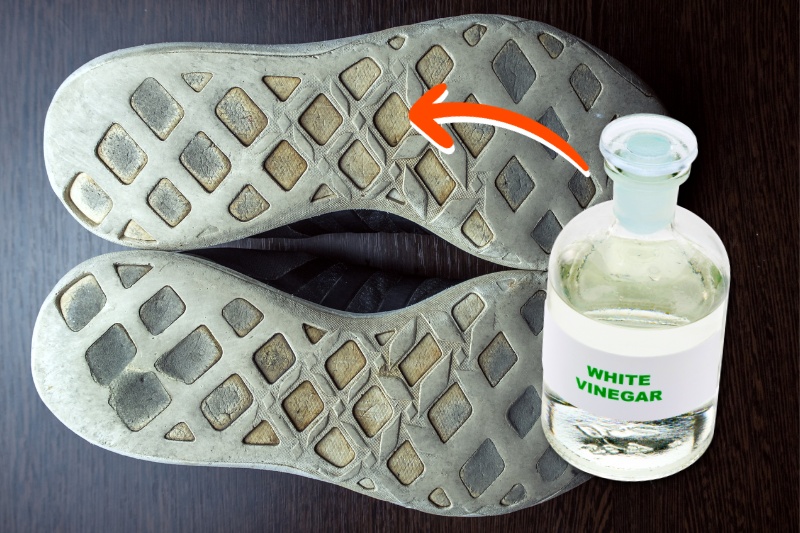
Does vinegar whiten white shoe soles?
Vinegar may help loosen some mineral residue, but it is not a reliable way to reverse yellowed rubber. It can also affect some finishes and nearby materials.
Use mild soap and water first. Never mix vinegar with bleach or other cleaners.
How often should I clean the soles of white shoes?
Clean them when dirt or scuffs appear. For shoes worn often outdoors, a quick wipe once a week can prevent buildup. A deeper clean may be needed every few weeks, depending on use.
Frequent hard scrubbing can wear the surface. Small, gentle cleanups are usually better than rare, aggressive cleaning.
Can I put white sneakers in the washing machine?
Check the shoe maker’s instructions first. Some canvas sneakers may tolerate a gentle wash, but machine washing can harm foam, leather, suede, glued parts, and structured shoes.
Even when washing is allowed, clean the soles by hand first. Remove loose dirt so it does not spread through the washer.
Why do white soles turn yellow after cleaning?
Yellowing may come from oxidation, age, heat, sunlight, or a reaction with a cleaning product. It does not always mean that dirt remains.
Stop using stronger cleaners if soap and water do not help. Continued scrubbing may damage the sole. For expensive or delicate shoes, consult a shoe repair professional.
Conclusion
To clean the soles of white shoes, brush away dry dirt, scrub with mild dish soap and warm water, wipe off the residue, and air-dry the shoes. Use extra care with foam, painted soles, leather, and suede.
The safest approach is gradual. Begin with the gentlest method, test any stronger tool in a hidden spot, and stop when the mark is actually damage rather than dirt.

Michael Smith is the Content Strategist behind The Style Hub, where fashion meets function. With a keen eye for trends and a passion for everyday style, he curates content that helps readers make smarter, more stylish choices—from the perfect pair of sneakers to must-have accessories. Michael specializes in breaking down fashion into practical, wearable insights, making style accessible for everyone. When he’s not researching the latest trends, he’s exploring how comfort, innovation, and timeless design come together in modern fashion.