Saltwater sandals can handle beach days, pool trips, and warm U.S. summers, but sand, salt, sunscreen, and chlorine can still wear them down. The safest way to clean them is simple: rinse away grit, wash with mild soap and cool or lukewarm water, clean gently with a soft brush, rinse again, and let them air-dry away from heat.
This guide covers branded Salt-Water sandals and similar leather or synthetic water sandals. Always check the care label first, since materials and finishes can vary.
Quick answer: How do you clean saltwater sandals?
- Shake or brush off loose sand and dirt.
- Rinse the sandals with clean, cool water.
- Mix a small amount of mild soap into lukewarm water.
- Scrub the straps, footbed, and sole with a soft cloth or soft toothbrush.
- Rinse until no soap remains.
- Blot with a towel.
- Air-dry the sandals in a shaded, well-ventilated place.
- Do not use a washing machine, dryer, radiator, hair dryer, bleach, or harsh cleaner.
Clean the sandals after exposure to salt water, chlorine, mud, or heavy sunscreen. Prompt rinsing keeps grit from acting like sandpaper on the straps and footbed.
What you need before cleaning
Gather these items before you start:
- Clean water
- A small bowl or sink
- Mild liquid soap
- A soft cloth or sponge
- A soft toothbrush
- A clean towel
- An old toothbrush for the sole grooves
- A fan, if needed, to improve airflow
Use only a small amount of soap. Too much can leave a film on the leather or footbed.
Choose the cleaner with care
A mild soap is the safest general option for most washable sandals. A small amount of gentle dish soap can work, but avoid products made to cut heavy grease.
Do not use:
- Bleach
- Ammonia
- Acetone
- Alcohol-based cleaners
- Strong degreasers
- Abrasive powders
- Rough scrub pads
- Leather dye or polish unless the manufacturer allows it
Harsh products may strip color, dry out leather, weaken adhesives, or make the surface sticky.
Check the sandal material
The cleaning method depends on the upper material.
| Sandal material | Best general method | Main caution |
|---|---|---|
| Leather | Damp cloth, mild soap, gentle brushing | Do not soak for a long time |
| Synthetic material | Mild soap and water | Avoid harsh chemicals |
| Rubber sole | Soft brush and soapy water | Rinse grit from grooves |
| Fabric or textile straps | Spot-clean and rinse lightly | Do not assume the material is machine-washable |
| Suede or nubuck | Use a dry suede brush first | Do not use the standard soaking method |
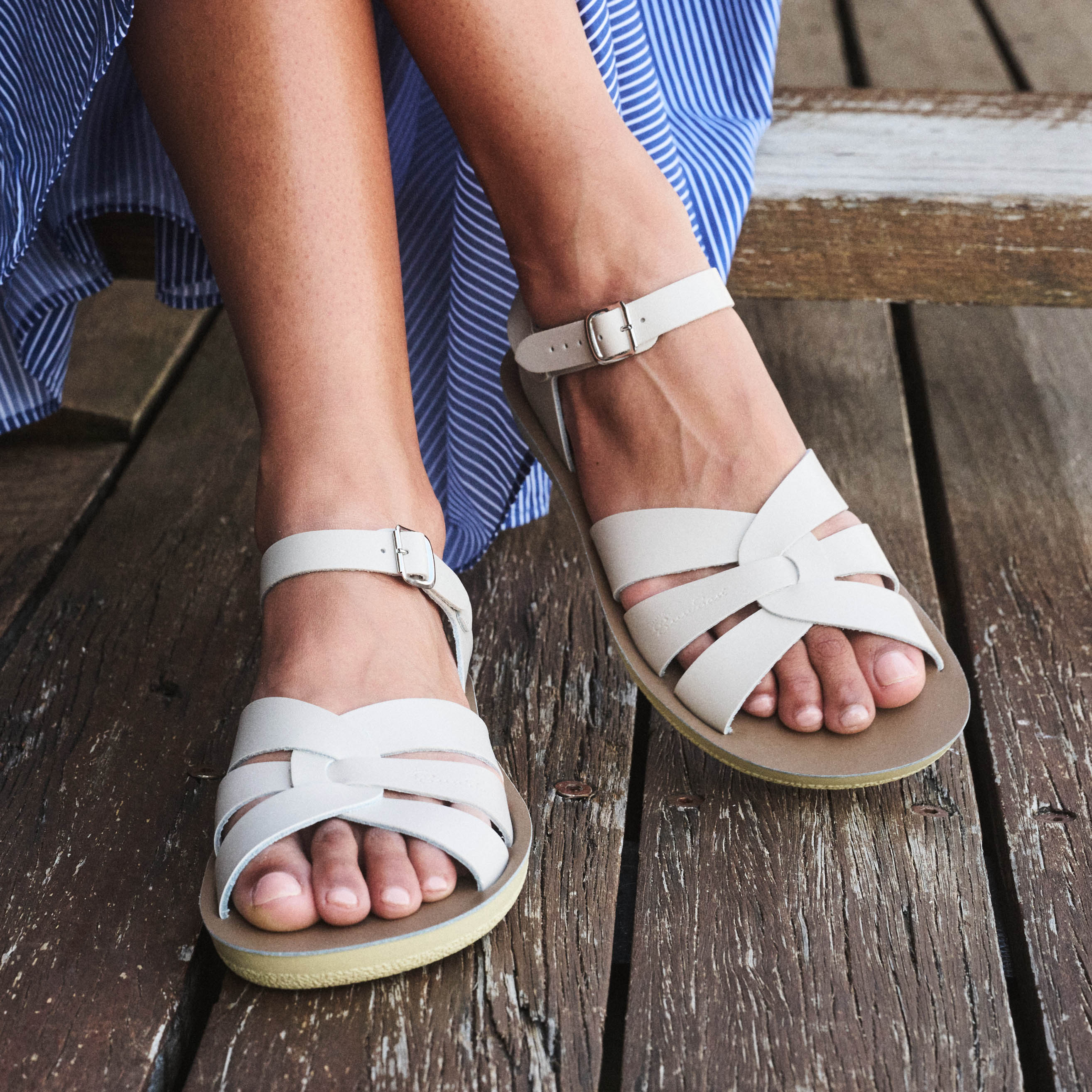
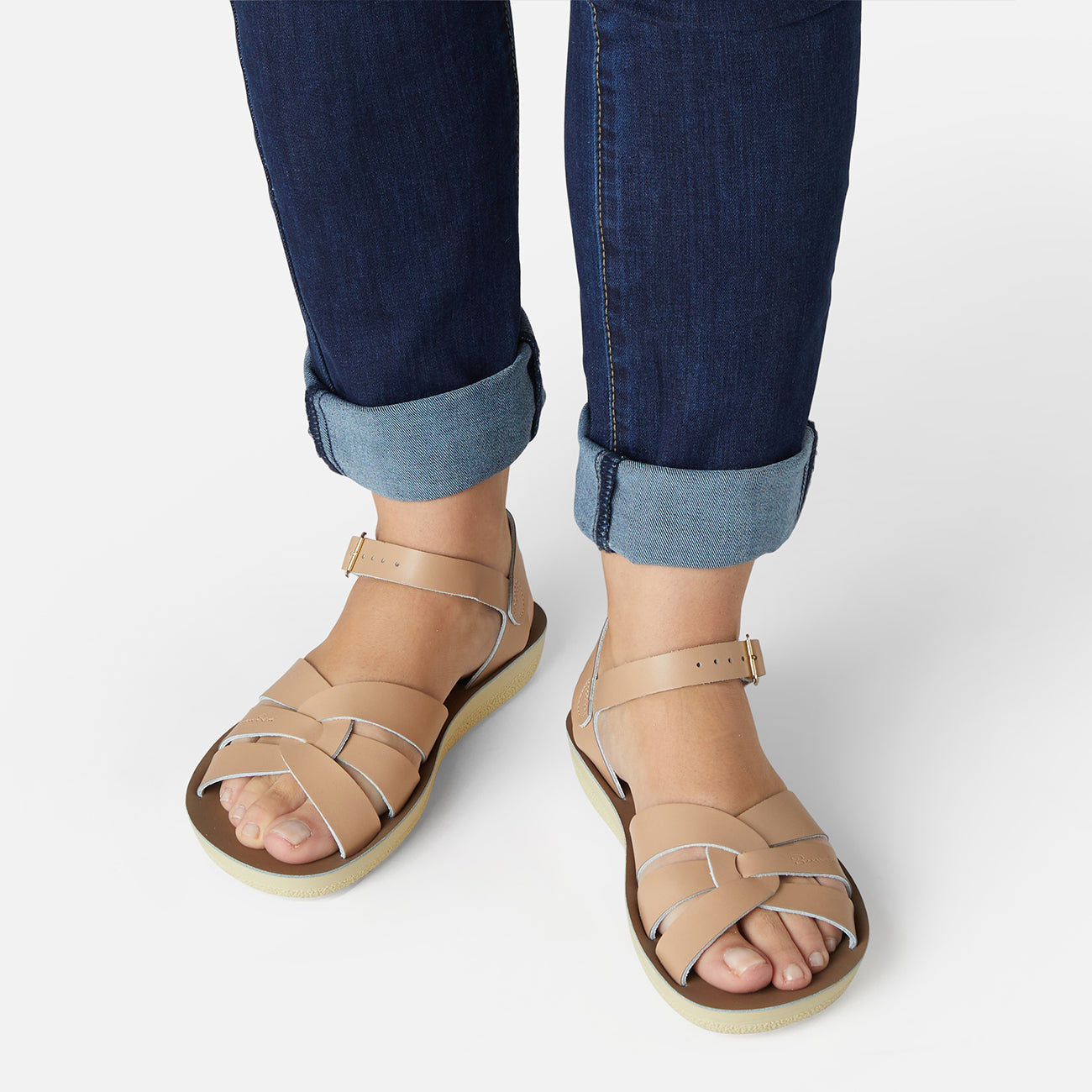
Many Salt-Water sandals use leather uppers with rubber soles. Leather can get wet, but repeated soaking and fast drying may make it stiff or cause cracking.
Step-by-step: How to clean saltwater sandals
1. Remove loose sand and dirt
Take out any removable inserts, if the sandal has them. Tap the sandals together over a trash can or outdoors. Then use a dry, soft brush to remove sand from the straps, stitching, and sole grooves.
This step matters because wet sand can spread across the surface and scratch the finish during washing.
2. Rinse with fresh water
rinse each sandal with clean water. Pay close attention to:
- The underside of the straps
- The space around buckles
- The footbed
- The heel area
- The tread pattern
- The edges where the upper meets the sole
Fresh water helps remove salt and chlorine residue. Do not use hot water. High heat can affect leather, glue, coatings, and some synthetic materials.
If the sandals are only lightly dirty, a fresh-water rinse may be all they need.
3. Make a mild cleaning solution
Add a few drops of mild soap to a bowl of lukewarm water. The water should feel comfortable to the touch, not hot.
Dip a soft cloth into the solution and wring it out. The cloth should be damp, not dripping. For stubborn dirt, use a soft toothbrush with light pressure.
4. Clean the upper and straps
Wipe the straps in small sections. Work around buckles and stitching without pulling hard on the straps.
For marks that do not lift at once, let the damp cloth sit on the spot for a minute. Then brush gently. Repeated light passes are safer than one hard scrub.
If the sandal is leather, avoid keeping the whole upper submerged. Brief contact with water is usually less stressful than prolonged soaking.
5. Clean the footbed
Wipe the footbed with the same mild soap solution. A soft toothbrush can help remove dirt near the toe and heel.
Do not flood the footbed. Excess water can move into seams and padding. It may also lengthen drying time, which can lead to odor.
For foot odor, cleaning helps remove residue, but drying is just as important. Bacteria and odor often persist when footwear stays damp.
6. Scrub the rubber sole
Use a soft toothbrush to clean the tread. Start at the heel and work toward the toe. Rinse the brush often so that it does not spread grit.
Avoid metal brushes. They may damage the rubber surface or leave marks on the sole.
A plastic toothpick can help remove packed dirt from narrow grooves, but use it gently. Do not pry at glued seams.
7. Rinse away all soap
Rinse the sandals with clean, cool water. Continue until the water runs clear and the surface no longer feels slippery.
Soap left behind can attract dirt. It may also leave pale streaks on dark sandals.
8. Blot and air-dry
Press the sandals gently with a clean towel. Do not twist or wring them.
Place them in a shaded, well-ventilated area. Keep the straps open so air can reach the inside. A fan set nearby can help, but do not use high heat.
Let the sandals dry fully before wearing them again. Drying time varies with humidity, material, and how wet the sandals became.
How to remove common stains and odors
Different marks need different treatment. Start with the mildest method and stop if the surface, color, or finish begins to change.
Salt marks
White or chalky marks often come from dried salt or mineral residue.
- Wipe the area with a damp cloth.
- Rinse the cloth in clean water.
- Wipe again until the mark disappears.
- Let the sandal air-dry in the shade.
Avoid using more soap than needed. Salt marks usually need fresh water, not a strong cleaner.
Sunscreen and oily marks
Sunscreen can leave a greasy film on straps and footbeds.
- Blot fresh residue with a dry cloth.
- Apply a small amount of mild soap to a damp cloth.
- Wipe the spot gently.
- Rinse the cloth and wipe away the soap.
- Repeat once if needed.
Do not use a strong degreaser. It may remove the sandal’s color or dry out leather.
Mud and dried dirt
Let thick mud dry enough to brush away. Remove as much as possible before adding water.
Then use mild soapy water and a soft brush. Scrubbing wet mud before removing the loose material can push dirt deeper into stitching and textured surfaces.
Scuff marks
Try a damp cloth first. If the mark remains, use a soft toothbrush with mild soap.
Avoid a melamine foam sponge unless the manufacturer permits it. These sponges work like very fine abrasives and may dull or remove a surface finish.
Mildew or musty odor
A musty smell usually means the sandals stayed damp for too long.
Clean the sandals with mild soap and water, rinse well, and dry them completely. Improve airflow around the footbed and straps.
Do not mix cleaning products. Never combine bleach with ammonia, vinegar, or other cleaners. If visible mold remains after gentle cleaning, or if the material has deep staining, contact the manufacturer before using a stronger treatment.
Rust around buckles
Many Salt-Water sandal buckles are designed to resist rust, but no metal finish should be treated as completely immune to damage. Rinse buckles with fresh water after exposure to salt water, then dry them with a towel.
If rust appears, do not use a harsh rust remover on leather or colored material. Ask the manufacturer about a replacement buckle or approved cleaner.
How to dry saltwater sandals without damaging them
Drying is one of the most important parts of sandal care. Fast heat may seem helpful, but it can cause more harm than slow air-drying.
Use natural airflow
Place the sandals:
- In a shaded room or covered outdoor area
- Away from direct sunlight
- Away from heaters and fireplaces
- With straps separated and buckles open
- On a dry towel or rack that allows air below the sole
Turn the sandals over once the top feels dry. The sole and footbed may hold moisture longer.
Avoid these drying methods
Do not use:
- A clothes dryer
- A hair dryer on a hot setting
- A radiator
- A heated floor vent
- An oven
- Direct, intense sun for long periods
Heat can shrink or stiffen leather. It may also warp rubber, weaken glue, fade color, or cause the sandal to lose its shape.
If the sandals become soaked, stuff them loosely with plain paper for a short time. Replace the paper when it becomes damp. Do not use printed newspaper on light-colored leather because ink may transfer.

How often should you clean saltwater sandals?
Clean them whenever they have visible dirt, a sticky film, or a strong odor. Rinse them with fresh water after a beach or pool visit, especially if they were exposed to salt water or chlorine.
A simple routine works well:
| Situation | Recommended care |
|---|---|
| Light dust or dry sand | Brush or wipe when needed |
| Beach use | Fresh-water rinse after wearing |
| Pool use | Fresh-water rinse to remove chlorine |
| Sunscreen buildup | Clean with mild soap soon after use |
| Mud or heavy dirt | Full gentle wash |
| Musty odor | Clean, rinse, and dry fully |
| Long-term storage | Clean and dry before storing |
Do not store damp sandals in a closed gym bag, plastic bin, or car trunk. Trapped moisture can create odor and encourage mildew.
Can you put Salt-Water sandals in the washing machine?
Avoid machine-washing Salt-Water sandals unless the current care instructions for your exact model clearly approve it.
A washing machine adds soaking, heat, friction, and tumbling. Those forces can stretch straps, damage buckles, loosen adhesive, and change the shape of the sandal.
Hand cleaning takes longer, but it gives you control over water, pressure, and drying. That makes it the safer choice for leather sandals and sandals with glued parts.

Common cleaning mistakes to avoid
Using hot water
Hot water can affect leather, rubber, adhesives, and finishes. Use cool or lukewarm water instead.
Scrubbing too hard
Hard scrubbing can roughen leather and damage color. Use a soft brush and several light passes.
Soaking leather for a long time
Leather can tolerate some water, but long soaking may cause stiffness, color changes, or shape changes.
Drying sandals in direct heat
High heat can dry leather too quickly and weaken glued areas. Air-drying is slower but safer.
Applying oil without checking the care instructions
Oil may darken leather, create a greasy surface, or affect how the sandal absorbs water. Use a leather conditioner only if the manufacturer recommends it for that sandal’s finish.
Wearing sandals before they are fully dry
Damp sandals can develop odor and may stretch or deform under body weight. Let them dry completely first.
Ignoring sand inside the sole grooves
Sand trapped in the tread can grind against surfaces as you walk. Brush it out before washing and rinse it away afterward.
What to do if cleaning does not work
Stop cleaning if the color begins to bleed, the leather becomes sticky, or the surface starts to peel. Rinse away any cleaner with fresh water and let the sandal dry naturally.
Consider contacting the manufacturer when:
- The sole is separating from the upper
- A buckle is broken or badly corroded
- The leather has deep cracks
- The sandal has persistent mold
- A stain may be chemical or oil-based
- The care label gives different instructions
- The sandal is covered by a warranty or repair policy
Cleaning cannot repair structural damage. A sandal with a loose sole, sharp metal edge, or broken strap may be unsafe to wear, especially near water.
How to store clean sandals
Store sandals only when they are fully dry. Keep them in a cool, dry place with some airflow.
Good storage options include:
- A breathable fabric bag
- An open shelf
- A dry closet
- A shoe rack away from heat
Avoid sealed plastic bags for long-term storage. If the sandals must go into a container, allow them to dry first and use a breathable insert or paper to help prevent moisture buildup.
Keep buckles open or loosely fastened. This helps preserve the shape of the straps.

Key takeaways
- Rinse saltwater sandals with fresh water after beach or pool use.
- Use mild soap, cool or lukewarm water, and a soft cloth or toothbrush.
- Clean leather gently and avoid long soaking.
- Air-dry sandals away from direct heat and intense sun.
- Do not use bleach, harsh solvents, rough brushes, or a dryer.
- Clean and dry sandals fully before storing them.
- Contact the manufacturer if the material, finish, buckle, or sole shows serious damage.
Frequently asked questions
Can I clean saltwater sandals with vinegar?
Vinegar may help with some household odors, but it is not the safest default cleaner for colored leather or finished sandals. Use mild soap and fresh water first. If you want to use vinegar, check the manufacturer’s instructions for your exact model before applying it.
Can I use leather conditioner on Salt-Water sandals?
Only use a conditioner approved for the sandal’s leather and finish. Some conditioners darken leather or leave an oily film. Apply any approved product to a hidden spot first and follow the product directions.
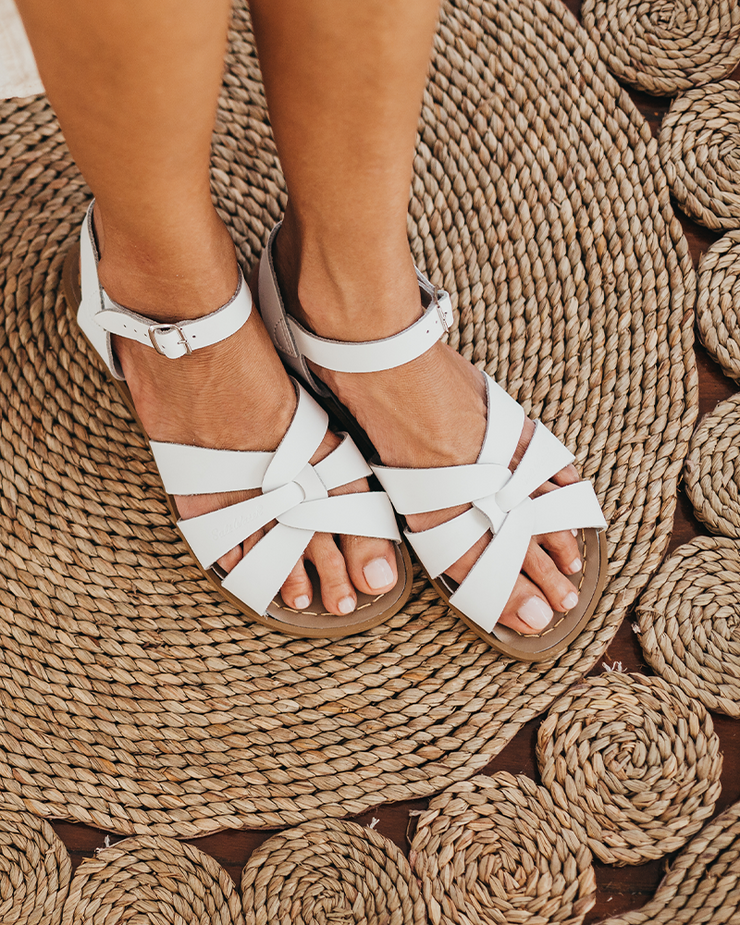
How do I clean white saltwater sandals?
Use mild soap, clean water, and a soft brush. Work in small areas and rinse well. Avoid bleach and abrasive cleaners, which can yellow the material or damage the finish.
Why do my sandals smell after I clean them?
They may still contain moisture inside the footbed, straps, or seams. Clean them again if needed, then allow more airflow and drying time. Do not store them in a closed bag until they are fully dry.
Can I wear saltwater sandals in a swimming pool?
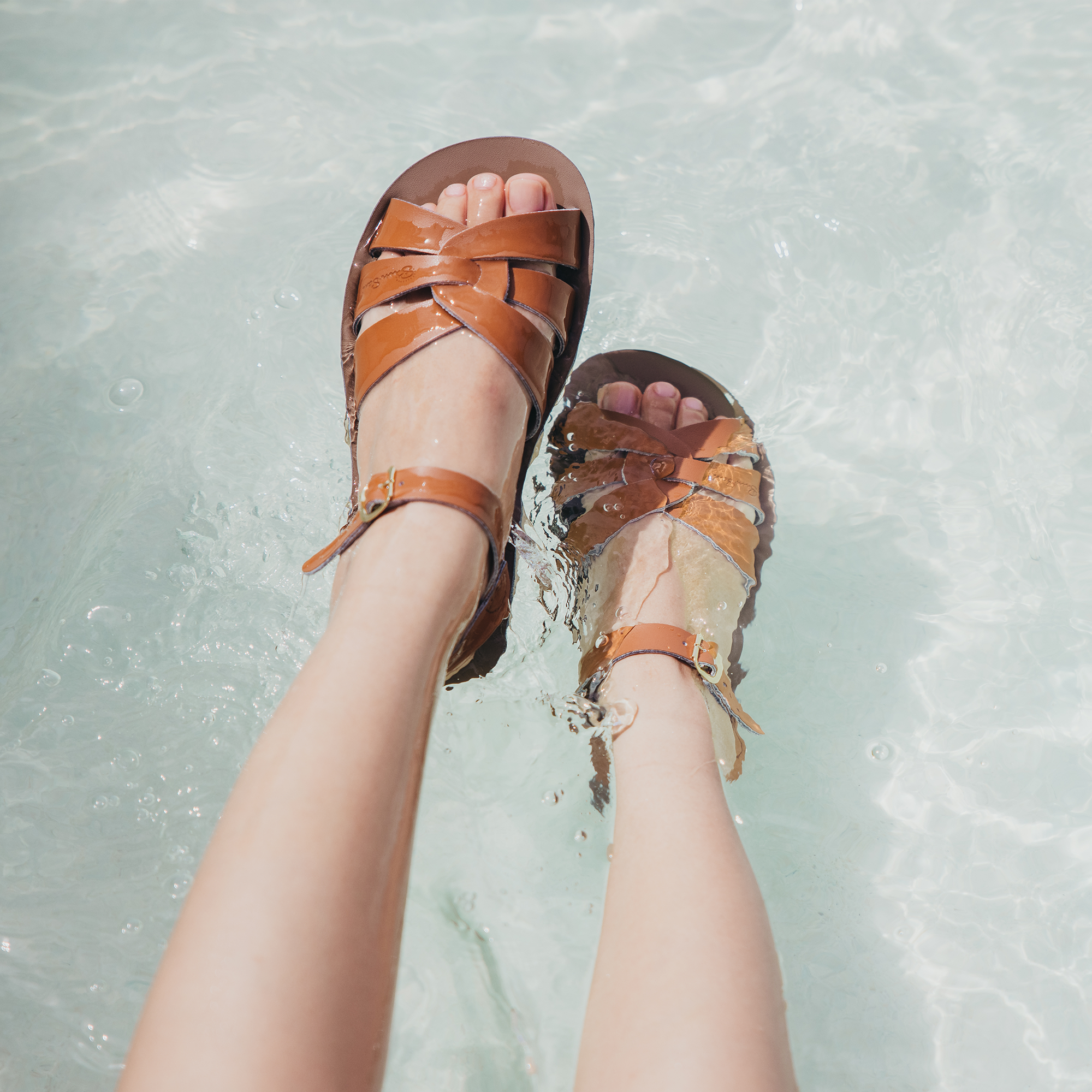
Some water sandals are designed for wet use, but pool chemicals can still affect leather, color, metal, and adhesives over time. Rinse the sandals with fresh water after swimming and check the manufacturer’s care instructions.
How do I clean sandals with suede or nubuck straps?
Do not use the regular soaking method. Brush the material with a suede brush when dry, then follow the care instructions for that specific sandal. Water and soap can leave permanent marks on suede or nubuck.
Final recommendation
The best way to clean saltwater sandals is to treat them gently and rinse them soon after exposure to salt, chlorine, sand, or sunscreen. Use mild soap only when needed, clean by hand, and let the sandals dry naturally in a shaded place. This simple routine removes residue without exposing the material to unnecessary heat or harsh chemicals.

Michael Smith is the Content Strategist behind The Style Hub, where fashion meets function. With a keen eye for trends and a passion for everyday style, he curates content that helps readers make smarter, more stylish choices—from the perfect pair of sneakers to must-have accessories. Michael specializes in breaking down fashion into practical, wearable insights, making style accessible for everyone. When he’s not researching the latest trends, he’s exploring how comfort, innovation, and timeless design come together in modern fashion.