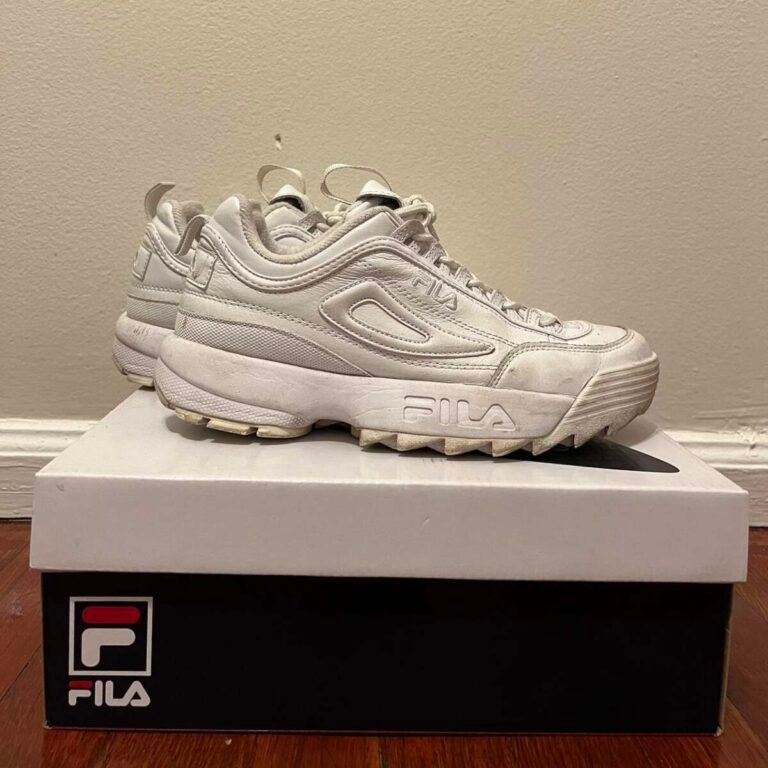
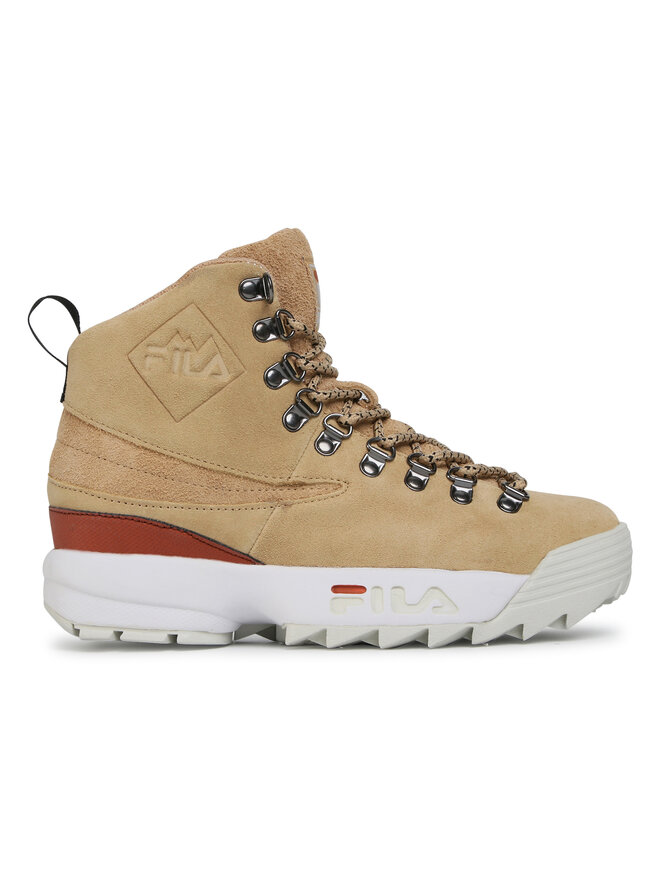
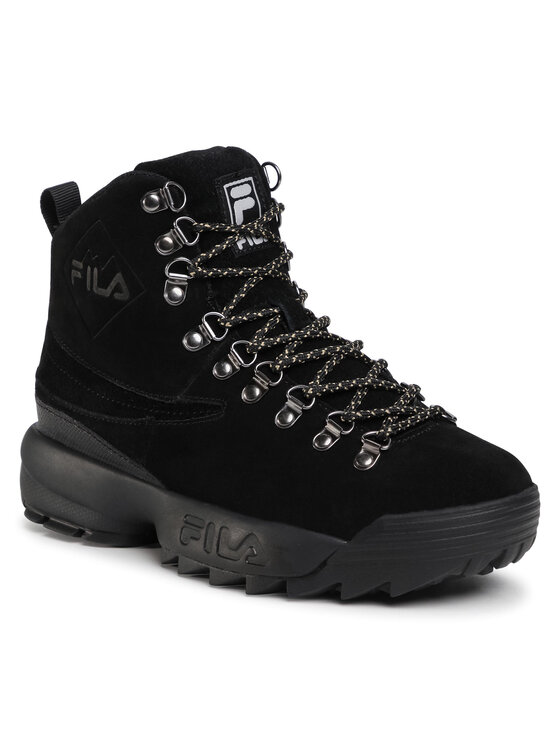
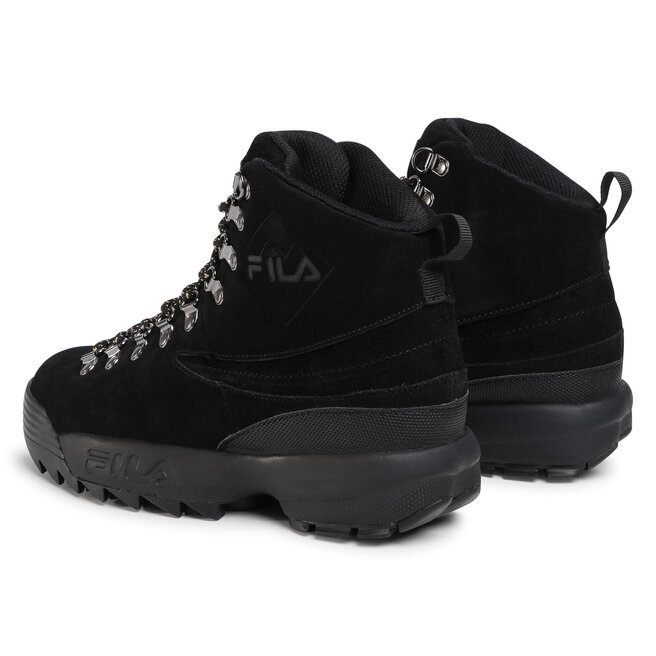
Fila Disruptors can work for a short, easy walk on a dry, paved, or well-kept U.S. trail. They are not a good choice for most real hikes, especially routes with rocks, mud, steep slopes, rain, or long miles.
The thick sole may look ready for the outdoors, but the Fila Disruptor is made as a casual fashion sneaker. It does not offer the grip, stability, water protection, or foot protection found in hiking shoes and trail runners.
For a safe trail choice, use Fila Disruptors only when the route is short, smooth, dry, and close to help. Choose trail shoes or hiking shoes for uneven ground, long walks, or changing weather.
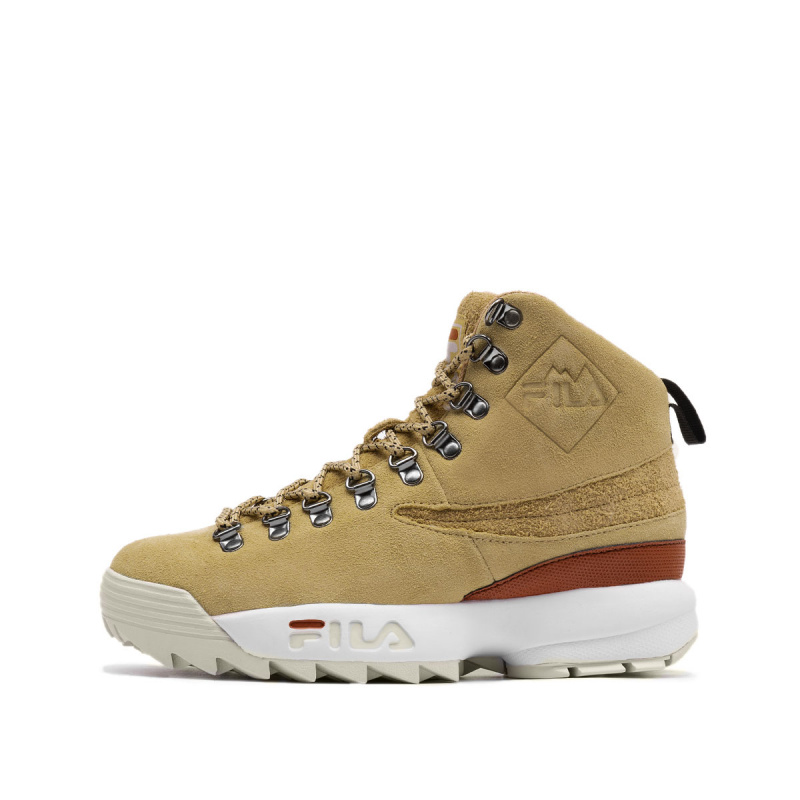
Why Fila Disruptors are not true hiking shoes
Fila Disruptors are casual sneakers, not hiking footwear. Their design focuses on street wear, a raised platform sole, and everyday comfort rather than trail control.
A hiking shoe must manage several problems at once:
- Loose dirt and gravel
- Roots and rocks
- Wet ground
- Side-to-side movement
- Repeated impact
- Heat and sweat
- Long periods of walking
- Uneven weight under each foot
The Disruptor may handle a flat path. Yet its thick, fashion-focused sole does not automatically provide better trail performance. A tall sole can also make your foot feel less stable when the ground tilts or shifts.
The exact materials and fit vary by model and production year. Many Disruptor versions use synthetic or leather-like uppers, a cushioned midsole, and a rubber outsole. Those parts may feel fine on pavement, but they do not prove that the shoe has trail-grade grip or support.
The main issue: looks are not the same as trail function
The chunky sole gives the shoe a rugged look. Hiking performance depends on details that are harder to see:
- The shape and depth of the tread
- Rubber grip on wet rock
- Flexibility through the forefoot
- Heel hold
- Sidewall support
- Protection over the toes
- Resistance to water and mud
- Breathability during long use
A shoe can look tough and still slide on wet leaves or twist on a rocky slope. That is the key difference between fashion styling and outdoor design.
When can you wear Fila Disruptors on a trail?
Fila Disruptors are most suitable for easy, low-risk walks. Think of a short park loop, a paved greenway, a firm dirt path, or a maintained urban trail in dry weather.
They may be reasonable when all or nearly all of these conditions apply:
- The route is short.
- The surface is flat and firm.
- The trail is dry.
- There is little loose gravel.
- You are not carrying a heavy pack.
- You know the route well.
- You can turn back quickly.
- You do not have a foot, ankle, or balance problem.
For example, a one-mile walk on a dry, packed trail in a U.S. city park is very different from a six-mile hike in the Colorado foothills. The first may be manageable in casual sneakers. The second calls for shoes with better traction, fit, and protection.
A simple route decision table
| Trail condition | Are Fila Disruptors a sensible choice? | Better option |
|---|---|---|
| Paved park path | Usually, for short walks | Walking shoes |
| Flat, dry, packed dirt | Maybe, if the sole grips well | Trail sneakers |
| Loose gravel | Usually no | Trail runners or hiking shoes |
| Mud or wet grass | No | Shoes with deeper lugs and water resistance |
| Rocky or root-filled trail | No | Hiking shoes or trail runners |
| Steep uphill or downhill route | No | Shoes with strong heel hold and traction |
| Snow, ice, or heavy rain | No | Weather-ready hiking footwear |
| Backpacking or long day hike | No | Proper hiking shoes or boots |
This table is a guide, not a guarantee. A worn outsole, poor fit, or weak balance can make even an easy path unsafe.

Fila Disruptors for hiking: the key performance factors
Traction
Traction is the biggest concern. Casual sneaker outsoles may grip well on clean pavement but perform poorly on wet leaves, loose soil, mud, or angled rock.
Look at the bottom of your pair before hiking. A suitable trail shoe usually has a visible tread pattern with separate lugs or channels. A smooth, shallow, or worn sole gives the ground fewer edges to catch.
Do not assume that a thick rubber sole has strong grip. Thickness and traction are different features.
Stability
Fila Disruptors have a raised platform shape. That design can feel stable on a flat floor, but stability on a trail depends on how well the shoe keeps your foot aligned when the ground is uneven.
A high or rigid sole can make an ankle roll more likely for some people. The risk rises when the foot lands on a rock, root, or sloped edge. People with weak ankles should be especially careful.
A hiking shoe should hold the heel firmly and limit unwanted sliding inside the shoe. If your heel lifts or your foot moves from side to side, the fit is not ready for a rough trail.
Cushioning
The Disruptor’s thick sole may feel soft and comfortable during short city walks. That cushioning can reduce the harsh feel of pavement.
More cushioning does not always mean better hiking comfort. On uneven ground, a soft or high platform can reduce your sense of the surface. It may also make it harder to place each foot with care.
Comfort depends on more than softness. A good hiking shoe must combine cushioning with fit, grip, and control.
Protection
A casual sneaker may leave the upper part of your foot exposed to rocks, sticks, and brush. Some Disruptor versions also have a low-cut collar and limited protection around the toe.
That may be fine on a clean path. It is less suitable when the trail has sharp stones or thick plants.
Hiking shoes do not need to be heavy boots. Many trail runners offer a lighter build with a reinforced toe area and a sole made for dirt and rock.
Weather resistance and breathability
Most casual sneakers are not designed to keep out rain, stream spray, or wet grass. Some may absorb water quickly through the upper and seams.
Wet shoes can cause rubbing and blisters. They can also become heavy and take a long time to dry.
Do not treat a coated upper as waterproof unless the product maker clearly states the shoe has a waterproof membrane or tested water-resistant construction. Even waterproof shoes can let water in over the collar or through the laces.

How to check whether your Fila Disruptors are safe for a short walk
If you plan to use them on an easy trail, inspect the shoes first. This quick check cannot turn casual sneakers into hiking shoes, but it can help you avoid an obvious problem.
1. Check the outsole
Look for:
- Deep wear under the heel or forefoot
- Smooth patches
- Cracks
- Loose rubber
- Uneven wear
- Dirt packed into the tread
Press the outsole against a clean, dry floor. It should not feel unusually slick. This test does not predict wet-rock grip, but a slippery indoor sole is a clear warning.
2. Test the fit
Wear the socks you plan to use. Lace the shoes snugly, then walk down a slope or ramp.
Your heel should stay in place. Your toes should not hit the front. The shoe should not squeeze your forefoot or allow your foot to slide inside.
Do not use a new pair for a long hike. Walk in them around your home and on short local walks first.
3. Check the route
Read the trail description from a reliable local source, such as a park agency or land manager. Check:
- Distance
- Elevation change
- Surface type
- Recent rain
- Stream crossings
- Cell service
- Exit points
- Heat or cold risks
A trail listed as “easy” can still have mud, loose stone, steep sections, or poor drainage after a storm.
4. Pack basic safety items
Even on a short U.S. trail, carry water, a phone, and a way to navigate. The National Park Service recommends planning for the route and carrying essential items suited to the trip.
For a longer or remote walk, add food, extra layers, a light source, first-aid supplies, and a way to signal for help. Shoes are only one part of trail safety.
5. Stop at the first warning sign
Turn back if you notice:
- Sliding
- An ankle that feels unstable
- Heel movement
- Hot spots
- Numb toes
- Pain in the arch, knee, or ankle
- Wet feet
- A loose sole
- A sudden change in weather
Pain is not a normal part of “breaking in” a shoe. Continuing can turn a small irritation into a blister or injury.

Fila Disruptors versus trail runners and hiking shoes
Trail runners are often the closest practical alternative for people who want a light shoe. They usually have a sole designed for dirt, better drainage, and a fit made for repeated movement over uneven ground.
Hiking shoes often add more structure and protection. They can feel less flexible than casual sneakers, but they may offer better support on rough terrain.
Traditional hiking boots provide more ankle coverage and protection, although ankle height alone does not prevent every sprain. Boots can also be heavier and warmer.
| Feature | Fila Disruptor | Trail runner | Hiking shoe |
|---|---|---|---|
| Main use | Casual daily wear | Fast or light trail travel | General hiking |
| Trail grip | Model-dependent and often limited | Usually stronger | Usually strong |
| Weight | Moderate, varies by model | Usually light | Moderate to heavy |
| Water protection | Usually limited | Varies | Often available |
| Toe protection | Limited to moderate | Often reinforced | Usually stronger |
| Long-trail control | Limited | Good for many users | Good for rougher routes |
| Style for daily wear | Strong | Moderate | Limited |
The right choice depends on terrain, distance, weather, pack weight, and your foot. A light trail runner can be better than a heavy boot on a dry, smooth trail. A hiking shoe may be better when the route is rocky or carries a pack.
Common mistakes when hiking in Fila Disruptors
Mistake 1: Choosing them because the sole looks thick
A thick sole can add height and cushioning. It does not confirm good grip or stability.
Check the tread and the shoe’s intended use instead.
Mistake 2: Ignoring the downhill section
Downhill walking pushes the toes forward and places more demand on heel control. A shoe that feels fine on level ground may cause toe impact or sliding on a descent.
Test the fit on a slope before taking the shoes onto a steep trail.
Mistake 3: Wearing cotton socks in wet weather
Cotton holds moisture next to the skin. That can increase rubbing and blisters.
For longer walks, moisture-managing hiking socks are often a better choice. The sock must also fit the shoe without making it too tight.
Mistake 4: Using old sneakers with worn tread
Outsole wear can be hard to see from above. Turn the shoe over and compare the heel and forefoot. If the tread is smooth or uneven, replace the shoe for outdoor use.
Mistake 5: Confusing water resistance with waterproofing
A shoe may shed a small amount of water and still become soaked in rain or wet grass. Read the product details for the exact Fila model.
Mistake 6: Testing them far from help
Do not make a new or uncertain shoe your choice for a remote hike. Start with a short route near home. This gives you a safe way to find fit and comfort problems.

Are Fila Disruptors good for hiking in different U.S. conditions?
The answer changes with the region and season.
In the Southwest, heat and sharp rock can place more demand on breathability and toe protection. In the Pacific Northwest, wet roots, mud, and rain make outsole grip and water management more important. In the Northeast, roots, rocks, and changing ground can challenge side-to-side stability.
In the South, humidity and wet trails can increase rubbing. In the Mountain West, elevation, cold, and sudden storms can make a casual sneaker a poor safety choice even when the trail begins dry.
A short walk on a maintained trail near a U.S. city is a low-demand use. A remote hike in a national forest or national park is a higher-demand use. The farther you are from a road or help, the less sense it makes to accept uncertain footwear.
A practical risk rule
Use this simple rule:
- Low risk: Fila Disruptors may work.
- Moderate risk: Choose trail shoes.
- High risk: Use footwear made for the terrain and weather.
Risk increases with distance, slope, rain, loose ground, cold, heat, pack weight, and distance from help. If several of those factors are present, casual sneakers are not a wise choice.
How to make a better footwear choice
Start with the trail, not the shoe. Write down the route length, surface, slope, weather, and pack weight.
Then match the footwear:
- Paved or smooth paths: Walking shoes or comfortable sneakers
- Dry dirt trails: Trail sneakers or trail runners
- Rocky routes: Hiking shoes with firm grip and toe protection
- Wet routes: Shoes with strong wet traction and suitable water management
- Cold or snowy routes: Insulated or weather-ready footwear made for those conditions
- Long hikes: Footwear that has been tested on shorter walks first
Fit matters as much as the label. Try shoes on late in the day, when feet are often slightly larger. Wear your hiking socks. Leave enough room for your toes, but do not allow your heel to move.
If you have diabetes, reduced foot sensation, a history of falls, or ongoing foot and ankle pain, ask a qualified health professional or podiatrist for personal footwear advice. General shoe guidance cannot account for every medical need.

Key takeaways
- Fila Disruptors are casual sneakers, not hiking shoes.
- They may work for short, flat, dry, maintained paths.
- Their thick sole does not guarantee trail traction or stability.
- Avoid them for mud, wet rock, steep slopes, rough terrain, snow, or long hikes.
- Check tread wear, heel hold, toe room, and comfort before any walk.
- Trail runners and hiking shoes are safer choices for most real hikes.
- Test any shoe close to home before using it far from help.
FAQs
Can I wear Fila Disruptors on a nature trail?
Yes, if the trail is short, flat, dry, and well maintained. Avoid them when the route has loose rock, mud, steep slopes, or wet roots.
Are Fila Disruptors waterproof?
Do not assume they are waterproof. Water protection varies by model, and many casual versions are not built for sustained rain or wet trails. Check the exact product information for your pair.
Are Fila Disruptors comfortable for long walks?
They may feel comfortable for daily walking, but long-trail comfort depends on fit, heat, foot movement, and terrain. A shoe that feels good on pavement may not control the foot well on uneven ground.
Can Fila Disruptors cause ankle problems while hiking?
Any shoe with a poor fit, weak grip, or unstable platform can increase the chance of a slip or ankle roll. The risk depends on the person, terrain, and shoe condition. People with past ankle injuries should use extra caution.
What is better than Fila Disruptors for hiking?
Trail runners are a good light option for many dry trails. Hiking shoes offer more structure and protection for rocky or uneven routes. Choose based on terrain, distance, weather, and pack weight.
Conclusion
Fila Disruptors are good for casual walks, not demanding hikes. Their style and cushioning may suit a paved greenway or easy park path, but they lack the dependable trail features needed for rough, wet, steep, or remote routes.
If you are unsure, choose a trail runner or hiking shoe and test it on a short local walk first. Good hiking footwear should help you stay sure-footed, dry, and comfortable—not simply look rugged.
Sources and scope
This guide is based on general footwear principles and documented outdoor safety guidance. Fila Disruptor materials and outsole details can vary by model, market, and production year, so check the product page or label for your exact pair.
- National Park Service: Ten Essentials
- National Park Service: Hiking Safety
- REI Expert Advice: Hiking Footwear Guide
- Fila U.S.

Michael Smith is the Content Strategist behind The Style Hub, where fashion meets function. With a keen eye for trends and a passion for everyday style, he curates content that helps readers make smarter, more stylish choices—from the perfect pair of sneakers to must-have accessories. Michael specializes in breaking down fashion into practical, wearable insights, making style accessible for everyone. When he’s not researching the latest trends, he’s exploring how comfort, innovation, and timeless design come together in modern fashion.