Most light scuffs on leather shoes can be removed at home with a soft cloth, mild soap, leather conditioner, and matching shoe cream or polish. Start with the gentlest method. Clean the area, test a hidden spot, rub the mark lightly, and add color only if the scuff has removed the finish.
This guide is written for people caring for leather shoes in the United States, where shoes may face road salt, winter moisture, sidewalk grime, dry indoor heat, and frequent daily wear. The right method depends on the leather type and how deep the scuff is.

First, Identify the Leather
The leather type determines what you can safely use. A product that works on smooth leather may permanently damage suede, nubuck, or patent leather.
| Shoe material | How it looks or feels | Safe starting method |
|---|---|---|
| Smooth or finished leather | Even surface with a slight sheen | Soft cloth, mild soap, conditioner, and cream polish |
| Aniline leather | Soft, natural surface with visible grain | Dry cloth and a leather product labeled for aniline leather |
| Suede | Soft, raised, fuzzy nap | Suede brush or suede eraser |
| Nubuck | Fine, short nap with a velvety feel | Nubuck brush or nubuck eraser |
| Patent leather | Very shiny, smooth coating | Damp cloth and patent-leather cleaner |
| Faux leather or polyurethane | Plastic-like, coated surface | Damp cloth and mild soap |
If you are unsure, check the shoe box, care label, or brand website. Do not use shoe polish on suede or nubuck. Oil-based products can flatten the nap, darken the material, or leave a greasy patch.
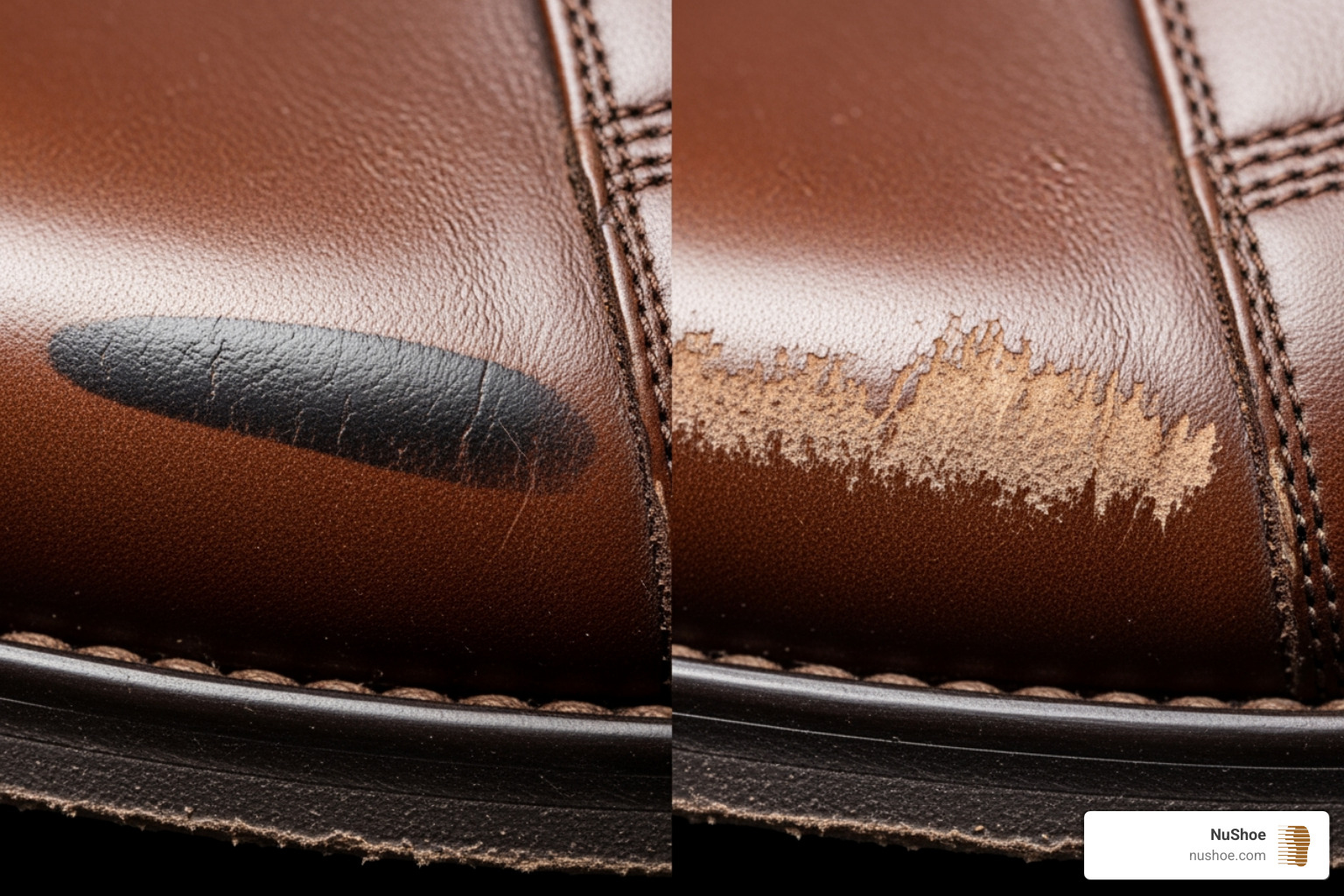
A scuff is often a surface mark caused by contact with another object. It may transfer color onto the shoe without cutting the leather. A scratch is deeper and may break the finish or expose the layer beneath it.
What You Need
Gather the following items before you begin:
- A clean, soft cotton or microfiber cloth
- A soft horsehair shoe brush, if available
- Lukewarm water
- A small amount of mild soap or leather cleaner
- Leather conditioner
- Shoe cream or wax polish in a close color
- A clean, dry cloth for buffing
- An old towel or sheet of paper to protect your work area
For suede or nubuck, use:
- A suede or nubuck brush
- A suede eraser, if needed
- A suede-safe protector after cleaning
Avoid household items such as nail polish remover, rubbing alcohol, bleach, acetone, glass cleaner, and strong degreasers. These products can strip dye, dissolve a finish, or dry the leather.
You do not need expensive tools for a light scuff. The most useful rule is simple: use a product made for the shoe’s material, and use less product than you think you need.

How to Get Scuffs Out of Smooth Leather Shoes
Follow these steps for finished smooth leather, such as common dress shoes, loafers, boots, and leather sneakers.
1. Remove loose dirt
Take out the laces, if possible. Brush or wipe away dust and grit with a dry cloth. Dirt left on the surface can act like fine sandpaper when you rub the scuff.
If the shoe is wet, let it dry at room temperature first. Keep it away from a heater, hair dryer, fireplace, or direct high heat. Fast drying can make leather stiff and may cause cracking.
2. Test the product
Apply a small amount of cleaner or conditioner to a hidden area, such as the inside edge near the heel. Wait until it dries.
Check for:
- A darker patch
- A change in shine
- Color transfer
- Sticky or rough texture
- A ring or water mark
If the test area changes in a way you do not want, stop and use a product made specifically for that leather.
3. Clean the scuff gently
Mix a few drops of mild soap into lukewarm water. Dampen—not soak—a soft cloth. Wring it out well, then wipe the scuffed area with small, light motions.
Do not scrub hard. Several gentle passes are safer than one forceful pass. Wipe away soap with another barely damp cloth, then let the shoe dry naturally.
For a small rubber or paint mark, gentle rubbing with a clean, damp cloth may be enough. Do not use a rough sponge or abrasive cleaner.
4. Apply leather conditioner
Once the leather is dry, apply a small amount of conditioner to a cloth. Work it over the area and then across the rest of the shoe so the color and sheen remain even.
Conditioner can soften a dry finish and reduce the contrast around a light scuff. It cannot rebuild leather that has been cut or peeled.
Too much conditioner may leave the shoe greasy or dark. Start with an amount about the size of a small pea for one shoe, unless the product label says otherwise.
5. Restore color with shoe cream
If the scuff has removed some color, choose a cream polish that closely matches the shoe. Neutral cream can add mild shine but will not replace missing pigment.
Use a thin layer. Let it sit according to the product directions, then buff with a clean cloth or soft brush. Add another thin layer only if the color still looks uneven.
Cream polish is usually better for color repair than hard wax. Wax can add shine and protection, but it may sit on top of a damaged area instead of blending with it.
6. Buff the shoe
Buff lightly until the surface looks even. Use a separate part of the cloth for the final pass.
A successful repair should leave the scuff less visible, not create a larger shiny or dark patch. If the mark remains but the leather looks healthy, stop. Repeated rubbing can cause more harm than the original scuff.

How to Remove Scuffs From Suede and Nubuck
Suede and nubuck need a dry method because water, oils, and regular shoe polish can damage their raised surface.
- Let the shoe dry fully if it is damp.
- Brush the scuffed area in one direction with a suede or nubuck brush.
- If the mark remains, rub it gently with a suede eraser.
- Brush again to restore the nap.
- Apply a suede-safe protector after the surface is clean and dry.
Use short, light strokes. Do not press hard enough to create a bald spot.
A scuff on suede may look like a dark smear, a flattened patch, or a change in the direction of the nap. Brushing can correct the texture even when it cannot remove a dye transfer.
If the suede has an oil stain, deep discoloration, or a shiny worn patch, home treatment may not fully restore it. A professional cleaner who handles suede is safer than experimenting with water or household solvents.

How to Treat Patent Leather, White Leather, and Faux Leather
Different finishes need different care. Use the method that matches the shoe.
Patent leather
Wipe patent leather with a soft, damp cloth. For a stubborn mark, use a cleaner labeled for patent leather. Dry it with a clean cloth.
Do not use regular leather conditioner or abrasive polish. These products may cloud the glossy coating.
White leather
Clean white leather with a leather-safe cleaner and a soft cloth. Use a white or neutral leather cream to blend small areas where the finish looks thin.
Avoid colored polish unless it matches exactly. A cream that is slightly off-white can leave a visible patch.
Faux leather
Faux leather often has a plastic or polyurethane coating. Wipe it with a damp cloth and a small amount of mild soap. Dry it right away.
Do not treat faux leather like absorbent hide leather. Heavy oils and conditioners may leave a sticky film and will not soak in as intended.

How to Tell Whether a Scuff Can Be Fixed at Home
The depth of the damage matters more than the size of the mark.
| What you see | Likely issue | Best next step |
|---|---|---|
| A light gray or dark streak | Surface transfer | Wipe gently, then condition |
| A dull patch | Finish or shine has changed | Clean, condition, and buff |
| A lighter area with no cut | Color loss | Use matching cream polish |
| A visible cut or groove | Leather surface is damaged | Use a leather repair professional |
| Peeling or flaking | Coating failure or bonded material damage | Repair or replacement may be needed |
| Exposed lighter-colored layer | Deep abrasion | Do not keep rubbing; seek repair advice |
| Cracked leather | Dryness or age-related damage | Condition if minor; professional repair if open |
A useful test is to run a clean fingertip over the area. If the surface feels smooth and the mark changes with gentle cleaning, it may be superficial. If your finger catches on a cut, split, or raised edge, cleaning alone will not repair it.
Deep damage often needs filler, dye, refinishing, or replacement of the affected leather panel. A shoe repair shop may be able to blend the color better than a home kit.

Common Mistakes That Make Scuffs Worse
The most common mistake is treating every shoe as if it were smooth leather. Suede, nubuck, patent leather, and faux leather have different finishes and different limits.
Avoid these errors:
- Scrubbing with a rough sponge
- Applying large amounts of water
- Using acetone or nail polish remover
- Holding the shoe near a heater to dry it
- Applying black polish to hide a mark on brown leather
- Using leather oil on suede or nubuck
- Polishing before removing grit
- Rubbing one small spot until it becomes shinier than the rest
- Mixing several cleaners without testing them
- Ignoring the manufacturer’s care instructions
Do not use a magic eraser on finished leather unless the manufacturer specifically approves it. Its abrasive action can remove the finish along with the scuff.
Do not use toothpaste, baking soda paste, or household cream cleaners as a default treatment. These methods are popular online, but they can leave residue or abrade the surface. A leather-safe product gives you better control.

What to Do If the Scuff Does Not Come Out
Stop after two or three gentle cleaning attempts if the mark is not improving. More pressure will not bring back leather color that has been removed.
If the leather looks dry but intact, apply a small amount of conditioner and let it absorb. If the color is missing, try a matching cream polish on a hidden area first.
Take the shoe to a professional repair shop when:
- The leather is cut, split, or peeling
- The mark covers a large area
- The shoe is expensive, vintage, or difficult to replace
- The color is unusual or has a strong finish
- The damage is on suede or nubuck and brushing does not help
- You already used a harsh product and the surface has changed
A professional may use leather filler, dye, refinishing products, or controlled heat. These treatments require skill because a poor color match or heavy coating can make the repair more visible.

How to Prevent Future Scuffs
Prevention is easier than repair. Store leather shoes with enough space that they do not rub against hard objects. Use shoe trees made for the shoe shape to help maintain the form while the leather rests.
Clean dirt from shoes after wear, especially in winter. Road salt and de-icing residue can dry or stain leather. Wipe salt marks away with a slightly damp cloth, then let the shoes dry naturally and condition them when needed.
Apply a suitable protector before regular wear, but confirm that it is safe for the material. Suede protector, smooth-leather protector, and patent-leather care products are not interchangeable.
Rotate frequently worn shoes when possible. Giving leather time to dry between wears can reduce odor, moisture buildup, and premature wear.

Key Takeaways
- Identify the shoe material before using any cleaner.
- For smooth leather, start with a dry wipe, then use mild cleaner and light pressure.
- Use cream polish only after cleaning if the scuff removed color.
- Treat suede and nubuck with a brush or eraser, not regular polish.
- Avoid acetone, bleach, alcohol, abrasive cleaners, and high heat.
- Stop rubbing when the mark does not improve.
- Use a professional repair shop for cuts, peeling, deep scratches, and valuable shoes.
Frequently Asked Questions
Can toothpaste remove scuffs from leather shoes?
Toothpaste is not a reliable leather cleaner. Some types contain mild abrasives that may dull or remove the finish. Use a leather-safe cleaner instead.
Can I use rubbing alcohol on leather shoes?
It is best to avoid rubbing alcohol. It can strip color, dry the leather, and create a lighter patch. If a specific manufacturer approves it for a particular finish, follow that product guidance.
Will olive oil remove a scuff from leather?
Olive oil may darken leather and can leave a greasy residue. It does not restore missing color and may attract dirt. Use a leather conditioner made for the shoe material.
How do I remove black scuff marks from white leather shoes?
First wipe the mark with a soft, damp cloth and a small amount of leather-safe cleaner. Test the cleaner first. If the mark remains and the finish is intact, use a white leather cream. Do not scrub aggressively.
Can shoe polish hide a deep scratch?
Polish can reduce the appearance of light color loss, but it cannot fill a deep scratch or rebuild missing leather. Deep scratches may need filler, dye, or professional refinishing.
How often should I condition leather shoes?
Condition when the leather looks dry or feels less flexible, rather than on a fixed schedule. Frequent conditioning can soften leather too much and may darken it. Always follow the product instructions.
Conclusion
To get scuffs out of leather shoes, begin with the least aggressive method: remove dirt, test a leather-safe cleaner, wipe gently, condition the surface, and use matching cream polish only when color needs repair. For suede, nubuck, patent leather, and faux leather, use products made for that specific finish.
If the shoe is cut, peeling, or valuable, stop home treatment and ask a qualified shoe repair professional to assess it. The best repair is the one that removes the mark without creating a larger problem.

Michael Smith is the Content Strategist behind The Style Hub, where fashion meets function. With a keen eye for trends and a passion for everyday style, he curates content that helps readers make smarter, more stylish choices—from the perfect pair of sneakers to must-have accessories. Michael specializes in breaking down fashion into practical, wearable insights, making style accessible for everyone. When he’s not researching the latest trends, he’s exploring how comfort, innovation, and timeless design come together in modern fashion.