Salt-Water sandals can be good for many children for short walks, play, and water use, but they are not the best choice for every child or every activity. Their secure straps, firm sole, and adjustable fit can help keep the foot in place. However, they usually offer limited arch support and cushioning. They may also cause rubbing if the size or strap setting is wrong.
For healthy feet, the key question is not only whether the sandal is a Salt-Water sandal. It is whether the pair fits well, stays secure, bends in the right place, and suits the child’s activity. A child with foot pain, a known foot condition, or a need for custom support may need advice from a pediatrician or podiatrist.
What are Salt-Water sandals?
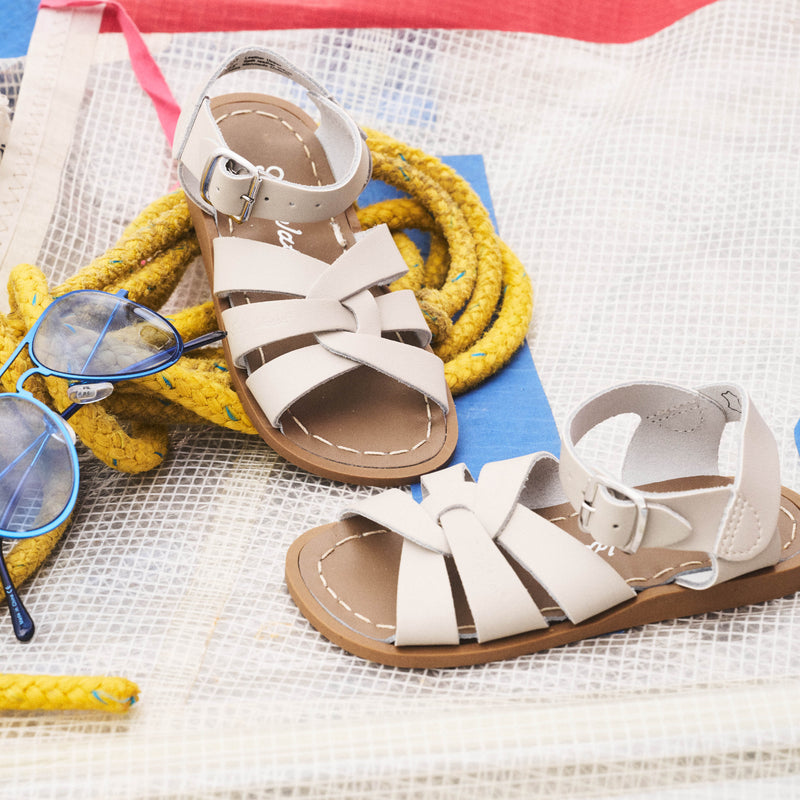
Salt-Water sandals are open-toe leather sandals with straps, a rubber sole, and an adjustable buckle. The original Salt-Water sandals were designed as water-friendly sandals. The brand states that many of its sandals can be worn in water, although care needs vary by style and material.
The name can mean two things:
- Salt-Water, the specific sandal brand
- Saltwater sandals, a general phrase people may use for water-friendly children’s sandals
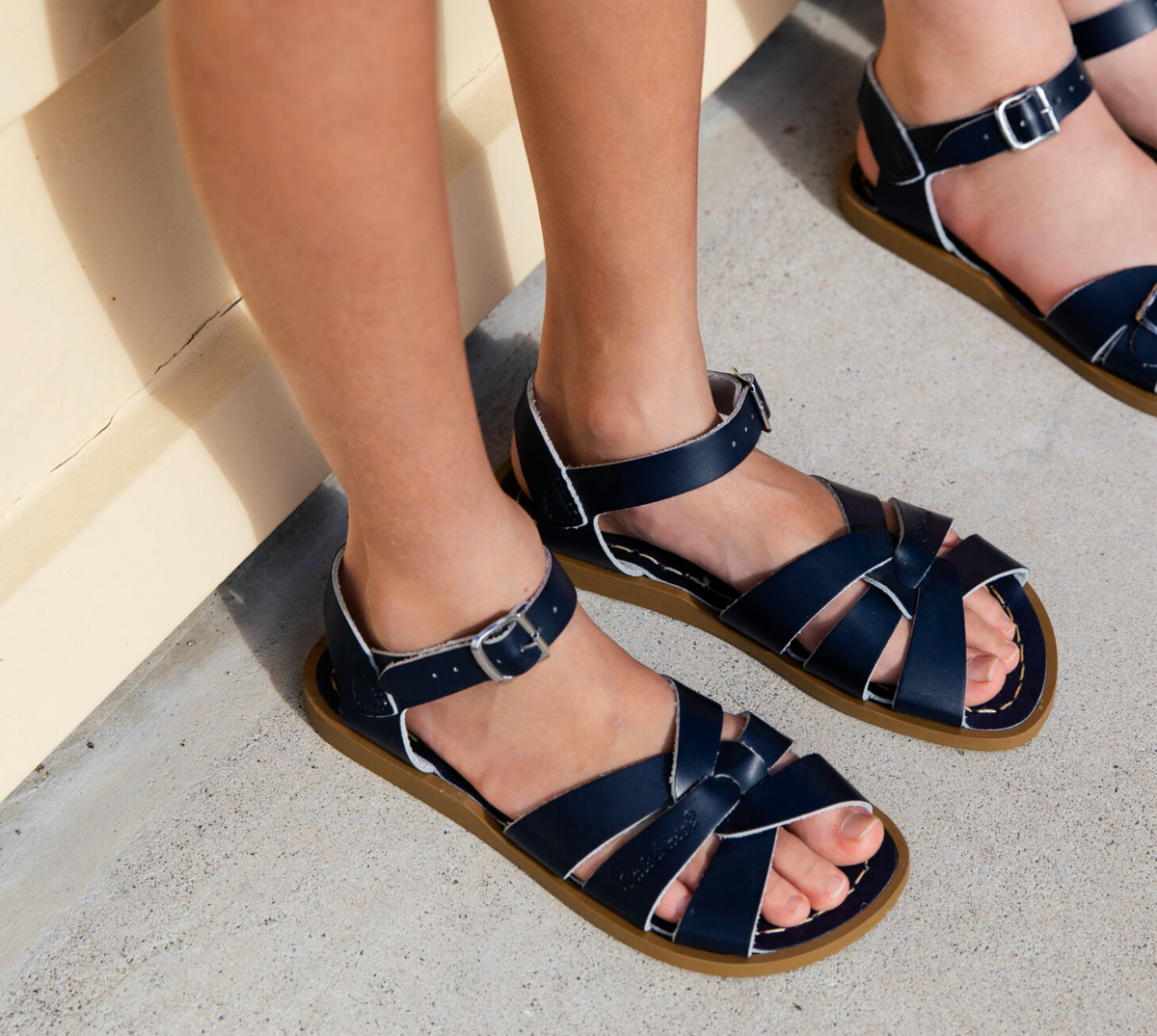
Most children’s Salt-Water styles have a flat sole and several straps. Some have a closed heel, while others have an open heel or a back strap. These details affect how well the sandal stays on during walking, running, and play.
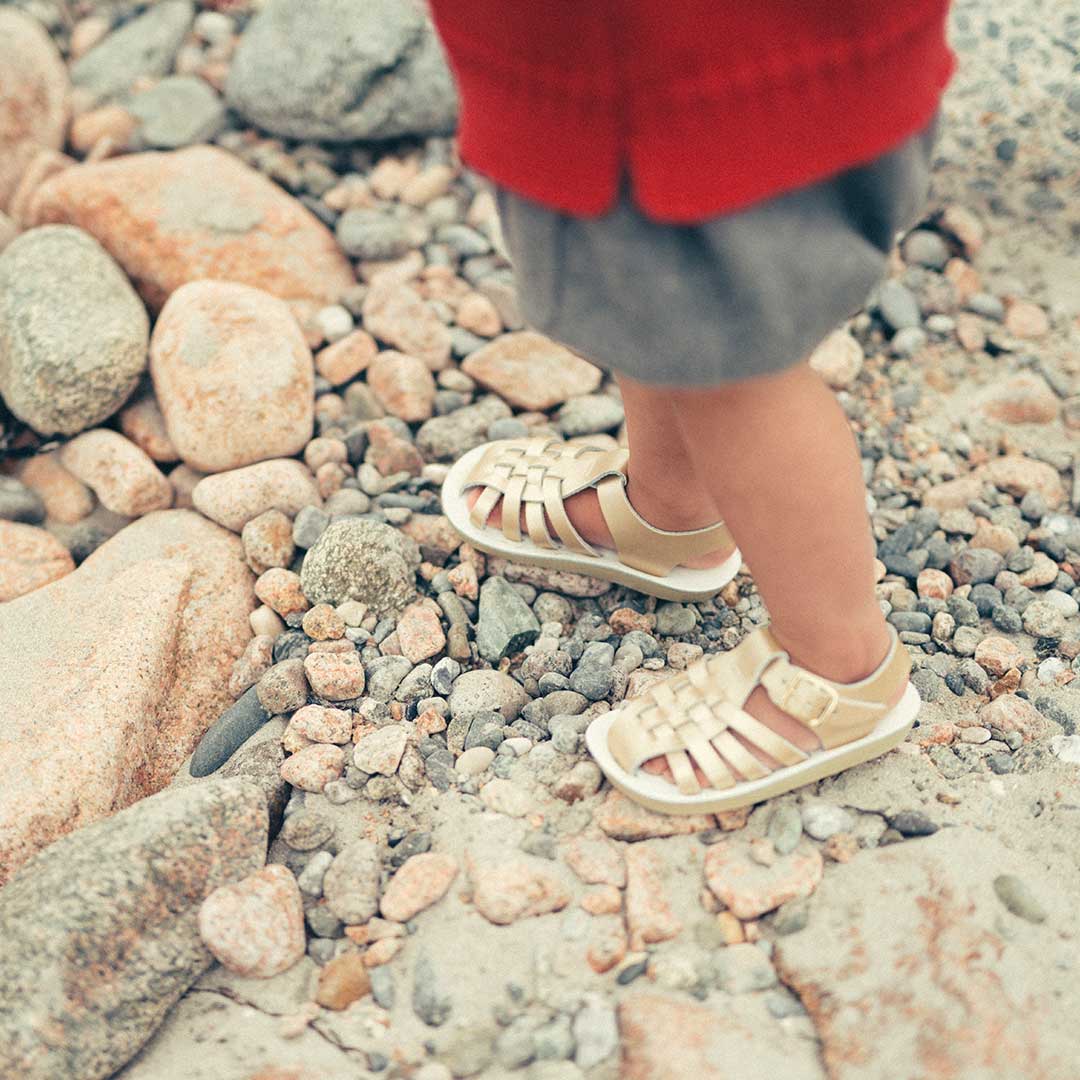
A water-friendly sandal is not the same as a swim shoe. Salt-Water sandals may work for light water play, beach walks, or trips to a splash pad. They may not protect the feet from sharp rocks, hot sand, broken shells, or rough pool surfaces as well as a purpose-made water shoe.
Are Saltwater sandals healthy for children’s feet?
For most children with healthy feet, Salt-Water sandals are generally reasonable for casual wear when they fit correctly. They can be a useful warm-weather option, but they should not be treated as a medical shoe.
The American Academy of Pediatrics advises parents to look for children’s shoes that are comfortable, flexible, lightweight, and roomy enough for the toes. The American Podiatric Medical Association also stresses proper fit and comfort when choosing children’s shoes. These points matter more than the brand name.
Potential benefits
Salt-Water sandals may offer several practical benefits:
- Adjustable straps: Buckles allow parents to change the fit as the child’s foot grows or swells slightly during the day.
- A secure sole: A rubber outsole can provide useful traction on many dry surfaces.
- A flexible design: Many styles bend more easily than stiff dress shoes or molded clogs.
- Open construction: Air can reach the foot, which may feel more comfortable in hot US summers.
- Easy cleaning: Many styles can handle some water exposure, though they still need to dry properly.
- A flat platform: A low, flat sole can feel stable for ordinary walking.
Possible limits
They also have limits:
- They may provide little arch support.
- The leather can become stiff, stained, or misshapen if it stays wet.
- Straps may rub the toes, top of the foot, or heel.
- An open design may not protect the foot from sharp objects.
- A flat sole may not suit a child who needs prescribed support.
- They may not provide enough cushioning for long walks on hard pavement.
- Loose straps can make the sandal slide, while tight straps can restrict movement.
There is no strong clinical evidence showing that Salt-Water sandals are better for foot development than other well-fitting children’s sandals. The safer conclusion is narrower: they may be suitable when the child’s feet are healthy, the fit is good, and the activity is appropriate.

How should Saltwater sandals fit?
A correct fit is the most important factor. A sandal that looks attractive but slips, pinches, or forces the toes to grip is not a good choice.
Use this fit check:
- Check the toe room. The longest toe should not touch the front edge. Leave a small amount of space for growth, but avoid a large gap that lets the foot slide forward.
- Check the width. The foot should not spill over the sides. The straps should not leave deep red marks.
- Check the heel. The heel should stay within the rear part of the sandal during normal walking.
- Check the straps. They should hold the foot in place without pressing hard on the skin.
- Check the sole. The sole should bend near the ball of the foot, not fold in the middle.
- Watch the child walk. Look for slipping, toe gripping, limping, or repeated tripping.
Try sandals on near the end of the day. Feet can swell slightly after hours of activity. Have the child wear the socks, if any, that they will normally use with the sandals.
Signs that the sandals fit poorly
Replace or adjust the sandals if you notice:
- Blisters or broken skin
- Red marks that remain after the sandals come off
- The heel lifting with each step
- Toes hanging over the front
- Toes curling or gripping the sole
- Complaints of burning, numbness, or pain
- New limping or reluctance to walk
- Frequent tripping that began after wearing the sandals
Children may not describe a fit problem clearly. A child may simply say, “My feet hurt,” or may ask to take the sandals off often. Check the feet after the first few wears.
Do Saltwater sandals provide enough support?
For normal play and short walks, many children do not need special arch support. Children’s feet naturally change as they grow, and a flat shoe is not automatically harmful.
Still, support means more than an arch bump. A supportive sandal should hold the foot securely, have a sole that does not twist too easily, and allow normal movement. A sandal can feel stable without having a raised arch.
Salt-Water sandals may not provide enough support for children who:
- Have pain during or after walking
- Wear orthotics or special inserts
- Have a diagnosed foot or ankle condition
- Have major differences between the two feet
- Frequently roll an ankle
- Tire quickly or limp while walking
- Need extra cushioning for a medical reason
Do not add an over-the-counter arch insert simply because the sandal feels flat. An insert can reduce the available space and change the fit. If a child already uses orthotics, ask the treating clinician whether the sandal can accommodate them.
When are Saltwater sandals a good choice?
Salt-Water sandals are often a practical choice for light, everyday summer use. They may work well for:
- Short neighborhood walks
- Casual family outings
- Dry playground visits
- Vacation sightseeing with frequent breaks
- Light beach use on smooth surfaces
- Splash-pad visits when the sandal is secure
- Warm-weather casual clothing
The best use depends on the child and the setting. A secure closed-heel style may be better for active toddlers than a loose slip-on design. An adjustable sandal may be useful for a child with a wider foot, but only if the straps do not press on the foot.
When another shoe is better
Choose a different shoe for activities that require more protection or support.
| Activity | Better option |
|---|---|
| Long walks on pavement | A well-fitting closed-toe walking shoe |
| Hiking or uneven trails | A closed-toe hiking or trail shoe |
| Sharp rocks or rough shorelines | A purpose-made water shoe |
| Biking or wheeled sports | Closed-toe athletic shoes |
| Running games | Lightweight athletic shoes |
| Wet indoor pool decks | A secure, non-slip water shoe |
| School days with heavy activity | A supportive everyday sneaker |
Sandals also may not be ideal for daycare or school if the rules require closed-toe shoes. Check the school or camp policy before buying several pairs.
Are Saltwater sandals good for toddlers?
They can be, but toddlers need a particularly secure fit. Young children take short, uneven steps and may trip more easily in loose sandals.
For a toddler, look for:
- A firm heel or secure back strap
- A wide, comfortable toe area
- A sole that bends at the front
- A strap that cannot easily open during play
- A sole with useful traction
- Little or no heel height
- A light design that does not tire the child
Avoid oversized sandals bought with the hope that the child will “grow into them.” Extra length can cause sliding and tripping. Oversizing is especially risky for toddlers who are still developing balance.
Let the child walk indoors on a safe surface before using the sandals outside. Watch for slipping, toe gripping, or a change in walking pattern.

How do you break in Saltwater sandals safely?
Do not assume that a child must endure painful rubbing while the sandals soften. A short adjustment period is reasonable, but pain and blisters are signs to stop.
Use this gradual approach:
- Have the child wear the sandals indoors for 15 to 30 minutes.
- Check the skin after removing them.
- Adjust the straps if they leave pressure marks or allow sliding.
- Increase wear time only if the child remains comfortable.
- Avoid a full-day outing for the first wear.
- Stop if blisters, swelling, numbness, or pain develop.
Some parents use socks during the first few wears to reduce friction. That may help with rubbing, but it can also make the sandal tighter. Recheck the fit with the socks on.
Keep wet sandals away from prolonged heat, such as a car dashboard or radiator. Excess heat can affect leather, adhesives, and the shape of the sandal. Follow the care directions for the exact style.
Can children wear Saltwater sandals in water?
Many Salt-Water styles are designed to tolerate water, but “water-friendly” does not mean maintenance-free or suitable for every water setting.
Before water use:
- Check the care instructions for the exact model.
- Make sure all straps are adjusted securely.
- Test the sandal on a safe, smooth surface.
- Avoid deep water where a sandal could come off.
- Watch for slippery soles on wet floors.
- Rinse away sand and salt after beach use.
- Let the sandals dry naturally in a ventilated place.
Do not rely on ordinary sandals for protection from sharp rocks, sea urchins, hot surfaces, or broken glass. A water shoe may be safer for those conditions.
Wet leather may also rub more than dry leather. Check the child’s skin after water play, especially around the heel and between the toes.
What are the most common mistakes parents make?
The most common mistake is choosing a size by age alone. Children of the same age can have very different foot lengths and widths. Measure both feet and use the manufacturer’s size chart as a starting point.
Other mistakes include:
- Buying a large size for several seasons of growth
- Ignoring the child’s complaint that the sandal hurts
- Tightening straps to compensate for an oversized sandal
- Using sandals for running, hiking, or sports
- Assuming a flat sandal must have good support
- Wearing new sandals all day on the first outing
- Failing to inspect the sole for wear
- Continuing use after a blister or open sore develops
- Putting a foot insert into a sandal without checking the fit
- Leaving wet leather in direct, intense heat
A worn sole can lose traction even if the upper still looks fine. Replace the sandals when the tread is smooth, the sole has split, the straps no longer hold the foot, or the child’s toes or heel extend beyond the sandal.
When should a child see a health professional?
A clinician should assess persistent or significant symptoms. Contact the child’s pediatrician or a podiatrist if the child has:
- Ongoing foot, ankle, knee, or leg pain
- Swelling or repeated skin breakdown
- Limping
- Frequent falls that do not improve with a better fit
- Numbness or unusual weakness
- A noticeable change in walking
- A known foot or bone condition
- A need for braces or orthotics
A shoe cannot correct every walking or foot problem. If a child needs medical support, the right footwear depends on the diagnosis, gait, and treatment plan.

Saltwater sandals versus other children’s footwear
Salt-Water sandals are best viewed as one seasonal option, not a replacement for every type of shoe.
| Footwear type | Main strength | Main limitation |
|---|---|---|
| Salt-Water-style sandal | Open, adjustable, casual, water-friendly in many styles | Limited protection and cushioning |
| Athletic sneaker | Cushioning, protection, and secure fit | Warmer and less suited to water |
| Water shoe | Protection and traction in wet settings | May dry slowly or feel less breathable |
| Molded foam sandal | Light and easy to clean | Fit and heel security vary by design |
| Closed-toe leather sandal | More protection than an open sandal | Can be less breathable |
| Barefoot walking | Natural movement in safe places | No protection from heat or sharp objects |
No category is best for every child. Match the footwear to the activity, surface, weather, and child’s foot needs.
Key takeaways
- Salt-Water sandals can be suitable for many children with healthy feet.
- Fit, comfort, and secure straps matter more than the brand.
- They are usually better for casual wear than for running, hiking, or sports.
- They may offer little arch support and limited cushioning.
- A closed-toe water shoe may be safer on sharp, rocky, or rough surfaces.
- Stop use if the child develops pain, blisters, limping, or repeated tripping.
- Ask a pediatrician or podiatrist for help when symptoms persist or the child needs orthotics.
Frequently asked questions
Are Saltwater sandals good for flat feet?
Usually, a flat foot alone does not mean a child needs special arch support. Many children have flexible flat feet without pain. If flat feet are painful, stiff, linked with limping, or associated with fatigue, seek a professional assessment before choosing sandals.
Do Saltwater sandals need socks?
No. They are commonly worn without socks. However, thin socks may reduce rubbing during the break-in period. Check that socks do not make the straps too tight or cause the foot to slide.
Are Saltwater sandals good for walking?
They can be suitable for short, normal walks if they fit securely and the child walks comfortably. For long walks, running, or uneven ground, a closed-toe walking or athletic shoe usually offers more protection and cushioning.
Can a child wear Saltwater sandals every day?
A child may wear them often if the feet remain comfortable and the activity is low impact. Rotate footwear when possible, inspect the skin and soles, and use sneakers for activities that involve running or extended walking.
How much room should children have in sandals?
The toes should not touch the front, and the foot should not slide forward. Leave modest room for growth, but avoid a large gap. The child should be able to walk without the heel lifting or the toes gripping the sole.
Are Saltwater sandals safe for the beach?
They may work on smooth, familiar surfaces, but they do not replace a protective water shoe for sharp rocks, shells, hot sand, or rough shorelines. Rinse them after exposure to salt and sand, then allow them to dry naturally.
Final answer
Saltwater sandals are a reasonable choice for many children’s feet when used for the right activity and fitted carefully. They offer a secure, open design and can be useful in warm weather and around light water play. They are not a universal walking or sports shoe, and they may not meet the needs of a child with pain, a foot condition, or prescribed orthotics.
Before using them outdoors, check the fit, let the child walk in them briefly, and inspect the skin afterward. If the sandals cause pain or change the child’s walking pattern, stop using them and ask a qualified health professional for guidance.

Michael Smith is the Content Strategist behind The Style Hub, where fashion meets function. With a keen eye for trends and a passion for everyday style, he curates content that helps readers make smarter, more stylish choices—from the perfect pair of sneakers to must-have accessories. Michael specializes in breaking down fashion into practical, wearable insights, making style accessible for everyone. When he’s not researching the latest trends, he’s exploring how comfort, innovation, and timeless design come together in modern fashion.