Introduction
You can clean suede shoes without a special suede cleaner by using a soft suede brush, a clean white cloth, and a small amount of white vinegar or rubbing alcohol when needed. The safest method depends on the stain, but the main rule is simple: start dry, use little moisture, and let the shoes dry at room temperature.
This guide applies to suede shoes commonly worn in the United States, including boots, loafers, sneakers, and casual shoes. It also covers salt stains from winter sidewalks, mud, water marks, oil, and scuffs.
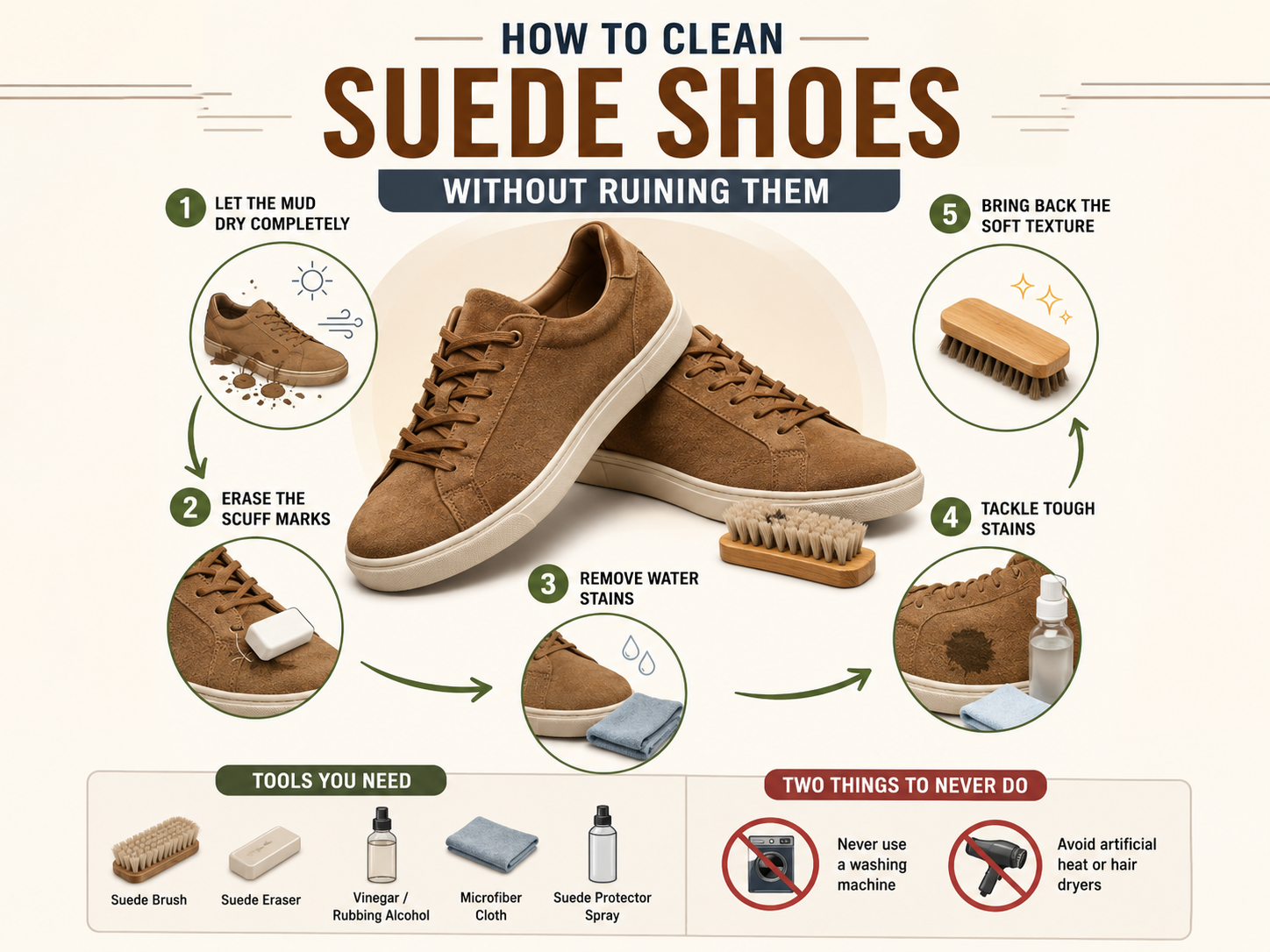
What You Need Before You Start
Suede is leather with a soft, raised surface called a nap. That nap gives suede its texture, but it also traps dust and can show water, oil, and pressure marks easily.
Before cleaning, check the shoe’s care label or the brand’s care instructions. Some shoes use genuine suede, while others use nubuck or synthetic microfiber. These materials can look alike but may react differently to moisture and solvents.
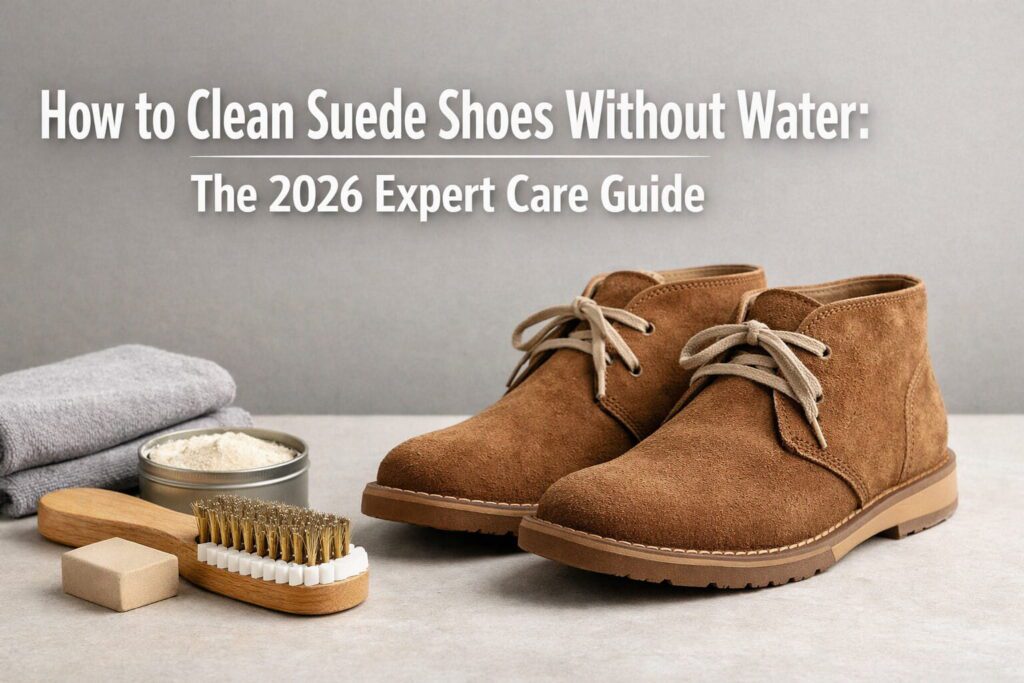
Gather these basic supplies:
- A suede brush or clean, soft toothbrush
- Two clean white cloths
- A suede eraser or plain white pencil eraser
- Distilled white vinegar
- Rubbing alcohol, preferably 70%
- Cornstarch or talcum powder for fresh oil stains
- A clean towel
- Shoe trees, crumpled white paper, or plain paper towels
Avoid colored cloths. Dye from the cloth can transfer to light suede.
Test first
Choose a hidden area, such as the inside ankle or the back edge of the shoe. Dab on a very small amount of vinegar or rubbing alcohol. Let it dry fully before treating the visible stain.
If the color changes, the nap becomes rough, or the material feels stiff, stop. The shoe may need professional cleaning.

How to Clean Suede Shoes Without Cleaner
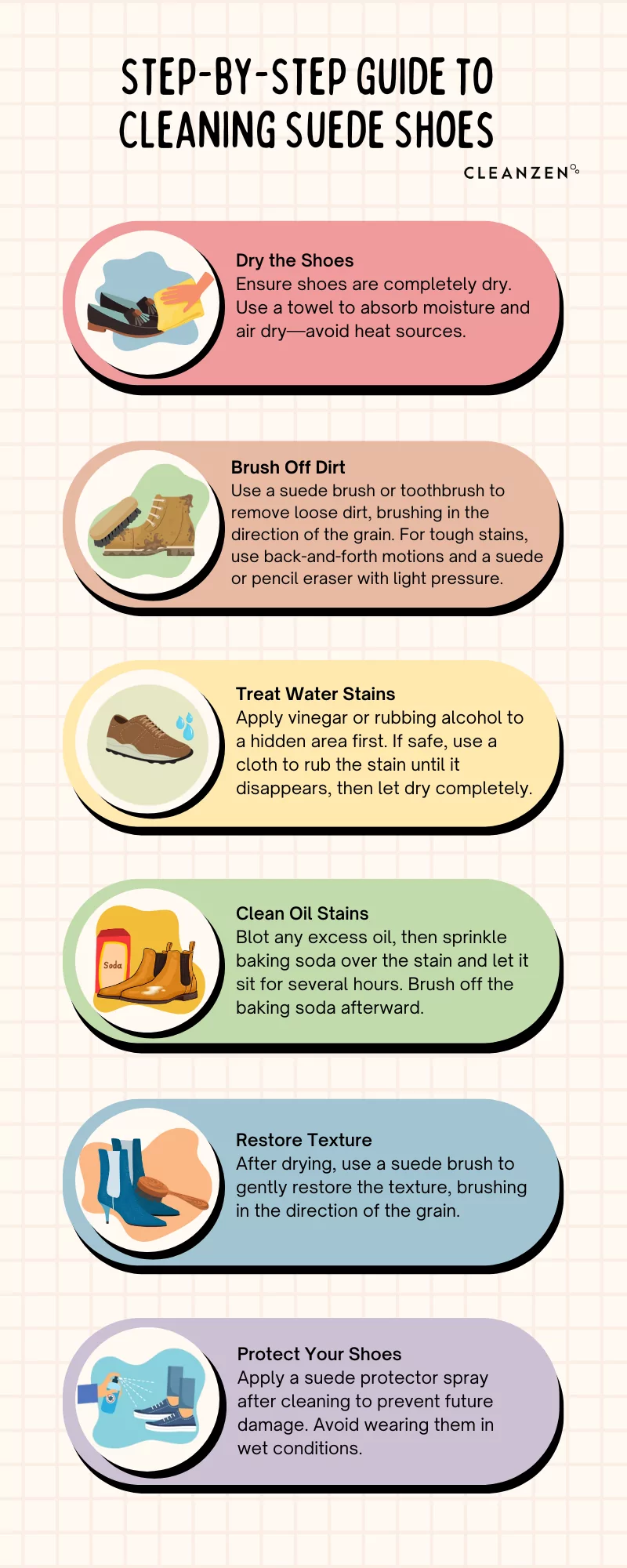
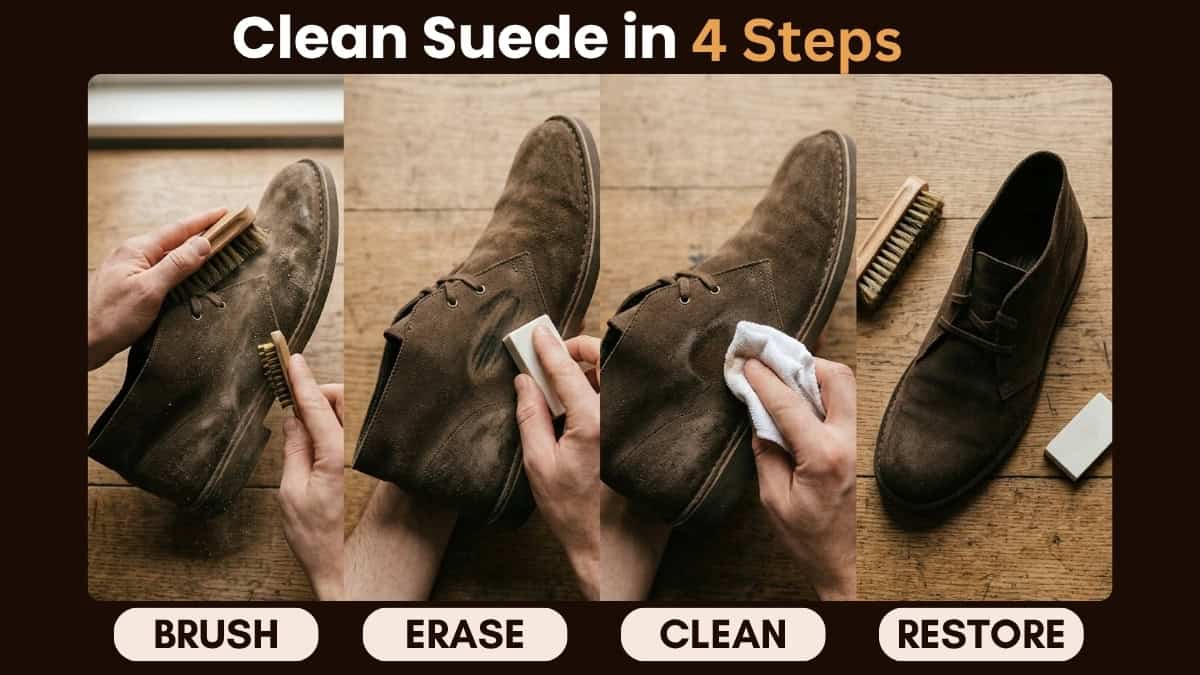
The safest process is to remove dry dirt first, treat the stain in small steps, and restore the nap after the shoe dries.
1. Remove the laces
Take out the laces before cleaning. This gives you better access to the tongue and prevents the laces from getting stained.
Wash the laces separately with mild laundry soap and water. Let them dry before putting them back on.
2. Let wet mud dry
Do not scrub wet mud. Scrubbing can push dirt deeper into the nap and spread the stain.
Leave the shoes at room temperature until the mud is dry. Keep them away from heaters, hair dryers, fireplaces, and direct sunlight.
3. Brush away loose dirt
Use a suede brush or a clean, soft toothbrush. Brush in one direction with light pressure.
For most shoes, brushing from heel to toe works well. Use short strokes around seams and the welt. Do not press hard, because heavy brushing can flatten or damage the nap.
4. Remove dry scuffs
Rub a suede eraser or plain white pencil eraser over the mark. Use gentle back-and-forth strokes.
Afterward, brush away the loose particles. A clean toothbrush can help in small areas, but avoid a stiff brush that scratches the surface.
5. Treat water marks and general stains
For a small water mark, lightly dampen the whole affected panel with a clean white cloth. Do not soak the shoe or wet only one tiny dot if the mark has a sharp edge.
Use an even, thin layer of moisture across the panel. This can help the leather dry more evenly. Test this method first, because some dyes bleed or darken.
For a stronger stain, put a small amount of distilled white vinegar or 70% rubbing alcohol on a white cloth. Blot or lightly dab the stain. Do not pour the liquid onto the shoe.
Work from the outside of the stain toward the center. This helps limit the spread of the mark.
6. Dry the shoes slowly
Insert shoe trees or loosely packed white paper. This helps the shoes hold their shape and absorbs some moisture.
Let the shoes dry for at least several hours. Thick suede boots may need overnight drying. Do not judge the final color while the shoes are still damp.
7. Restore the nap
When the shoes are completely dry, brush the suede in one direction. If the nap still looks flat, brush gently in short strokes from several angles.
Stop if the surface begins to shed fibers or look worn. More brushing will not always improve the finish.
How to Remove Specific Stains From Suede
Different stains need different treatments. Use the least aggressive method first.
| Stain or mark | First method | If the mark remains |
|---|---|---|
| Dust or dry dirt | Brush when dry | Use a suede eraser for small marks |
| Dry mud | Let it dry, then brush | Dab the remaining mark with diluted vinegar |
| Water rings | Evenly dampen the affected panel | Let dry, then brush the nap |
| Salt stains | Dab with diluted white vinegar | Repeat lightly after drying |
| Oil or grease | Cover with cornstarch or talcum powder | Brush off after several hours; seek professional help if needed |
| Scuff marks | Suede eraser | Use a small amount of rubbing alcohol on a cloth |
| Gum or wax | Harden with a cold pack, then lift carefully | Repeat without scraping the leather |
| Ink | Dab very lightly with rubbing alcohol | Stop if color transfers or the stain spreads |
| Blood or protein stains | Blot with a cool, damp cloth | Use professional cleaning for set stains |
Salt stains
Salt stains are common after snow or ice treatment on U.S. roads and sidewalks. Mix one part distilled white vinegar with one part water.
Dampen a white cloth with the mixture. Dab the salt mark without soaking the shoe. Let the shoe dry, then brush the nap.
You may need more than one light treatment. Several gentle passes are safer than one wet pass.
Oil and grease
Cover a fresh oil spot with cornstarch or talcum powder. Leave it in place for several hours or overnight. The powder may absorb some surface oil.
Brush it away when the shoe is dry. Repeat once if the mark is lighter but still visible.
Do not use water on an oil stain first. Water usually does not dissolve grease and may spread the dark area.
Gum and wax
Place ice in a sealed plastic bag and hold it against the gum or wax until the material becomes hard. Lift it gently with a dull edge, such as a plastic card.
Do not use a knife. Sharp tools can cut the nap or scratch the leather.
Ink
Rubbing alcohol may help with some fresh ink marks, but it can also remove color. Use a cotton swab or white cloth and touch only the stained fibers.
Do not rub hard. If the ink spreads or the shoe color transfers to the cloth, stop immediately.

What Not to Use on Suede Shoes
Several common cleaning methods can damage suede even when they work on smooth leather or fabric.
Avoid dish soap and laundry detergent
Soap can leave residue in the nap. It may also change the color or make the surface stiff after drying.
Avoid soaking or machine washing
Suede leather can lose its shape, finish, and softness when saturated. A washing machine can also cause severe color bleeding and damage adhesives.
Avoid heat
A hair dryer, radiator, clothes dryer, or heat vent can shrink leather and make it crack. Room-temperature drying is slower but safer.
Avoid bleach and harsh chemicals
Bleach, acetone, nail-polish remover, and strong degreasers can strip color and damage leather fibers.
Avoid olive oil and other household oils
Oil may darken suede permanently. It can also leave a larger, uneven stain than the original mark.
Avoid colored brushes and paper
Colored materials may transfer dye. Use a white cloth and plain white paper whenever possible.
Avoid aggressive sanding
Fine sandpaper is sometimes used by specialists on heavily damaged suede, but it is easy to remove too much material at home. A worn patch cannot be brushed back into place.
What to Do if the Cleaning Does Not Work
Stop home treatment if the stain grows, the color changes, or the nap becomes rough. Repeated wetting can cause more damage than the original mark.
Professional cleaning is the better option when:
- The shoes are expensive, vintage, or difficult to replace
- The stain covers most of a shoe
- Dye has bled from one area to another
- The shoes have mold, mildew, or a strong odor
- Oil has soaked deeply into the leather
- The suede has become stiff, shiny, cracked, or bald
- The shoes have decorative trim, metallic details, or mixed materials
A professional may be able to clean and recolor suede, but no method can guarantee that a deep stain will disappear.
If the shoes smell musty, do not seal them in a box. Let them air out in a dry, ventilated room. For visible mold, avoid brushing indoors because you may spread spores. Place the shoes in a bag and ask a qualified shoe-care or leather-care service for advice.
How to Keep Suede Shoes Clean Longer
Regular care reduces the need for liquid treatments.
Brush the shoes after dusty or muddy wear. Small amounts of dirt are easier to remove before they become embedded.
Use a suede-protective spray only if the shoe brand allows it. Apply it outdoors or in good ventilation, and test it on a hidden area first. A protective spray may improve resistance to light moisture, but it does not make suede waterproof.
Store the shoes in a cool, dry place. Keep them away from damp basements, hot garages, and tightly sealed plastic bags.
Use shoe trees or plain paper to help the shoes keep their shape. Do not use newspaper inside light-colored suede because ink can transfer.
Rotate suede shoes when possible. Giving the leather time to dry between wears can help reduce odor and moisture buildup.

Key Takeaways
- Brush suede dry before using any liquid.
- Use a suede eraser for light scuffs.
- Use diluted white vinegar for some water or salt marks.
- Use 70% rubbing alcohol sparingly for certain ink or dark stains.
- Treat oil with cornstarch or talcum powder before trying anything wet.
- Always test a hidden area first.
- Dry suede at room temperature, never with direct heat.
- Stop and seek professional help if the color bleeds or the leather becomes damaged.
Frequently Asked Questions
Can I clean suede shoes with just water?
You can use a small amount of water for some light marks, but do not soak the shoes. Water can leave rings or change the color. If you use water, dampen the entire affected panel lightly so it dries more evenly.
Is vinegar safe for suede?
Diluted white vinegar may help with salt and some water-based stains. It is not safe for every dye or finish, so test it on a hidden spot first. Use a cloth that is damp, not wet.
Can I use a toothbrush to clean suede?
Yes. A clean, soft toothbrush can remove dust and loosen the nap in small areas. Do not use a stiff brush or scrub with heavy pressure.
How do I clean light-colored suede?
Start with dry brushing and a white suede eraser. Use only white cloths and test any liquid carefully, because light suede shows dye transfer and water marks more clearly.
Can I clean suede shoes with baking soda?
Baking soda may help absorb odor, but it is not a reliable stain cleaner for suede. Fine powder can settle into the nap and may leave residue. For odor, let the shoes air out and use plain paper to absorb moisture.
How long should suede shoes dry?
Small damp areas may dry in a few hours. Thick boots or fully damp shoes may need overnight drying. Wait until the shoes are completely dry before brushing or judging the final color.
Can I use rubbing alcohol on all suede?
No. Rubbing alcohol can remove some stains, but it may also remove dye or change the finish. Use a tiny amount, test first, and stop if color transfers to the cloth.
Conclusion
To clean suede shoes without cleaner, begin with a dry brush and a suede eraser. For stains that remain, use a small amount of diluted white vinegar or rubbing alcohol only after a hidden-spot test. Treat oil with cornstarch or talcum powder, let the shoes dry naturally, and brush the nap back into place.
The safest next step is to identify the stain before choosing a treatment. If the mark is deep, the color is bleeding, or the suede feels damaged, stop cleaning and use a professional leather-care service.

Michael Smith is the Content Strategist behind The Style Hub, where fashion meets function. With a keen eye for trends and a passion for everyday style, he curates content that helps readers make smarter, more stylish choices—from the perfect pair of sneakers to must-have accessories. Michael specializes in breaking down fashion into practical, wearable insights, making style accessible for everyone. When he’s not researching the latest trends, he’s exploring how comfort, innovation, and timeless design come together in modern fashion.