
Does Your Shoe Size Change When You Lose Weight: Explained
Losing weight may reduce foot swelling and width, but it usually does not shrink your foot bones.
Does your shoe size change when you lose weight? Sometimes, yes—but the change is often small and depends on how much weight you lose, where your body stores fat, and whether your feet were swollen. Understanding foot shape, arch support, and proper shoe fitting can help you avoid pain and wasted money.
Why Weight Loss Can Affect Shoe Size
Your feet support your entire body all day. When body weight decreases, the pressure placed on the feet may also decrease. This can change how your feet feel inside your shoes, even when the bones remain the same length.
The most common changes affect foot width, swelling, and arch shape. A person may go from a wide fit to a regular fit, or from a snug shoe to a more comfortable one.
Does your shoe size change when you lose weight? It can, especially after major weight loss, but there is no fixed number of pounds that causes a smaller shoe size.
Several factors influence the result:
• The amount of weight lost
• The amount of fluid swelling in the feet and ankles
• Your foot width and arch height
• Your age and joint health
• How much your shoes stretched over time
• Whether you had obesity-related foot strain or inflammation

Does Weight Loss Make Your Feet Smaller?
Weight loss does not usually make your foot bones shorter. Your adult foot structure is mostly set once growth ends. However, the soft tissue around your feet may become less full, and your arches may respond differently to lower body weight.
Think of your foot like a bridge. Your bones form the frame, while muscles, ligaments, fat pads, and fluid provide support and cushioning. When the load on that bridge becomes lighter, its shape and movement may change slightly.
The length of your foot may stay nearly the same, while the width becomes smaller. This is why some people need a narrower shoe rather than a shorter shoe after losing weight.
Does your shoe size change when you lose weight? A person may see a half-size change, but a full-size change is less common unless swelling, arch flattening, or another foot condition was involved.
Foot length versus foot width
Shoe size has two important parts:
• Length measures how long your foot is.
• Width measures how much space your foot needs from side to side.
Many people focus only on length. Yet width often changes first after weight loss. A shoe can feel loose across the top or sides while the toe area still has the correct length.
How Weight Loss May Change Your Feet
Weight loss can affect the feet in several ways. Some changes are temporary, while others may last.
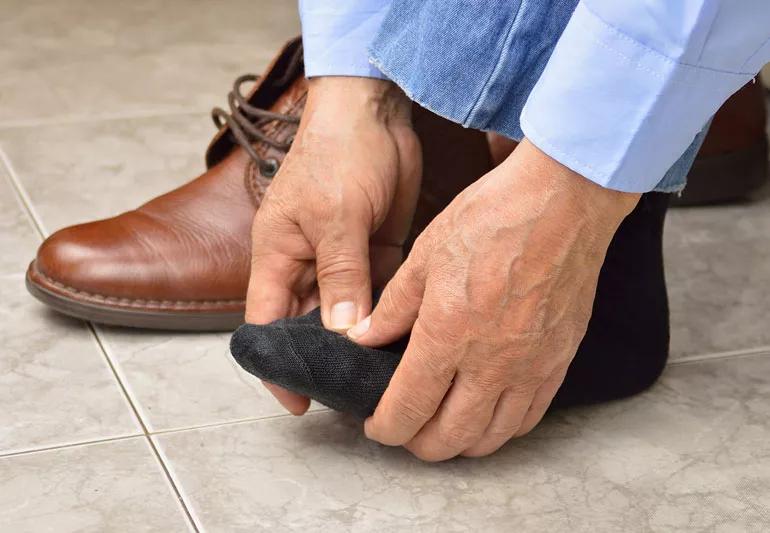
Less swelling
Extra body weight can place more stress on the veins and joints in the legs. Long periods of standing, heat, high salt intake, and certain health conditions can also cause swelling.
When swelling goes down, shoes may feel looser. This change may happen within days or weeks and does not always mean your actual shoe size has changed.
If swelling affects only one foot, appears suddenly, or comes with redness, warmth, chest pain, or shortness of breath, seek medical care promptly.
Less pressure on the arch
Excess weight can increase the force placed on the arches. In some people, this contributes to arch fatigue or a flatter-looking foot. Losing weight may reduce that strain and make the arch feel more supported.
This does not mean weight loss will rebuild a permanently collapsed arch. Still, reduced pressure may improve comfort and alter the way a shoe fits.
Less forefoot spreading
The front of the foot may spread under repeated load. This can make shoes feel tight across the ball of the foot. With less pressure, the forefoot may feel less broad.
The change is not always dramatic. Foot shape also depends on genetics, age, footwear, and conditions such as bunions.
Reduced inflammation and soreness
Lower body weight can reduce stress on the ankles, knees, and feet. Research on weight and musculoskeletal health links excess load with greater strain on weight-bearing joints.
Less pain can make shoes feel better, but comfort does not always equal a smaller size. A shoe may feel more comfortable because your feet are less tired at the end of the day.

How Much Weight Loss Changes Shoe Size
There is no reliable rule such as “lose 20 pounds and drop one shoe size.” Bodies lose fat in different patterns, and the feet do not respond in a predictable way.
A person who loses 50 pounds may notice a clear change in width. Another person may lose the same amount and keep the same shoe size. Someone with severe swelling may notice a change after losing much less weight.
Does your shoe size change when you lose weight? The answer depends more on foot structure and swelling than on a specific number on the scale.
Here are common patterns:
• Small weight loss may improve comfort without changing size.
• Moderate weight loss may reduce swelling or shoe width.
• Major weight loss may change width, arch comfort, or overall fit.
• A full size change is possible but not typical for everyone.
Do not buy a large supply of new shoes during rapid weight loss. Your feet may change gradually, and your best fit can vary as your body adjusts.

When Your Shoe Size May Not Change
Many people lose weight without changing shoe size at all. This is normal.
Your foot bones do not melt away with fat loss. If your shoe length was already correct, the same length may continue to work. You may only need a different width, a new insole, or better lacing.
Your size may remain stable when:
• You lose a modest amount of weight
• Your feet had little swelling before weight loss
• Your arch shape stays the same
• Your shoes were already wide enough
• Your foot length, rather than width, controls your fit
Age can also affect shoe fit. Ligaments may loosen over time, and arches may gradually flatten. This can make feet longer or wider, even if your weight decreases.
This is one reason does your shoe size change when you lose weight cannot be answered with a simple yes or no. Weight is only one factor in shoe fit.

How to Measure Your Feet After Weight Loss
Measuring your feet is more accurate than guessing from an old pair of shoes. Shoe sizes also vary between brands, so use the brand’s size chart when possible.
Follow these steps:
- Measure both feet while standing. Your feet spread under body weight.
- Measure late in the day, when feet are usually largest.
- Wear the socks you plan to use with the shoes.
- Trace or measure the longest point from heel to toe.
- Measure the widest part of each foot.
- Use the larger foot to choose your size.
- Leave about half an inch of space in front of your longest toe.
Your toes should move freely. The shoe should hold your heel without slipping, but it should not squeeze the sides of your foot.
A useful fitting test is to walk indoors for several minutes. Check for pressure near the little toe, rubbing at the heel, and contact with the top of the shoe.
Signs You Need a New Shoe Size
Loose shoes can be just as harmful as tight shoes. If your foot slides forward, your toes may grip the sole to stay stable. That can lead to blisters, calluses, and fatigue.
You may need a new size or width if:
• Your heel slips with every step
• Your toes hit the front of the shoe
• The sides press against a bunion
• Your foot slides from side to side
• You develop new blisters or calluses
• Your arch feels unsupported
• Your shoes feel loose after weight loss
Do not solve a width problem by buying a shorter shoe. Your toes need room to spread. A narrower width, better lacing, or an adjustable shoe may be the better choice.
In fitting advice, one mistake appears often: people replace shoes based only on the number printed inside. The label is a starting point, not a guarantee. Shape, materials, and brand sizing matter just as much.

Choosing Shoes After Losing Weight
Your new shoes should match your current foot shape and daily activity. A running shoe, work shoe, dress shoe, and hiking shoe may all fit differently.
Look for these features:
• A firm but flexible sole
• Enough toe room
• A stable heel counter
• Good support under the arch
• Breathable material
• An adjustable closure, such as laces or straps
• A width that does not press on the forefoot
Avoid shoes that need a long “break-in” period to stop hurting. Soft materials may stretch, but pain is not a normal part of proper fit.
If your feet feel less full after weight loss, removable insoles can sometimes improve fit. However, adding thick inserts may reduce toe space. Try them with the shoes and walk before making a final choice.

Other Reasons Your Shoe Size May Change
Weight loss is not the only reason shoes may fit differently. Several other causes can affect foot size or shape.
Pregnancy
Pregnancy can relax ligaments and increase foot length or width. Some changes remain after delivery.