How Long Do Hiking Shoes Last: Lifespan Guide
Most hiking shoes last 500 to 1,000 miles, or about one to three years with regular use.
How long do hiking shoes last depends on more than time. Trail surface, pack weight, weather, shoe quality, care, and your walking style all affect the answer. After years of hiking on rocky paths, muddy trails, and smooth forest roads, I have learned that mileage is only a guide. The shoe itself gives the clearest warning when its grip, cushioning, or support starts to fail.

How Long Do Hiking Shoes Last?
Most hiking shoes last between 500 and 1,000 miles. For a casual hiker, that may mean two or three years. For someone who hikes every weekend, the same pair may wear out in one year.
Light trail shoes often have a shorter life. Sturdy hiking shoes with firm midsoles and strong rubber may last longer. Hiking boots can sometimes reach 1,000 to 1,500 miles, but this depends on construction and use.
A better way to judge how long do hiking shoes last is to track these three factors:
• Distance: Count trail miles, daily walks, and travel use.
• Terrain: Rocks, sand, mud, and pavement wear shoes at different rates.
• Condition: Inspect the sole, midsole, upper, heel, and fit.
A shoe used only on soft forest trails may look new after 800 miles. A shoe used on sharp rocks with a heavy pack may need replacement after 400 miles. In other words, how long do hiking shoes last has no single answer for every hiker.
What Determines Hiking Shoe Lifespan?
Several forces work together to wear out hiking footwear. Some are easy to see, while others develop inside the shoe.
Trail Surface
Rocky trails are hard on hiking shoes. Sharp edges can cut the outsole and damage the upper. Loose gravel can also grind down the rubber.
Mud and wet ground create another problem. Water does not always ruin a shoe at once, but repeated soaking can weaken adhesives, leather, foam, and stitching. Sand is also damaging because it works into seams and acts like fine sandpaper.
Pavement wears hiking shoes quickly, too. Walking on asphalt creates more friction than walking on soil. If you use the same shoes for long road walks and trail hikes, expect a shorter lifespan.
Hiking Frequency
A pair used once a month may last several years. A pair used three or four times each week will wear much sooner.
Even when the tread looks fine, the midsole can age. Foam slowly loses its spring and ability to absorb impact. This can happen from use, but it can also happen while shoes sit in a hot garage or damp closet.
Pack Weight
A heavy backpack places more stress on the outsole, midsole, heel counter, and upper. If you carry camping gear, water, food, or camera equipment, your shoes may wear faster than those used for short day hikes.
Extra weight also increases foot movement inside the shoe. That movement can cause heel wear, toe damage, and stretched laces or eyelets.
Your Walking Style
Some hikers land hard on the heel. Others roll toward the outside or inside of the foot. These patterns create uneven wear.
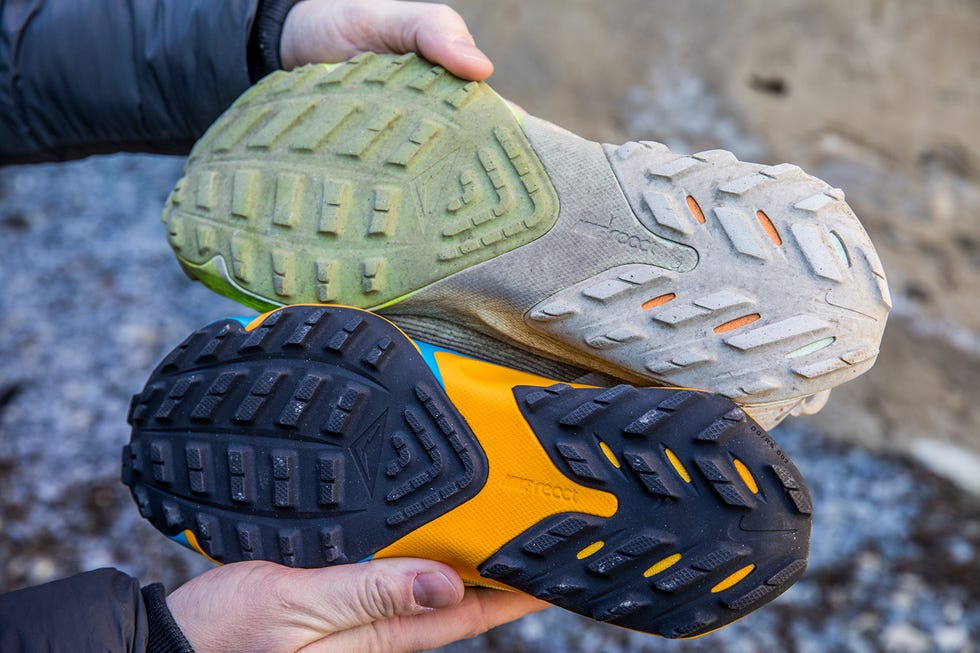
Look at the bottom of an old pair. If one side is much more worn than the other, your stride may be affecting shoe life. Uneven wear can also signal that the shoe no longer gives you stable support.
Shoe Quality and Design
Materials matter. A hiking shoe with a thick rubber outsole, strong stitching, and a durable upper usually lasts longer than a lightweight shoe made for speed.
However, durable does not always mean better. A stiff boot may last longer but feel too heavy for easy trails. A flexible trail shoe may be more comfortable but need replacement sooner. Choose the shoe for the terrain and activity, not just its expected mileage.

Signs Your Hiking Shoes Need Replacing
Knowing the warning signs is more useful than relying on a calendar. Hiking shoes can look acceptable but still offer poor support.
Replace your hiking shoes when you notice one or more of these problems:
• The tread is smooth or badly worn.
• The lugs no longer grip wet rock, dirt, or mud.
• The midsole has deep creases or feels flat.
• The heel tilts when the shoe sits on a level surface.
• The upper has tears near the toe box or sides.
• The sole separates from the upper.
• Your feet slide inside the shoe.
• You develop new blisters, foot pain, or sore knees.
• The shoe feels less stable on slopes.
• The waterproof lining no longer works for your needs.
Tread loss is one of the clearest signs. Hiking shoes depend on the outsole for traction. When the lugs become shallow, the shoe may slip even if the upper still looks good.
A flat midsole is another major warning. Press the foam with your thumb, then compare it with a new shoe. If the old foam feels hard, packed down, or uneven, it may no longer protect your feet.
I once kept using a pair because the upper looked nearly perfect. The sole still had some tread, but the cushioning had collapsed. After a long downhill hike, my feet and knees felt sore for days. That experience taught me to inspect the middle of the shoe, not just the bottom.
How to Check Hiking Shoes Before a Trip
A quick inspection can prevent pain, slips, and a ruined hike. Check your shoes several days before a major trip, not at the trailhead.
Use this simple process:
-
Clean the shoes so you can see the materials clearly.
-
Check the outsole for missing lugs, smooth areas, and deep cuts.
-
Look at the midsole for cracks, heavy creases, or compression.
-
Inspect stitching, eyelets, lace hooks, and the heel counter.
-
Bend the shoe gently and check for sole separation.
-
Put on both shoes with your usual hiking socks.
-
Walk on stairs, slopes, and hard floors.
-
Notice any slipping, rubbing, pressure, or unusual foot movement.
Test your shoes with the socks and insoles you plan to use. A shoe may feel fine with thin socks but cause blisters with thick wool socks.
Also inspect the fit at the end of the day. Feet often swell during long walks. Your toes should have room to move, while your heel should stay secure. A worn shoe may feel loose even if it fit well when new.
If you are planning a long trip, do not start with a brand-new pair. Break in new hiking shoes with short walks first. This lets you find hot spots before they become blisters.

Hiking Shoe Lifespan by Type
Different types of hiking footwear have different expected lifespans. The numbers below are estimates, not guarantees.
Lightweight Trail Shoes
Light trail shoes often last 300 to 600 miles. They are flexible, comfortable, and useful for fast day hikes. Their lighter materials and softer foam usually wear faster.
They work well on maintained trails, dry paths, and light loads. They may not be the best choice for sharp rock, deep mud, or heavy backpacking.
Traditional Hiking Shoes
Traditional hiking shoes often last 500 to 1,000 miles. They usually offer stronger uppers, firmer midsoles, and more protective toe caps.
These shoes suit day hikes, moderate terrain, and light backpacking. Their lifespan depends heavily on how often they touch pavement.
Hiking Boots
Hiking boots may last 800 to 1,500 miles. Full-grain leather models can sometimes last longer if the upper remains sound and the sole can be repaired.