Cat urine can soak into shoe fabric, foam, leather, and insoles. The smell may return when the shoe gets warm or damp. The best fix is to remove the urine, treat the odor source, and dry the shoe fully.
For most washable sneakers, use an enzyme-based pet-odor cleaner made for the shoe material. Blot fresh urine first. Do not scrub it deeper, use ammonia, or mix cleaning products. Leather, suede, and delicate shoes need a gentler method and may need professional care.
Introduction
If a cat has urinated in your shoes in a U.S. home, act as soon as you find the stain. Fresh urine is easier to remove than dried urine, but even an old odor can often improve with the right treatment.
Start by checking the shoe label or maker’s care guide. A running shoe made from mesh can handle more moisture than a suede boot or leather loafer. The material, age of the stain, and presence of removable parts will decide which cleaning method is safe.

What You Need Before Cleaning
Gather the supplies before you start:
- Paper towels or clean white cloths
- Cool or lukewarm water
- An enzyme-based pet urine cleaner labeled for the shoe material
- A soft brush or old toothbrush
- A mild, fragrance-free detergent
- A clean towel
- Baking soda for dry odor control
- A fan or well-ventilated drying area
- Rubber gloves
Choose a cleaner that says it is safe for the material. Test it on a hidden area first. Look for color change, fading, stiffness, or surface damage before treating the whole shoe.
An enzyme cleaner can help break down organic urine residue. It is not the same as a perfume spray. A fragrance may hide the smell for a short time while urine residue remains inside the shoe.
If you do not have an enzyme cleaner, wash the shoe with mild detergent and water when the care label allows it. This may reduce the smell, but it may not remove deep urine residue as well as a suitable enzyme product.

How to Get Cat Urine Out of Washable Sneakers
Washable mesh, canvas, nylon, and many fabric sneakers can usually be treated at home. Follow these steps.
1. Remove the insole and laces
Take out the insole and laces if they are removable. Urine often collects under the insole, where air cannot reach it.
Clean the insole and shoe body as separate parts. If the insole has a strong odor, replacing it may be easier than trying to remove every trace.
2. Blot fresh urine
Press paper towels or a clean cloth onto the wet area. Lift the towel and repeat with a dry section.
Do not rub the spot. Rubbing can push urine farther into the foam and fabric. Keep blotting until the surface feels only slightly damp.
3. Rinse with cool water
Hold the affected part under a gentle stream of cool water, if the shoe’s care instructions allow it. You can also press a damp cloth against the area.
Avoid hot water at this stage. Heat can make some stains and odors harder to remove, and it may damage glue or synthetic foam.
4. Apply the enzyme cleaner
Apply enough cleaner to reach the urine-soaked area. A light mist on the surface may not reach the insole bed or inner lining.
Follow the product label for contact time. The cleaner must stay wet for the listed time to work. Do not mix it with bleach, ammonia, vinegar, hydrogen peroxide, or another cleaner.
5. Rinse or wipe as directed
Some products require rinsing. Others should be wiped after the treatment period. Follow the label rather than guessing.
Use a clean cloth to lift loosened residue. Repeat the treatment if the odor remains after the shoe dries.
6. Wash with mild detergent if allowed
For washable sneakers, clean the shoe with a small amount of mild detergent and cool water. Use a soft brush on mesh and fabric.
Do not place shoes in a washing machine unless the care instructions allow it. Machine washing can warp the shoe, loosen glue, or damage foam.
7. Dry the shoe completely
Press the shoe in a towel to remove extra water. Stuff it loosely with plain white paper or a clean towel to help it keep its shape.
Let the shoe air-dry in a well-ventilated place. A fan can improve airflow. Keep the shoe away from a heater, fireplace, clothes dryer, or direct high heat.
A shoe may feel dry on the outside while the foam inside is still wet. Wait until the inside is fully dry before wearing it or applying more odor treatment.
8. Check the smell after drying
Smell the shoe only after it is dry. A damp shoe can give a false result.
If the odor returns, urine remains in a hidden layer. Treat the insole bed, tongue, lining, and seams again. Do not keep adding fragrance spray. It can make the smell harder to judge.
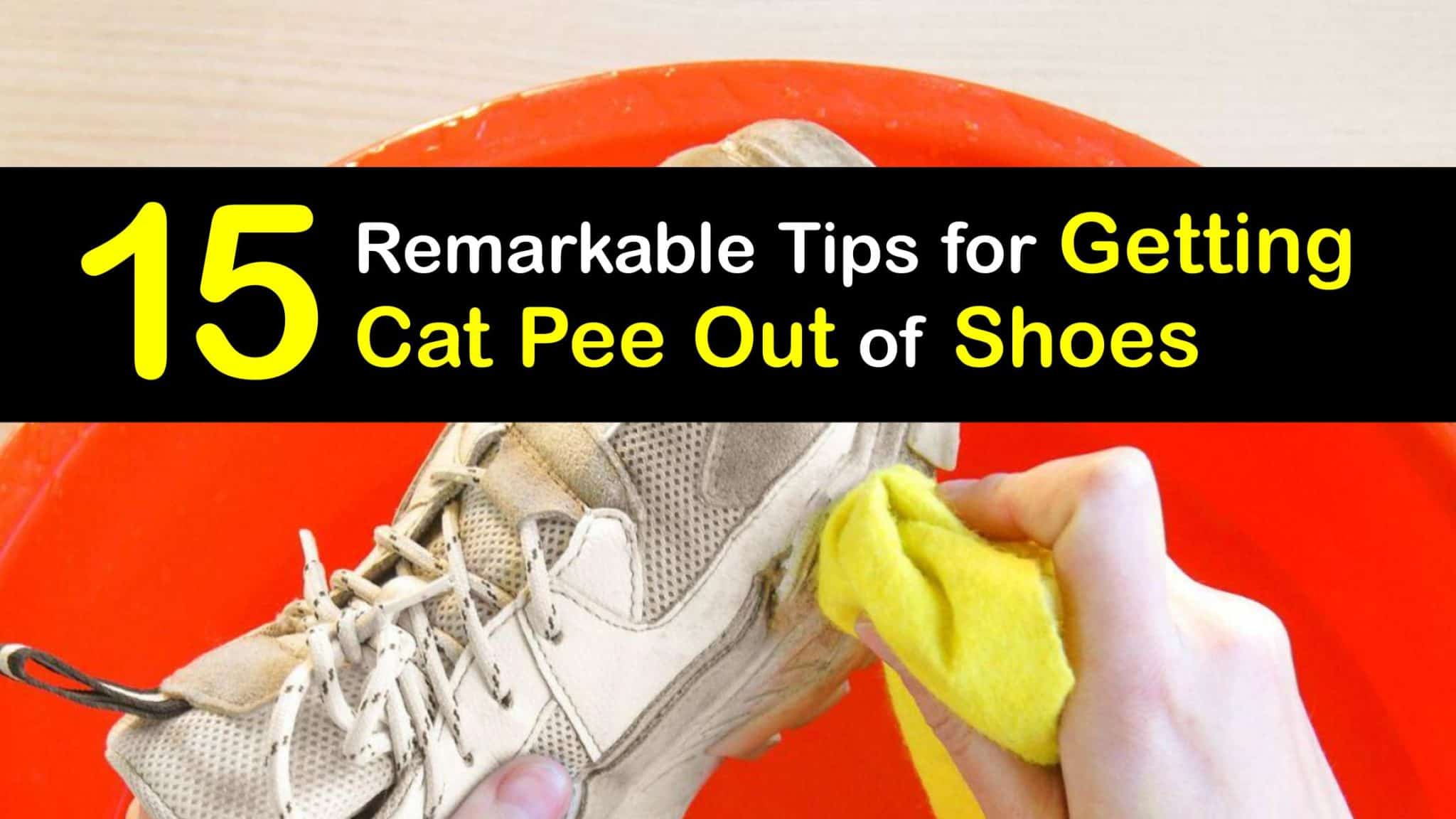
How to Clean Cat Urine From Leather or Suede Shoes
Leather and suede need less water and more care. Do not soak them unless the maker’s care guide says you can.
Smooth leather
For smooth leather:
- Blot fresh urine with a dry cloth.
- Wipe the area with a barely damp cloth.
- Use a leather-safe cleaner if the maker allows it.
- Wipe away cleaner residue.
- Let the shoe air-dry at room temperature.
- Apply a suitable leather conditioner after cleaning and drying, if the care guide recommends one.
Test every product in a hidden spot. Some enzyme cleaners can discolor leather, remove finish, or leave a tacky surface.
If urine soaked into the lining, padding, or insole, surface wiping may not solve the smell. A shoe repair shop or leather cleaner may be safer than repeated home treatment.
Suede and nubuck
Suede can stain, darken, flatten, or become stiff when wet. Use these steps:
- Blot the urine without rubbing.
- Let the area dry if it is already wet.
- Brush the nap gently with a suede brush.
- Use only a suede-safe cleaner, following its label.
- Let the shoe dry away from heat.
- Brush the nap again when dry.
Do not use a household enzyme spray on suede unless the label clearly says it is safe for suede. For expensive, vintage, or light-colored suede shoes, take them to a professional cleaner.

How to Remove Cat Urine Smell From Shoe Insoles
The insole often holds the odor after the shoe looks clean. Treat it based on its material and condition.
For a removable fabric insole:
- Blot any liquid.
- Rinse with cool water if allowed.
- Apply a material-safe enzyme cleaner.
- Wait for the label’s contact time.
- Wash with mild detergent if permitted.
- Rinse well.
- Dry fully in open air.
For a foam insole, avoid soaking it for a long time. Foam can hold water deep inside and may take days to dry. If the smell remains after one or two careful treatments, replace the insole.
You can sprinkle a small amount of baking soda on a fully dry insole and leave it for several hours. Then shake or vacuum it off. Baking soda may absorb some surface odor, but it does not replace urine removal.
Do not put baking soda on a damp insole and seal the shoe in a bag. That can trap moisture and slow drying.

Which Cleaning Method Should You Use?
Use the shoe material and urine condition to choose the method.
| Shoe type or condition | Best first method | Main warning |
|---|---|---|
| Mesh or canvas sneakers | Blot, enzyme cleaner, mild wash | Do not use high heat |
| Synthetic athletic shoes | Blot, material-safe enzyme cleaner | Check glue and foam care |
| Removable fabric insole | Treat separately | Replace it if odor remains |
| Smooth leather | Damp cloth and leather-safe cleaner | Do not soak |
| Suede or nubuck | Blot and suede-safe care | Avoid unapproved liquid cleaners |
| Dried urine in seams | Enzyme cleaner with full contact time | Repeat only after full drying |
| Strong odor after cleaning | Inspect foam, lining, and insole bed | Professional cleaning may be needed |
The key trade-off is moisture. More liquid may reach the odor, but excess water can damage glue, leather, suede, and foam. Use enough product to reach the affected layer, not enough to flood the entire shoe.

What Not to Use on Cat-Urine Shoes
Avoid these common mistakes:
Ammonia-based cleaners
Ammonia smells similar to some compounds in urine. It may also encourage a cat to investigate or mark the same area again. It can damage some shoe finishes as well.
Chlorine bleach
Bleach can discolor shoes and damage fabric, leather, and rubber. It should never be mixed with ammonia or other cleaners because dangerous fumes can form.
Vinegar as the only treatment
Vinegar may reduce some odors on some surfaces, but it is not a dependable way to remove urine residue from deep shoe padding. It may also damage certain materials or finishes.
Heavy scrubbing
Hard scrubbing can drive urine into seams, foam, and the shoe lining. Use blotting and gentle brushing instead.
Perfume sprays
Scented sprays cover odor. They do not prove that the urine is gone. Some fragrances can also irritate people or pets.
High heat
A hair dryer, radiator, or clothes dryer can damage glue and materials. Heat can also make odor harder to remove.
Mixing cleaners
Never combine an enzyme product with bleach, ammonia, vinegar, peroxide, or another chemical unless the product label specifically allows it. Rinse away one cleaner before using another.

How to Tell Whether the Urine Is Really Gone
A shoe is ready to use when it is fully dry and has no urine smell in normal room air.
Check these areas:
- Under the insole
- Around the heel cup
- Inside the toe box
- Along the tongue
- Near the lace holes
- In stitching and seams
- Around rubber edges
- Inside removable inserts
Do not judge the result while the shoe is wet. Let it dry first, then check it the next day.
If the smell returns after the shoe warms up, residue may still be trapped in the foam or lining. Repeat a material-safe treatment, focusing on that layer. If the odor remains after two careful attempts, replace the insole or seek professional cleaning.
A strong odor does not always mean the shoe is unsafe. It does mean the cleaning job is incomplete or the material has absorbed the urine deeply. Keep the shoe away from pets until it is cleaned and dry.

Why Cats Urinate on Shoes
A cat may urinate on shoes because of a dirty litter box, stress, changes at home, conflict with another cat, or a medical problem. The smell of outdoor animals or other cats on footwear may also draw attention.
Do not punish the cat. Punishment can increase fear and may make house-soiling worse.
Clean the shoe and also look at the cause. Scoop litter boxes often, provide enough boxes for the cats in the home, and reduce stress where possible. The American Association of Feline Practitioners advises veterinary attention for changes in urination, especially when they are sudden or repeated.
Contact a veterinarian promptly if the cat:
- Strains to urinate
- Makes frequent trips to the litter box
- Cries while urinating
- Produces little or no urine
- Has blood in the urine
- Licks the urinary area often
- Urinates outside the box repeatedly
A male cat that cannot pass urine needs urgent veterinary care. A urinary blockage can become life-threatening.

When You Should Replace the Shoes
Replacement may be the best choice when:
- The odor stays after repeated, material-safe cleaning
- The insole or foam remains wet for more than a day or two
- The shoe has visible mold
- The lining has broken down
- Leather or suede has permanent damage
- The shoe causes skin irritation
- The cost of professional cleaning is higher than the shoe’s value
Do not seal a damp shoe in a plastic bag. If you must store it for a short time, make sure it is completely dry first.

Frequently Asked Questions
Can I put cat-urine shoes in the washing machine?
Only if the shoe maker allows machine washing. Use a gentle cycle and cool water if approved, then air-dry the shoes. Machine washing is not suitable for most leather, suede, structured shoes, or shoes with delicate glue work.
Does baking soda remove cat urine from shoes?
Baking soda can help absorb some surface odor after the shoe is dry. It does not reliably remove urine trapped in foam, seams, or the lining. Use it as a finishing step, not as the main cleaner.
Will hydrogen peroxide remove cat urine odor?
Hydrogen peroxide may bleach or damage some shoe materials. It can also react with other cleaners. Use it only when the product label or shoe-care instructions clearly support it.
Can I use an enzyme cleaner on leather?
Only use it when the cleaner label says it is safe for leather. Test a hidden area first. For finished, valuable, or delicate leather, a leather-care professional is safer.
How many times should I clean the shoe?
Start with one complete treatment and let the shoe dry fully. If the smell remains, repeat a material-safe treatment once. Continued odor usually means the urine is deep in the foam or lining, or the insole needs replacement.
Final Takeaway
To get cat urine out of shoes, blot the liquid, remove washable parts, use a material-safe enzyme cleaner, and let the shoe dry completely. Treat fabric sneakers more thoroughly than leather or suede, and never mix cleaning chemicals.
If the odor returns after careful cleaning, focus on the insole and inner foam. Replace the insole or consult a professional when the urine has reached a delicate or hard-to-clean layer.

Michael Smith is the Content Strategist behind The Style Hub, where fashion meets function. With a keen eye for trends and a passion for everyday style, he curates content that helps readers make smarter, more stylish choices—from the perfect pair of sneakers to must-have accessories. Michael specializes in breaking down fashion into practical, wearable insights, making style accessible for everyone. When he’s not researching the latest trends, he’s exploring how comfort, innovation, and timeless design come together in modern fashion.