Introduction
Japanese school shoes are most often called uwabaki (上履き). In English, uwabaki means indoor school shoes or inside shoes. Students change into them when they enter school buildings and wear them in classrooms, hallways, and other indoor areas.
In the United States, this may seem unusual because most students keep the same shoes on all day. In Japan, changing shoes helps keep school floors clean and separates outdoor dirt from indoor spaces. The exact style and color depend on the school, so families should follow the school’s supply list before buying a pair.

What does uwabaki mean?
Uwabaki is the standard Japanese word for shoes worn indoors, especially at school. The word combines 上 (uwa, meaning “upper” or “inside”) with 履き (baki, meaning “wearing footwear”).
You may also see these related terms:
- Uwagutsu (上靴): another word for indoor shoes, used in some parts of Japan.
- Shitauchi or shitabaki: terms that can refer to indoor footwear in some settings or regions, though they are less universal for school shoes.
- Indoor shoes: the clearest English translation for uwabaki.
- School shoes: a broad English phrase that may refer to indoor or outdoor footwear.
When someone asks, “What are Japanese school shoes called?” the safest short answer is uwabaki.
What do Japanese indoor school shoes look like?
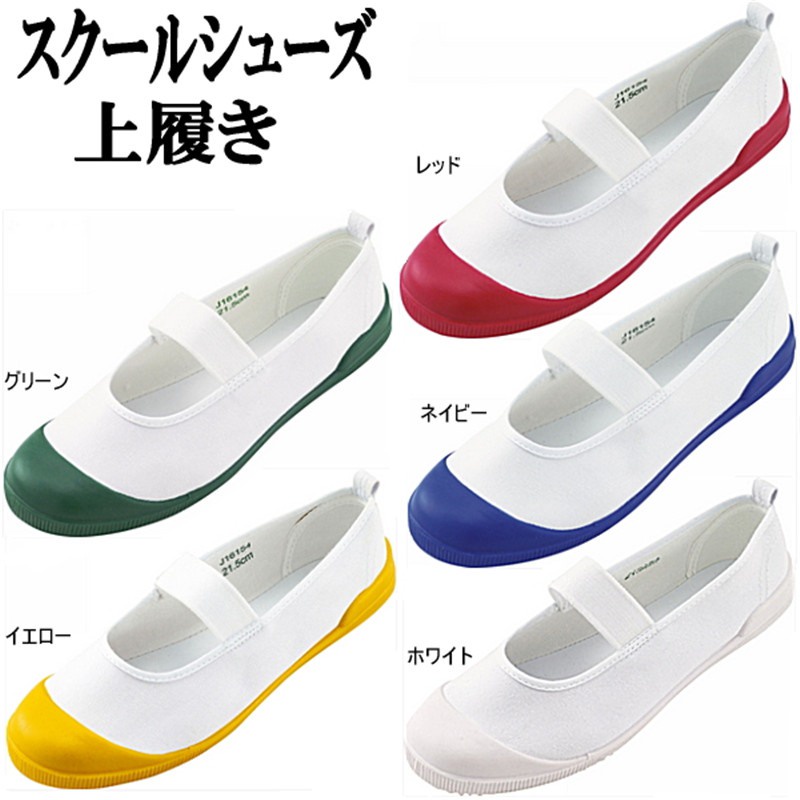
Japanese school indoor shoes are usually simple, lightweight shoes with a flexible rubber sole. Many are white, though schools may use different colors for different grades, classes, or age groups.
Common features include:
- A canvas or synthetic upper
- A rubber sole
- A slip-on design or a wide strap across the top
- A rounded toe
- A flat, flexible shape
- A name space for the student
- A color mark on the heel or strap
A popular style has a broad elastic band across the top. This band helps keep the shoe on without laces. It also lets young children put on and remove the shoes with less help.
The design is practical rather than decorative. Since students may walk, sit, kneel, and move around on polished floors, a lightweight shoe with a secure fit is usually more useful than a heavy outdoor sneaker.
When do students wear uwabaki?
Students normally change into uwabaki at the school entrance. Many Japanese schools have a genkan, or entry area, where students remove outdoor shoes and put them in a shoe locker.
The usual routine is:
- Remove outdoor shoes at the entrance.
- Place them in the assigned shoe locker.
- Put on the indoor shoes.
- Walk into the school building.
- Change back into outdoor shoes before leaving.
The same idea may apply in other places, such as kindergartens, gyms, community centers, and some homes. The purpose is simple: outdoor shoes carry soil, dust, water, and other debris. Indoor shoes help protect floors and make cleaning easier.

Are uwabaki the same as Japanese school uniforms?
No. Uwabaki are footwear, not part of the school uniform itself. A school uniform may include a jacket, shirt, skirt, pants, tie, or other clothing. The indoor shoes are a separate item.
Some schools require a specific type of uwabaki. Others may allow families to buy a similar pair from a designated store. The rules can differ by:
- School
- Grade level
- City or prefecture
- Public or private school
- Indoor location
- Student age
A school may also require a separate pair for physical education. Gym shoes may look similar to uwabaki, but they are not always interchangeable.
What is the difference between uwabaki and outdoor school shoes?
The main difference is where the shoes are worn.
| Japanese shoe term | Main use | Typical setting |
|---|---|---|
| Uwabaki | Indoor shoes | Classrooms, halls, and indoor school areas |
| Uwagutsu | Indoor shoes | Same general use as uwabaki |
| Taiikukan shoes | Gym shoes | School gym or sports activities |
| Outdoor shoes | Shoes worn outside | Streets, playgrounds, and commuting |
There is no single nationwide style for outdoor school shoes. Students may wear sneakers, leather shoes, loafers, or another style set by the school. The phrase gakko no kutsu means “school shoes” in a general sense, but it does not identify one exact shoe type.
Some Japanese middle and high schools have strict rules about outdoor footwear. A school may set limits on color, shape, brand, heel height, or decoration. Those rules are separate from the meaning of uwabaki.
How should you choose Japanese indoor school shoes in the United States?
If you need uwabaki for a child in the United States, first confirm the school’s rules. Some U.S. schools, preschools, martial arts studios, and cultural programs ask students to use indoor shoes, but their requirements may differ from those in Japan.
Check these points before buying:
1. Confirm the required color
Many schools prefer white indoor shoes. Others use a color-coded sole, strap, or heel. Do not assume that white is always correct.
2. Check the sole
Ask whether the school needs a non-marking sole. This matters in gyms and rooms with finished floors. A sole that leaves black marks may not be accepted.
3. Measure the child’s foot
Use the school’s size chart when one is available. Japanese shoe sizes are usually listed in centimeters, such as 18.0 cm or 21.5 cm.
Measure both feet while the child is standing. Choose a size that leaves a small amount of room for movement, but avoid buying a much larger size “to grow into.” An oversized shoe can slip and make running or climbing less secure.
4. Check the fastening system
A wide elastic strap is often easy for young children to manage. Older students may prefer a slip-on or a different closure, if the school allows it.
5. Write the student’s name on the shoe
Schools may have many pairs that look alike. Follow the school’s instructions for labeling the shoes. A name label inside the shoe can help prevent mix-ups.
6. Ask about separate gym shoes
Some schools use the same indoor shoe for daily use and gym class. Others require a separate pair. Confirm this before purchasing two identical pairs or assuming one pair will meet every rule.
How do Japanese shoe sizes compare with U.S. sizes?
Japanese children’s shoe sizes are commonly based on foot length in centimeters. U.S. sizes use a different scale, so the numbers are not directly interchangeable.
For example, a label marked 20.0 generally refers to a shoe size based on about 20 centimeters of foot length. It does not mean a U.S. size 20.
Use a conversion chart only as a starting point. Shoe shape varies by brand, and a child’s measured foot length is more useful than a guessed conversion. If possible, compare the child’s measurement with the manufacturer’s chart and the school’s stated requirements.
A simple process is:
- Place the child’s heel against a wall.
- Measure to the longest toe.
- Repeat for the other foot.
- Use the longer measurement.
- Check the brand’s size chart.
- Test the fit with the socks the child will wear.
The shoe should stay on during normal walking and should not press on the toes. If the heel lifts a lot or the child has to curl their toes to keep the shoe in place, the fit may be wrong.
Can regular sneakers replace uwabaki?
Sometimes, but only if the school permits them. Regular sneakers may be acceptable for a U.S. program that simply wants clean indoor footwear. They may not meet a Japanese school’s rules about color, shape, sole, or design.
A regular sneaker can also be less practical if it has:
- A thick outdoor tread
- Dark soles that mark floors
- Heavy padding
- Laces that a young child cannot manage
- A design that does not fit the school dress code
The deciding factor is not the name of the shoe. It is whether the shoe is clean, secure, suitable for the floor, and allowed by the school.
Do uwabaki work for physical education?
They can, but the answer depends on the school. Some Japanese schools use indoor shoes for ordinary classroom wear and require separate gym shoes for physical education. Others use one approved shoe for both activities.
Gym use raises different concerns from classroom use. A student may need better traction, stronger support, and a sole designed for movement. A very soft indoor shoe may be comfortable for walking but less suitable for sports.
Check the school’s written instructions before using uwabaki for running, jumping, or organized sports. If the activity involves a risk of slipping or ankle injury, the instructor’s rules should take priority.

Common mistakes when buying Japanese school shoes
The most common mistake is treating uwabaki as one universal product. Japanese schools do not all use the same shoe, and school policies can change.
Avoid these errors:
- Buying outdoor shoes when the school wants indoor shoes
- Assuming every school requires a white pair
- Choosing a large size so the child can wear it longer
- Ignoring the sole requirement
- Using a dark sole that marks the floor
- Forgetting to label the shoes
- Assuming gym shoes and classroom shoes are always the same
- Relying on a U.S. size conversion without measuring the foot
- Buying a style with laces when the child cannot tie them
- Skipping the school’s supply list
If the shoes feel loose, rub the heel, press the toes, or make walking awkward, replace them or ask the school whether a different style is allowed.
Frequently asked questions
What is the Japanese word for school indoor shoes?
The most common word is uwabaki (上履き). Uwagutsu (上靴) is another term used in Japan.
Are uwabaki only worn by children?
No. Children use them often in schools, but indoor shoes may also be used by adults in workplaces, gyms, clinics, and other buildings that require a change of footwear.
Why do Japanese students change shoes at school?
They change shoes to keep outdoor dirt, water, and dust out of indoor areas. The practice also supports school cleaning routines and protects indoor floors.
Are uwabaki slippers?
They are indoor footwear, but they are not always slippers. Many uwabaki have a firm rubber sole and are designed for walking around school. Some styles look like simple slip-on shoes rather than soft house slippers.
Can I buy Japanese school shoes in the United States?
Yes. They may be available through Japanese retailers, import stores, specialty shoe sellers, or online marketplaces. Before ordering, confirm the size system, return policy, sole type, and school requirements.
Conclusion
Japanese school shoes are usually called uwabaki, or indoor shoes. Students change into them at the school entrance and wear them inside the building. The shoes are often light, simple, and easy to remove, but their exact design varies by school.
If you are buying a pair in the United States, start with the school’s rules. Then check the color, sole, size, fastening style, and whether a separate gym shoe is needed. That approach is more reliable than choosing a pair based only on its appearance or its label.
Sources and terminology notes
- Japanese school footwear terms vary by region and institution.
- Uwabaki (上履き) and uwagutsu (上靴) are widely used terms for indoor footwear.
- School-specific requirements should be treated as the controlling guidance for color, size, sole, and use.
- Japanese size labels based on centimeters should be checked against the individual manufacturer’s chart rather than converted by number alone.

Michael Smith is the Content Strategist behind The Style Hub, where fashion meets function. With a keen eye for trends and a passion for everyday style, he curates content that helps readers make smarter, more stylish choices—from the perfect pair of sneakers to must-have accessories. Michael specializes in breaking down fashion into practical, wearable insights, making style accessible for everyone. When he’s not researching the latest trends, he’s exploring how comfort, innovation, and timeless design come together in modern fashion.