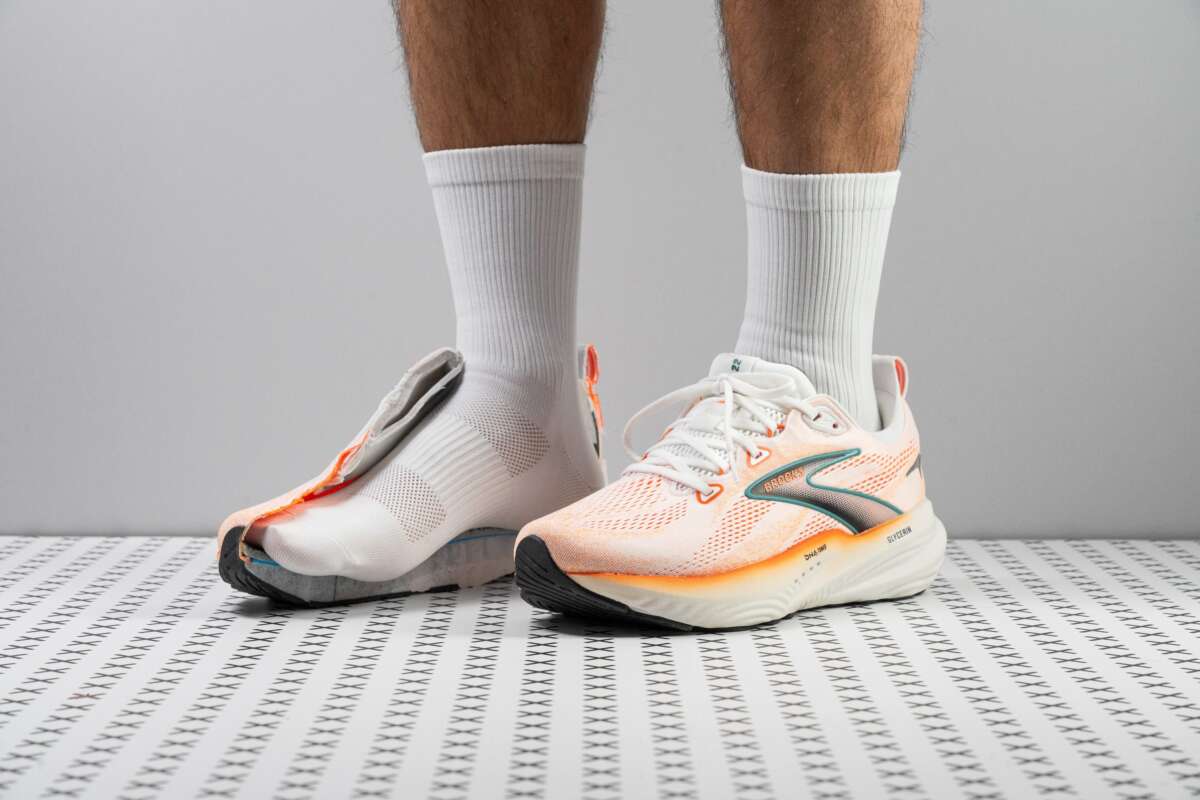
Do Brooks Shoes Run True To Size: Fit Guide
Most Brooks shoes run true to size, but your best fit depends on foot width, running socks, and the shoe model.
After reviewing Brooks fit guidance and common runner fitting patterns, the answer to “do Brooks shoes run true to size” is usually yes. Still, running shoes need more space than casual shoes, so your normal shoe size may not always be your ideal Brooks size. This guide explains how Brooks sizing works, how to measure your feet, and how to avoid a costly fit mistake.
Do Brooks shoes run true to size?
In most cases, Brooks shoes run true to size in length. If you wear a US men’s 10 or women’s 8 in well-fitting athletic shoes, you will often start with that same size in Brooks.
The key word is “start.” A running shoe should feel secure around the heel and midfoot, while leaving enough room for your toes to spread. Your feet may also swell during a long run, so a snug store fit can become painful after several miles.
Brooks shoes may feel different from one model to another. Cushioning, upper materials, toe box shape, and shoe purpose can all change the fit. A neutral daily trainer may feel roomier than a lightweight racing shoe, even when both have the same size printed inside.
Research on footwear fit also supports leaving space at the front of the shoe. Many foot specialists suggest about a thumb’s width between your longest toe and the shoe end. This space helps reduce pressure on the toes and lowers the risk of black toenails.

How Brooks shoe sizing works
Brooks uses standard US shoe sizes, along with separate men’s and women’s size charts. The brand also offers several width options, which can matter as much as length.
Common Brooks widths include:
• Men’s narrow, standard, wide, and extra wide
• Women’s narrow, standard, wide, and extra wide
• Standard men’s width: D
• Standard women’s width: B
• Wide men’s width: 2E
• Wide women’s width: D
A shoe can be the correct length but still feel wrong if the width does not match your foot. For example, a runner with a wide forefoot may keep sizing up to gain more toe room. That can leave the heel loose and create slipping. Choosing a wide version is often a better solution.
Brooks also makes shoes with different upper designs. Some use soft, flexible mesh, while others use structured materials that hold the foot more firmly. A flexible upper may feel more forgiving, while a structured upper may feel closer and more secure.
If you are wondering, “do Brooks shoes run true to size for wide feet,” the answer is often yes in length, but width selection becomes more important. Do not assume a larger size will solve a width problem.

Should you size up or down in Brooks shoes?
Most runners should not automatically size up or down in Brooks shoes. Begin with your usual athletic shoe size, then check the actual fit while wearing the socks you plan to run in.
Many runners choose a half size larger than their everyday dress shoes. Dress shoes often have a closer fit, and people may wear thin socks with them. Running shoes need more room because feet expand with heat, motion, and time.
Consider a half size up if:
• Your longest toe touches the front
• Your toes feel cramped when walking downhill
• Your feet swell during longer runs
• You wear thick running socks
• Your current shoes cause black toenails
Consider staying with your usual size if:
• You have about a thumb’s width of toe room
• Your heel stays in place without tight lacing
• Your toes can move freely
• The midfoot feels secure but not tight
Consider a different width instead of a larger size if the shoe feels tight across the forefoot but long enough. This is one of the most useful answers to “do Brooks shoes run true to size” because length and width are separate measurements.

How to measure your feet for Brooks shoes
Measuring your feet at home can make online shopping much easier. Your feet may differ slightly in length, so measure both and use the larger foot when choosing a size.
Follow these steps:
-
Place a sheet of paper on a hard floor.
-
Stand on the paper with your heel lightly touching a wall.
-
Wear the socks you plan to use for running.
-
Ask someone to mark the end of your longest toe.
-
Measure from the wall edge to the toe mark.
-
Repeat the process for your other foot.
-
Compare the larger measurement with the current Brooks size chart.
Measure late in the day when your feet are slightly larger. This gives you a more realistic running fit than measuring first thing in the morning.
Do not measure while sitting. Your feet spread more when you stand, and that spread affects shoe comfort. Also, your longest toe may not be your big toe. Check both feet carefully.
A size chart is helpful, but it cannot measure arch shape, instep height, heel width, or personal comfort. Use the chart as a guide, then use the return policy if the fit does not feel right.
How different Brooks models may fit
The question “do Brooks shoes run true to size” has a slightly different answer for each model. Most Brooks running shoes follow the brand’s standard length, but their shape and upper can feel different.
Brooks Ghost
The Ghost is a popular daily trainer with a familiar fit. It usually feels true to size for many runners and offers a moderate amount of room in the toe area.
It may work well for runners who want one shoe for walking, easy runs, and daily training. If your foot is wide, check whether the model is available in a wide or extra-wide version.
Brooks Adrenaline GTS
The Adrenaline GTS often has a secure midfoot feel and supportive structure. It generally runs true to size, but some runners may notice a closer fit around the midfoot.
If you have a high instep, try the shoe with your running socks. You may need a wide version rather than a longer size.
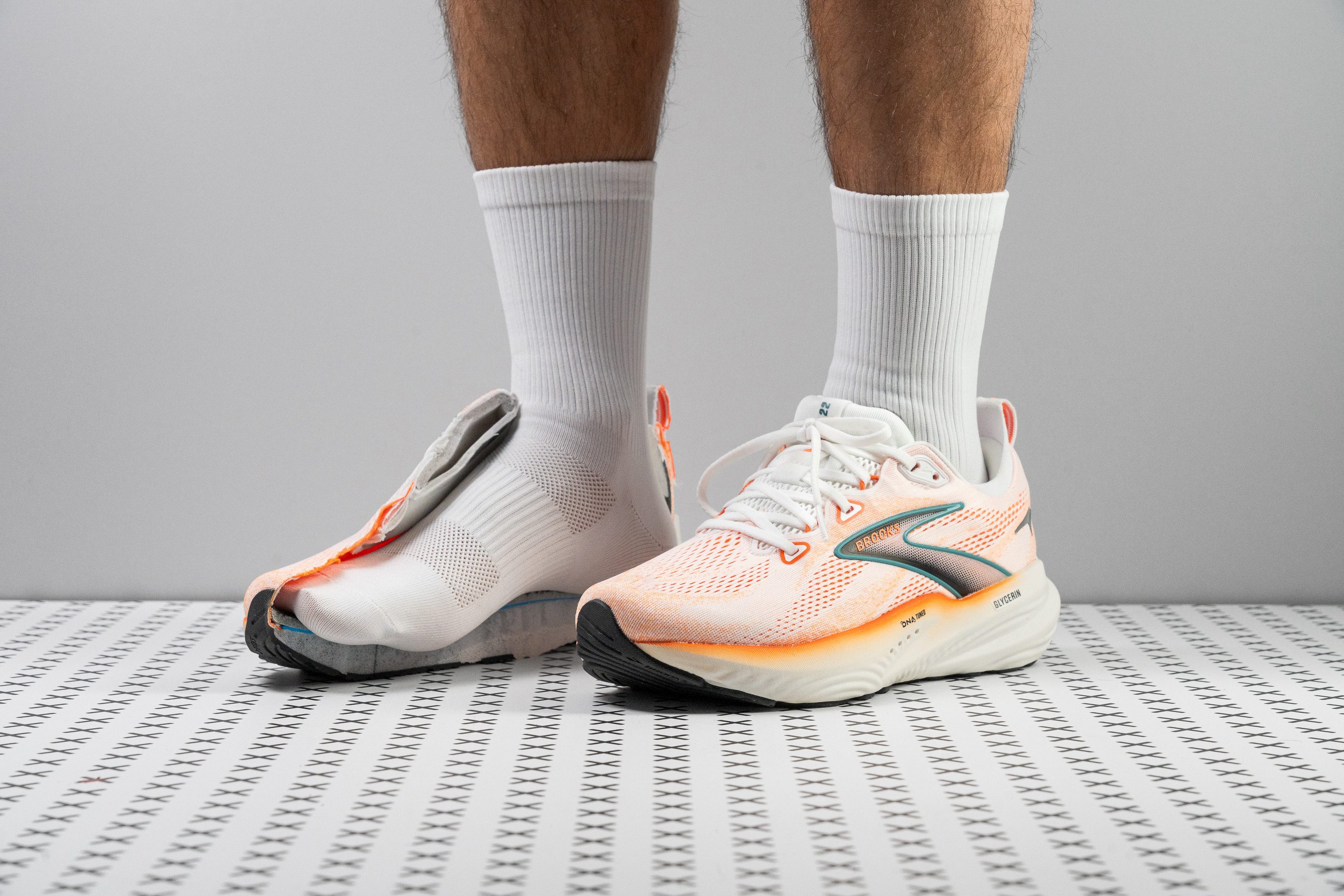
Brooks Glycerin
The Glycerin is known for a soft, cushioned ride. Its upper may feel comfortable for runners who want a little more softness around the foot.
Even with plush cushioning, do not choose a larger size unless you need more length. Extra space behind the heel can cause movement and rubbing.
Brooks Launch
The Launch is lighter and more streamlined than some Brooks daily trainers. It may feel closer to the foot, especially in the forefoot.
Runners between sizes should test both sizes if possible. A lightweight shoe can feel less forgiving when the fit is too short or too narrow.
Brooks Hyperion
The Hyperion line is designed for faster running. Some versions have a more performance-focused shape, so they may feel less roomy than a relaxed daily trainer.
For racing shoes, a secure fit matters, but your toes should never press against the front. Speed does not make a painful fit acceptable.

How Brooks shoes should fit
A properly fitted Brooks shoe should feel comfortable from the first try. Running shoes do not need a long break-in period to become wearable, although the upper may soften slightly over time.
Check these areas:
• Toe room: Leave about a thumb’s width between your longest toe and the front.
• Toe movement: Your toes should spread and move without pressure.
• Heel hold: Your heel should stay down when you walk or jog.
• Midfoot fit: The laces should hold your foot without creating numbness.
• Width: The upper should not bulge sharply over the sides of your foot.
• Arch area: The shoe should not press hard against your arch unless that shape suits your foot.
Try a short walk, a few stairs, and a gentle jog indoors. Pay attention to pressure points, slipping, and toe contact. A shoe that feels perfect for 30 seconds may feel very different after 30 minutes.
Use the runner’s knot if your heel slips slightly. This lacing method can improve heel security without making the whole shoe tighter. If the heel still slips, the shape may not match your foot.
Do Brooks shoes fit narrow, wide, or flat feet?
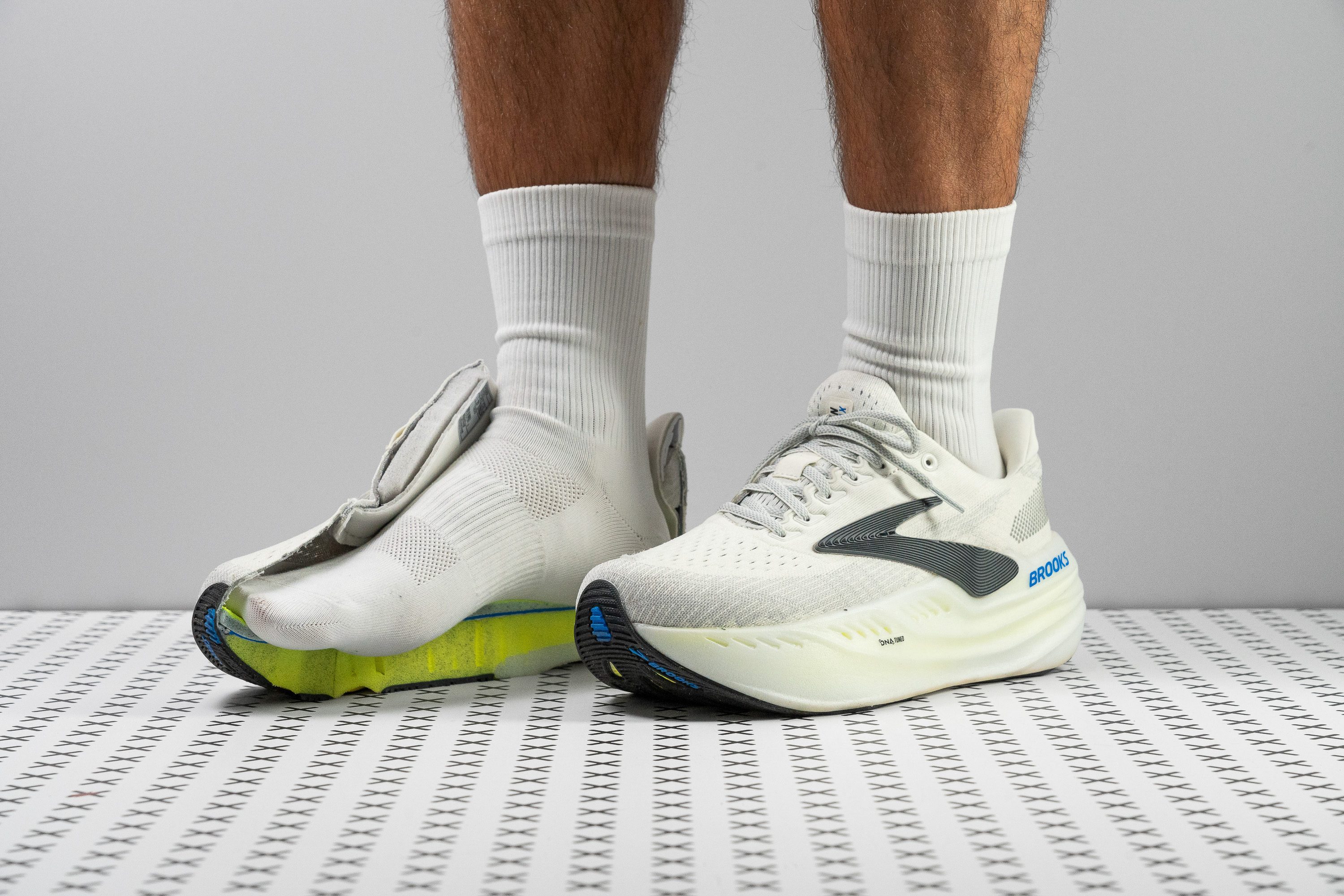
Brooks offers several widths, which makes the brand useful for many foot shapes. However, width labels are not a complete description of fit.
A narrow foot may need a narrow version to prevent side-to-side movement. A wide foot may need a wide or extra-wide version to avoid pressure across the ball of the foot.
Flat feet do not always require a special size. The more important question is whether the shoe feels stable and comfortable during movement. Some runners with low arches prefer structured shoes, while others feel better in neutral shoes.
High arches can create pressure under the midfoot or require more room over the instep. If the laces feel tight even when the shoe is not short, look for a different upper shape or width.
Foot shape changes with age, pregnancy, weight changes, injury, and daily activity. That means the Brooks size that worked two years ago may not feel right today.
Common Brooks sizing mistakes to avoid
Even when Brooks shoes run true to size, several habits can lead to a poor fit.
• Buying by size alone: A size number does not describe foot shape or width.
• Trying shoes with thin socks: Test them with the socks you will actually wear.
• Shopping early in the morning: Feet are often smaller before a full day of activity.
• Ignoring the larger foot: Always fit the larger foot.
• Sizing up for width: Choose a wider shoe when possible.
• Wearing shoes that hurt: Pain is a fit warning, not a normal break-in stage.
• Forgetting return rules: Keep indoor try-ons within the seller’s return requirements.
• Copying another runner’s size: Two people with the same length may need different widths.
One mistake I often see in shoe-fitting advice is treating toe room as the only factor. A shoe can have enough length but still cause heel slip, arch pressure, or forefoot pain. Think of fit as a balance: the heel anchors the shoe, the midfoot holds it, and the toes need room to move.
Buying Brooks shoes online
Online shopping can work well if you prepare before ordering. Start by checking the size chart for the exact Brooks model and reviewing the available widths.
Before buying, compare:
• Your measured foot length
• Your usual athletic shoe size
• The model’s width options
• Customer comments about length and width
• The retailer’s return and exchange policy
Read reviews with care. A runner may say a shoe feels small because they prefer a roomy fit. Another may say it feels true to size because they have a narrow foot. Reviews are useful patterns, not personal prescriptions.
When the shoes arrive, try them indoors on a clean surface. Wear both shoes and use your normal running socks. Walk, climb stairs, and perform a few light movements before deciding.
If the shoe feels too short, too tight, or unstable, exchange it. Do not keep an uncomfortable pair because the color is attractive or the discount was good. The right shoe should support your running goals, not distract you from them.

When to replace Brooks running shoes
Fit can change as shoes wear down. The upper may stretch, the heel lining may weaken, and the midsole may lose some of its original feel.
Replace your Brooks shoes when you notice:
• New pain during or after runs
• Visible wear on the outsole
• Uneven compression in the midsole
• A loose or damaged heel collar
• Less cushioning than before
• Repeated slipping despite proper lacing
Mileage can offer a rough guide, but it is not a strict rule. Many running shoes last several hundred miles, yet body weight, running style, terrain, pace, and shoe design all affect durability.
Keep a simple record of when you begin using a pair. This helps you connect changes in comfort with shoe age. If discomfort appears suddenly, also consider training load, injury, and running surface instead of blaming size alone.
Frequently Asked Questions: Do Brooks shoes run true to size?
Do Brooks running shoes run true to size?
Yes, most Brooks running shoes run true to size in length. Start with your usual athletic shoe size, then check toe room, heel security, and width before keeping the pair.
Should I buy Brooks shoes half a size bigger?
Some runners prefer a half size larger than their casual shoe size, especially for long-distance running. Do this only when your usual size feels short or cramped, not simply because the shoe is a running shoe.
Do Brooks shoes run small?
Brooks shoes are not generally considered small, but a specific model may feel short or narrow on your foot. Check the model’s shape and try a wide option before moving to a much longer size.
Do Brooks shoes fit wide feet?
Many Brooks models are available in wide and extra-wide sizes. If the length feels right but the forefoot feels tight, choose a wider width instead of sizing up.
How much room should be in Brooks running shoes?
Aim for about a thumb’s width between your longest toe and the shoe end. Your toes should move freely, while your heel and midfoot remain secure.
Are Brooks shoes good for people with flat feet?
They can be, but flat feet alone do not determine the best shoe. Choose based on comfort, stability, gait needs, and whether the shoe creates pressure or pain during movement.
Should Brooks shoes feel tight at first?
They should feel secure, not tight or painful. Mild upper firmness may soften, but numbness, toe pressure, rubbing, and sharp pain are signs to try another size, width, or model.
Conclusion
So, do Brooks shoes run true to size? Usually, yes. Most runners can begin with their normal athletic shoe size, but the best choice depends on toe room, foot width, swelling, socks, and the specific Brooks model.
Measure both feet, shop later in the day, test the shoes indoors, and choose width before adding length. A well-fitted pair should feel secure at the heel, comfortable through the midfoot, and roomy at the toes. Use these steps before your next purchase, and share your Brooks fit experience to help other runners make a confident choice.

Michael Smith is the Content Strategist behind The Style Hub, where fashion meets function. With a keen eye for trends and a passion for everyday style, he curates content that helps readers make smarter, more stylish choices—from the perfect pair of sneakers to must-have accessories. Michael specializes in breaking down fashion into practical, wearable insights, making style accessible for everyone. When he’s not researching the latest trends, he’s exploring how comfort, innovation, and timeless design come together in modern fashion.