Do DC Shoes Run Big Or Small: Find Your Perfect Fit
DC shoes usually fit true to size, but some skate models feel slightly roomy.
Wondering, “do DC shoes run big or small?” The best answer is that most DC shoes fit true to size, yet their wide skate shape, thick padding, and sturdy build can make them feel larger than slim casual sneakers. This guide explains DC shoe sizing by model, foot shape, use, and fit preference so you can choose with confidence.
Do DC shoes run big or small?
In most cases, DC shoes run true to size. If you normally wear a men’s US 10, a DC size 10 will often be the right starting point. The brand’s skate shoes are made for control, comfort, and board feel, so many models have a broader toe box and extra internal padding.
That extra space can make DC shoes feel slightly big, especially if you have narrow feet. However, this does not always mean you should size down. A smaller shoe may press against your toes or feel tight across the top of your foot.
The main factors are:
• The specific DC shoe model
• Your foot length and width
• Whether you wear thick or thin socks
• Your preferred amount of room
• Whether you use the shoes for skating or daily wear
• The fit of the shoe’s insole and upper
So, do DC shoes run big or small? They usually run true to size, with some styles feeling wide or slightly roomy rather than genuinely oversized.
How DC shoe sizing usually works
DC uses standard US shoe sizing for its men’s, women’s, and kids’ footwear. The most reliable way to choose a size is to compare your foot measurement with the official size chart for the exact shoe you want.
Shoe sizes can vary slightly between models. A low-profile sneaker may feel closer to your foot, while a padded skate shoe may have more space around the toes and sides.
Length versus width
Length and width are different parts of fit. A shoe can be the correct length but still feel too wide. This is why sizing down is not always the right fix.
If your toes have too much space at the front, the shoe may be too long. If your heel stays secure but the sides feel loose, the shoe may simply have a wide fit.
A good fit usually leaves:
• About a thumb’s width of space between your longest toe and the front
• Enough room for your toes to move naturally
• A secure heel that does not lift with each step
• Light contact around the midfoot without pressure
• No pinching across the toe box
Why skate shoes often feel larger
Skate shoes are built differently from lightweight running shoes. They often include padded collars, thick tongues, reinforced uppers, and rubber outsoles. These features improve durability and protection, but they can also make the shoe feel bulky.
That bulk may be useful on a skateboard. It helps protect your feet during impact and gives the shoe a stable feel. For casual wear, though, someone with narrow feet may notice more movement inside the shoe.

Do DC skate shoes run big?
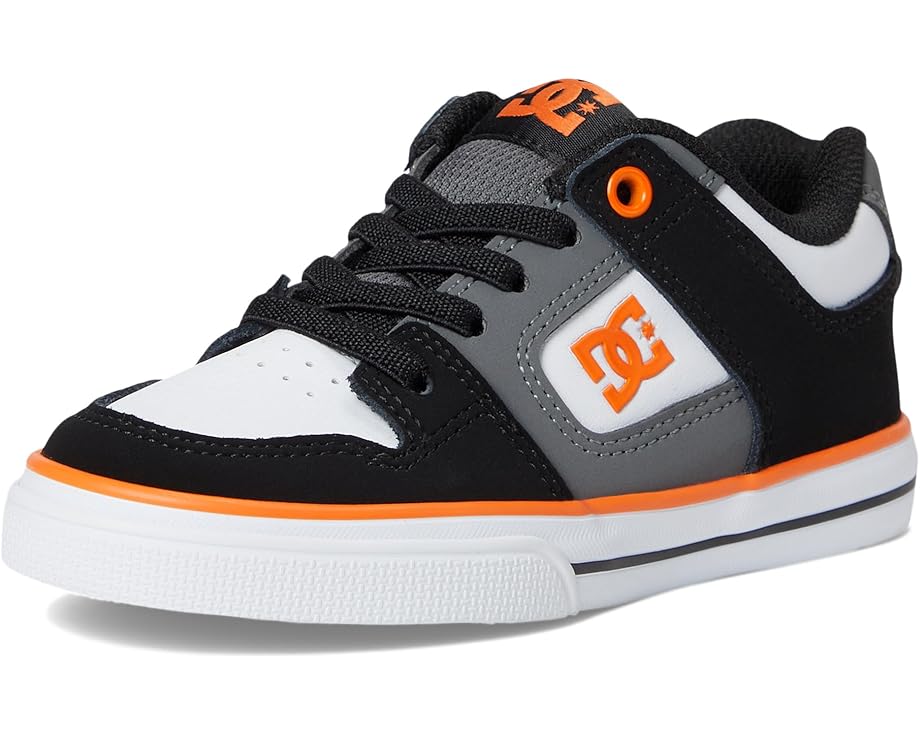
Many DC skate shoes fit true to size, but they can feel slightly larger than standard lifestyle sneakers. This is most noticeable in heavily padded models with wide soles and thick tongues.
A roomy skate shoe is not always a problem. Skaters often want enough space to move their toes and wear thicker socks. The shoe should still hold your heel firmly and prevent your foot from sliding forward.
If you are between sizes, your choice depends on how you plan to wear the shoes:
• Choose the larger size if you wear thick socks or need more toe room.
• Choose the smaller size if your feet are narrow and the larger size slips.
• Stay with your usual size if the shoe feels secure and comfortable.
• Avoid sizing down just because the shoe looks wide.
For daily walking, a snug but comfortable fit often feels better. For skating, you may prefer a little extra room, especially if the shoe has strong padding.
One common mistake is judging a DC shoe by its outer shape. A wide outsole can make the shoe look oversized even when the internal length is correct. Always check how your foot sits inside the shoe.
Do different DC shoe models fit differently?
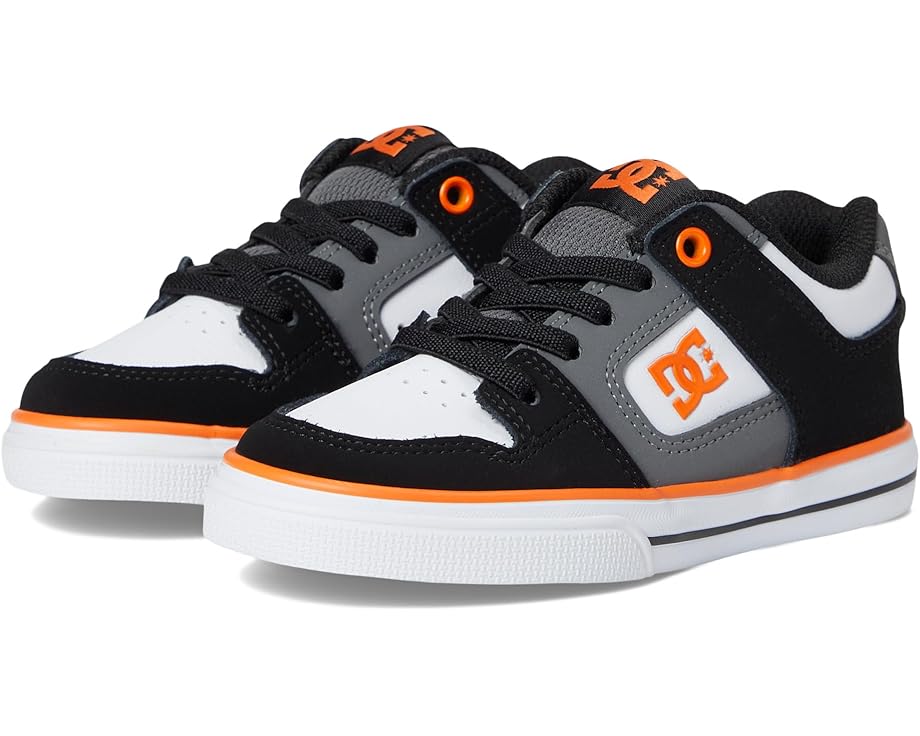
Yes. DC shoe sizing can vary by design, even when two pairs share the same labeled size. Construction, padding, materials, and sole shape all affect the fit.
Court-style and low-profile shoes
Low-profile DC shoes often feel closer to the foot. They may have less padding and a slimmer upper than traditional skate shoes. These styles are more likely to feel true to size without much extra room.
If you prefer a clean, narrow look, a low-profile model may feel more secure. People with wide feet should check the toe box carefully before choosing a smaller size.
Padded skate shoes
Padded models usually feel softer and roomier. Their collars and tongues can create more space around the ankle and upper foot. This can make the shoes feel big during the first try-on.
Do not confuse soft padding with excess length. If your toes sit in the right place and your heel stays secure, the size may be correct.
High-top DC shoes
High-top designs provide extra ankle coverage. They can feel more secure around the ankle, but the upper may also feel roomy around the lower leg.
Use the laces to control the fit. Lace the lower eyelets firmly, then adjust the upper section for comfort. A high-top should support your ankle without cutting into it.
Slip-on and casual models
Slip-on shoes may feel different because they rely on the upper’s shape to hold your foot. If the shoe is too loose, your heel may lift. If it is too tight, the upper can press across the top of your foot.
For slip-on DC shoes, focus on heel security and midfoot comfort. The shoe should stay on without forcing your toes to grip the insole.
How to measure your feet for DC shoes
Measuring your feet is the simplest way to answer, “do DC shoes run big or small?” Your foot length gives you a better starting point than your old shoe size.
Measure both feet because one foot is often slightly longer. Use the larger measurement when choosing your size.
Follow these steps
- Place a sheet of paper on a hard floor.
- Stand on the paper while wearing the socks you plan to use.
- Keep your heel against a wall.
- Mark the end of your longest toe.
- Measure from the wall edge to the mark.
- Repeat for the other foot.
- Compare the larger measurement with DC’s current size chart.
Measure your feet later in the day if possible. Feet can swell slightly after walking, standing, or working. A shoe that fits in the morning may feel tighter at night.
Do not measure while sitting. Your foot spreads under body weight, so standing gives a more realistic result.
What if your feet are different sizes?
Many people have one foot that is slightly longer or wider. Choose a size that fits the larger foot. You can use a thin insole or adjust the lacing on the smaller side if needed.
If the difference is large, look for a retailer with an easy return policy. Comfort and stability matter more than forcing both feet into the same tight fit.
How DC shoes should fit
A properly fitted DC shoe should feel secure without feeling stiff or painful. Since DC makes many skate-focused designs, the ideal fit may feel more supportive than a soft walking sneaker.
Use this quick fit test:
• Your longest toe should not touch the front.
• Your heel should stay mostly in place when walking.
• Your toes should not be squeezed together.
• The upper should not create sharp pressure points.
• You should be able to bend your toes slightly.
• The sole should feel stable under your whole foot.
Walk on a clean indoor surface for several minutes. Try stairs, turns, and a few normal steps. This reveals slipping or pressure that you may not notice while standing still.
Pay close attention to heel lift. A small amount of movement can be normal in a new shoe. Constant slipping can cause blisters and reduce control.
Also check the toe area. Your toes should not hit the front when you walk downhill or stop suddenly. If they do, the shoe is too short, even if the width feels comfortable.
Signs your DC shoes are too big
Your DC shoes may be too big if:
• Your heel lifts with each step.
• Your foot slides forward inside the shoe.
• You need to overtighten the laces.
• Your toes grip the insole to keep the shoe on.
• You develop blisters at the heel.
Signs your DC shoes are too small
Your DC shoes may be too small if:
• Your longest toe touches the front.
• Your toes feel numb or cramped.
• The sides press into your foot.
• The upper leaves painful marks.
• Your feet hurt after short walks.
A break-in period may soften leather or fabric, but it will not create meaningful extra length. Never rely on break-in time to fix a shoe that is clearly too short.

Should you size up or down in DC shoes?
Most shoppers should begin with their normal shoe size. Then adjust only when measurements, foot shape, or the model’s fit support a change.
Consider sizing up when:
• Your larger foot is between sizes.
• You wear thick skate socks.
• Your toes need more room.
• The shoe feels short but not narrow.
• The model has a snug upper.
Consider sizing down when:
• Your feet are narrow.
• Your heel slips in your normal size.
• You wear thin socks.
• The shoe has a notably roomy fit.
• You are choosing a soft slip-on that stretches slightly.
Do not size down to make a wide shoe look slimmer. A wide shoe can still have the correct length. Try a different model, adjust the laces, or use a supportive insole before choosing a shorter size.
The best answer to do DC shoes run big or small depends on the relationship between length, width, and support. Fit is more than the number printed inside the shoe.
A practical example
Suppose you normally wear a men’s US 9.5 and have average-width feet. A DC skate shoe in 9.5 is the logical first choice. If your toes sit correctly and your heel stays secure, keep that size.
If the 9.5 feels loose only around the heel, try a different lacing method or a thinner insole. If your toes touch the front, do not size down. Try a larger size or a different shape instead.
How socks, laces, and insoles change the fit
Small adjustments can change how DC shoes feel. This is useful when the length is correct but the fit needs minor refinement.
Socks
Thick socks take up more space and can make a roomy shoe feel secure. They may also make a snug shoe uncomfortable.
Wear the socks you expect to use most often when trying on DC shoes. Do not test skate shoes with thin dress socks if you plan to wear thick athletic socks.
Lacing
Lacing controls heel and midfoot security. If your heel slips, use a heel-lock or runner’s-loop technique if the shoe has suitable eyelets. Tighten the lower laces enough to hold your foot, but avoid pressure across the top.
Loose lacing can make a correctly sized shoe feel too big. Tight lacing can make a correctly sized shoe feel too small. Adjust the laces before changing sizes.
Insoles
An insole can reduce extra volume and improve arch support. It may help if the shoe is slightly roomy but correct in length.
Avoid using a thick insole in a shoe that already presses against your toes. It raises your foot and can reduce the available space inside the upper.
Breaking in DC shoes
New DC shoes may feel firm at first, especially around the collar and upper. Wear them indoors for short periods before using them all day.
A short break-in period can improve flexibility. It should not cause sharp pain, numbness, or repeated rubbing. Those signs point to a poor fit, not normal breaking in.
Common mistakes when buying DC shoes online
Online shopping makes size selection harder because you cannot test heel movement or toe room. A few simple checks can reduce the risk.
• Read the product page for model-specific fit notes.
• Check the current DC size chart.
• Review customer comments for width and length patterns.
• Compare the return and exchange rules before ordering.
• Measure both feet before buying.
• Order from a seller that accepts unworn returns.
Customer reviews are useful, but they are not universal. One shopper may call a shoe “too big” because they have narrow feet. Another may call the same shoe “perfect” because they wear thick socks.
Look for repeated comments about the same feature. Several buyers mentioning a narrow toe box or loose heel provide more useful information than one short review.
When the shoe arrives, try it indoors on a clean surface. Keep the packaging and tags until you are sure about the fit. This protects your return options.
The answer to do DC shoes run big or small is also affected by retailer measurements. Some stores list only standard US sizing, while others provide foot-length measurements. Use measurements whenever they are available.
DC shoes for wide and narrow feet
DC shoes are often a reasonable choice for medium or wider feet because many skate styles have a broad shape. Still, not every DC model has the same amount of room.
For wide feet
Look for models with:
• A rounded or spacious toe box
• Flexible materials
• Less restrictive overlays
• A secure but adjustable lacing system
Avoid sizing up solely for width if the extra length causes heel slip. A longer shoe may create new problems. A different model with more natural width is often better.
For narrow feet
Narrow feet may move inside padded DC skate shoes. Try these solutions:
• Wear medium-weight socks.
• Use a heel-lock lacing method.
• Add a thin, well-fitting insole.
• Choose a lower-profile model.
• Consider a narrower design when available.
If your heel still slips after these adjustments, the shoe may not match your foot shape. No size can fully correct a shape mismatch.
Are DC shoes comfortable for everyday wear?
DC shoes can be comfortable for daily use, especially if you like firm soles, padded uppers, and durable construction. Their skate design often feels stable and protective.
They may feel heavier than running shoes or lightweight walking sneakers. The flat sole also provides a different feel from shoes with a curved, cushioned platform.
For everyday wear, choose a size that allows natural toe movement and secure heel contact. Comfort should remain consistent after several hours, not just during a quick try-on.
If you stand or walk for long periods, consider the shoe’s cushioning and support. Skate shoes are designed for board control and impact protection, not necessarily for long-distance walking.
A useful real-world lesson is to test shoes in the setting where you will use them. A pair that feels great for short errands may feel heavy during a full workday. Start with short wear sessions and monitor pressure points.
What I have learned about choosing DC shoe sizes
A common fitting mistake is to focus only on whether the shoe feels roomy. Room is not the same as poor fit. The better question is whether the foot stays stable while the toes have enough space.
I have also seen people size down too quickly after trying on a padded skate shoe. That often creates toe pressure without solving heel movement. Lacing and sock thickness should be tested first.
Another lesson is that online size labels are not enough. The same labeled size can feel different when the upper, padding, or sole changes. Measuring your feet and checking the exact model saves more time than guessing.
For a safe purchase, use this simple method:
- Measure both feet.
- Check the exact DC model’s size chart.
- Start with your usual size.
- Try the shoes with your normal socks.
- Walk indoors and check heel and toe space.
- Exchange them if the fit remains unstable or painful.
This process gives you a more reliable answer to do DC shoes run big or small than relying on brand reputation alone.
Frequently Asked Questions: Do DC shoes run big or small?
Do DC shoes fit true to size?
Most DC shoes fit true to size, especially when you use your normal US shoe size as a starting point. Some padded skate models may feel wider or roomier without being longer.
Should I size down in DC shoes?
Only consider sizing down if your normal size has clear heel slip and your toes still have enough room. Do not size down if your longest toe touches the front or feels cramped.
Do DC skate shoes run wide?
Many DC skate shoes have a broader shape than slim casual sneakers. The exact width depends on the model, so check the product details and measure your feet before ordering.
Are DC shoes good for people with wide feet?
Several DC skate styles can work well for wider feet because they often have a roomy toe area. However, a wider fit varies by model, and sizing up may create too much extra length.
Do DC shoes stretch after wearing them?
Materials may soften and flex with use, but shoes generally do not gain much length. If DC shoes feel too short or cause pain, choose a different size instead of waiting for them to stretch.
How much space should I have in DC shoes?
Your longest toe should have roughly a thumb’s width of space from the front of the shoe. Your heel should remain secure, and your toes should move without pressure.
Are DC shoes comfortable for walking?
DC shoes can be comfortable for casual walking because they often have stable soles and padded uppers. They may feel heavier and less flexible than shoes made specifically for long-distance walking.
Conclusion
So, do DC shoes run big or small? Most DC shoes run true to size, but padded skate designs can feel wider and slightly roomier. Your foot shape, socks, lacing, and the exact model all affect the final fit.
Start with your usual size, measure both feet, and check the model-specific size chart. Make sure your toes have room while your heel stays secure. If a pair feels painful, numb, or unstable indoors, exchange it rather than hoping the problem will disappear.
Use these fit checks before your next purchase, and explore more footwear guides or share your DC shoe sizing experience in the comments.

Michael Smith is the Content Strategist behind The Style Hub, where fashion meets function. With a keen eye for trends and a passion for everyday style, he curates content that helps readers make smarter, more stylish choices—from the perfect pair of sneakers to must-have accessories. Michael specializes in breaking down fashion into practical, wearable insights, making style accessible for everyone. When he’s not researching the latest trends, he’s exploring how comfort, innovation, and timeless design come together in modern fashion.