
How To Get Blood Out Of Shoes: Easy Cleaning Guide
Cold water, gentle blotting, and the right cleaner can remove blood from most shoes without setting the stain.
Learning how to get blood out of shoes starts with acting fast and using low-risk methods. Fresh blood is much easier to lift than dried blood, but even older stains can often improve with careful cleaning. The best method depends on the shoe material, stain age, and whether the blood reached the lining or insole.
What to Do Before Cleaning Blood From Shoes
Treat blood as potentially infectious, even when you know where it came from. Wear disposable gloves, keep children and pets away from the area, and wash your hands after cleaning. If blood came from another person, avoid touching it with bare skin.
Before you learn how to get blood out of shoes, check the care label or the manufacturer’s cleaning guide. Test every cleaner on a hidden spot first. Some products can fade leather, weaken glue, or leave a pale mark on colored fabric.
Gather these supplies:
• Disposable gloves
• Cold water
• White cloths or paper towels
• A soft toothbrush
• Mild liquid laundry detergent or dish soap
• Baking soda
• Enzyme-based laundry cleaner
• Leather conditioner for leather shoes
• A suede brush for suede or nubuck
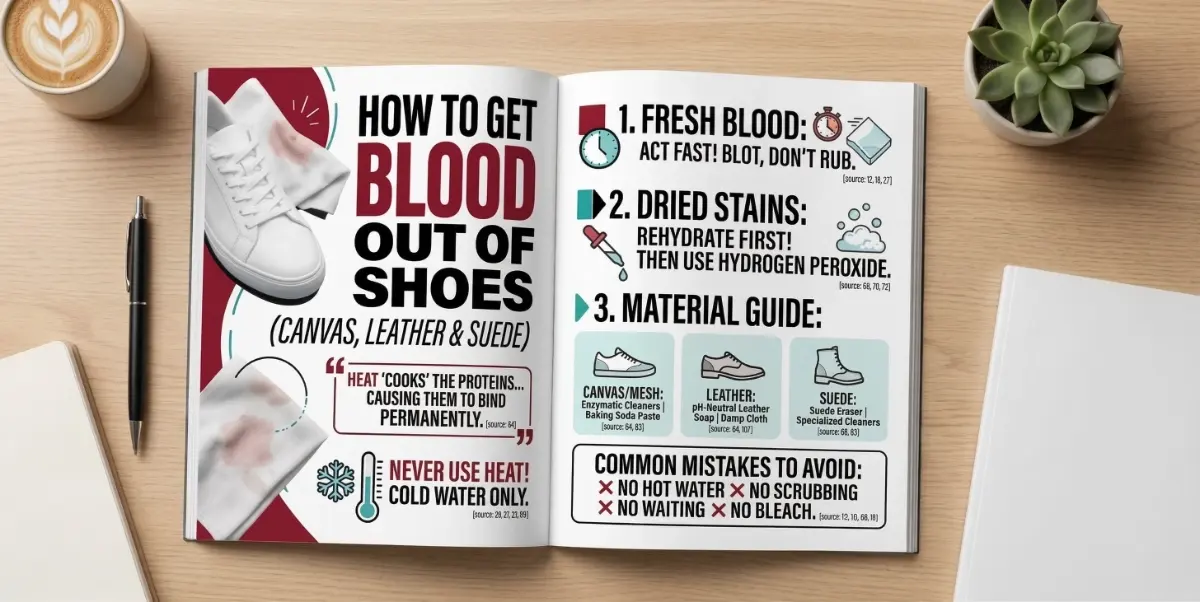
Avoid hot water at the start. Heat can make blood proteins bond more firmly with fibers, much like cooking makes an egg harder to clean from a pan.
:max_bytes(150000):strip_icc()/how-to-clean-your-shoes-4164257-10-08ef5a8d285b4111a29f1a4dc6e53157.jpg)
How to Get Blood Out of Shoes Step by Step
The following method works well for canvas, mesh, cotton, and many synthetic shoes. It is also a useful starting point for other materials, as long as you adjust the cleaner and moisture level.
1. Remove the Laces and Insoles
Take out the shoelaces and removable insoles. This lets you clean beneath them and prevents blood from spreading to clean areas.
Clean laces separately in cold water with a small amount of detergent. If the insole has absorbed a large amount of blood, replacing it may be safer and more effective than trying to fully clean it.
2. Blot Fresh Blood
Use a clean cloth dampened with cold water. Press it onto the stain, then lift it away. Repeat with a clean part of the cloth each time.
Do not rub the spot. Rubbing pushes blood deeper into the fabric and spreads the stain around the shoe. Blotting works like lifting dust with tape: gentle contact removes more than forceful scrubbing.
3. Mix a Mild Cleaning Solution
Add a few drops of mild detergent to a cup of cold water. Stir it until the water looks slightly soapy.
Dip a soft toothbrush or cloth into the mixture. Wring it out well, since soaking the shoe can damage padding, glue, and inner materials.
4. Work From the Outside In
Gently dab the edge of the stain first. Move toward the center in small circles or short strokes.
Starting at the outside helps keep the stain from growing. Rinse the cloth often and use a fresh section as the blood lifts.
5. Rinse Away Soap
Dampen another cloth with plain cold water. Dab the cleaned area to remove soap residue.
Too much detergent can leave a sticky film that attracts dirt. Use only enough water to lift the soap, not enough to saturate the shoe.
6. Air-Dry the Shoes
Stuff the shoes loosely with white paper towels to help them hold their shape. Let them dry at room temperature in a well-ventilated place.
Avoid direct heat, hair dryers, radiators, and clothes dryers. Heat may shrink fabric, warp foam, crack leather, or loosen the sole.
How to Remove Fresh Blood From Fabric Shoes
Fresh blood usually responds best to cold water and mild detergent. Start cleaning as soon as possible, but do not panic if you cannot treat the shoes right away.
Follow these steps:
-
Put on gloves and remove the laces.
-
Blot excess blood with a dry paper towel.
-
Dab the stain with a cold, damp cloth.
-
Apply a small amount of diluted detergent.
-
Brush gently with a soft toothbrush.
-
Blot with clean water.
-
Repeat until the stain fades.
For white canvas, you can try a small amount of 3% hydrogen peroxide after a patch test. Apply it with a cotton swab, wait briefly, then blot with cold water. Peroxide can lighten dyes, so it is not a safe first choice for colored shoes.
A useful cleaning lesson is that patience beats pressure. Several gentle treatments are safer than one aggressive scrub. I have seen people damage the fabric around a stain while trying to remove the last faint mark in one pass.
How to Get Dried Blood Out of Shoes
Dried blood needs more time because it has bonded to the fibers. Soften it before cleaning rather than scraping hard.
Place a cold, damp cloth over the stain for 10 to 15 minutes. Keep the cloth damp, but do not soak the entire shoe. Once the stain softens, lift loose residue with a soft toothbrush.
Next, apply a small amount of enzyme-based laundry cleaner made for protein stains. Blood is a protein-based stain, and enzymes can help break it down. Follow the product directions and test it on a hidden area first.
Repeat the process if needed. Old stains may not disappear completely, especially on porous fabric, light suede, or heavily worn shoes. The goal is to improve the mark without harming the shoe.
Never use a knife, razor, or rough brush to scrape dried blood. These tools can cut fibers and create a permanent worn patch.

How to Clean Blood From Leather Shoes
Leather needs less water and more care than fabric. Excess moisture can darken leather, leave rings, or weaken the finish.
Use this method:
-
Blot fresh blood with a dry cloth.
-
Mix a few drops of mild soap with cold water.
-
Dampen a soft cloth and wring it out well.
-
Dab the blood stain without soaking the leather.
-
Wipe away soap with a clean, lightly damp cloth.
-
Dry the shoe at room temperature.
-
Apply a suitable leather conditioner once the surface is fully dry.
Do not use hydrogen peroxide, bleach, acetone, or strong alcohol on finished leather unless the manufacturer specifically approves it. These products may strip color and protective coatings.
If the blood has entered deep cracks, stitching, or unfinished leather, a professional shoe cleaner may be the best option. A professional can match the leather finish and reduce the chance of a visible repair mark.
How to Get Blood Out of Suede and Nubuck Shoes
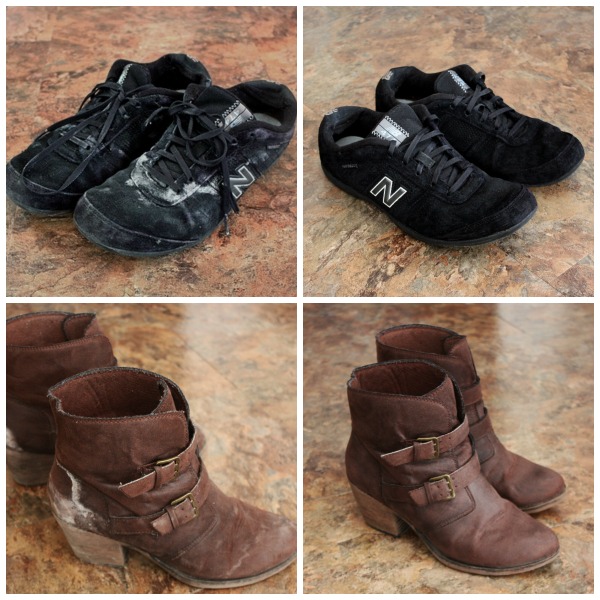
Suede and nubuck are difficult because water can change their texture and create dark rings. Keep moisture low and avoid rubbing.
First, let wet blood dry slightly on the surface if possible. Blot excess moisture, then use a suede brush to lift surface residue. Brush in one direction with light strokes.
For a remaining mark, use a suede cleaner designed for the shoe. Apply it to the whole affected panel rather than creating a small wet circle. Follow the product instructions and allow the shoe to dry naturally.
Once dry, brush the nap again. If the stain remains, take the shoes to a cobbler or professional cleaner. Home remedies can sometimes make suede look worse than the original blood mark.
How to Clean Mesh, Knit, and Athletic Shoes
Mesh and knit shoes can hold blood deep in their weave. They also often contain foam and glued sections that do not tolerate soaking.
Use a cold-water detergent solution and a soft toothbrush. Work slowly across the mesh, then press a dry towel against the area to draw out moisture.
Do not place blood-stained athletic shoes in a washing machine before spot-treating them. The heat and movement may spread the stain, while the machine may not remove blood from the inner lining.
If the care label allows machine washing, place the shoes in a laundry bag after spot treatment. Use cold water, a gentle cycle, and air-dry them afterward. Never use chlorine bleach on colored mesh or shoes with rubber details unless the manufacturer says it is safe.

How to Remove Blood From Shoe Soles
Rubber soles are usually easier to clean than uppers. Still, blood can collect in grooves and textured tread.
Mix mild soap with cold water and scrub the sole with an old toothbrush. For stubborn marks on plain white rubber, a baking soda paste may help.
To make the paste, mix baking soda with a small amount of cold water. Apply it to the rubber only, let it sit for a few minutes, then scrub gently and rinse with a damp cloth.
Keep baking soda away from delicate suede and unfinished leather. It can leave residue or alter the surface texture.
Using Hydrogen Peroxide, Baking Soda, and Enzyme Cleaners
Several household products may help, but each has limits.
Hydrogen Peroxide
Use only 3% hydrogen peroxide, and test it first. It can remove or lighten blood on white fabric, but it may bleach colored materials and damage some finishes.
Apply a small amount, allow brief contact, and blot. Do not mix peroxide with bleach, ammonia, vinegar, or other cleaners.
Baking Soda
Baking soda is mildly abrasive and can help with odor after cleaning. It is not the strongest choice for removing a deep blood stain.
Use it as a paste on rubber or durable white fabric. Brush gently and remove all residue afterward.
Enzyme Cleaners
Enzyme cleaners are often useful for protein stains. Choose a product labeled for blood or laundry stains, and follow the label exactly.
Do not assume an enzyme cleaner is safe for every shoe. Some formulas can affect leather, suede, dyes, or adhesives.
Mistakes That Make Blood Stains Worse
Knowing what not to do is a major part of learning how to get blood out of shoes. Common mistakes include:
• Using hot water before the stain is removed
• Scrubbing hard and spreading the blood
• Soaking the whole shoe
• Applying bleach to colored materials
• Using peroxide without a patch test
• Drying shoes with a hair dryer or heater
• Mixing cleaning products
• Ignoring the inner lining and insole
• Wearing contaminated shoes before cleaning them
Do not mix bleach with ammonia, vinegar, alcohol, or other household cleaners. Dangerous gases or chemical reactions may result.
If blood has soaked through the shoe, clean the inside as carefully as the outside. If the shoe cannot be cleaned fully, or if it belonged to someone with a bloodborne infection, consider professional cleaning or disposal.
How to Prevent Water Damage While Cleaning
Water damage is a common problem when people try to get blood out of shoes. The safest approach is controlled moisture.
Use a damp cloth instead of running water over the shoe. Clean small sections, blot often, and let the material dry between repeated treatments if it becomes too wet.
Protect the shoe’s shape with plain white paper. Avoid newspaper because ink can transfer to light-colored fabric. Remove the paper if it becomes soaked, then replace it with dry paper.
Do not store the shoes until they are fully dry. Damp shoes can develop odor or mold, especially around the insole and padding.
When to Use a Professional Shoe Cleaner
Home cleaning is reasonable for small stains on washable fabric, rubber, and some finished leather. Professional help is safer when the shoe is valuable or the material is delicate.
Consider a cobbler or specialty cleaner if:
• The shoe is made from suede, nubuck, silk, or exotic leather
• Blood has soaked into the lining
• The stain covers a large area
• The shoe has sentimental or high financial value
• A home cleaner caused discoloration
• You cannot safely handle the blood
A professional may not guarantee complete removal. Blood can permanently change dyed fibers, especially when it has dried in heat. Ask about the likely result before approving the service.
Safety and Hygiene After Cleaning
After cleaning, place used paper towels and disposable gloves in a sealed bag. Wash reusable cloths in hot water with detergent if the material allows it.
Clean the surface where you worked. Wash your hands with soap and running water, even if you wore gloves. If blood touched broken skin, eyes, mouth, or another mucous membrane, seek medical advice promptly.
The cleaning goal is both appearance and safety. A shoe that looks clean may still hold residue in its lining, stitching, or insole, so inspect all areas before wearing it again.
Frequently Asked Questions About How to Get Blood Out of Shoes
Can I use hot water to remove blood from shoes?
No. Start with cold water because heat can set blood into fabric and make the stain harder to remove. Use warm or hot water only later, and only if the shoe care label allows it.
Does hydrogen peroxide remove blood from shoes?
3% hydrogen peroxide can help lift blood from some white or colorfast fabrics. Always test it first because it may bleach colored fabric, damage dyes, or affect leather finishes.
How do I get blood out of white canvas shoes?
Blot the stain with cold water, then use diluted mild detergent and a soft brush. If the mark remains, test a small amount of 3% hydrogen peroxide on a hidden area before treating the stain.
Can I put blood-stained shoes in the washing machine?
Spot-treat the blood first, then check the care label. If machine washing is approved, use cold water and a gentle cycle, and air-dry the shoes instead of using a dryer.
How do I remove dried blood from leather shoes?
Use a barely damp cloth with a small amount of mild soap. Dab gently, remove soap with a clean damp cloth, let the leather dry naturally, and apply leather conditioner afterward.
What is the best way to clean blood from suede shoes?
Use a suede brush and as little moisture as possible. For a deep or large stain, professional suede cleaning is safer because water and household products can permanently change the nap.
Will baking soda remove a blood stain from shoes?
Baking soda may help with light residue and odor, especially on rubber soles. It is not a reliable treatment for deep blood stains and should not be used aggressively on suede or delicate leather.
Conclusion
The safest way to get blood out of shoes is to act early, use cold water, blot instead of scrub, and match the cleaner to the shoe material. Fabric shoes often respond to mild detergent, while leather and suede need less moisture and more caution. Always test products, avoid heat and bleach, and protect yourself when handling blood.
Start with the gentlest method that fits your shoes, and repeat it patiently rather than using harsh chemicals. If the stain is deep, the material is delicate, or the shoe has special value, contact a professional cleaner. Share your cleaning experience or explore more shoe-care guides for practical ways to keep your footwear fresh.

Michael Smith is the Content Strategist behind The Style Hub, where fashion meets function. With a keen eye for trends and a passion for everyday style, he curates content that helps readers make smarter, more stylish choices—from the perfect pair of sneakers to must-have accessories. Michael specializes in breaking down fashion into practical, wearable insights, making style accessible for everyone. When he’s not researching the latest trends, he’s exploring how comfort, innovation, and timeless design come together in modern fashion.