Best Shoes For Bow Legged Adults: Comfort Picks
The best shoes for bow legged adults offer stable support, a firm heel, wide comfort, and room for helpful orthotic inserts.
If your knees feel tired after a short walk, your feet roll out, or your shoes wear down on one edge, you are not alone. Bow legs can change how your feet meet the floor, so a soft shoe with no structure may feel like a loose boat. I looked for supportive footwear options and alignment inserts that can make daily steps feel steadier. These picks are not a cure for bone alignment, but they may improve comfort and balance when paired with the right fit and professional advice.
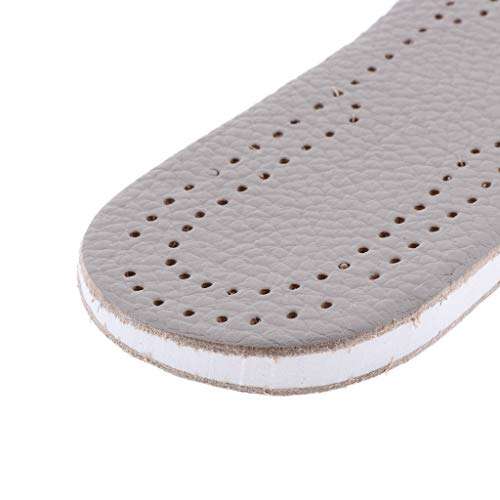
Deevoka Bow Leg Correction Orthotics

The Deevoka insert is made for adults who want a raised support area inside the shoe. Its shaped design aims to change how the foot rests in the shoe. That can be useful when a flat insole leaves the outer edge of the foot feeling overworked. The 26 cm length may suit many adult shoes, but measuring first is important.
I like this style because it can fit into a daily shoe instead of requiring a bulky brace. It may work best in a shoe with a removable insole and a firm heel counter. Start with short wear periods, since any new wedge can feel unusual at first. Stop if you notice sharp pain, numbness, or more knee strain.
Pros:
- Designed for bow-leg support needs
- Raised section may improve foot positioning
- Can fit many casual shoes
- Useful for people who need more than flat cushioning
- Lightweight design is easy to move between shoes
- Long 26 cm size may cover much of the foot
Cons:
- May not fit narrow or low-volume shoes
- Needs careful sizing before use
- Wedges may feel firm during the adjustment period
Silicone Heel Wedges for Bow Legs
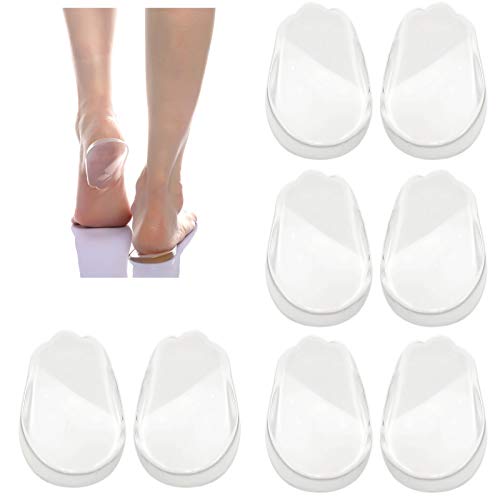
This four-pair set gives you medial and lateral heel wedges in a clear silicone style. It is aimed at people who need a small change in heel height or tilt rather than a full-length insert. The soft material may help reduce pressure under the heel. Multiple pairs also make it easier to test different shoes.
The adhesive backing can help keep each wedge from sliding. Still, the shoe must be clean and dry before placement. These inserts are better for users who want a low-profile option for dress shoes, work shoes, or casual footwear. They should not replace an evaluation when bowing comes with swelling, joint locking, or strong pain.
Pros:
- Four pairs offer useful backup options
- Medial and lateral wedges support different needs
- Silicone construction feels softer than hard plastic
- Low profile may fit more shoes
- Clear color is less visible
- Adhesive backing can limit movement
Cons:
- May lose grip as the adhesive collects dust
- Small wedges do not provide full-foot support
- Incorrect placement can make walking feel uneven
LUXINYU Mary Jane Flats for Women

The LUXINYU Mary Jane is a dress flat, not a medical correction shoe. I included it because many adults need a nicer shoe that can hold a slim insert. Its square toe gives the front of the foot more space than a narrow pointed toe. The elastic strap may also help keep the foot secure while walking.
This silver style suits events, office outfits, and light indoor use. Its flat shape may feel comfortable for short periods, but it may not offer enough shock control for long walks. If you use an orthotic, check that the insole does not lift your heel out of the shoe. A secure fit matters more than a pretty finish when choosing shoes for bow legged adults.
Pros:
- Stylish option for dress occasions
- Square toe gives extra front-room space
- Elastic strap helps hold the foot in place
- Flat profile may work with thin inserts
- Light design is easy to pack
- Silver finish adds a polished look
Cons:
- Not designed to correct leg alignment
- Limited cushioning for long outdoor walks
- May not fit thick orthotics
BraceAbility Heel Wedge Insoles
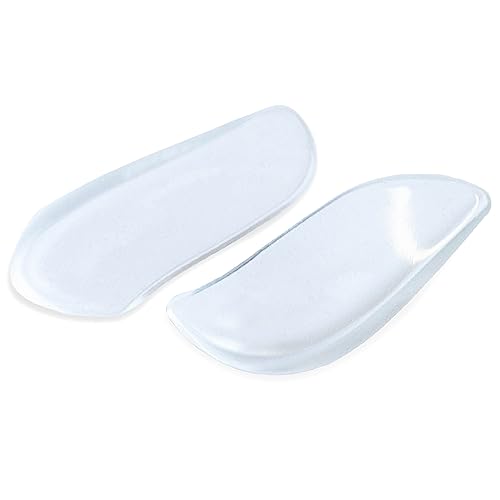
BraceAbility heel wedges are a focused option for people who want to adjust heel contact without filling the whole shoe. The pair includes medial and lateral designs for different foot alignment patterns. Its silicone material can feel gentle under the heel. The adhesive base is intended to keep the wedge in place during normal use.
This product may appeal to adults with supination, pronation, or discomfort linked to uneven foot loading. I would place it in a stable shoe with a firm outsole, not a loose slipper. The best result comes from careful left-and-right placement. Since bow legs vary from person to person, a podiatrist or physical therapist can help decide whether a medial or lateral wedge makes sense.
Pros:
- Focused heel support for targeted use
- Includes medial and lateral options
- Soft silicone may reduce heel pressure
- Adhesive base helps prevent sliding
- Low profile fits many closed shoes
- Useful for people who dislike full-length insoles
Cons:
- Only supports the heel area
- May need replacement after repeated use
- Wrong wedge direction may worsen discomfort
Three-Pair Silicone Heel Wedge Inserts
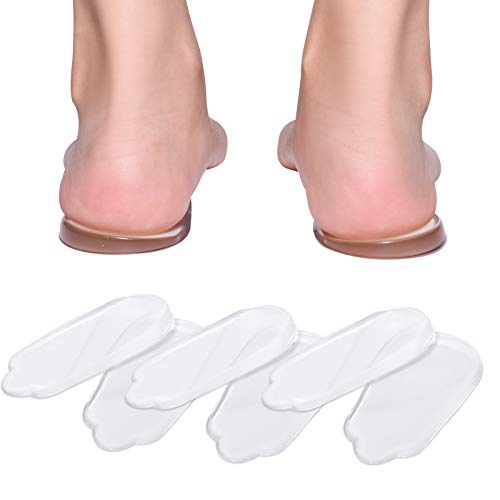
This three-pair set gives shoppers a simple way to try heel wedges in several shoes. The silicone gel construction is made to cushion the heel while creating a small raised edge. It may help users who feel that one side of the heel takes more load. The transparent look keeps the insert discreet in most shoes.
These wedges are especially practical if you rotate work shoes, sneakers, and walking shoes. I recommend testing one pair at home before wearing it for a full day. Keep both inserts matched so your hips do not receive an uneven lift. Like all alignment aids, this product can support comfort but cannot reshape adult bones.
Pros:
- Three pairs offer good value
- Transparent design is subtle
- Gel material adds heel cushioning
- Works in several types of footwear
- Medial and lateral options increase flexibility
- Easy to test during a gradual break-in
Cons:
- May move in shoes with a loose heel
- Does not support the arch or forefoot
- Can feel too high in shallow shoes
Stxdynjy 26.5 cm Bow Leg Cushion
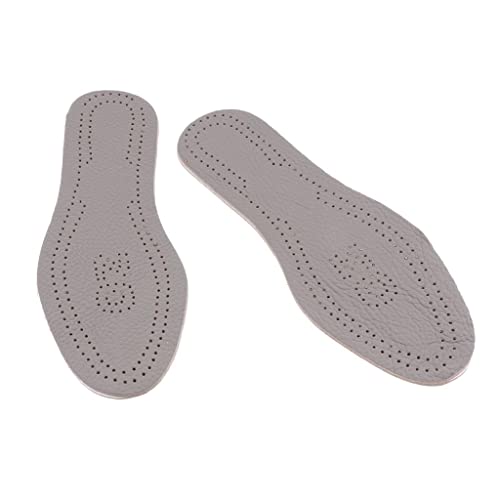
The Stxdynjy 26.5 cm cushion is a longer insert for adults who want more coverage than a small heel wedge. Its raised section is designed around the needs of O-shaped leg alignment. The extended length may spread support over more of the foot. That can feel more balanced than placing a tiny pad under the heel.
Measure the inside of your shoe before ordering this size. It may work best in a sneaker, boot, or walking shoe with enough depth. A removable factory insole can create extra space. I would avoid forcing it into a tight shoe because pressure on the toes can cause a new problem.
Pros:
- Longer 26.5 cm design covers more of the foot
- Made with bow-leg support in mind
- Raised section may guide foot placement
- Good match for roomy sneakers and boots
- May feel steadier than a small heel pad
- Useful for adults who need broad insert coverage
Cons:
- Too long for some smaller shoes
- May require removing the original insole
- Not ideal for shallow dress shoes
Stxdynjy 24.5 cm Bow Leg Cushion
This Stxdynjy version measures 24.5 cm, so it may suit users who need a shorter insert. It has the same general raised-support idea as the longer model. A shorter length may fit more everyday shoes and leave extra room near the toe. That makes it a useful option for adults with smaller feet or compact footwear.
Use it in a shoe that holds the heel firmly and has a level, stable sole. The cushion should sit flat without folding at the front. I suggest trying it for 15 to 30 minutes at first, then checking your feet and knees. If the shoe feels tilted in a painful way, remove it and ask a qualified clinician for guidance.
Pros:
- Shorter 24.5 cm size may fit more shoes
- Made for bow-leg support concerns
- Leaves more toe space than a longer insert
- Raised design may encourage a steadier stance
- Works well for users with smaller footwear
- Can be tested with daily casual shoes
Cons:
- May not cover the full foot of larger users
- Can shift if the shoe has a loose lining
- Requires careful placement on both sides
Fiocias 24.5 cm Raised Edge Insert
The Fiocias 24.5 cm insert uses a raised-edge design for users seeking bow-leg support. Its shorter size may be easier to fit in casual shoes than a long orthotic. The shape is intended to influence how the foot rests on the sole. This can offer a practical starting point for people who feel unstable in flat shoes.
I see this as a compact choice for daily use, travel, or testing a new insert concept. It should lie smooth and stay in the same position on both sides. Avoid pairing it with a very soft shoe that bends in the middle. A supportive outsole gives the insert a better base and may make the walking feel more natural.
Pros:
- Compact 24.5 cm size fits many shoes
- Raised edge targets foot positioning
- Useful for people trying support for the first time
- May work in casual sneakers and boots
- Less bulky than a full custom orthotic
- Easy to compare with other insert styles
Cons:
- May not provide enough coverage for large feet
- Firm shape can need a gradual break-in
- Limited cushioning under the whole foot
Fiocias 26.5 cm Raised Edge Insert
The Fiocias 26.5 cm version offers the same raised-edge concept in a longer size. It may suit adults with larger feet or shoes that need more insert coverage. The extended shape can help the support feel less concentrated in one small area. It is best used in a shoe with enough width and depth.
Before buying, measure the original insole from heel to toe. If the Fiocias insert is too long, it may curl or press against the front of the shoe. I would use it with a stable walking shoe rather than a thin fashion flat. This is a practical option for shoppers who want a larger bow-leg insert without immediately ordering a custom device.
Pros:
- Long 26.5 cm size suits larger footwear
- Raised edge supports the intended alignment goal
- May distribute pressure over more foot length
- Good fit for roomy walking shoes
- Useful alternative to small heel wedges
- Can be moved between compatible shoes
Cons:
- May be too large for compact shoes
- Needs enough shoe depth to sit well
- Does not replace custom medical orthotics
ChicLitonor 24.5 cm Correction Insert
The ChicLitonor insert is a 24.5 cm option for adults who want a compact correction-style cushion. Its design focuses on a shaped support area rather than a thick layer across the whole foot. That may leave more room for the toes. It can be useful in a daily sneaker when a standard flat liner does not feel supportive enough.
Fit is the key point with this product. The insert needs to stay flat and should not crowd the heel or toe box. I recommend wearing it indoors first and checking for hot spots. For people comparing the best shoes for bow legged adults, this insert is most useful when paired with a firm, lace-up shoe that keeps the foot centered.
Pros:
- Compact size may fit everyday shoes
- Shaped support targets bow-leg concerns
- Leaves useful space at the toe
- May add structure without a full custom device
- Easy to test during short indoor sessions
- Works best in a secure lace-up shoe
Cons:
- May feel unusual during the first few wears
- Not suitable for every foot shape
- Offers less whole-foot cushioning than a padded insole
My Recommendation
After comparing the options, I would start with the Deevoka 26 cm insert for adults who want a longer bow-leg support design. It gives more coverage than a small heel wedge and may fit well in a roomy walking shoe. The BraceAbility wedges are my better pick for targeted heel support and easier testing. For a dress outfit, the LUXINYU Mary Jane is the most attractive choice, but it should be used with a thin insert only.
The best shoes for bow legged adults should have a firm heel counter, a stable outsole, a roomy toe box, and enough depth for an insert. Look for shoes that bend near the toes but do not twist like a towel. Replace worn shoes, since a slanted or crushed sole can add more uneven loading. If you have knee swelling, severe pain, numbness, or a sudden change in walking, get an assessment before using wedges.
| Best for | Why |
|---|---|
| Longer bow-leg support | Deevoka, Stxdynjy 26.5 cm, and Fiocias 26.5 cm offer more foot coverage. |
| Targeted heel adjustment | BraceAbility and the silicone wedge sets are slim and easy to test. |
| Dress wear | The LUXINYU Mary Jane has a secure strap and a roomy square toe. |
How I Chose These Options
I did not judge these products by marketing words alone. I looked at the support shape, size choices, shoe compatibility, material, and likely daily use. I also considered how easy each item would be to test without buying a new wardrobe. A useful insert should fit the shoe, stay in place, and feel steady without creating a new pressure point.
Medical groups such as the American Academy of Orthopaedic Surgeons note that leg alignment problems can have several causes. Adult bowing may relate to bone shape, joint wear, past injury, or another health concern. Shoes and inserts can improve comfort and foot contact, but they cannot straighten mature bones. That difference matters when you shop for the best shoes for bow legged adults.
I also favor a gradual break-in. Wear a new insert for a short period, then check your skin, feet, ankles, and knees. A little new pressure may be normal, but sharp pain is not. Keep notes on how you feel during walking, stairs, and standing because those clues help a clinician fine-tune your support.
What to Look for in Shoes for Bow Legs
The shoe itself is often more important than a clever insert. Start with a firm heel counter. When you squeeze the back of the shoe, it should resist collapse. This helps keep the heel centered instead of letting it drift to one side.
Next, check the sole. A stable sole should not twist easily from side to side. It should still flex near the toes so your walk does not feel stiff. Very soft foam can feel pleasant in the store but may allow too much motion for some adults.
Toe room also matters. Your toes should spread without touching the front or sides. A wide or square toe box can reduce rubbing and help the foot rest in a more natural position. Do not buy a larger size just to gain width, because excess length can make the foot slide.
Look for a shoe with a removable insole if you plan to use an orthotic. This feature creates space and makes the insert sit more evenly. Lace-up shoes often hold the heel better than loose slip-ons. A strap can work well too, as seen in a Mary Jane design.
Finally, inspect your old shoes. Uneven wear can show how you load each foot, but it does not diagnose the cause. If one heel is badly worn or the outsole slopes, replace the shoe. A worn sole is like a crooked floor under your feet; it can make every step less even.
How Bow Legs Can Affect Shoe Choice
Bow legs, often called genu varum, describe an outward curve of the legs. Some adults have a mild natural shape with no pain. Others may notice stress at the knees, ankles, hips, or outer edge of the foot. The effect depends on the full chain from the hip down to the toes.
That is why no single shoe works for every person. One adult may feel better with a supportive neutral shoe. Another may need a prescribed orthotic or a physical therapy plan. A third may simply need a wider toe box and a fresh pair of shoes.
Do not assume that the thickest cushion is the best answer. More padding can reduce ground feel and make a shoe unstable. A controlled, secure fit often matters more than a soft feel. The best shoes for bow legged adults should help you feel balanced, not force your legs into a painful position.
Wedges need extra care. A medial wedge raises one side of the heel, while a lateral wedge raises the other side. The correct choice depends on your foot and leg mechanics. Online product labels can provide a starting point, but a trained professional can check your gait and recommend the safest direction.
How to Fit an Orthotic Insert
First, remove the shoe’s factory insole if it is removable. Place the new insert inside and check the heel, arch, and toe area. It should lie flat with no curl. If the shoe feels tight, do not force your foot into it.
Try both shoes on while wearing the socks you use most often. Stand still, then walk on a hard floor. Check whether your heel lifts, your toes pinch, or the insert slides. The shoe should hold your foot without squeezing it.
Begin with a short session. Fifteen minutes can tell you more than a rushed full-day trial. Increase wear time only if your feet and knees feel calm. Check your skin after each use, especially near the heel and outer edge.
Never stack several wedges or inserts unless a clinician tells you to do so. Too much height can change your ankle angle and strain the knee. If pain lasts after you remove the insert, stop using it and seek advice.
When to See a Medical Professional
See a doctor, podiatrist, or physical therapist if your bowing is new, getting worse, or linked to pain. Get help sooner if one leg looks different from the other. Swelling, warmth, locking, giving way, or trouble bearing weight also deserve attention.
An evaluation may include a history, walking check, joint exam, and sometimes imaging. The goal is not only to pick a shoe. It is to find the reason for your symptoms and protect the knee, hip, and ankle.
Seek urgent care after an injury if you cannot walk normally or the leg looks deformed. Do not use a corrective wedge to walk through serious pain. Comfort products have a place, but they should support a sound care plan.
FAQs Of best shoes for bow legged adults
What are the best shoes for bow legged adults?
The best shoes for bow legged adults usually have a firm heel counter, stable outsole, roomy toe box, and removable insole. A neutral walking shoe often gives a safe starting point. The right choice depends on your foot shape, pain, and walking pattern.
Can shoes straighten bow legs in adults?
No. Shoes and inserts cannot reshape mature leg bones. They may improve comfort, foot contact, and stability. A clinician should assess true alignment problems or ongoing pain.
Are heel wedges safe for bow legs?
They can be helpful for some people, but the direction matters. A wrong wedge may increase stress in another joint. Start slowly and ask a podiatrist or physical therapist if you are unsure.
Should I choose soft or firm shoes?
A shoe with controlled firmness is usually a better starting point than one that is very soft and unstable. Look for a cushioned but supportive sole. The shoe should flex near the toes and resist twisting through the middle.
How long should I wear a new orthotic?
Start with about 15 to 30 minutes. Add time slowly if you have no pain, rubbing, or numbness. Stop if symptoms increase and ask a professional for help.
Final Verdict: Which Should You Buy?
For most shoppers, I would choose the Deevoka 26 cm insert for its longer support area. BraceAbility is better for a slim heel wedge, while LUXINYU works for dress wear. Match the insert with a firm, roomy shoe.
The best shoes for bow legged adults should feel stable, not forced. Choose a careful fit, break in support slowly, and seek expert advice when pain or swelling continues.

Michael Smith is the Content Strategist behind The Style Hub, where fashion meets function. With a keen eye for trends and a passion for everyday style, he curates content that helps readers make smarter, more stylish choices—from the perfect pair of sneakers to must-have accessories. Michael specializes in breaking down fashion into practical, wearable insights, making style accessible for everyone. When he’s not researching the latest trends, he’s exploring how comfort, innovation, and timeless design come together in modern fashion.