How Should Hiking Shoes Fit: Expert Tips For The Perfect Fit
Hiking shoes should fit snugly at the heel and midfoot, with room for your toes to move freely.
Knowing how should hiking shoes fit can prevent blisters, bruised toenails, sore arches, and painful trips. The best fit also changes with trail type, socks, foot swelling, and the weight of your pack. This guide explains each fit check in simple terms, so you can choose hiking shoes with confidence and test them before a long day outside.

Why Hiking Shoe Fit Matters
A hiking shoe is more than a casual sneaker. It must hold your foot steady on uneven ground while allowing natural movement. If the fit is too loose, your foot slides inside the shoe. If it is too tight, pressure builds on your toes and the sides of your feet.
Many hiking problems begin with a poor fit rather than a poor shoe. A shoe may have excellent grip and strong materials, but it cannot protect your feet if the shape does not match them.
A correct fit can help reduce:
• Heel blisters caused by repeated rubbing
• Black or bruised toenails from downhill pressure
• Numb toes caused by tight forefoot space
• Arch pain from poor support
• Ankle movement caused by a loose heel
• Foot fatigue during long hikes
The key is balance. Your hiking shoes should feel secure without feeling restrictive. Think of the fit as a firm handshake, not a squeeze.

How Should Hiking Shoes Fit?
How should hiking shoes fit from heel to toe? They should hold your heel and midfoot in place, while leaving enough space for your toes to spread and move.
Use these basic fit rules:
• Your heel should stay mostly in place when you walk uphill.
• Your midfoot should feel supported but not squeezed.
• Your toes should not touch the front of the shoe.
• Your widest foot area should sit comfortably inside the widest part of the shoe.
• Your toes should still move when you tighten the laces.
• The shoe should feel comfortable right away, with no sharp pressure points.
You should have about a thumb’s width of space between your longest toe and the front of the shoe. This is often close to half an inch, but foot shape matters more than an exact measurement.
Do not judge fit by shoe size alone. Sizes can differ between brands, models, and even versions of the same shoe. Your left and right feet may also differ in length or width, so always fit the larger foot.
A useful test is to remove the insole and stand on it. Your foot should fit fully on the insole without spilling over the sides. You should also see space in front of your longest toe.

How Much Toe Room Should Hiking Shoes Have?
Your toes need room to move, especially when hiking downhill. Each step can push your foot forward, and your feet may swell during a long walk. Without enough space, your toes may hit the front of the shoe.
A good rule is to leave about one thumb’s width between your longest toe and the shoe’s end. Do this while standing, not sitting. Your feet spread and lengthen under your body weight.
Check toe room with these steps:
-
Put on the socks you plan to hike in.
-
Stand with your full weight on both feet.
-
Push your foot forward until your toes touch the front.
-
Place a finger behind your heel.
-
Look for roughly one finger or thumb’s width of space.
-
Lace the shoe and walk downhill if possible.
The amount of room may change by shoe type. Lightweight trail shoes often feel more flexible and may need a secure, close fit. Stiffer hiking boots may need slightly more space because thick materials do not stretch much.
Too much toe room is also a problem. If your foot slides forward, your toes may still hit the front. The solution is not always a smaller shoe. It may be better lacing, a different heel shape, or a shoe with a wider forefoot.

How Should Hiking Shoes Fit at the Heel?
Your heel should stay seated when you walk, climb, or step down. A small amount of movement is normal, but noticeable lifting can create friction and blisters.
To check heel fit, walk up a slope or use stairs. Your heel should not rise sharply with each step. You can also loosen the laces, push your foot forward, and check the space behind your heel. There should not be a large gap.
A heel that feels too loose may cause:
• Hot spots
• Heel blisters
• An unstable feeling on rocky trails
• Extra pressure on the toes
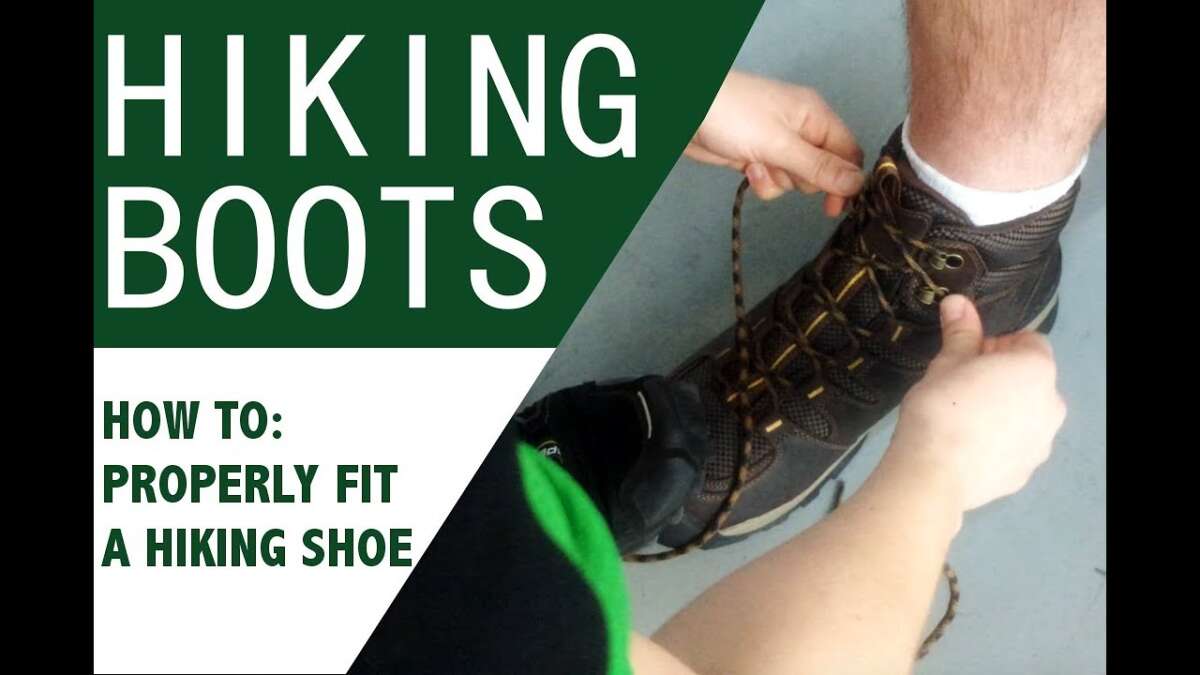
Try a heel-lock lacing method before changing shoes. This method uses the top eyelets to create a loop that pulls the heel back into the heel cup.
Here is a simple version:
-
Lace the shoe normally through the second-to-last eyelet.
-
Use the final eyelets to create small loops on each side.
-
Cross the laces through the loops.
-
Pull the laces down and back.
-
Tie the shoe without cutting off circulation.
If the heel still lifts after this adjustment, the shoe may have the wrong heel shape for your foot. A tighter knot cannot always fix a poor match.
How Should Hiking Shoes Fit Around the Midfoot?
The midfoot should feel secure and supported. The laces should hold your foot in place without creating pressure across the top.
You should be able to slide one finger under the laces, but the shoe should not feel loose. If you see deep marks after removing the shoes, the laces may be too tight or the shoe may have too little volume.
People with high arches may need more room over the top of the foot. People with low arches may prefer a shoe with a supportive, stable platform. These traits do not automatically decide which shoe is best, but they affect comfort.
Try different lacing patterns if the shoe feels close to correct:
• Skip an eyelet over a pressure point.
• Use a window lacing pattern for a high instep.
• Tighten the lower laces less than the upper laces.
• Use a heel-lock pattern to reduce heel movement.
Do not use laces to force your foot into a shoe that is too narrow. Lacing can adjust the fit, but it cannot create width or length that the shoe does not have.

How Should Hiking Shoes Fit for Wide Feet?
If you have wide feet, the widest part of your foot should rest inside the widest part of the shoe. Your little toe should not press against the sidewall, and the upper should not bulge sharply.
Look for shoes labeled wide, extra-wide, or with a naturally roomy toe box. However, labels are not fully consistent. One brand’s wide model may feel similar to another brand’s regular model.
Signs that hiking shoes are too narrow include:
• Tingling or numbness
• Pressure on the little toe
• A pinched feeling across the ball of the foot
• Blisters along the sides
• Toes that cannot spread
A wide shoe should not feel loose everywhere. You still need a secure heel and midfoot. The ideal fit gives your forefoot room while keeping the rear of the foot stable.
Do not size up several sizes to gain width. This can leave too much space in front and increase sliding. Try a wider version or a shoe built on a broader last instead.

When Is the Best Time to Try Hiking Shoes?
Try hiking shoes later in the day. Feet often swell after hours of standing and walking, so a shoe that feels perfect in the morning may feel tight by afternoon.
Wear the socks you will use on the trail. Thick wool socks can change the fit more than expected. If you use custom insoles, bring them with you as well.
Before buying, spend at least 10 to 15 minutes walking in the shoes. Try several movements:
• Walk on level ground.
• Walk up stairs.
• Walk down stairs.
• Bend your knees.
• Stand on your toes.
• Walk on an angled surface.
• Carry a backpack with some weight inside.
The backpack test matters because extra load can change how your feet land. It can also increase pressure on your toes during descents.
A shoe that feels slightly stiff may become more comfortable after a short break-in period. A shoe that causes pain, numbness, or sharp pressure is unlikely to become good with time.

How Should Hiking Shoes Fit With Hiking Socks?
Your socks and shoes work as one system. The right shoe can feel wrong with socks that are too thick, too loose, or full of seams.
Choose hiking socks that fit smoothly around your heel and toes. Merino wool and synthetic blends are common choices because they manage moisture better than cotton. Cotton can hold moisture against the skin, which may increase friction and the chance of blisters.
When testing fit:
• Wear your normal hiking socks.
• Check that the socks do not bunch under the toes.
• Make sure the heel of the sock sits in the shoe’s heel cup.
• Avoid extra layers unless the shoe has enough space.
• Check your feet after a long walk.
If you use liner socks, test them during the fitting. Adding a liner later can make a comfortable shoe feel too tight.
Moisture is only one part of blister prevention. Friction, heat, pressure, and poor fit all play a role. If a hot spot appears, stop early and cover it before it becomes a blister.
Hiking Shoe Fit for Uphill and Downhill Trails
Trail direction changes how your shoes should feel. Uphill walking can expose heel slippage, while downhill walking can expose a lack of toe room.
For uphill travel, your heel should remain secure. Your toes should not feel crushed as you push off. Tighten the laces across the midfoot, but avoid pulling the lower laces too hard.
For downhill travel, your toes should stay away from the front. Use a heel-lock lacing pattern and make sure the shoe has enough length. If your toes hit the front even when the heel is secure, the shoe may be too short or too shallow in the toe box.
On steep or rocky trails, a firm sole can improve stability. On smooth paths, a flexible trail shoe may feel more natural. This is why how should hiking shoes fit depends partly on where you plan to use them.
A shoe for a short park walk does not need the same fit as a stiff boot for a steep mountain route. Match the fit to the terrain, distance, pack weight, and weather.
Common Hiking Shoe Fit Mistakes
Even experienced hikers can make fitting mistakes. The most common error is choosing a size based only on a familiar number.
Avoid these problems:
• Buying shoes early in the morning when your feet are at their smallest
• Testing shoes without your hiking socks
• Choosing a tight fit because the shoe feels more secure
• Ignoring pressure on the little toe
• Assuming every shoe will break in and become wider
• Forgetting to test downhill movement
• Buying online without checking the return policy
• Wearing brand-new shoes on a long hike
One lesson worth remembering is that comfort during the first few minutes is not enough. Walk long enough to notice heat, pressure, and foot movement. A shoe can feel fine at the store and fail after several miles.
If you buy online, measure both feet and compare the measurements with the brand’s chart. Order from a seller that allows returns after indoor testing. Keep the shoes clean until you are sure the fit works.
How to Break In Hiking Shoes Safely
Not every hiking shoe needs a long break-in period. Lightweight trail shoes may feel ready after a short walk. Leather hiking boots and stiff backpacking boots often need more time.
Break them in gradually:
-
Wear them indoors for 20 to 30 minutes.
-
Walk around your neighborhood.
-
Take a short trail walk.
-
Increase distance only if your feet feel comfortable.
-
Check for hot spots after each walk.
Do not wait for pain to become severe. Red skin, burning, or rubbing is an early warning. Adjust the laces, change your socks, or stop and protect the area.
A shoe may soften as materials flex, but it should not need to change shape dramatically. If your toes are cramped or your foot is numb, return the shoes if possible.
How to Tell if Hiking Shoes Fit Correctly
Use this final checklist before a hike:
• Your longest toe has about a thumb’s width of space.
• Your toes do not touch the front when walking downhill.
• Your heel stays mostly in place.
• Your midfoot feels secure but not squeezed.
• Your forefoot can spread naturally.
• You feel no numbness, burning, or sharp pressure.
• The shoe works with your hiking socks and insoles.
• You can walk comfortably for at least 20 minutes.
• The sole feels stable on the terrain you plan to hike.
Your feet should feel supported, not trapped. A correct fit should fade into the background while you walk. If you keep thinking about the shoe, something may need to change.
Hiking Shoe Fit Compared With Hiking Boots
Hiking shoes are usually lighter and more flexible than hiking boots. They often suit day hikes, fast trail walks, and warm conditions. Hiking boots may offer more ankle coverage, protection, and stiffness for rough terrain or heavy loads.
The fitting principles remain similar:
• Secure heel
• Stable midfoot
• Comfortable width
• Adequate toe room
• No painful pressure points
Boots may feel stiffer at first, so walk in them before a major trip. They also tend to have thicker socks and heavier soles, which can change how your foot sits.
Ankle height does not automatically prevent ankle injuries. Good footing, careful movement, and proper training also matter. Choose boots for the protection and support you actually need, not only because they look more rugged.
Frequently Asked Questions About How Should Hiking Shoes Fit
Should hiking shoes be tight or loose?
Hiking shoes should feel snug around the heel and midfoot but roomy around the toes. They should not squeeze your foot or allow it to slide from side to side.
Should my toes touch the end of hiking shoes?
No. Your toes should not touch the front when you stand or walk downhill. Leave about a thumb’s width of space in front of your longest toe.
Should I size up for hiking shoes?
You may need a half size up if your feet swell, you wear thick socks, or your toes touch the front. Always test the shoe while standing and walking rather than sizing up automatically.
How much heel slip is normal in hiking shoes?
A small amount of movement can occur in a new shoe, but your heel should not lift sharply with every step. Continued heel slip often leads to rubbing and blisters.
Should hiking shoes feel comfortable right away?
Yes, they should feel comfortable during the first fitting. Some stiff materials may soften, but pain, numbness, and sharp pressure are signs of a poor fit.
Are hiking shoes supposed to be wider than regular shoes?
Many hiking shoes have a roomier toe box than casual shoes, but they are not always wider overall. The shoe should match your foot shape and give your toes space without losing heel and midfoot control.
How do I know if hiking shoes are too small?
Your shoes may be too small if your toes touch the front, your forefoot feels pinched, or you develop numbness and pressure during a short walk. These signs usually will not disappear through break-in.
Conclusion
The best hiking shoe fit keeps your heel and midfoot secure while giving your toes room to spread, swell, and move. Test shoes late in the day, wear your trail socks, walk both uphill and downhill, and never ignore pain or numbness.
Remember that how should hiking shoes fit depends on your foot shape, trail conditions, pack weight, and personal comfort. Take time to test each pair before a long hike, then use the same careful process when replacing them. Find a pair that feels stable and natural, and share your favorite fitting tip or hiking question in the comments.

Michael Smith is the Content Strategist behind The Style Hub, where fashion meets function. With a keen eye for trends and a passion for everyday style, he curates content that helps readers make smarter, more stylish choices—from the perfect pair of sneakers to must-have accessories. Michael specializes in breaking down fashion into practical, wearable insights, making style accessible for everyone. When he’s not researching the latest trends, he’s exploring how comfort, innovation, and timeless design come together in modern fashion.